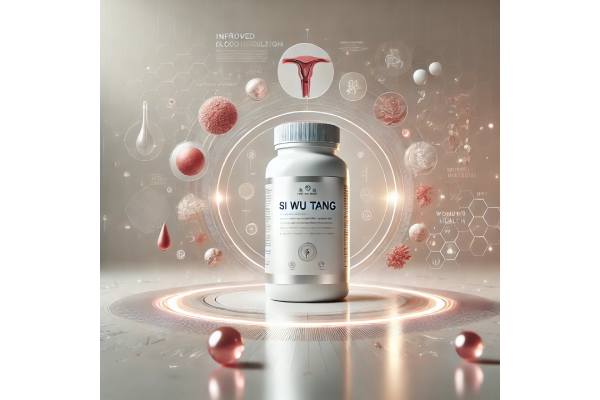
Si Wu Tang, often translated as “Four Agents Decoction” or “Four Substance Decoction,” is one of the most important classic formulas in traditional Chinese medicine for nourishing and regulating the blood. Built from four herbs—prepared Rehmannia root, Chinese angelica root, white peony root, and Ligusticum chuanxiong—it has been prescribed for centuries for patterns linked to blood deficiency, especially in women with menstrual irregularities, pain, or post-illness weakness. Modern research adds another layer: Si Wu Tang appears to influence antioxidant pathways, microcirculation, liver function, and aspects of hormone balance. At the same time, the clinical evidence is mixed and varies in quality, and this formula is not suitable for everyone. This guide explains what Si Wu Tang is, how it is traditionally understood, what current studies suggest, typical ways and amounts to take it, and the safety issues you should review with a qualified practitioner before using it as a long-term supplement.
Key Facts about Si Wu Tang
- Si Wu Tang is a four-herb blood-tonic formula traditionally used for menstrual irregularities, pain, and post-illness weakness.
- Human studies suggest possible benefits for dysmenorrhea, skin and liver antioxidant status, and certain menstrual disorders, though evidence quality is variable.
- Classical dosing often uses around 20–40 g of crude herbs per day as a decoction, or an equivalent dose of granules such as 6–18 g per day, individualized by a practitioner.
- People who are pregnant, have heavy menstrual bleeding, estrogen-sensitive cancers, serious liver disease, or take anticoagulants should avoid self-prescribing Si Wu Tang without specialist guidance.
Table of Contents
- What is Si Wu Tang in Chinese medicine
- Si Wu Tang benefits and how it works
- How to take Si Wu Tang in practice
- How much Si Wu Tang per day
- Si Wu Tang side effects and who should avoid it
- What clinical evidence says about Si Wu Tang
What is Si Wu Tang in Chinese medicine
Si Wu Tang is a foundational blood-tonifying formula in traditional Chinese medicine (TCM). The name literally means “Four Substances Decoction” and refers to its four plant ingredients:
- Shu Di Huang (prepared Rehmannia glutinosa root)
- Bai Shao (Paeonia lactiflora root, often white peony root)
- Dang Gui (Angelica sinensis root, Chinese angelica)
- Chuan Xiong (Ligusticum chuanxiong rhizome, Szechuan lovage)
In classical TCM theory, Shu Di Huang and Bai Shao primarily “nourish the blood,” while Dang Gui and Chuan Xiong “invigorate the blood and move Qi” to prevent stagnation. Together, the formula is said to enrich blood, regulate menstruation, nourish the Liver (in the TCM sense), and support tissues such as hair, skin, and nails that depend on adequate blood and yin.
Traditionally, Si Wu Tang is used for patterns described as blood deficiency or blood deficiency with mild stagnation. Typical presentations include:
- Pale or dull complexion and lips
- Dizziness, palpitations, fatigue
- Scanty, delayed, or irregular menstruation
- Dull or cramping lower abdominal pain, often before or during menses
- Postpartum or post-illness weakness related to blood loss or depletion
Modern practice often uses Si Wu Tang as:
- A base formula for menstrual disorders, sometimes combined with herbs for pain, cold, or stasis
- A tonic for women with chronic blood deficiency patterns
- A component in more complex prescriptions for anemia, hair loss, or skin dryness, when these fit a TCM blood-deficiency pattern
You may encounter related formulas such as Taohong Siwu Decoction, which adds herbs for stronger “blood-moving” effects, or commercial preparations marketed for menstrual balance, recovery after childbirth, or general female health.
Si Wu Tang is traditionally prepared as a decoction by boiling the raw herbs in water. In modern settings, it is also available as concentrated granules, tablets, capsules, and ready-to-drink liquids. Although it has a long history of use, it remains a potent medicinal formula rather than a gentle tea, and TCM practitioners typically adjust the dose, duration, and added herbs based on an individual pattern diagnosis rather than a single Western diagnosis.
Si Wu Tang benefits and how it works
From a TCM viewpoint, Si Wu Tang’s main benefit is to nourish and regulate the blood. By improving “blood richness” and circulation, it is thought to:
- Ease menstrual pain associated with blood deficiency and mild stagnation
- Regulate the menstrual cycle and support a more predictable flow
- Improve symptoms such as dizziness, fatigue, pale complexion, and brittle hair or nails
- Support recovery after childbirth or significant blood loss when appropriate
Modern research has begun to clarify biochemical and physiological actions that might underlie these clinical observations.
Phytochemical studies show that Si Wu Tang contains a range of active constituents derived from its component herbs, including paeoniflorin, ferulic acid, ligustilide, and various iridoid glycosides. These compounds appear to influence:
- Hematopoiesis (blood cell formation), with animal models showing increased red and white blood cells and bone marrow activity
- Microcirculation and vascular tone, potentially improving blood flow in peripheral tissues and the uterus
- Antioxidant and detoxifying pathways, such as activation of Nrf2 and upregulation of protective enzymes
- Hormone-related pathways relevant to menstrual regulation and follicular development
Clinical and experimental work suggests several potential benefit areas:
- Menstrual discomfort and dysmenorrhea: Trials and systematic reviews indicate that Si Wu Tang and related formulas may reduce pain scores and improve overall symptom response rates compared with some conventional medications in primary dysmenorrhea, although study quality varies.
- Skin and liver antioxidant status: In healthy adults, Si Wu Tang has been associated with improved antioxidant indices, more favorable lipid profiles, and better ultrasound findings in mild fatty liver, along with improvements in skin texture and barrier function.
- Menstrual disorders linked to follicular development: Research in women with follicular maldevelopment-related menstrual problems suggests that Si Wu Tang decoction and equivalent concentrated extract doses can help normalize certain hormone ratios and improve symptoms.
- Blood-deficiency-related conditions: Network pharmacology and animal studies indicate possible roles in cancer-related anemia and other blood-deficiency states, though these findings are preliminary and not yet routine clinical practice.
Despite these promising findings, Si Wu Tang is not a universal solution. Its effects are most meaningful when the underlying pattern truly corresponds to blood deficiency with elements of stagnation, and when it is used as part of a broader plan that includes diet, lifestyle, and, where necessary, conventional medical treatment.
How to take Si Wu Tang in practice
There are several practical ways people use Si Wu Tang, each with advantages and trade-offs. Ideally, dosing and form should be chosen with the help of a licensed TCM practitioner or integrative physician.
1. Traditional decoction
In classical practice, the four herbs are weighed in their crude form and simmered in water to make a daily decoction. A typical approach might involve:
- Rinsing the dried herbs briefly to remove dust.
- Soaking them in cool water for 20–30 minutes.
- Bringing the mixture to a boil, then simmering for 30–45 minutes.
- Straining and dividing the liquid into one or two doses for the day.
Decoctions are flexible: a practitioner can adjust the ratios, add or remove herbs, or change cooking times to emphasize certain effects. However, they require time, kitchen space, and tolerance for a strong herbal taste and aroma.
2. Concentrated granules and powders
Many modern clinics use spray-dried granules or powders standardized to represent a given weight of crude herbs per gram of granules. For example, a preparation might be labeled so that 6–9 g of granules approximate 30–40 g of raw herbs. These can be:
- Dissolved in hot water as a quick tea
- Encapsulated for convenience
- Combined with other formula granules in individualized prescriptions
Granules offer better convenience and more consistent quality control compared with home decoctions, although exact equivalence depends on the manufacturer’s processes.
3. Patent pills, capsules, and ready-made drinks
Over-the-counter products may present Si Wu Tang as:
- Tablets or honeyed pills
- Capsules containing powdered herbs or extracts
- Bottled herbal drinks marketed for women’s health
These are convenient but less customizable. Labels sometimes use proprietary names or emphasize “blood tonic” or “women’s formula” branding instead of clearly listing Si Wu Tang. Checking the ingredient list and, where possible, third-party testing is important to understand what you are taking.
4. Timing and duration
In practice, Si Wu Tang is often taken:
- Once or twice daily, usually with warm water and away from very heavy or greasy meals
- For several menstrual cycles when addressing dysmenorrhea or irregular cycles
- For defined periods (for example, 1–3 months) in chronic blood-deficiency patterns, with reassessment and possible breaks
Some practitioners time the formula to particular phases of the menstrual cycle, while others use it throughout the cycle depending on the pattern. Self-prescribing long term without review is not advisable, especially if you have ongoing heavy bleeding, new symptoms, or other chronic conditions.
How much Si Wu Tang per day
There is no single “one-size-fits-all” dose for Si Wu Tang, but several reference points from traditional texts and modern studies can help frame a safe discussion with your clinician.
Classical crude-herb doses
In many traditional prescriptions, a daily dose of Si Wu Tang might use around:
- 9–12 g Shu Di Huang
- 9–12 g Bai Shao
- 6–9 g Dang Gui
- 4.5–6 g Chuan Xiong
This adds up to roughly 25–40 g of crude herb material per day, prepared as a decoction and divided into one or two doses. Exact numbers vary by lineage, text, and patient constitution.
Modern pharmacokinetic and clinical studies
Recent pharmacokinetic work has compared water decoctions and concentrated extracts of Si Wu Tang. In one study, 170 mL of a decoction prepared from 40 g of crude herbs was considered equivalent to 18 g of a concentrated extract when looking at blood levels of ferulic acid, a key marker compound. This gives a practical equivalence between:
- About 40 g crude herbs per day as decoction
- About 18 g of a specific Si Wu Tang concentrated extract per day
In clinical practice, many TCM doctors prescribe within the lower to middle end of this range and adjust according to body weight, age, and strength of the person’s constitution.
Typical clinic-style ranges
Under professional supervision, common daily ranges might include:
- Around 20–40 g of crude herb equivalent per day for adult women with clear blood-deficiency patterns
- Lower total equivalents for smaller-bodied individuals, older adults, or those with mixed deficiency and excess patterns
- Shorter courses or lower doses when used preventively or in combination with other formulas
For concentrated granules, manufacturers often give a recommended daily dose such as 6–9 g, sometimes divided into two or three servings. The actual potency depends on how many grams of crude herbs are represented per gram of granules, which should be made clear on the product information or by the prescribing practitioner.
Key points for safe dosing
- Start low and increase gradually while monitoring your response.
- Take Si Wu Tang with warm water, and avoid combining it with very cold or greasy foods at the same time.
- Do not exceed the upper end of crude herb equivalence (around 40 g per day) without expert oversight, especially if you have any chronic medical conditions.
- Avoid long-term, continuous use without reassessment; most people benefit from defined treatment periods followed by evaluation and possible adjustment or breaks.
Children, adolescents, pregnant individuals, and people with significant liver, kidney, cardiovascular, or hematological conditions should not use strong doses of Si Wu Tang unless it is specifically prescribed and monitored by a professional familiar with both TCM and conventional medicine in their context.
Si Wu Tang side effects and who should avoid it
Si Wu Tang is widely used and generally considered safe when prescribed appropriately, but it is not free from risks. Side effects and adverse events can occur, especially with unsupervised long-term or high-dose use.
Common, usually mild effects
Some people notice:
- Digestive discomfort such as nausea, bloating, or loose stools
- A feeling of warmth or flushing, especially in those who already run “hot”
- Headache or light-headedness if the dose is too strong for their constitution
These effects often improve when the dose is lowered, the formula is taken with food, or the prescription is modified by adding balancing herbs.
Potentially serious but less common concerns
Reports from pharmacovigilance systems and observational studies show occasional adverse events associated with Si Wu Tang and related formulas. These may include:
- Allergic reactions (rash, itching, swelling, breathing difficulty), which require immediate medical attention
- Liver-related laboratory abnormalities in susceptible individuals, particularly when multiple herbal products or medications are used together
- Worsening of heavy menstrual bleeding in people whose primary issue is excess bleeding rather than pure deficiency
Because Si Wu Tang contains herbs that influence blood, circulation, and hormones, several groups warrant special caution.
Who should avoid self-prescribing Si Wu Tang
Generally, you should not use Si Wu Tang on your own if you:
- Are pregnant, especially in the first trimester, unless an experienced practitioner has clearly indicated that it is appropriate for your pattern
- Have very heavy menstrual bleeding, unexplained uterine bleeding, or known fibroids causing bulk symptoms and bleeding
- Have a personal history of estrogen-sensitive cancers such as certain breast or endometrial cancers, without explicit approval from an oncology team familiar with herb–drug interactions
- Have known significant liver disease, especially if your liver enzymes are unstable or you already react poorly to other medications
- Are taking anticoagulant or antiplatelet drugs (such as warfarin, direct oral anticoagulants, aspirin, or clopidogrel), as some components may influence platelet function or coagulation
- Have complex autoimmune or hematologic disorders where changes in blood cell production or immune activity could be problematic
Medication interactions
Si Wu Tang may interact with medications by:
- Affecting platelet aggregation and bleeding risk
- Modulating liver enzymes that metabolize drugs
- Influencing blood pressure or circulatory dynamics
- Slightly affecting hormone-related pathways
These interactions are not fully mapped, but they matter if you take multiple drugs chronically. A pharmacist or integrative physician can help assess your specific situation.
Quality and contamination
The safety of Si Wu Tang also depends on product quality. Poorly sourced herbs may contain heavy metals, pesticides, adulterants, or misidentified plant species. Choosing products from reputable manufacturers, ideally with independent testing data, significantly reduces these risks.
If you start Si Wu Tang and experience new symptoms such as severe abdominal pain, yellowing of the skin or eyes, dark urine, unusual bruising, or any sign of allergic reaction, stop the formula immediately and seek medical evaluation.
What clinical evidence says about Si Wu Tang
Clinical research on Si Wu Tang has expanded in recent decades, though the overall evidence base is still mixed and often limited by study design.
Primary dysmenorrhea and menstrual pain
A key area of research is primary dysmenorrhea (menstrual pain without identifiable pelvic pathology). A systematic review and meta-analysis of randomized controlled trials found that:
- Si Wu Tang and related formulas often showed better overall symptom response rates and improved pain scores compared with some conventional treatments such as nonsteroidal anti-inflammatory drugs.
- Adverse events reported in trials were relatively few, and the formula sometimes appeared safer than comparison drugs in terms of reported side-effect rates.
- However, many trials had small sample sizes, unclear randomization methods, and limited blinding, which lowers confidence in the results.
Earlier placebo-controlled work on “Four-Agents-Decoction” also suggested trends toward pain improvement but did not always reach statistical significance, underscoring the need for larger, high-quality trials.
Antioxidant effects, skin, and liver
A randomized, double-blind, placebo-controlled clinical trial in healthy adults evaluated Si Wu Tang’s effects on antioxidant status, lipid profiles, liver markers, and skin condition over several months. Participants taking the formula showed:
- Increased antioxidant indices and key antioxidant enzyme activities
- More favorable trends in triglycerides and certain liver enzymes
- Improvements in measures of skin texture, barrier function, and wrinkle appearance
These findings support the traditional view of Si Wu Tang as a tonic that can nourish blood and improve skin and liver health, at least in otherwise healthy individuals.
Menstrual disorders and follicular development
A more recent study combined pharmacokinetic and pharmacodynamic analysis to compare Si Wu Tang water decoction with a concentrated herbal extract. It found that:
- 170 mL of decoction made from 40 g crude herbs and 18 g of concentrated extract produced similar blood levels of a key marker compound, supporting dose equivalency between these forms.
- In women with follicular maldevelopment-related menstrual disorders, both forms were associated with improvements in hormone ratios and menstrual symptoms over time.
This work highlights that concentrated extracts can be used as practical alternatives to traditional decoctions when carefully standardized.
Mechanistic and network pharmacology research
Beyond clinical trials, mechanistic studies in cells, animals, and computational models show that Si Wu Tang:
- Activates antioxidant pathways, particularly Nrf2-regulated detoxifying genes, offering a plausible route for protection against oxidative damage.
- Influences multiple protein targets and pathways related to hematopoiesis, inflammation, hormone regulation, and microcirculation.
- May have relevance in complex conditions such as cancer-related anemia; network pharmacology analyses identify numerous potential targets, though human trials in these areas are still lacking.
How to interpret the evidence
Taken together, the literature suggests that Si Wu Tang:
- Has plausible mechanisms and early clinical evidence for benefits in primary dysmenorrhea, menstrual irregularities linked to blood deficiency, and general antioxidant support.
- Appears reasonably safe in short- to medium-term use when appropriately prescribed, with relatively few serious adverse events reported in trials.
- Requires more rigorous, larger, and better controlled studies to define its role alongside modern therapies, especially in chronic or serious conditions.
For now, Si Wu Tang is best viewed as a time-tested TCM formula with supportive but not definitive modern evidence, to be used thoughtfully as part of an integrative treatment plan rather than as a stand-alone cure.
References
- Chinese herbal formula siwutang for treating primary dysmenorrhea: A systematic review and meta-analysis of randomized controlled trials 2020 (Systematic Review)
- Antioxidant and physiological effects of Si-Wu-Tang on skin and liver: a randomized, double-blind, placebo-controlled clinical trial 2016 (Clinical Trial)
- Evaluating the Therapeutic Efficacy of Si-Wu-Tang Decoction and Concentrated Extract in Follicular Maldevelopment-Related Menstrual Disorders Through Pharmacokinetic/Pharmacodynamic Studies 2020 (Clinical and PK/PD Study)
- Traditional Chinese medicinal formula Si-Wu-Tang prevents oxidative damage by activating Nrf2-mediated detoxifying/antioxidant genes 2014 (Experimental Study)
- Deciphering the potential mechanism of Siwu decoction for treating cancer-related anemia based on network pharmacology and molecular docking technology 2023 (Network Pharmacology Study)
Disclaimer
This article is intended for informational and educational purposes only and does not provide medical advice, diagnosis, or treatment. Si Wu Tang is a potent traditional herbal formula with both potential benefits and real risks, and its suitability depends on an individual’s health status, medications, and pattern diagnosis within traditional Chinese medicine. Always consult a qualified healthcare professional—ideally one familiar with both TCM and conventional medicine—before starting, stopping, or changing any herbal formula or supplement, including Si Wu Tang. Do not ignore or delay seeking professional medical advice because of information you have read online, and seek urgent care immediately if you experience symptoms of an allergic reaction, severe bleeding, or signs of liver or other organ injury after taking any herbal product.
If you found this guide helpful, please consider sharing it on Facebook, X (formerly Twitter), or any platform you prefer, and follow our work on social media. Your support in sharing our articles helps our team continue to research, refine, and publish careful, evidence-informed health content for readers who value trustworthy information.