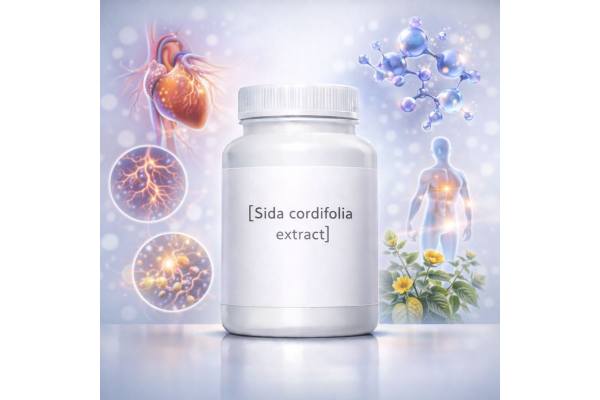
Sida cordifolia extract is a traditional botanical preparation derived from the leaves, stems, and seeds of Sida cordifolia, a plant long used in Ayurvedic and folk medicine. It has been employed for centuries for respiratory support, joint discomfort, fatigue, and general vitality. Interest in this herb expanded globally once its active compounds were identified, particularly ephedrine-like alkaloids that produce noticeable physiological effects.
Modern research shows that Sida cordifolia contains a complex mix of alkaloids, flavonoids, and sterols that may influence the nervous, respiratory, and musculoskeletal systems. These same compounds, however, also introduce safety considerations that distinguish Sida cordifolia from gentler herbal supplements. Some uses once considered traditional are now restricted or closely regulated in several countries.
This guide provides a careful, evidence-informed overview of Sida cordifolia extract. You will learn what it is, how it works, its potential benefits and uses, practical dosage considerations, possible side effects and interactions, and what the scientific literature currently supports—so you can make informed decisions grounded in both tradition and modern knowledge.
Key Insights on Sida cordifolia extract
- Sida cordifolia extract contains alkaloids that may support respiration, focus, and physical performance.
- It has stimulant-like effects, which increases both its potential benefits and risks.
- Typical traditional doses range from 250 to 1,000 mg per day of crude extract equivalents, depending on formulation.
- People with cardiovascular disease, hypertension, anxiety disorders, or who are pregnant should avoid use unless medically supervised.
Table of Contents
- What is Sida cordifolia extract?
- What are the potential benefits?
- How Sida cordifolia works in the body
- How much Sida cordifolia extract is used
- Side effects, interactions, and warnings
- What the science says
What is Sida cordifolia extract?
Sida cordifolia is a small perennial shrub native to India and other tropical regions. In Ayurvedic medicine, it is commonly known as Bala, a name that translates to “strength,” reflecting its traditional role as a rejuvenating and strengthening herb. The plant’s leaves, roots, and seeds have all been used medicinally, either alone or in combination with other herbs.
Sida cordifolia extract refers to a concentrated preparation derived from plant material using water or alcohol. Unlike whole-herb powders, extracts deliver higher concentrations of bioactive compounds per gram. Historically, decoctions were used for respiratory complaints, rheumatic pain, and nervous exhaustion, while topical applications addressed swelling and localized discomfort.
Chemically, Sida cordifolia is notable for containing alkaloids such as ephedrine, pseudoephedrine, and vasicine, along with flavonoids, sterols, and fatty acids. These alkaloids are pharmacologically active and can stimulate the sympathetic nervous system, which partly explains the herb’s traditional energizing and bronchodilating effects.
In the late 20th century, Sida cordifolia gained attention outside of traditional medicine because of these stimulant properties. It began appearing in weight-loss and performance supplements, which eventually led to regulatory scrutiny and restrictions in some regions. As a result, modern Sida cordifolia products vary widely in alkaloid content and legal status.
Understanding what Sida cordifolia extract truly is—an herb with potent active compounds rather than a mild tonic—is essential. It carries both meaningful therapeutic potential and real risks, which must be weighed carefully before use.
What are the potential benefits?
Traditional and preclinical evidence suggests several potential benefits of Sida cordifolia extract, although these effects must be interpreted in light of limited human clinical data. One of the most cited uses is respiratory support. The plant’s alkaloids can relax bronchial smooth muscle, which may ease breathing in conditions involving bronchospasm. This aligns with its long history of use in asthma-like symptoms and chronic coughs.
Another commonly cited benefit is musculoskeletal support. Sida cordifolia has been used traditionally for joint pain, stiffness, and inflammation. Animal studies suggest anti-inflammatory and analgesic activity, which may explain its use in rheumatic conditions and post-illness weakness.
Because of its stimulant alkaloids, Sida cordifolia may also increase alertness, reduce perceived fatigue, and enhance physical endurance. These effects led to its inclusion in some sports and weight-management supplements. However, this same stimulant action increases the risk of adverse cardiovascular and nervous system effects.
Additional properties explored in early research include:
- Mild analgesic effects in animal pain models
- Antioxidant activity due to flavonoid content
- Potential support for metabolic rate through sympathetic activation
In traditional systems, Sida cordifolia is also viewed as a “nervine” tonic, used for anxiety, nerve pain, and recovery from stress-related exhaustion. Interestingly, this calming reputation coexists with its stimulant chemistry, highlighting how dosage and preparation dramatically influence effects.
Importantly, these potential benefits are not equivalent to proven medical indications. Sida cordifolia should not be considered a substitute for prescription bronchodilators, anti-inflammatory drugs, or cardiovascular medications. Its role, if any, is adjunctive and requires careful consideration of individual health status.
How Sida cordifolia works in the body
Sida cordifolia’s effects stem primarily from its alkaloid content, especially ephedrine-like compounds. These substances stimulate alpha- and beta-adrenergic receptors, leading to increased release of norepinephrine. This activation explains several hallmark effects: elevated heart rate, improved airflow in the lungs, increased alertness, and heightened energy expenditure.
At the respiratory level, adrenergic stimulation can relax bronchial muscles, temporarily improving airflow. This mechanism underlies the plant’s traditional use for breathing difficulties. In skeletal muscle and metabolic tissues, sympathetic activation may enhance endurance and thermogenesis, contributing to its historical reputation for boosting strength.
Beyond alkaloids, Sida cordifolia contains flavonoids and phytosterols that may reduce inflammation and oxidative stress. These compounds act through different pathways, including inhibition of pro-inflammatory mediators and scavenging of free radicals. This dual action—stimulation paired with anti-inflammatory support—helps explain the herb’s diverse traditional applications.
Some studies also indicate mild central nervous system effects that may influence pain perception and mood. These effects could arise from interactions between alkaloids and neurotransmitter systems, though this area remains incompletely understood.
Crucially, the same pathways that create benefits also drive risks. Sympathetic stimulation raises blood pressure and cardiac workload, which can be dangerous for certain individuals. Unlike adaptogenic herbs that gently modulate stress responses, Sida cordifolia exerts direct pharmacological pressure on the nervous and cardiovascular systems.
For this reason, understanding how Sida cordifolia works is less about fine-tuning wellness and more about managing a biologically active agent safely.
How much Sida cordifolia extract is used
There is no universally accepted dosage for Sida cordifolia extract, largely because standardized clinical trials in humans are lacking. Most dosage guidance comes from traditional practice and small experimental studies, which should be treated as rough reference points.
In traditional oral use, crude extract or powder equivalents often range from about 250 to 1,000 mg per day, usually divided into two doses. Decoctions may deliver similar amounts of total plant material but vary widely in alkaloid concentration depending on preparation time and plant part used.
Modern commercial extracts may be much more concentrated, especially those standardized for alkaloid content. With such products, effective doses may be significantly lower, sometimes under 200 mg per day. Unfortunately, labeling practices are inconsistent, making it difficult for consumers to know exactly how much active compound they are ingesting.
Practical guidance for conservative use includes:
- Start with the lowest suggested dose on the product label.
- Avoid combining Sida cordifolia with other stimulants such as caffeine or synephrine.
- Do not increase the dose rapidly or exceed traditional ranges.
- Use for short durations rather than continuous long-term intake.
Because of cardiovascular and nervous system effects, Sida cordifolia extract should ideally be taken only under the guidance of a qualified healthcare professional familiar with herbal medicine. Individuals often underestimate its potency because it is plant-derived, which increases the risk of misuse.
Side effects, interactions, and warnings
Sida cordifolia extract carries a higher risk profile than many herbal supplements. Reported and theoretically plausible side effects include increased heart rate, elevated blood pressure, palpitations, insomnia, anxiety, headache, and gastrointestinal discomfort. These effects are largely related to adrenergic stimulation.
More serious concerns arise when Sida cordifolia is used by individuals with pre-existing cardiovascular disease, hypertension, arrhythmias, or anxiety disorders. In these populations, sympathetic stimulation can precipitate dangerous events. For this reason, Sida cordifolia is generally contraindicated in such conditions.
Potential interactions may occur with medications such as:
- Blood pressure and heart medications
- Stimulants and certain antidepressants
- Decongestants containing pseudoephedrine
- Thyroid medications
Pregnant and breastfeeding individuals should avoid Sida cordifolia entirely due to lack of safety data and possible uterine or fetal effects. Athletes should also be aware that some sport organizations restrict or ban ephedrine-like compounds, which could lead to testing issues.
Several countries have restricted or banned supplements containing Sida cordifolia because of safety concerns. Even where legal, products may vary significantly in quality and composition. This inconsistency increases risk, especially for unsupervised users.
Overall, Sida cordifolia should not be approached casually. It demands the same respect as a low-dose pharmacological stimulant, not a benign herbal tea.
What the science says
Scientific research on Sida cordifolia confirms many aspects of its traditional reputation while also highlighting safety concerns. Phytochemical studies clearly document the presence of ephedrine-like alkaloids alongside flavonoids and sterols. These findings align with observed stimulant, bronchodilating, and anti-inflammatory actions in experimental models.
Animal studies have demonstrated analgesic, anti-inflammatory, and bronchodilatory effects, as well as increased locomotor activity at certain doses. Toxicological studies suggest that relatively low doses may be tolerated in animals, while higher doses produce signs of sympathetic overstimulation.
What is notably lacking are large, well-controlled human clinical trials assessing efficacy and safety for specific indications. As a result, Sida cordifolia is not recommended in evidence-based clinical guidelines for respiratory disease, pain management, or metabolic support.
Recent reviews emphasize the need for standardized extracts with clearly defined alkaloid content, along with rigorous dose-ranging studies in humans. Until such research is conducted, Sida cordifolia remains a plant with confirmed biological activity but uncertain therapeutic boundaries.
For readers, the scientific conclusion is one of caution. Sida cordifolia is neither a myth nor a miracle. It is a potent botanical whose traditional uses are biologically plausible but not yet supported by modern clinical standards.
References
- Pharmacological activities and phytochemical constituents of Sida cordifolia: A review 2020 (Systematic Review)
- A comprehensive review on medicinal importance of Sida cordifolia 2022 (Review)
- Toxicological and pharmacological evaluation of Sida cordifolia extracts 2023 (Preclinical Study)
Disclaimer
This content is for educational purposes only and does not constitute medical advice. Sida cordifolia extract contains pharmacologically active compounds that may cause serious side effects and interact with medications. Always consult a qualified healthcare professional before using Sida cordifolia, especially if you have a medical condition, are pregnant or breastfeeding, or take prescription drugs. Discontinue use and seek medical attention if adverse reactions occur.
If you found this article helpful, please consider sharing it on Facebook, X (formerly Twitter), or your preferred social platform, and follow us on social media. Your support helps us continue producing accurate, high-quality health information.