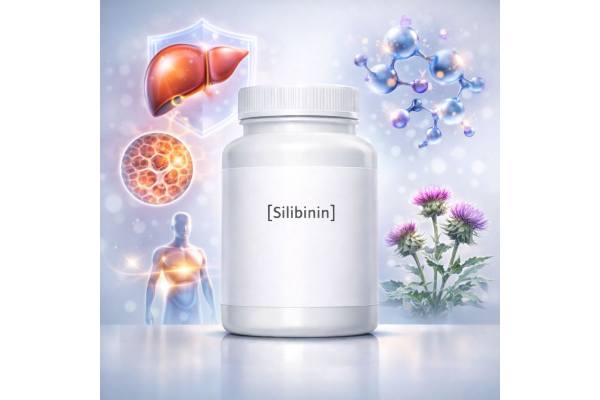
Silibinin is the main active compound in milk thistle (Silybum marianum), a plant long used to support liver health. Chemically, it is a flavonolignan mixture (often called silybin A and silybin B) that makes up the largest portion of the better-known extract “silymarin.” Over the past few decades, silibinin has moved from folk remedy to a subject of serious pharmacology: it is used intravenously in specialized settings for certain mushroom poisonings, and has been investigated as an oral adjunct in alcohol-related liver disease, nonalcoholic fatty liver disease (NAFLD), and other chronic liver conditions.
Laboratory and early clinical work also point to antioxidant, anti-inflammatory, and potential anticancer actions. At the same time, results across trials are mixed, dosing is not fully standardized, and high-dose intravenous use belongs strictly in hospital care.
This guide explains how silibinin works, where the evidence is strongest, how oral supplements are typically dosed, what side effects to watch for, and when medical supervision is essential.
Key Insights for Using Silibinin Wisely
- Silibinin is the primary active component of milk thistle extracts and shows antioxidant, anti-inflammatory, and antifibrotic effects, especially in the liver.
- Oral silibinin or silymarin appears to modestly improve liver enzymes in several chronic liver diseases, but it is an adjunct to, not a replacement for, standard care and lifestyle change.
- Common supplemental ranges use about 140–420 mg per day of standardized silymarin, typically delivering roughly 90–280 mg silibinin, taken with meals for several weeks to months.
- Intravenous silibinin for Amanita phalloides (deadly mushroom) poisoning is a hospital-only treatment that must never be self-administered.
- People with complex liver disease, those on multiple medications (especially anticoagulants, immunosuppressants, and chemotherapy), pregnant or breastfeeding individuals, and children should avoid unsupervised silibinin use.
Table of Contents
- What is silibinin and how does it work?
- Liver health benefits of silibinin
- How to take silibinin and dosage guidelines
- Silibinin for nonalcoholic fatty liver disease and metabolic health
- Silibinin in cancer and other advanced uses
- Side effects safety and who should avoid silibinin
- What the science says and key limitations
What is silibinin and how does it work?
Silibinin (sometimes written silybin) is a flavonolignan complex extracted from the seeds (fruits) of milk thistle, Silybum marianum. Commercial “silymarin” extracts contain several related compounds, but silibinin is quantitatively the most important and is considered the main bioactive fraction. In many scientific papers, the terms silibinin and silymarin are used together, but they are not identical: silymarin is the whole standardized extract, while silibinin refers to a specific pair of molecules within that extract.
After oral intake, silibinin is absorbed in the small intestine, conjugated in the liver (mainly by glucuronidation and sulfation), excreted into bile, and then undergoes enterohepatic circulation. Only a small portion appears in the bloodstream at any moment, which is one reason why oral bioavailability is modest. To improve this, manufacturers often formulate silibinin with phosphatidylcholine or other lipids, or within phytosomal and nanoparticle systems, to enhance absorption and liver delivery.
Mechanistically, silibinin acts on several levels:
- As a direct antioxidant, it scavenges free radicals and protects lipids in cell membranes from peroxidation.
- It upregulates endogenous antioxidant defenses, including enzymes such as superoxide dismutase and glutathione peroxidase.
- It shows anti-inflammatory effects by modulating transcription factors (such as NF-κB and STAT3) and reducing the production of inflammatory cytokines.
- It exerts antifibrotic actions by inhibiting hepatic stellate cell activation and collagen deposition, key drivers of liver scarring.
- It may stabilize cell membranes and interact with membrane transporters, limiting toxin entry into hepatocytes.
Beyond the liver, silibinin’s modulation of cell signaling, oxidative stress, and apoptosis has led to research in cancer biology, metabolic syndrome, neuroprotection, and kidney and lung protection in experimental models. These effects, however, are mostly preclinical and do not yet translate into routine clinical indications.
Overall, silibinin is best understood as a multi-target, antioxidant and anti-inflammatory agent with a strong affinity for the liver and emerging, but not fully proven, systemic benefits.
Liver health benefits of silibinin
Most interest in silibinin comes from its role as a liver-protective compound. Historically, milk thistle preparations were used for “liver cleansing” and jaundice. Modern research has focused on clearer clinical outcomes such as liver enzyme levels, histology, survival in toxic injuries, and progression of chronic liver disease.
One of the most striking uses of silibinin is in Amanita phalloides (death cap mushroom) poisoning. The amatoxins from these mushrooms cause severe, often fatal liver failure. Intravenous silibinin (marketed in some regions as Legalon SIL) has become a key antidote alongside intensive supportive care. It appears to block the uptake of amatoxins into hepatocytes and reduce their binding to critical enzymes. Case series and observational reports suggest that timely intravenous silibinin, combined with early hospital admission, can markedly improve survival and reduce the need for liver transplantation. This therapy, however, is specialized and must be administered in experienced centers.
In chronic liver disease, oral silibinin or silymarin has been studied in several contexts:
- Alcohol-related liver disease (ALD) – Trials and, more recently, systematic reviews indicate that silibinin-containing capsules may improve liver enzymes, some markers of fibrosis, and clinical response when used as adjunctive therapy in people who also reduce or stop alcohol intake. Benefits are modest and depend heavily on continued abstinence.
- Viral hepatitis – Earlier studies in chronic hepatitis C and B found limited or no meaningful impact on viral loads or long-term outcomes, though some biochemical markers improved. With modern direct-acting antivirals now available, silibinin is not considered a primary treatment.
- Toxin-related and drug-induced liver injury – Experimental and small clinical experiences suggest that silibinin can help stabilize liver function after certain toxic exposures. Nevertheless, evidence is not strong enough to replace standard treatments or careful withdrawal of offending drugs.
Across these conditions, silibinin tends to show:
- Decreases in serum transaminases (ALT and AST).
- Improvements in oxidative stress markers.
- Possible slowing of fibrotic progression in some subsets of patients.
However, it rarely produces dramatic changes in isolation. Clinically meaningful improvement usually depends on addressing root causes: alcohol cessation, weight loss, control of diabetes and lipids, or the use of appropriate antiviral agents. Silibinin should therefore be seen as a potential supporting therapy for liver health, not a stand-alone cure.
How to take silibinin and dosage guidelines
There is no single, universally accepted dosing schedule for silibinin, because different products and indications use different strengths and formulations. The most practical way to think about dosing is to distinguish between oral supplements for chronic liver support and intravenous formulations for acute poisoning—two very different situations.
For oral use, people usually encounter silibinin within standardized milk thistle extracts (silymarin) or as enhanced silibinin–phosphatidylcholine complexes:
- Traditional European herbal products commonly supply around 140 mg of silymarin per capsule or tablet, taken two or three times daily, for a typical daily total of 280–420 mg of silymarin. Silibinin usually represents roughly 60–70% of silymarin, so this delivers an estimated 90–280 mg of silibinin per day.
- Newer formulations may list silibinin (or silibinin–phosphatidylcholine) directly, with daily totals often in the 160–360 mg range, split into two or three doses. These complexes tend to have better bioavailability than older powders.
General practical principles for adults, when a clinician agrees that silibinin is appropriate:
- Start at the lower end of the product’s suggested range, especially if you have never taken milk thistle before.
- Take doses with food to reduce the chance of stomach upset.
- Use a consistent schedule (for example, morning and evening) for at least several weeks before judging benefit, unless side effects occur.
- For chronic liver support, clinical studies typically last from 8 to 48 weeks; beyond this, ongoing use should be periodically reviewed with a healthcare professional.
For intravenous silibinin in Amanita mushroom poisoning, dosing is completely different. Hospital protocols use weight-based regimens (on the order of tens of mg per kg per day) delivered by continuous infusion or repeated bolus doses. These regimens are designed and monitored by toxicologists and hepatologists, with frequent laboratory tests and supportive measures. Attempts at self-treatment or outpatient infusion are unsafe and inappropriate.
Certain groups—children, pregnant or breastfeeding individuals, and people with severe pre-existing liver or kidney impairment—require individualized dosing or should avoid silibinin unless a specialist determines that potential benefits outweigh risks.
Finally, it is important to remember that supplements vary in quality. Choosing products from reputable manufacturers that provide standardized extract content and quality testing helps reduce variability, though it does not replace professional dosing guidance.
Silibinin for nonalcoholic fatty liver disease and metabolic health
Nonalcoholic fatty liver disease (NAFLD) and its more severe form, nonalcoholic steatohepatitis (NASH), are now among the most common liver conditions worldwide. They are closely tied to obesity, insulin resistance, type 2 diabetes, dyslipidemia, and hypertension. Because oxidative stress, inflammation, and lipid accumulation are central to NAFLD, silibinin has been a natural candidate for investigation.
Several randomized controlled trials and meta-analyses have evaluated silymarin or silibinin-based products in patients with NAFLD or NASH. Across these studies, typical daily doses of silymarin range from roughly 280 to 700 mg per day, often given for 12 to 48 weeks alongside lifestyle advice.
Key findings from this body of work include:
- Improvement in liver enzymes – Many trials report statistically significant reductions in ALT and AST compared with placebo, suggesting less ongoing liver cell injury.
- Mixed results on imaging and histology – Some studies show modest improvements in ultrasound markers of steatosis or in biopsy-based scores of inflammation and fibrosis, while others show little or no change.
- Variable impact on metabolic parameters – A number of trials note small favorable shifts in insulin resistance indices, fasting glucose, or lipid levels, but these effects are not consistently robust across all studies.
Pharmacology-focused research highlights that silibinin can improve hepatic insulin sensitivity and reduce fat accumulation in experimental models, as well as modulate pathways involved in oxidative stress and inflammatory signaling within the liver. At the same time, newer analyses emphasize that liver penetration of conventional silibinin is limited and that specialized delivery systems may be needed to fully exploit its potential.
From a practical standpoint, for someone with NAFLD:
- Silibinin should be viewed as a possible adjunct to core treatments—calorie control, weight reduction, regular physical activity, and optimization of blood sugar and lipid levels—not as a main therapy.
- Benefits are most likely when used in people who are actively engaged in lifestyle change, rather than those relying on supplements alone.
- Response may be better in individuals with lower body mass index and earlier disease stages, based on some subgroup analyses.
Current liver society guidelines do not list silibinin as a standard-of-care treatment for NAFLD or NASH. However, under specialist supervision, particularly in patients who cannot tolerate other options or who seek additional non-pharmacologic support, silibinin-containing preparations may be considered on a case-by-case basis.
Silibinin in cancer and other advanced uses
Beyond liver disease, silibinin has become an active area of research in oncology and other complex conditions. Most of this work remains in preclinical or early clinical stages, so it should be interpreted as exploratory rather than definitive.
In cancer models, silibinin has been shown to:
- Inhibit proliferation and induce programmed cell death (apoptosis) in a variety of tumor cell lines, including liver, breast, lung, prostate, colorectal, skin, and bladder cancers.
- Interfere with key signaling pathways such as EGFR, PI3K/Akt, STAT3, and others that drive cell growth, angiogenesis, and metastasis.
- Enhance the sensitivity of certain tumor cells to chemotherapy or radiotherapy in experimental systems, while sometimes protecting normal tissues from treatment-related damage.
These findings have led to small clinical studies and pilot trials, for example in prostate cancer and in some metastatic settings, where high-dose silibinin preparations were used as adjuncts to conventional therapies. Results have included occasional delayed progression or changes in tumor markers, but studies are small, often uncontrolled or non-randomized, and not sufficient to support routine use. Larger, rigorous trials are needed before silibinin can be considered a standard anticancer agent.
Other areas of interest include:
- Neuroprotection – Recent reviews highlight potential benefits of silymarin and silibinin in models of Alzheimer’s disease, Parkinson’s disease, and ischemic brain injury, through antioxidant, anti-inflammatory, and anti-amyloid actions. Human evidence is still sparse.
- Cardiometabolic health – Some trials suggest modest improvements in markers of cardiometabolic syndrome, including lipid profiles and inflammatory markers, when silibinin-containing supplements are added to lifestyle and medication regimens.
- Kidney and lung protection – Experimental studies suggest that silibinin may attenuate drug-induced or toxin-induced damage in these organs, but clinical translation remains limited.
Given the current evidence:
- Silibinin should not be used as a stand-alone treatment for cancer or serious neurological diseases.
- Any use in these contexts should be part of a formal clinical trial or supervised integrative oncology or neurology program.
- Patients should always inform their oncologist or specialist if they are taking silibinin, because of possible interactions with chemotherapy, targeted agents, or immunotherapies.
The promise of silibinin in advanced diseases is intriguing, but for now it remains a complementary research target, not an established therapeutic mainstay.
Side effects safety and who should avoid silibinin
Overall, silibinin and silymarin have shown a good safety profile in clinical studies, even with long-term use at moderate doses. Large reviews and meta-analyses report that adverse effects are generally mild, infrequent, and similar in rate to placebo when recommended doses are used.
Commonly reported side effects include:
- Gastrointestinal symptoms such as nausea, bloating, mild abdominal discomfort, or loose stools
- Headache or transient dizziness
- Mild allergic reactions such as itching or rash
These effects are usually self-limited and improve when the dose is reduced or the supplement is stopped. Taking silibinin with food can reduce some digestive complaints.
Serious adverse reactions are rare but can occur, particularly when high doses are used or when there are significant comorbidities. Important considerations include:
- Allergy risk – Milk thistle belongs to the Asteraceae family. People with known allergies to plants like ragweed, marigold, or daisies may have a higher chance of reacting and should exercise caution.
- Drug interactions – Silibinin may influence cytochrome P450 enzymes and drug transporters such as P-glycoprotein. This raises the possibility of interactions with drugs that have narrow therapeutic windows, including certain anticoagulants (for example warfarin), immunosuppressants, antiepileptics, and some chemotherapies.
- Blood sugar and blood pressure – In some individuals, especially those with diabetes or metabolic syndrome, modest improvements in glycemic and lipid control may alter the required doses of their existing medications, which should be monitored by a clinician.
Groups that should avoid unsupervised silibinin use include:
- Pregnant and breastfeeding individuals, due to insufficient safety data.
- Children and adolescents, unless a paediatric specialist recommends otherwise.
- People with severe liver failure, advanced cirrhosis, or kidney failure, where any new substance can alter delicate pharmacokinetic balances.
- Patients with active hormone-sensitive cancers if using high doses of herbal products without oncologist approval, as plant compounds can sometimes have estrogenic or other hormone-modulating effects.
- Individuals on multiple medications with high interaction risk, especially transplant recipients and those receiving complex chemotherapy.
Even in generally healthy adults, it is wise to review all supplements, including silibinin, with a healthcare professional before starting, particularly if you plan to use them for more than a few weeks, have underlying medical conditions, or are scheduled for surgery.
What the science says and key limitations
When looking at silibinin, it is helpful to separate areas where evidence is relatively strong from those where it is still preliminary or conflicting.
Areas with stronger support:
- Antidote in amatoxin poisoning – Intravenous silibinin has become an important part of the treatment algorithm for Amanita phalloides–induced liver failure in many centers. Clinical experience and mechanistic data together justify its use in this specific emergency setting, although controlled trials are understandably difficult to conduct.
- Adjunct in chronic liver disease – Multiple clinical trials and recent systematic reviews suggest that silibinin-containing capsules can improve liver enzymes and some markers of liver function in alcohol-related and other chronic liver diseases. Benefits are modest, but safety is generally good when used appropriately.
- Hepatoprotective and antioxidant actions – Pharmacology and human biomarker studies consistently show reductions in oxidative stress and improvements in antioxidant capacity, supporting its role as a liver-protective agent.
Areas with promising but still incomplete evidence:
- NAFLD and NASH – Meta-analyses report reductions in transaminases and, in some studies, improvements in imaging or histology. However, variability in dosing, extract composition, and lifestyle interventions makes it difficult to define exact indications or to predict which patients will benefit most.
- Cancer prevention and treatment – Robust preclinical evidence exists for anticancer actions across several tumor types, and early clinical work is under way. Yet there is not enough high-quality clinical trial data to recommend silibinin as a regular part of oncology protocols.
- Neuroprotection and cardiometabolic health – Emerging data in animals and small human studies suggest potential benefit, but larger and longer trials are needed.
Key limitations across the silibinin literature include:
- Heterogeneity of preparations – Different studies use different extracts (silymarin vs pure silibinin vs enhanced complexes), making dose comparisons challenging.
- Short trial durations – Many studies last only a few months, which may not capture long-term effects on fibrosis, cirrhosis, or survival.
- Surrogate endpoints – Improvements in liver enzymes or imaging do not always translate into better long-term outcomes, such as reduced progression to cirrhosis or hepatocellular carcinoma.
- Publication bias and small sample sizes – Positive trials are more likely to be published, and many studies involve relatively few participants.
In practical terms, this means that silibinin can reasonably be considered:
- A well-tolerated liver-supporting agent with evidence for modest clinical benefit as an adjunct in chronic liver disease.
- A specialist antidote when given intravenously for amatoxin poisoning.
- A research-stage candidate in oncology, neurology, and cardiometabolic medicine.
Using it thoughtfully—within evidence-informed dose ranges and in partnership with healthcare professionals—helps you capture potential benefits while respecting the limits of current knowledge.
References
- Evidence construction of Silibinin capsules against alcoholic liver disease: A systematic review 2025 (Systematic Review)
- Silibinin, a commonly used therapeutic agent for non-alcohol fatty liver disease 2024 (Pharmacology and Clinical Review)
- Silymarin: Unveiling its pharmacological spectrum and future prospects 2024 (Comprehensive Review)
- Anti-Tumor Activity and Mechanism of Silibinin Based on Signaling Pathways 2024 (Research Review)
- Legalon SIL: The Antidote of Choice in Patients with Acute Hepatotoxicity from Amatoxin Poisoning 2012 (Clinical and Mechanistic Review)
Disclaimer
This article is for general information only and does not provide medical advice, diagnosis, or treatment. Silibinin is a pharmacologically active substance that can interact with diseases and medications, especially in people with liver or kidney problems, those taking multiple drugs, and individuals with complex conditions such as cancer or autoimmune disease. Never start, stop, or change any medication or supplement regimen, including silibinin or milk thistle products, without discussing it with a qualified healthcare professional who knows your medical history and current treatments.
If you have symptoms such as jaundice, dark urine, severe abdominal pain, confusion, or unexplained weight loss, seek urgent medical care. Do not rely on over-the-counter supplements as a substitute for timely evaluation and evidence-based treatment.
If you found this guide useful, you are kindly invited to share it on Facebook, X (formerly Twitter), or any platform you prefer, and to follow our work on social media. Your considerate support through sharing helps our team continue to produce balanced, research-informed content on nutrition, supplements, and health.