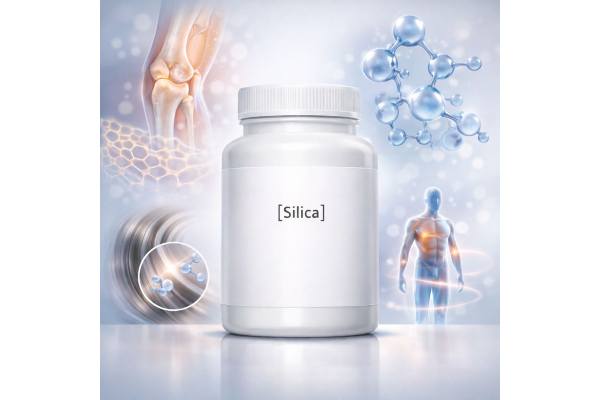
Silica, the common name for silicon dioxide, is one of the most abundant materials on earth and quietly present in your body every day. In nutrition and supplements, it matters because it is a primary source of bioavailable silicon, a trace element linked with bone mineralization, collagen formation, and the strength of skin, hair, nails, and connective tissues.
You already consume silica through water, whole grains, and plant foods, and in small amounts from additives and cookware. In the supplement world, silica usually appears in more soluble forms that release orthosilicic acid, the form your gut can absorb. These products are often marketed for bone density, joint comfort, and cosmetic benefits such as smoother skin or stronger hair and nails.
At the same time, silica is also a workhorse in cosmetics and oral care, where it functions as a gentle abrasive or thickener. Understanding which forms are useful, how much is reasonable to take, and where the limits and unknowns lie is essential before adding silica to your daily routine.
Key Facts About Silica for Health
- Silica-derived silicon supports bone mineralization and healthy connective tissues, including collagen in skin, hair, nails, cartilage, and blood vessels.
- Benefits from silica supplements appear modest and are best seen as a complement to core nutrients like calcium, vitamin D, and protein, not as a stand-alone bone or beauty solution.
- Typical supplemental intakes provide about 5–20 mg elemental silicon per day from bioavailable forms such as orthosilicic acid, staying well below proposed safe upper levels for adults.
- People who are pregnant, breastfeeding, have significant kidney disease, a history of kidney stones, or take multiple medications should avoid unsupervised silica supplements and seek personalised medical advice first.
Table of Contents
- What is silica and how does it behave in the body?
- Health benefits of silica for bones skin and hair
- How to get silica from diet and everyday products
- Silica supplements and practical dosage guidelines
- Side effects of silica and who should avoid it
- What the research says and how to use silica wisely
What is silica and how does it behave in the body?
When people talk about “silica,” they usually mean silicon dioxide (SiO₂), a compound of silicon and oxygen found in sand, quartz, and many rocks. In biology and nutrition, the focus is not on sand-like particles but on how various silica-containing materials release orthosilicic acid, a small, water-soluble form of silicon that your digestive tract can absorb.
In the body, silicon behaves as a trace mineral. It is not officially classified as an essential nutrient in humans, but growing evidence suggests it plays a structural and regulatory role. The highest concentrations are typically found in bones, skin, hair, nails, arteries, and other connective tissues. These are the same tissues that rely heavily on collagen and glycosaminoglycans, scaffolding molecules that give structure and resilience.
Dietary silica reaches the gut mostly as polymerized silicic acids or silica particles. In the acidic environment of the stomach and upper small intestine, some of this material dissolves to orthosilicic acid. This small molecule is passively absorbed into the bloodstream; a substantial portion is then filtered by the kidneys and excreted in urine within hours. The fact that a meaningful fraction is excreted intact suggests relatively low toxicity and a dynamic turnover: the body uses what it needs and discards the rest.
Not all forms of silica behave the same way. Crystalline silica, the sharp mineral dust that can cause lung disease when inhaled, is very different from amorphous silica gels and food-grade silicon dioxide used in supplements and as anticaking agents. Synthetic amorphous silica and hydrated silica are designed to be inert, non-crystalline, and much less hazardous when swallowed. Regulatory reviews of these forms used as food additives and cosmetic ingredients have generally found low oral toxicity and little tendency to accumulate in tissues when used within permitted levels.
In supplements, the most nutritionally relevant forms are orthosilicic acid itself and compounds that steadily release it, such as choline-stabilized orthosilicic acid, monomethylsilanetriol, and certain silica gels or colloidal silica. These have been shown to raise blood silicon levels and are therefore more likely to influence bone and connective tissue than poorly soluble mineral particles.
Health benefits of silica for bones skin and hair
Silica-derived silicon has drawn attention because of its close association with tissues rich in collagen and mineral. Observational and experimental research suggests it may contribute to bone strength, skin quality, and the condition of hair and nails, although the exact requirements and mechanisms are still being clarified.
Bone and joint health is the area with the most consistent signals. Higher dietary silicon intakes have been linked with greater bone mineral density, particularly in men and premenopausal women. Silicon appears to support the formation of the collagen matrix that mineral crystals attach to, and may influence osteoblasts, the cells responsible for building bone. In some human studies, bioavailable silicon supplements have improved markers of bone formation and slowed bone loss when used alongside calcium and vitamin D, especially in women with low bone density. These effects are modest rather than dramatic, but they support the view that silicon is a supportive bone nutrient.
Skin, hair, and nails also seem to respond to increased silicon intake. Clinical trials using choline-stabilized orthosilicic acid at doses around 10 mg silicon per day over several months have reported improvements in skin elasticity, decreased skin roughness, and reduced brittleness of hair and nails in women with photodamaged skin. The proposed explanation is that silicon helps enzymes involved in collagen cross-linking and elastin synthesis, leading to more resilient dermal structure.
Connective tissues beyond skin and bone, such as tendons, ligaments, and arterial walls, are another potential target. Animal and early human data suggest silicon may influence the organization of extracellular matrix and the integrity of blood vessel walls. Some research links adequate silicon status with healthier arteries and less calcification, though this is far from proven in large, long-term trials.
Importantly, silica is not a stand-alone cure for osteoporosis, joint disease, or skin aging. Its best role is as a part of a broader strategy that includes adequate protein, calcium, vitamin D and K, regular weight-bearing exercise, and, where indicated, evidence-based medical therapy. For cosmetic goals, healthy sleep patterns, sun protection, and avoidance of smoking and excessive alcohol remain far more impactful than any single trace element.
Still, for individuals whose diet is low in silicon-rich foods or in specific life stages where connective tissue turnover is high, ensuring a steady, moderate intake from food and possibly well-chosen supplements may offer a useful, low-risk way to support structural health.
How to get silica from diet and everyday products
Most people obtain silica, and therefore silicon, from food and drinking water without thinking about it. Surveys in Western populations suggest typical dietary intakes in the range of about 20–50 mg silicon per day, with higher intakes in younger adults and men, and somewhat lower intakes in older adults and women. These amounts appear to be safe and sufficient for most people.
The richest food sources are plant-based. Whole grains and grain products (such as oats, barley, brown rice, and whole wheat bread) contribute substantial amounts, because the husk and outer layers of cereal grains concentrate silica structures called phytoliths. Beer can also contain surprisingly high levels of silicon due to the use of malted barley and the solubilization of silica during brewing. Among fruits and vegetables, green beans, leafy greens, and bananas are notable contributors, while mineral water and certain tap waters add a variable but sometimes meaningful amount.
To increase your silica intake through diet, you can:
- Choose whole-grain breads, cereals, and pastas instead of refined versions.
- Include oats, barley, or brown rice regularly in meals.
- Eat a variety of vegetables, particularly green beans and leafy greens.
- Drink mineral waters that list higher silica content if you enjoy them and they fit your health plan.
Beyond foods, silica appears in many everyday products. In toothpastes, hydrated silica is used as a gentle abrasive that helps remove plaque and surface stains without damaging enamel when formulated correctly. In cosmetic products, various forms of amorphous silica improve texture, absorb oil, and provide a silky feel in powders and creams. Regulatory safety panels reviewing synthetically manufactured amorphous silica and hydrated silica in cosmetics have concluded that they are safe at current use levels when products are formulated to be non-irritating and used as directed.
Food manufacturers also use silicon dioxide as an anticaking agent in spices, powders, and supplements. At the levels used for this technological purpose, silicon dioxide is considered poorly absorbed and largely inert, with regulatory bodies in several regions finding no evidence of harm from long-term dietary exposure in the general population.
It is important to distinguish these ingested forms from crystalline silica dust, an occupational hazard in mining, construction, and sandblasting. Inhalation of fine crystalline silica particles is associated with silicosis and lung cancer, but this risk is related to airborne exposure in workplaces, not to silica in food, water, or personal care products.
If you eat a varied, plant-rich diet and use typical personal care products, you are almost certainly getting some silica every day. For most healthy people, this background exposure is adequate, making supplementation optional rather than essential.
Silica supplements and practical dosage guidelines
Silica supplements aim to provide silicon in a form your body can absorb and use for bone and connective tissue support. They come in several chemistries, each with different solubility and bioavailability, which can be confusing when you read labels.
The most studied supplemental forms include:
- Orthosilicic acid (OSA), the simple, dissolved form of silicon.
- Choline-stabilized orthosilicic acid (ch-OSA), designed to keep OSA stable in liquid or capsules.
- Monomethylsilanetriol (MMST), an organic silicon compound that converts to OSA in the body.
- Silica gels, colloidal silica, and certain diatomaceous earth products that slowly release OSA when in contact with fluids.
These forms have been shown to raise blood silicon levels and are considered bioavailable. In contrast, bulk mineral particles and poorly soluble silicates contribute very little absorbable silicon, even at higher doses.
There is no officially agreed daily requirement for silicon, but some authors suggest that intakes of around 10–25 mg silicon per day from diet and supplements are adequate for most adults. Typical supplement products that focus on bone, skin, or hair often provide about 5–10 mg of elemental silicon per day from a bioavailable form, sometimes up to 20 mg. In several clinical studies, daily doses of 10 mg silicon as ch-OSA over months were well tolerated and associated with beneficial effects on skin or bone markers.
Safety evaluations by expert panels have proposed a supplemental upper level for elemental silicon of about 700 mg per day for adults over a lifetime, with no expected adverse effects when derived from approved sources. Regulatory assessments of silicon dioxide used as a food additive have suggested that intakes up to 1,500 mg per day of silica in supplement form are unlikely to raise safety concerns in healthy adults. These values are far above the amounts delivered by standard silicon supplements aimed at connective tissue support.
In practical terms, if you and your clinician decide that a silica supplement is appropriate:
- Prefer products that specify the form and amount of elemental silicon (mg Si per dose).
- Aim for a total supplemental intake in the lower evidence-informed range, commonly 5–20 mg Si per day, unless a specialist recommends otherwise.
- Take the supplement with food and water to reduce the chance of stomach upset.
- Avoid stacking multiple silicon-containing products (such as a hair/skin/nail formula plus a bone formula plus diatomaceous earth) without calculating the combined dose.
Remember that more is not necessarily better. Extremely high doses serve no proven purpose for bone or skin and only add uncertainty about long-term effects. Silica supplementation should complement, not replace, prescribed treatments or core nutrients such as calcium, vitamin D, magnesium, and protein.
Side effects of silica and who should avoid it
At the levels used in foods and mainstream supplements, silica and its related silicon compounds have shown a reassuring safety profile in both animal and human studies. Nevertheless, as with any bioactive substance, side effects are possible, and some groups should be especially careful.
For healthy adults taking low to moderate doses of bioavailable silicon (for example, up to 20 mg per day from orthosilicic acid or similar compounds), reported adverse effects are usually mild and infrequent. These can include digestive discomfort such as nausea, bloating, or loose stools, and occasionally headaches or a sense of fullness. These symptoms often resolve when the dose is lowered or the supplement is stopped.
Food-grade silicon dioxide used as an anticaking agent and synthetic amorphous silica used in supplements appear to be poorly absorbed and are excreted largely unchanged. Long-term toxicology studies in animals using high doses of amorphous silica have generally not shown organ damage, carcinogenicity, or significant accumulation, though some silicon can be detected in tissues. Regulatory reviews have concluded that these forms do not raise concern for genotoxicity or carcinogenicity when used as food additives within specified limits.
However, crystalline silica dust, which is chemically the same silicon dioxide but with a different crystal structure and particle characteristics, is a known inhalation hazard. Long-term occupational exposure to fine crystalline silica particles can cause silicosis and increase lung cancer risk. This risk is associated with breathing in airborne dust in workplaces, not with ingesting silica in food or supplements, but it underscores the importance of form and route of exposure.
Silica nanoparticles introduce another layer of uncertainty. While some nanoscale silicas are used in cosmetics and food technologies, data on chronic oral exposure to nanoparticles are less robust. Some authorities have called for more detailed characterization and monitoring of nano-sized fractions in additives and cosmetic ingredients.
Given these nuances, the following people should avoid self-prescribing silica supplements and should only consider them, if at all, under medical supervision:
- Individuals with chronic kidney disease or a history of kidney stones, since altered mineral handling may affect silicon excretion.
- Pregnant or breastfeeding individuals, due to limited human safety data.
- Children and adolescents, where long-term exposure to nonessential supplements is rarely justified.
- People with complex chronic illnesses, autoimmune diseases, or those taking many medications, where unknown interactions and added burden on detoxification systems are a concern.
Even if you are generally healthy, it is wise to review any planned silica supplement with a healthcare professional, especially if you are already taking other bone, joint, or cosmetic-targeted products. If you notice new symptoms after starting a silica supplement—such as persistent digestive upset, rashes, or changes in kidney function tests—stop taking the product and seek medical advice.
What the research says and how to use silica wisely
Silica and silicon have moved from being viewed as inert fillers to being recognized as potentially important players in bone and connective tissue biology. At the same time, the science is far from complete, and health claims often leap ahead of the evidence.
Broadly, research supports these points:
- Silicon concentrates in bone and connective tissues and participates in collagen and glycosaminoglycan formation.
- Typical dietary intakes of around 20–50 mg silicon per day appear to be safe and may be beneficial for skeletal health.
- Bioavailable silicon supplements can increase blood silicon levels and, in some studies, improve markers of bone formation or connective tissue quality, especially when combined with standard bone-support nutrients.
- Skin, hair, and nail parameters can improve modestly with specific orthosilicic acid formulations in cosmetic studies.
On the other hand:
- Major nutrition and bone societies have not yet established a formal recommended daily intake for silicon, reflecting gaps in definitive dose–response data.
- Large, long-term randomized trials linking silica supplementation to reduced fracture risk, fewer osteoporotic events, or clinically meaningful anti-aging effects on skin are lacking.
- Regulatory bodies evaluating health claims for silicon have often concluded that available human data are insufficient to substantiate broad claims such as “supports bone health” or “prevents osteoporosis” as stand-alone statements.
Given these realities, a prudent, evidence-informed way to approach silica is to prioritise foundational habits and use silica as a secondary, supportive option rather than a central pillar of your health strategy. In practice, that means:
- Building your baseline around diet and lifestyle: a whole-food eating pattern rich in vegetables, fruits, whole grains, and quality protein; regular resistance and impact exercise; good sleep; and avoidance of smoking and heavy drinking.
- Ensuring core bone and connective tissue nutrients are in place: calcium, vitamin D, magnesium, vitamin K, and adequate protein as guided by your clinician.
- Considering silica from food as the first line: whole grains, green beans, mineral waters, and other silicon-rich foods are simple, low-risk ways to support intake.
- If you and your healthcare provider decide on a silica supplement, choosing a well-characterised, bioavailable form at modest doses and checking periodically whether it seems to add value, rather than assuming it is needed indefinitely.
Silica is likely “helpful but not magic”: a supportive trace element that may optimise collagen-rich tissues when everything else is in place, but not a cure-all for bone disease, joint pain, or cosmetic concerns. Staying grounded in the quality and limits of current evidence helps you use it wisely and avoid overpromising expectations.
References
- Silicon: A neglected micronutrient essential for bone health 2021 (Narrative Review)
- Sources, Bioavailability, and Safety of Silicon Derived from Foods and Other Sources Added for Nutritional Purposes in Food Supplements and Functional Foods 2020 (Review)
- Biological and therapeutic effects of ortho-silicic acid and some ortho-silicic acid-releasing compounds: New perspectives for therapy 2013 (Review)
- Use of silicon for skin and hair care 2016 (Review)
- Dietary Silicon and Its Impact on Plasma Silicon Levels in Healthy Polish Adults 2019 (Clinical Study)
Disclaimer
This guide is intended for informational and educational purposes only and does not provide medical advice, diagnosis, or treatment. Silica and silicon-containing supplements are not approved as sole therapies for osteoporosis, joint disease, or any other medical condition. Individual needs, safe intake levels, and interactions with medications can vary widely.
Always consult a qualified healthcare professional before starting, stopping, or changing any supplement regimen, especially if you are pregnant, breastfeeding, under 18, living with chronic illness, have a history of kidney stones or kidney disease, or take prescription medications. If you experience new or worsening symptoms after using a silica-containing product, discontinue use and seek medical guidance promptly.
If this article helped clarify how silica works and when it might be useful, you are kindly invited to share it on Facebook, X (formerly Twitter), or any platform you prefer, and to follow our work on social media. Your thoughtful support through sharing helps our team continue to produce balanced, research-informed content on nutrition and health.