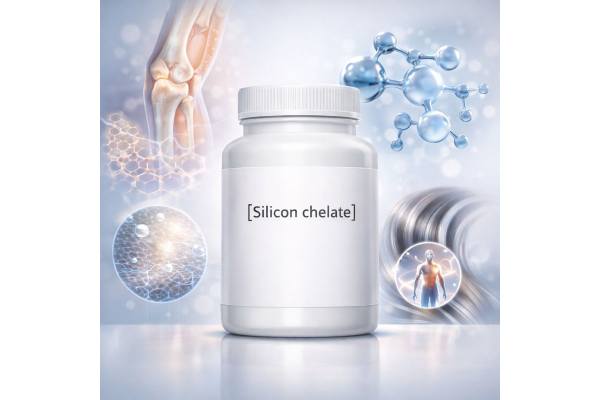
Silicon chelate is a newer form of supplemental silicon designed to improve absorption and stability compared with traditional silica powders or plant extracts. Silicon itself is involved in collagen structure, bone mineralization, skin elasticity, and connective tissue integrity, but not all forms are equally bioavailable. Chelation binds silicon to organic carrier molecules, usually amino acids or small organic acids, to help it stay soluble and easier for the gut to absorb.
People look to silicon chelate for support with bone density, joint comfort, skin, hair, and nails, especially when diet is low in whole grains and plant foods. At the same time, the science around chelated silicon is still developing, and much of what we know comes from broader silicon research plus a smaller number of experimental and animal studies. This guide walks through what silicon chelate is, what it may do, how to use it sensibly, and where the safety limits and uncertainties still lie.
Key Insights for Silicon Chelate
- Silicon chelate is a bioavailability-focused form of silicon that aims to support bone structure, connective tissue, skin, hair, and nails.
- Evidence for silicon in bone and collagen health is stronger than for many cosmetic claims, and most data come from bioavailable silicon forms in general rather than chelates alone.
- Typical supplemental ranges are about 5–20 mg elemental silicon per day, with higher doses only under professional guidance.
- People with kidney disease, a history of kidney stones, pregnancy, breastfeeding, or multiple medications should avoid silicon chelate unless a clinician specifically approves it.
Table of Contents
- What is silicon chelate and how it works
- Benefits of silicon chelate for bones skin and joints
- How silicon chelate compares with other silicon supplements
- How to take silicon chelate in practice
- Side effects of silicon chelate and who should avoid it
- Research on silicon chelate and how to choose a product
What is silicon chelate and how it works
Silicon is a trace element that occurs naturally in whole grains, some vegetables, and mineral waters. In the body, it is present in bone, cartilage, blood vessels, and skin, where it appears to support collagen networks and mineral deposition. The form your body actually uses is orthosilicic acid, a small, water-soluble molecule that can be absorbed in the gut.
Most traditional “silica” supplements are based on poorly soluble forms such as silicon dioxide, horsetail powder, or mineral silicates. These can release only small amounts of orthosilicic acid under digestive conditions, which limits how much silicon is absorbed. To address this, manufacturers have developed more soluble forms, including stabilized orthosilicic acid, monomethylsilanetriol, and silicon chelates.
A chelate is a complex in which a metal or metalloid ion (here, silicon in a transformed complex) is bound to an organic “ligand,” often an amino acid or small organic acid. The ligand wraps around the central atom and can protect it from precipitation or polymerization. In practice, silicon chelate products usually combine a processed silica source with organic molecules under specific conditions to yield a stable, dispersible powder.
The goal of silicon chelation is not to deliver the chelate intact into tissues, but to keep silicon in a form that remains soluble until it reaches the intestinal environment. There, digestive processes liberate orthosilicic acid, which the body can absorb and utilize in bone and connective tissues.
Compared with simple silica, chelated silicon typically:
- Has better dispersibility in water.
- Tends to form fewer insoluble particles in the digestive tract.
- Is formulated to deliver silicon in relatively small, standardized doses (often 5–20 mg elemental silicon per serving).
However, different brands may use different ligands and manufacturing methods, and “silicon chelate” is not yet a highly regulated technical category. Many mechanistic claims still rest on general silicon physiology and on experience with other bioavailable silicon sources rather than on large human trials with chelated silicon itself.
Benefits of silicon chelate for bones skin and joints
The most consistent area of silicon research relates to bone and connective tissue health. Observational and interventional studies with bioavailable silicon forms show links between higher silicon intake and better bone mineral density, especially in women, and improvements in markers of bone formation. These effects are thought to arise from silicon’s role in collagen matrix formation and in the initiation of mineralization in bone.
Because silicon chelate is designed to be a soluble, absorbable form, its potential benefits are expected to overlap with those of other proven bioavailable silicon sources:
- Bone strength and density
Animal and human data with orthosilicic acid and related forms suggest silicon supports osteoblast activity (bone-building cells), enhances collagen cross-linking, and can modestly increase bone density when combined with calcium and vitamin D. Chelated silicon appears to behave similarly in preliminary experimental models of fracture healing, where it promotes faster regeneration and better structural organization of bone tissue. - Joint and cartilage support
Cartilage is rich in collagen and glycosaminoglycans. Silicon is found in higher concentrations in developing cartilage and connective tissue, and deficiencies in animal studies have been associated with impaired cartilage formation. By supporting collagen and matrix structure, silicon may contribute to joint resilience and comfort over time, especially when combined with adequate protein, vitamin C, and physical activity. - Skin, hair, and nails
Clinical data with bioavailable silicon forms show improvements in skin elasticity, skin roughness, and nail brittleness, as well as thicker hair strands in some trials. These effects likely reflect enhanced collagen and elastin organization in the dermis and better structural support in accessory tissues. Silicon chelate is expected to act in the same general way, assuming comparable absorption. - Vascular and connective tissue integrity
Silicon is present in arterial walls and other connective tissues. Experimental work suggests it may help maintain the structural integrity of elastin and collagen in blood vessels, which could theoretically support vascular flexibility and long-term cardiovascular health. Human outcome data remain limited, so these potential benefits should be viewed as emerging rather than established.
It is important to note that most of the stronger evidence concerns silicon as a nutrient, not silicon chelate as a unique ingredient. When you choose a silicon chelate supplement, you are mainly choosing one delivery format among several bioavailable forms that aim to raise your total silicon intake into a range associated with healthier bone and connective tissue.
How silicon chelate compares with other silicon supplements
Silicon supplements come in several main formats, each with its own strengths and limitations. Understanding these can help you decide when silicon chelate makes sense and when another form might be equally suitable.
Common supplemental forms include:
- Silicon dioxide and mineral silica powders
These are typically inexpensive and widely available but only sparingly soluble in water. They can release orthosilicic acid slowly in the gut, yet the fraction absorbed is relatively low. For people with an already adequate silicon intake from diet, these products may add little. - Plant-based silica (e.g., horsetail, bamboo extracts)
These rely on silica stored in plant tissues. While “natural,” they still face the same solubility limits as many mineral forms unless specially processed. Some products are standardized, but others offer vague labeling of actual silicon content. - Stabilized orthosilicic acid liquids
These solutions use choline, vanillin, or similar molecules to keep orthosilicic acid from polymerizing. They have documented bioavailability and have been used in clinical trials for bone, skin, and hair outcomes. They usually provide modest elemental silicon doses and often have good absorption. - Monomethylsilanetriol and related organic forms
These are organic silicon compounds that convert to orthosilicic acid in the body. Some regulatory bodies have reviewed their safety and bioavailability as novel food ingredients. Overall, they appear to be well absorbed at typical supplemental doses. - Silicon chelate
This format aims to combine the stability of dry powders with the solubility of organic complexes. Compared with simple silica, silicon chelate usually offers: - Higher water dispersibility.
- Better control of elemental silicon dose per capsule or tablet.
- Potentially smoother gastrointestinal tolerance due to smaller particles and better solubility.
On the other hand, chelated silicon is not yet as extensively studied in humans as stabilized orthosilicic acid. Existing data include:
- Laboratory and animal work suggesting good bioavailability and positive effects on bone remodeling and fracture healing when combined with vitamin D.
- Indirect evidence from general silicon research that raising readily absorbable silicon intake within a moderate range supports bone and connective tissue.
In practice, your choice often comes down to:
- Evidence base – stabilized orthosilicic acid has more human data; silicon chelate has more preclinical data.
- Convenience – chelated silicon is typically in capsules or tablets, while orthosilicic acid often comes as a flavored liquid.
- Tolerance and preferences – some people prefer to avoid certain stabilizers or liquid supplements, making chelate formats attractive.
For many users, silicon chelate is a reasonable option when a standardized, capsule-based product is preferred, provided you accept that the science is more extrapolative than direct compared with some other forms.
How to take silicon chelate in practice
Because there is no official daily requirement for silicon, practical dosage guidance relies on observational intake ranges and supplemental trials with bioavailable silicon forms. Higher dietary silicon intakes of around 20–30 mg per day have been associated with better bone parameters in some populations, and supplemental studies often add 5–20 mg of absorbable silicon per day on top of food intake.
Silicon chelate supplements usually state the amount of elemental silicon per serving, not just the weight of the chelate. When reading a label:
- Look for “Silicon (as silicon chelate)” followed by a value in milligrams (for example, 10 mg).
- Verify the serving size (capsules per serving) and adjust if necessary.
- Check whether the product is designed to be taken with food, which can support steady absorption and minimize stomach discomfort.
A commonly used practical approach for healthy adults who have medical clearance is:
- Maintenance or general support: about 5–10 mg elemental silicon per day from a chelated or other bioavailable form.
- Targeted bone or connective tissue support: up to 20 mg elemental silicon per day, often combined with calcium, vitamin D, vitamin K, and adequate protein.
Some products provide higher amounts, but going beyond about 20–25 mg per day of supplemental elemental silicon should be reserved for situations where a knowledgeable practitioner is monitoring your overall mineral intake, kidney function, and medication interactions.
Additional practical tips:
- Timing: Many people take silicon chelate with meals to align with normal mineral absorption patterns and to reduce the chance of minor digestive upset.
- Hydration: Ensuring good fluid intake supports kidney handling of silicon and overall mineral balance.
- Stacking with other supplements: Silicon is often combined with bone-support formulas. Avoid doubling up unknowingly by checking for silicon content in multi-ingredient products.
Silicon should not be used as a stand-alone solution for significant bone loss or connective tissue disease. It can be one supportive element alongside diet, exercise, established medical treatments, and other nutrients.
People with reduced kidney function, a history of kidney stones, or complex medication regimens should only use silicon chelate after individual assessment, since silicon is excreted mainly through the kidneys and long-term high intake has not been fully studied in these groups.
Side effects of silicon chelate and who should avoid it
At typical dietary and supplemental intakes, silicon from bioavailable forms appears to have a wide safety margin in healthy adults. Evaluations of several soluble silicon ingredients have not identified major toxicity concerns at proposed use levels. However, this does not mean that unlimited intake or use in every situation is appropriate.
Possible side effects and issues include:
- Digestive discomfort
Some users report mild bloating, nausea, or loose stools when first starting silicon-containing supplements, especially at higher doses or when multiple mineral products are combined. Taking silicon chelate with food and starting at the lower end of the dose range can reduce this risk. - Kidney load and stone risk
Silicon is eliminated through the kidneys. While normal intakes are usually well tolerated, sustained high supplemental doses in people with existing kidney disease or a history of stones could, in theory, contribute to altered mineral handling. There is limited direct human data in these groups, so caution is warranted. - Allergy or sensitivity to excipients
Chelated products may contain additional ingredients such as binders, capsule materials, or the specific organic ligand used to form the chelate. While silicon itself is rarely allergenic, these other components can occasionally cause reactions in sensitive individuals. - Unknowns with long-term high-dose use
Most safety assessments and trials cover modest supplemental doses over weeks or months, not decades of continuous, high-dose use. Until more long-term data are available, it is prudent to stay within moderate intake ranges rather than pushing doses in the hope of faster cosmetic or performance effects.
You should avoid or delay silicon chelate and seek professional advice if:
- You have chronic kidney disease or recurrent kidney stones.
- You are pregnant or breastfeeding and do not have clear guidance from your obstetric or primary care team.
- You are taking multiple medications that affect bone, mineral balance, or kidney function (for example, certain diuretics or drugs for osteoporosis).
- You have a history of unexplained hypercalcemia or other mineral metabolism disorders.
When in doubt, a clinician can review your full supplement list, recent blood work, and health goals to decide whether silicon chelate is appropriate or whether focusing on food sources and other well-established measures is safer.
Research on silicon chelate and how to choose a product
The body of research on silicon as a supportive nutrient for bone and connective tissue is substantial and growing. Reviews and umbrella analyses describe consistent associations between higher silicon intake, improved markers of bone health, and structural benefits when silicon is provided in bioavailable forms.
By contrast, the specific evidence base for silicon chelate is still narrower:
- Experimental work in rodents has shown that adding silicon chelate to feed, particularly in combination with vitamin D, can accelerate bone fracture healing, improve the quality of regenerated bone, and support better calcium use.
- Preclinical studies on other silicon compounds that release orthosilicic acid indicate enhanced collagen synthesis, improved bone microarchitecture, and favorable effects on osteoblast function.
- Human studies have primarily used stabilized orthosilicic acid and related forms rather than chelated powders, but there is no indication that chelates delivering similar amounts of absorbable silicon behave fundamentally differently.
Given this landscape, when choosing a silicon chelate product it is useful to treat it as one delivery vehicle in a broader, evidence-informed silicon strategy. Practical selection criteria include:
- Clear labeling of elemental silicon content
The supplement should state the milligrams of silicon per serving, not just the weight of the chelate complex or proprietary blend. - Defined chelate chemistry
Reputable brands disclose the type of ligand (for example, amino acid chelate or organic acid chelate) and avoid vague descriptions that do not allow a basic understanding of the ingredient. - Third-party quality testing
Look for evidence of testing for contaminants such as heavy metals, as well as verification of label claims. - Reasonable dose range
Products providing 5–20 mg elemental silicon per day are aligned with the ranges most often explored in research on bioavailable silicon. Extremely high-dose products without solid justification or clinical oversight are best avoided. - Compatibility with your broader plan
Silicon chelate should complement, not replace, core strategies for bone and connective tissue health: sufficient dietary protein, calcium, vitamin D and K, magnesium, resistance exercise, fall-prevention strategies, and any prescribed treatments.
As more human data on silicon chelate emerges, recommendations may become more specific. Until then, conservative, evidence-informed use is the most responsible way to integrate this supplement into a health plan.
References
- Biological and therapeutic effects of ortho-silicic acid and some ortho-silicic acid-releasing compounds: New perspectives for therapy 2013 (Systematic Review)
- Sources, Bioavailability, and Safety of Silicon Derived from Foods and Other Sources Added for Nutritional Purposes in Food Supplements and Functional Foods 2020 (Systematic Review)
- Silicon Supplementation for Bone Health: An Umbrella Review 2024 (Systematic Review)
- Use of silicon for skin and hair care: an approach of chemical forms available and efficacy 2016 (Review)
- Experimental Testing of the Action of Vitamin D and Silicon Chelates in Bone Fracture Healing and Bone Turnover in Mice and Rats 2022 (Animal Study)
Disclaimer
The information in this article is for general educational purposes only and is not a substitute for personal medical advice, diagnosis, or treatment. Silicon chelate and other supplements can interact with medications and may not be appropriate for people with certain health conditions, including kidney disease, mineral metabolism disorders, pregnancy, or breastfeeding. Always consult a qualified health professional who knows your medical history before starting, stopping, or changing any supplement, especially if you have existing illnesses, take prescription or over-the-counter medicines, or are considering higher-than-maintenance doses. Never disregard professional medical advice or delay seeking it because of information you have read online.
If you found this guide useful, you are warmly invited to share it with others on Facebook, X (formerly Twitter), or any platform you prefer, and to follow our work on social media. Your support through thoughtful sharing helps our team continue to create careful, well-researched health content for readers worldwide.