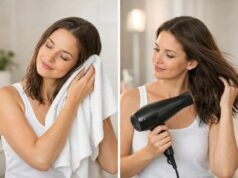
On a label, names like dimethicone, amodimethicone, and cyclopentasiloxane can make a product look suspicious. Online, silicones are often blamed for dullness, dryness, limp roots, and even the sense that hair is being “suffocated.” Yet in cosmetic science, the same ingredients are widely used because they make hair feel smoother, detangle more easily, reflect more light, and hold up better against daily friction. The contradiction is real only if all silicones are treated as one thing.
They are not. Different silicones deposit differently, rinse out differently, and suit different hair goals. A light silicone serum for frizz control behaves very differently from a heavy, buildup-prone conditioning film used on bleached ends. The more useful question is not whether silicones are good or bad in the abstract. It is whether a specific silicone, in a specific formula, is helping your hair type more than it is burdening it. For many people, silicones are less a problem ingredient than a precision tool.
Key Insights
- Silicones can lower friction, reduce tangling, and protect fragile hair from mechanical and heat-related wear.
- Dry, porous, bleached, curly, and coarse hair often benefits more from silicones than fine, easily weighed-down hair.
- The main drawback is buildup, especially with heavier insoluble silicones used often and cleansed poorly.
- Silicone products usually work best on mid-lengths and ends rather than directly on the scalp.
- A periodic reset wash is often more helpful than avoiding silicones entirely.
Table of Contents
- What Silicones Do on the Hair Shaft
- Why Silicones Can Be Protective
- When They Cause Buildup and Flatness
- How Different Silicone Types Behave
- Who Typically Benefits Most
- How to Use Them Without Problems
What Silicones Do on the Hair Shaft
Silicones mostly work on the outside of the hair fiber. That matters because the hair shaft is not living tissue that needs to “breathe.” Once hair emerges from the scalp, it behaves more like a delicate fabric than a living organ. It can weather, roughen, chip, lose its surface lipids, and catch on neighboring strands. Much of what people experience as frizz, roughness, and tangling comes from this outer wear, especially when the cuticle is lifted or uneven.
A well-chosen silicone helps by forming a very thin film over the shaft. That film can smooth microscopic irregularities, reduce drag between strands, and make combing easier. Less friction usually means less mechanical stress during washing, towel drying, brushing, and styling. The immediate cosmetic result is familiar: more slip, more gloss, less puffiness, better separation of strands, and often less static.
This is also why silicones are common in serums, leave-ins, anti-frizz creams, and heat protectants. They help the hair surface act more like intact hair again, even when the fiber underneath has been weathered by bleaching, straightening, sun exposure, hard water, or repeated wash-and-style cycles. In practical terms, they do not “heal” the hair in a biological sense. Instead, they compensate for lost smoothness and hydrophobicity. That distinction matters. Silicones are protective and appearance-improving, but they are not nutrients, and they do not rebuild broken bonds on their own.
They also change how hair looks because a smoother surface reflects light more evenly. That is why shine often returns before hair is truly less damaged. The gloss is real, but it is optical and surface-based. For many readers, that is not a disappointment. It is exactly the benefit they want: fewer snags, less frizz, and a cleaner-looking cuticle without another round of aggressive processing.
Damage level changes the result. Hair with a rough, porous surface often grabs onto conditioning films more readily than untouched hair. That is one reason the same silicone product can feel transformative on bleached ends but heavy on virgin roots. If you already think about hair through the lens of low and high porosity care, this makes sense: the more compromised the surface, the more noticeable surface-smoothing ingredients become.
The most accurate way to think about silicones is this: they are finishers, not fertilizer. They sit where daily wear happens and improve how the fiber behaves under stress. For some people that is exactly what healthy-looking hair needs.
Why Silicones Can Be Protective
Calling silicones “protective” is not marketing fluff when the claim is used carefully. Their biggest benefit is friction control. Hair is damaged not only by bleach or high heat, but also by thousands of small events: snagging during detangling, rubbing against clothing, rough towel friction, brush tension, and repeated swelling and drying. A low-friction surface helps reduce these daily insults.
This is especially relevant for long hair and chemically treated hair. The ends of long strands are the oldest part of the fiber and have survived the most weathering. Bleached, highlighted, relaxed, and heat-styled hair often loses some of its natural surface repellency and becomes rougher, more porous, and more prone to catching. A silicone film can restore some of that lost glide, which is why hair may suddenly feel softer and more manageable after one use.
Silicones can also support heat styling when they are part of a well-formulated protectant. They are not a license to flat-iron damaged hair at extreme temperatures, but they can help spread heat more evenly across the shaft and reduce the rapid roughening that follows repeated hot-tool contact. That is one reason so many effective heat protectant sprays rely on film-forming polymers, including silicones, rather than on oils alone.
Another overlooked benefit is humidity control. In humid conditions, rough and porous hair readily takes up environmental moisture in uneven ways, which can swell the fiber and exaggerate frizz. A hydrophobic surface layer helps moderate that effect. The hair may not become “moisturized” in the skincare sense, but it often becomes more stable, shinier, and less reactive to weather.
Some silicones are also useful because they deposit more strongly on damaged areas than on healthier ones. That selective behavior is part of why certain formulas perform so well on color-treated or bleached hair. You may notice that the most stressed zones suddenly look less frayed and feel easier to separate, even if the root area does not need the same help.
What silicones do not do is prevent every form of damage or replace broader hair care. They work best as one layer in a system that also includes sensible heat use, gentle detangling, enough conditioning, and realistic expectations. Still, for someone battling breakage from combing, halo frizz, or rough ends, a protective coating is not trivial. It can be the difference between hair that tangles into knots and hair that stays manageable through the week.
When They Cause Buildup and Flatness
The case against silicones is not imaginary. It is just often overstated and poorly targeted. The real problem is usually not that silicones are toxic to hair. It is that some of them are persistent enough to accumulate when the formula is heavy, the application is generous, and the cleansing routine is too mild or too infrequent to remove residue well.
When buildup happens, hair can start to feel strangely paradoxical. It may seem smooth on the outside but dull, coated, limp, or difficult to fully wet. Curls may lose spring. Fine hair may separate poorly and collapse at the roots. Some people describe a waxy or “producty” feel, especially when layering serum, leave-in cream, and heat protectant on top of conditioner wash after wash.
This is why a person can swear that silicones ruined their hair while another says silicones saved it. Both may be describing real experiences. A porous, frizz-prone, shoulder-blade-length head of bleached hair and a fine, low-density bob do not respond to the same amount of surface coating in the same way.
Routine compatibility matters too. Heavy water-insoluble silicones can be a poor match for very minimalist routines built around co-washing, infrequent shampooing, or very gentle cleansers used every time. In that setting, residue can outpace removal. But the answer is usually better product matching or a smarter reset plan, not automatic panic. A periodic clarifying shampoo routine often solves the problem more effectively than throwing out every silicone product you own.
Scalp concerns deserve a separate note. Silicones on the hair shaft are not the same as heavy product application directly onto the scalp. Hair does not grow from the visible shaft, and coating the shaft is not the same as blocking the follicle. Silicones are not known for causing hair loss directly. Still, if you have an oily, itchy, or very reactive scalp, repeated use of rich styling products at the roots can make the scalp feel dirtier sooner or leave residue mixed with sebum, dry shampoo, and flakes. In that setting, discomfort may be blamed on silicone when the real issue is total product load.
Another source of confusion is the idea that silicones always “block moisture.” In reality, healthy hair care is not about forcing unlimited water into the shaft. Too much swelling and repeated wet-dry cycling can also stress the cuticle. What many people actually need is a balanced surface that reduces water swings, friction, and humidity chaos. Trouble starts when the coating becomes so persistent that it makes the hair feel stiff, flat, or difficult to cleanse.
The other mistake is overcorrecting. Scrubbing aggressively or using harsh deep-cleansers too often can leave hair rougher than the silicone ever did. Buildup is a management issue, not proof that all silicones are harmful.
How Different Silicone Types Behave
The word “silicone” hides a very mixed group of ingredients. If you want a more accurate answer than “silicones are bad,” the first step is to separate them by behavior.
Heavier, less water-friendly silicones are the ones most associated with lasting smoothness and with buildup complaints. Dimethicone and dimethiconol are classic examples. They can create durable slip, gloss, and humidity resistance, which is great for rough, damaged, or frizz-prone hair, but they may feel excessive on hair that is fine, low-porosity, or easily flattened.
Then there are modified silicones designed to behave differently. Amodimethicone is often valued because it can deposit well on damaged hair and offer a targeted conditioning effect without always coating every strand equally. That makes it a favorite in products for color-treated and heat-damaged hair. PEG-modified or water-dispersible silicones are often easier to rinse away and may suit people who want some of the sensory benefits of silicone without the same degree of residue.
Volatile silicones, such as cyclopentasiloxane in some formulas, mostly help with spreadability and feel. They can make a serum distribute more evenly, reduce that greasy first impression, and then partially evaporate. In practice, a product built around volatile silicone can feel very different from a thick smoothing cream centered on more persistent films.
Ingredient labels offer clues, though not a complete map. Endings like -cone, -conol, and -siloxane often signal a silicone, but the formula around the ingredient matters just as much as the name itself. A tiny amount of silicone in a rinse-out conditioner is not equivalent to layering several silicone-rich leave-ins on dry hair every day. Position on the ingredient list, product type, and how often you use it all change the outcome.
This is why “cone-free” marketing can be misleading. It sounds precise, but it tells you very little about how the product will actually behave. A silicone-free formula can still leave plenty of residue, and a silicone-containing formula can feel remarkably light. Performance comes from the whole system, not from one suffix alone.
This is also why silicone-free is not automatically better. Brands can replace silicones with plant oils, fatty alcohols, quats, starches, proteins, or other film-formers. Those can work beautifully, but they can also feel greasy, sticky, stiff, or heavy in their own ways. The smarter comparison is not silicone versus natural. It is one performance profile versus another. If you have ever wondered whether a smoothing serum behaves differently from an oil, this is where understanding the difference between hair oil and hair serum becomes useful.
The best silicone is not the trendiest one. It is the one whose weight, rinse-out behavior, and finish match your hair’s actual needs.
Who Typically Benefits Most
Silicones tend to shine on hair that loses smoothness faster than it loses volume. That usually includes high-porosity hair, bleached or highlighted hair, color-treated hair, relaxed hair, heat-damaged hair, and hair with chronic frizz in humid weather over time. Curly and coily hair can also benefit, especially on the lengths and ends, because reduced friction often means easier detangling and less breakage during wash day.
They are also useful for people with long hair. Even healthy long hair has older, more weathered ends than newer growth near the scalp. A lightweight silicone leave-in or serum can make those ends snag less on clothing, brushes, and pillowcases, especially at weathered crown and perimeter areas. For many people, that translates into better length retention simply because fewer strands snap before they can grow longer.
Fine hair is where opinions often split. Some people with fine hair love lightweight silicone serums because they add gloss and reduce flyaways without much oiliness. Others feel coated almost immediately, especially with richer creams or masks. Density matters too. A small amount of product on thick fine hair may disappear, while the same amount on low-density fine hair may look like buildup.
Low-porosity hair can also be tricky. Because the surface is often smoother to begin with, heavy film-formers may sit on top more obviously. That does not mean low-porosity hair can never use silicones. It usually means the product has to be lighter, the amount smaller, and the cleanse cycle more deliberate.
Who may prefer fewer silicones? People who value airy volume over sleekness, people whose scalp gets oily fast, and people following very low-detergent routines often do better with selective use rather than constant layering. Some curly routines built around frequent co-washing also feel more consistent with water-dispersible or lower-deposit products.
The key is that hair type alone does not decide everything. Climate, water hardness, styling habits, and damage history all matter. Someone dealing with chronic roughness may get more benefit from a targeted smoothing layer than from yet another rich mask. Someone chasing bounce and softness may do better with a moisture-first plan for dry and frizzy hair and only a small amount of silicone as a finisher.
A good rule is simple: the more your hair struggles with friction, tangling, and surface roughness, the stronger the case for silicones becomes. The more it struggles with limpness and residue, the more selective you should be.
How to Use Them Without Problems
Most silicone frustration comes from mismatch, not from the ingredient category itself. A few practical adjustments can make a big difference.
First, match the product type to the job. If you only want smoother ends, choose a lightweight serum or leave-in and use a very small amount. If your hair is bleached, rough, or heat-styled often, a richer rinse-out conditioner or heat protectant may make more sense. Do not use a dense mask, a leave-in cream, and a serum all at once unless your hair clearly handles that level of coating.
Second, control placement. Mid-lengths and ends are usually where silicones earn their keep. The scalp rarely needs the same heavy smoothing film. Applying silicone-rich products too close to the roots is one of the fastest ways to end up thinking an ingredient is “bad” when the real issue is overapplication.
Third, scale the amount to density and damage. Fine or low-density hair may need only one or two drops of serum. Coarse, porous, or very long hair may need more. Start lower than you think, then add only if the hair still feels grabby after it dries.
Fourth, keep cleansing compatible with your styling load. If you use silicone products occasionally, a normal shampoo may be enough. If you layer them several times a week, use dry shampoo, or live with hard water, you may need a deeper cleanse every couple of weeks. Many people do well with a reset wash every 2 to 4 weeks, while heavy-product users may need it sooner. When residue becomes obvious, fixing product buildup in hair is usually more effective than abandoning all smoothing products.
Finally, remember that silicones do not replace repair strategies for severe damage. If the fiber is breaking, splitting, or stretching too easily, you may need less heat, fewer chemical services, and supportive treatments aimed at structural support, not just more shine on top. Surface smoothness can buy time and improve handling, but it cannot make severely weathered hair behave like untouched hair forever.
It also helps to judge results after a full wash cycle, not in the first five minutes after styling. Some products feel luxurious when applied but leave a heavy after-effect the next day. Others seem modest at first and then prove useful because the hair tangles less, frizzes less, and holds its shape better between washes. That longer view is the fairest way to decide whether a silicone product belongs in your routine.
Used thoughtfully, silicones can be one of the most practical protective tools in hair care. Used carelessly, they can make hair feel flat and overdone. The difference is usually routine design, not morality.
References
- With or without Silicones? A Comprehensive Review of Their Role in Hair Care 2025 (Review)
- On Hair Care Physicochemistry: From Structure and Degradation to Novel Biobased Conditioning Agents 2023 (Review)
- Silicone in Dermatology: An Update 2023 (Review)
- Effects of Cosmetic Emulsions on the Surface Properties of Mongolian Hair 2022 (Comparative Study)
- Hair Cosmetics for the Hair Loss Patient 2021 (Clinical Review)
Disclaimer
This article is for educational purposes and does not diagnose, treat, or replace medical care. Hair texture, scalp sensitivity, chemical processing history, and underlying conditions can all change how products perform. If you have persistent scalp itching, burning, heavy shedding, patchy hair loss, or sudden breakage, a dermatologist or other qualified clinician can help identify whether the issue is cosmetic, inflammatory, or medical.
If this article clarified the silicone debate for you, please share it on Facebook, X, or another platform you use.