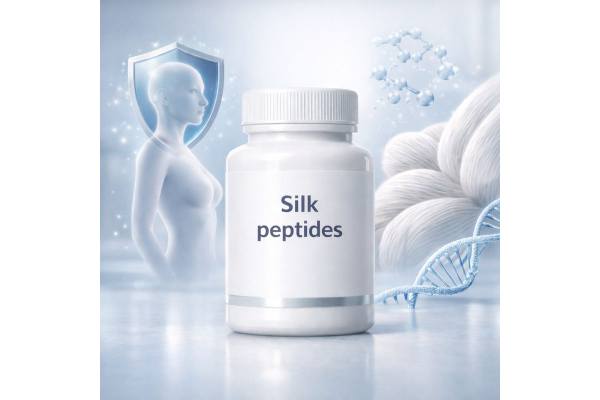
Silk peptides have moved from the world of textiles and cosmetics into nutrition, sports, and wellness. Derived from the proteins that make up silkworm cocoons, these low molecular weight peptides dissolve easily in water, mix into drinks, and are being explored for effects on immunity, metabolism, exercise performance, and skin appearance. Preclinical studies suggest that silk peptide supplementation may increase fat oxidation, support healthy body weight under high-fat conditions, and modulate immune cell activity. Early human trials indicate potential benefits for natural killer (NK) cell function at daily intakes of several grams.
At the same time, silk peptides are still a relatively new category of functional ingredient. There is no official recommended daily intake, long-term human data remain limited, and quality can vary widely between brands. This guide explains what silk peptides are, how they may work, potential benefits and limitations, practical dosage ranges, safety considerations, and how to choose a product with more confidence.
Key Insights on Silk Peptides
- Silk peptides are easily absorbed protein fragments from silkworm cocoons that may support immune function, metabolic health, and exercise performance.
- Most human trials report good tolerance at doses around 7.5 g per day for about 8 weeks, but long-term safety data are still limited.
- Common supplement intakes range roughly from 0.5–7.5 g per day, usually divided with meals and taken according to product directions.
- People with protein allergies, significant immune disorders, pregnancy, or breastfeeding should use silk peptides only with prior medical approval.
Table of Contents
- What are silk peptides and how are they made?
- What benefits do silk peptides offer?
- How to use silk peptides in daily life
- Silk peptides dosage and timing guide
- Side effects, safety, and who should avoid silk peptides
- How to choose a silk peptides supplement
What are silk peptides and how are they made?
Silk peptides are short chains of amino acids produced by breaking down the proteins in silkworm cocoons, usually from the species Bombyx mori. A cocoon contains two main proteins: fibroin, which forms the strong structural core, and sericin, a glue-like protein that coats and binds the fibers. When manufacturers hydrolyze (chemically or enzymatically cut) these larger proteins, they create a mixture of low molecular weight peptides that dissolve easily in water and are suitable for ingestion.
These peptides are typically rich in glycine, alanine, and serine. This profile reflects the natural composition of silk fibroin and gives silk peptides a relatively neutral taste with a light, slightly bitter or savory note. Their small size, often in the range of a few hundred to a few thousand Daltons, is important because it improves solubility and allows efficient absorption through the intestine as di- and tri-peptides or free amino acids.
To produce a dietary ingredient, cocoons are cleaned and degummed to remove impurities. The silk proteins are then hydrolyzed, filtered, and spray-dried to yield a fine powder. High-quality producers characterize each batch by peptide size distribution, amino acid composition, and absence of contaminants. Some products are standardized under proprietary names and used in clinical trials at defined daily doses.
It is useful to distinguish silk peptides from related terms:
- Silk amino acids often refer to even smaller fragments or free amino acids derived from silk, commonly used in cosmetics.
- Silk fibroin usually indicates the intact or minimally processed protein used as a biomaterial in medical devices or tissue engineering.
- Silk peptides most often describe the ingestible, hydrolyzed form used in functional foods and supplements.
In supplements, silk peptides may appear alone or combined with collagen, vitamins, or herbal extracts in powders, capsules, or ready-to-drink beverages.
What benefits do silk peptides offer?
Most proposed benefits of silk peptides come from animal experiments and a smaller number of human trials. The strongest areas of interest currently include immune support, body composition, metabolic health, and exercise performance. A separate line of research focuses on cosmetic and skin applications.
Immune function and natural killer cells
Several clinical studies in healthy adults have examined silk peptide supplementation at daily doses around 7.5–9 g over an 8-week period. In these trials, participants receiving silk peptide showed increases in natural killer (NK) cell activity compared with baseline and, in some analyses, compared with placebo. NK cells are part of the innate immune system and help recognize and destroy virus-infected or abnormal cells. Changes in cytokines such as interleukin-12 and interferon-gamma have also been reported, suggesting an immunostimulatory pattern rather than suppression.
These results are encouraging but should be interpreted cautiously. The trials are relatively small, focus on laboratory immune markers, and were conducted in generally healthy Korean adults. They do not prove that silk peptides reduce infections or disease risk in the general population.
Metabolic health, body weight, and adipose tissue
In mouse models, dietary silk peptide added to a high-fat diet has been shown to reduce weight gain, limit fat accumulation, and improve markers such as blood glucose and lipid profiles. Mechanistic work points to activation of AMP-activated protein kinase (AMPK), increased expression of browning markers like UCP1 in white adipose tissue, and changes consistent with greater fatty acid oxidation. These findings suggest that silk peptides may help shift metabolism toward burning more fat and resisting diet-induced obesity in animals.
While these mechanisms are attractive from a weight-management perspective, they have not yet been confirmed in long-term human weight-loss trials. Any metabolic claims for people should therefore be considered preliminary.
Exercise performance and fat oxidation
Several rodent studies examine silk peptide administration alongside endurance training. Mice given silk peptide at moderate to high doses show higher oxygen uptake, lower respiratory exchange ratios (indicating greater fat use), improved time to exhaustion, and sometimes reduced markers of muscle damage. One study observed increased fat oxidation at rest over 24 hours in trained mice given silk peptide, even though food intake was slightly higher, suggesting a possible efficiency effect.
These data support the idea that silk peptides could be of interest to athletes or active individuals seeking better fat utilization and endurance. However, the absence of robust human performance trials means that any such use remains experimental.
Skin, hair, and cosmetic effects
Silk-derived ingredients are widely used in topical skin and hair products because the peptides can form a protective film, bind water, and interact with keratin. Laboratory and clinical cosmetic studies suggest benefits for skin hydration, smoothness, and hair feel when silk proteins are applied externally. There is much less evidence that oral silk peptide supplementation alone significantly affects skin appearance, although general improvements in metabolic health and inflammation could indirectly support skin over time.
Overall, silk peptides should be viewed as a promising but still emerging functional ingredient. The current evidence supports potential roles in immune modulation and metabolic regulation, mostly in specific populations and settings, rather than as a universal cure-all.
How to use silk peptides in daily life
Because silk peptides are water-soluble and relatively neutral in flavor, they are straightforward to integrate into a daily routine. The best approach depends on your primary goal, your sensitivity to supplements, and the specific product you choose.
Common product formats include:
- Powders in jars or stick packs that you mix into water, smoothies, yogurt, or pre-workout drinks.
- Capsules or tablets for people who prefer precise dosing without taste.
- Ready-to-drink shots or beverages that combine silk peptides with collagen, vitamins, or plant extracts.
A simple step-by-step framework can help you decide how to use silk peptides:
- Clarify your main objective.
- For immune support, people often mirror the schedules used in clinical trials (daily use for several weeks).
- For metabolic support or exercise, silk peptides are usually taken around training or consistently with meals.
- For skin and hair, a long-term, lower-dose approach is more typical and often combined with topical products.
- Start with the label, then adjust conservatively.
Follow the manufacturer’s serving size and maximum daily intake. If a powder provides 2.5 g per scoop and suggests 1–3 scoops per day, consider starting at the lowest serving and monitoring how you feel for one to two weeks. - Choose timing that fits your lifestyle.
- Many people take silk peptides with breakfast to pair them with food and reduce the chance of stomach upset.
- Those focused on exercise performance often take a serving 30–60 minutes before training, sometimes with a carbohydrate source.
- If the total daily dose is higher (for example, approaching 7.5 g), splitting it into two or three smaller servings with meals can improve tolerance.
- Combine with foundational habits.
Silk peptides are not a substitute for balanced nutrition, adequate protein, sleep, or consistent physical activity. They may complement, but not replace, these core pillars. - Observe and track.
Keep a brief log of energy levels, training quality, digestion, and any changes in weight or body composition over 4–8 weeks. This makes it easier to judge whether silk peptides contribute meaningful benefits for you.
For many users, silk peptides function best as a targeted adjunct: something to trial for a defined period (for example, one or two months during intense training or higher infection risk) rather than a permanent, high-dose daily staple. People with chronic conditions or on medications should involve their healthcare professional before starting, especially if they plan to combine silk peptides with other immune-active or metabolic supplements.
Silk peptides dosage and timing guide
There is currently no official recommended dietary allowance for silk peptides. Dosage guidance comes from clinical studies, animal experiments, and the serving sizes used in commercial products. For safety and practicality, it is important to distinguish between research doses and everyday use.
Doses used in research
- Human immune-focused trials have typically used about 7.5–9 g of silk peptide per day for 8 weeks, given as divided servings or sachets. These studies reported improved NK cell activity and cytokine profiles, with good overall tolerance in healthy adults.
- Animal studies investigating obesity and metabolic health often use doses equivalent to hundreds of mg per kg body weight, scaled to rodents. These are not directly transferable to human dosing but help clarify mechanisms of action.
- Toxicology work in rats has found a no-observed-adverse-effect level (NOAEL) above 2000 mg/kg/day, which corresponds to very high intakes relative to typical human supplement doses.
Practical dosage ranges in supplements
Based on the available evidence and typical product formulations, the following ranges can be used as a general orientation, not as personalized medical advice:
- Low range (approximately 250–1000 mg/day or 0.25–1 g/day)
- Common in beauty or “skin and hair” blends.
- Intended for long-term, gentle support alongside other nutrients.
- Moderate range (about 1–3 g/day)
- Often seen in multipurpose wellness formulas or combined with collagen.
- May be reasonable for people starting silk peptides who want to evaluate tolerance and subtle benefits.
- Higher range (around 3–7.5 g/day)
- Closer to the amounts used in immune and metabolism trials.
- Usually achieved with dedicated silk peptide powders or functional drinks.
- Should be time-limited (for example, 4–8 weeks) and ideally supervised in those with health conditions.
In all cases, it is wise to stay within the daily maximum stated on the product label, since that figure reflects the manufacturer’s safety testing and regulatory filings.
Timing considerations
- With food vs. empty stomach:
Taking silk peptides with meals may improve comfort and align their amino acid influx with other nutrients. Some users, especially athletes, may prefer a pre-workout serving without a heavy meal; in that case, a light snack (such as fruit or a small carbohydrate source) can reduce the chance of nausea. - Once daily vs. divided doses:
Higher intakes are often better tolerated when split into two or three doses spread across the day. For example, a total of 6 g could be taken as 2 g with breakfast, 2 g pre-training, and 2 g with dinner. - Duration of use:
Most human studies have run for about 8 weeks. For non-medical self-experimentation, similar cycles (for example, 6–12 weeks on, followed by a break) are a conservative approach until more long-term data are available.
People who are very small, elderly, or living with chronic illness may require lower doses, while larger or highly active individuals may tolerate the upper supplement range more comfortably. Because of these differences, consulting a healthcare professional before using doses near or above typical study levels is advisable.
Side effects, safety, and who should avoid silk peptides
Overall, silk peptides appear to have a favorable safety profile in both animals and humans at the doses studied so far. Formal toxicology studies in rats found no treatment-related organ damage, significant clinical chemistry changes, or mortality even at daily intakes exceeding 2000 mg/kg over 90 days. Human trials using approximately 7.5–9 g/day for 8 weeks reported no serious adverse events and only occasional mild gastrointestinal discomfort.
That said, “generally well tolerated” does not mean risk-free. Potential issues and caution points include:
Common, usually mild effects
- Digestive symptoms such as nausea, soft stools, bloating, or abdominal discomfort, especially when starting at higher doses or taking silk peptides on an empty stomach.
- A feeling of warmth or transient flushing in some users, likely related to increased circulation or metabolic activity.
- Rare reports of headache or sleep changes, which may reflect individual sensitivity.
These effects often improve when the dose is reduced or divided across meals.
Allergy and hypersensitivity
Silk peptides are derived from insect protein. Although documented IgE-mediated allergy to silk peptide supplements is rare, theoretical risk exists, particularly for individuals with:
- Known allergies to other insect-derived ingredients.
- Occupational sensitivity to silk fibers or sericin.
Anyone experiencing rash, itching, swelling, breathing difficulty, or other signs of an allergic reaction should stop the product and seek medical care immediately.
Immune and autoimmune conditions
Because silk peptides can enhance NK cell activity and influence cytokines in some studies, people with:
- Autoimmune diseases,
- A history of transplant, or
- Those taking immunosuppressive medications
should not start silk peptide supplements without explicit approval from their treating physician. In these situations, even substances with immune-supportive intentions may interfere with necessary suppression or alter disease activity.
Pregnancy, breastfeeding, and children
There is currently no robust safety data for silk peptide use during pregnancy, breastfeeding, or in young children. For these groups, it is safest to avoid silk peptide supplements unless a qualified clinician specifically recommends them as part of a broader care plan.
Interactions with medications
Direct drug–silk peptide interactions have not been well studied. However, caution is sensible in the following scenarios:
- People taking immunomodulating or chemotherapy agents, where any additional influence on immune function could be problematic.
- Individuals on complex metabolic regimens (for example, multiple antidiabetic or weight-loss medications), since changes in energy balance could theoretically alter blood glucose or weight trajectories.
In general, people with chronic disease or those taking prescription drugs should discuss silk peptides with their doctor or pharmacist before use.
Quality and contamination risks
Like many supplements, silk peptide products vary in quality. Potential concerns include heavy metals, residual solvents, microbial contamination, or mislabeling of peptide content. Choosing reputable brands that use third-party testing, provide certificates of analysis, and follow good manufacturing practices reduces but does not eliminate these risks.
If you notice persistent side effects, unexpected lab changes, or worsening of an existing condition after starting silk peptides, stop the product and consult a healthcare professional.
How to choose a silk peptides supplement
Because silk peptides are relatively specialized, many consumers rely heavily on marketing claims when choosing a product. A more structured checklist can help you select a supplement that better matches your needs and risk tolerance.
1. Verify the ingredient identity
Look for clear labeling that specifies:
- “Silk peptide,” “hydrolyzed silk peptide,” or a recognized proprietary name used in research.
- Source species (commonly Bombyx mori).
- The amount of silk peptide per serving in milligrams or grams.
Vague terms like “silk protein complex” without exact amounts are less helpful for matching research-style dosing.
2. Examine the dose and serving format
Check whether the product provides:
- A low, moderate, or high daily dose based on the ranges discussed earlier.
- Flexible dosing (for example, a powder that can be adjusted) versus fixed capsules that may require taking many pills to reach meaningful amounts.
- Serving suggestions that align with your schedule and preferences, such as once-daily stick packs or smaller doses that can be taken multiple times per day.
If a single serving exceeds what you are comfortable with, consider a product with lower individual doses.
3. Assess supporting ingredients
Some formulas combine silk peptides with:
- Collagen, hyaluronic acid, or antioxidants for skin and joint support.
- Caffeine, taurine, or amino acids for performance.
- Botanicals for immune function or stress.
Review these components carefully, especially if you have sensitivities, take medications, or wish to avoid stimulants or added sugars. For a first trial, many people prefer a simpler formula so they can attribute effects more clearly.
4. Check safety and quality assurances
Signs of a higher-quality product include:
- Good manufacturing practice (GMP) certification or similar quality statements.
- Independent third-party testing for purity, heavy metals, and microbial load.
- Transparent disclosure of excipients (fillers, flavors, sweeteners).
If possible, look for brands that share batch-specific certificates of analysis. This is especially important when using the supplement regularly or at higher doses.
5. Align with your values and practical needs
Consider:
- Dietary restrictions: whether the product is free from common allergens you need to avoid. Silk peptides themselves are animal-derived, so they do not fit vegan diets.
- Cost per effective dose: a very low-dose product taken once daily may be inexpensive but unlikely to approximate the intakes used in research.
- Taste and mixability: powders with strong bitterness may be difficult to use consistently, whereas neutral-tasting powders dissolve readily in water or smoothies.
6. Plan a structured trial
Before committing long term, many people benefit from:
- A time-limited trial (for example, 6–8 weeks) at a moderate dose,
- A simple tracking method for energy, training, digestion, and any immune-related changes, and
- A clear decision point at the end: continue, adjust, or discontinue.
By approaching silk peptides as a targeted experiment rather than an automatic staple, you can better balance potential benefits with cost and uncertainty.
References
- Supplementation with a Natural Source of Amino Acids, Sil-Q1 (Silk Peptide), Enhances Natural Killer Cell Activity: A Redesigned Clinical Trial with a Reduced Supplementation Dose and Minimized Seasonal Effects in a Larger Population 2021 (RCT)
- The effect of silk peptide on immune system, A randomized, double-blind, placebo-controlled clinical trial 2019 (RCT)
- Acute and 90-day subchronic toxicity studies of Silk peptide E5K6, in Sprague-Dawley rats 2011 (Toxicology)
- Silk peptide intake increases fat oxidation at rest in exercised mice 2013 (Preclinical)
- Dietary Silk Peptide Prevents High-Fat Diet-Induced Obesity and Promotes Adipose Browning by Activating AMP-Activated Protein Kinase in Mice 2020 (Preclinical)
Disclaimer
This article is for general informational and educational purposes only and does not provide medical, nutritional, or legal advice. Silk peptide supplements are not intended to diagnose, treat, cure, or prevent any disease. Individual needs, risks, and responses vary, especially in the presence of chronic illness, pregnancy, breastfeeding, or prescription medication use. Always consult a qualified healthcare professional before starting, stopping, or changing any supplement, including silk peptides, and before using doses similar to or higher than those discussed here. Never disregard or delay professional medical advice because of information you have read online.
If you found this guide helpful, you are welcome to share it with others on Facebook, X (formerly Twitter), or any platform you prefer, and to follow our work on social media. Your thoughtful support through sharing helps our team continue developing careful, evidence-informed content on emerging nutritional ingredients.