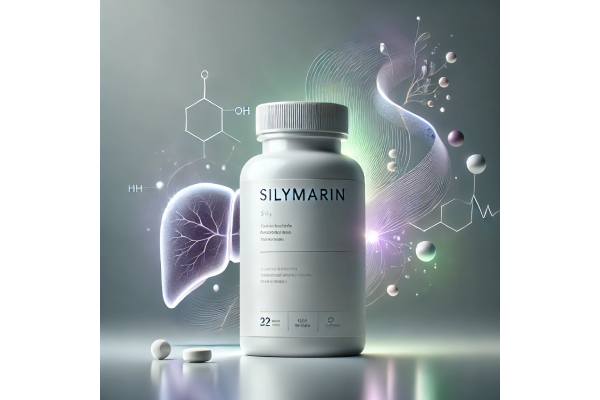
Silymarin is a standardized extract from the seeds of the milk thistle plant (Silybum marianum). It is best known for its role as a supportive therapy in chronic liver diseases, including fatty liver disease, hepatitis, and cirrhosis. Silymarin is not a single molecule but a complex of flavonolignans such as silybin, silychristin, silydianin, and others that act together as antioxidants and membrane-stabilizing agents.
In modern practice, silymarin is used as an adjunct, not a replacement, for medical treatment. Clinical and preclinical data suggest that it may help reduce liver enzyme levels, improve oxidative stress markers, and protect liver tissue in a range of toxic or metabolic injuries. At the same time, high-quality trials show mixed results, and dosing, formulation, and disease stage all influence outcomes. This guide explains what silymarin is, how it works, realistic benefits, how to use it, dosage ranges, safety, and who should avoid or use it only under close medical supervision.
Key Insights on Silymarin
- Silymarin is a milk thistle seed extract rich in flavonolignans that support antioxidant and liver-protective activity.
- Evidence suggests benefits mainly as adjunct therapy in chronic liver diseases, with strongest data for improving liver enzymes and oxidative stress markers.
- Common adult supplemental doses range from about 140–420 mg silymarin per day, with up to 700 mg three times daily used short term in specialist trials.
- Silymarin is generally well tolerated; most reported side effects are mild gastrointestinal symptoms or headache.
- People who are pregnant, on narrow-therapeutic-window medications, or living with advanced liver disease should avoid self-prescribing and instead consult a specialist.
Table of Contents
- What is silymarin and how it works
- Main health benefits of silymarin
- How to use silymarin day to day
- Silymarin dosage for different goals
- Side effects and interactions of silymarin
- Who should avoid or limit silymarin
- What research says about silymarin today
What is silymarin and how it works
Silymarin is a mixture of bioactive compounds extracted from the seeds (achenes) of milk thistle. The main components are flavonolignans such as silybin (also called silibinin), isosilybin, silychristin, isosilychristin, silydianin, and taxifolin. Silybin generally makes up about half of the complex and is often considered the most pharmacologically active fraction, but the other flavonolignans contribute to the overall effect.
Standardized silymarin extracts typically contain about 70–80% total flavonolignans. On supplement labels, you will usually see something like “milk thistle extract standardized to 80% silymarin.” In some pharmaceutical-grade products, each capsule contains a fixed amount of silymarin (for example, 140 mg) with carefully controlled composition.
Pharmacologically, silymarin is best described as a multitarget antioxidant and cytoprotective complex:
- It scavenges free radicals and reduces lipid peroxidation in cell membranes, especially in hepatocytes.
- It supports endogenous antioxidant systems by influencing glutathione levels and antioxidant enzymes such as superoxide dismutase and catalase.
- It modulates inflammatory signaling pathways, including nuclear factor kappa B (NF-κB), and can reduce the expression of pro-inflammatory cytokines.
- It appears to interfere with fibrogenic pathways in the liver, including transforming growth factor beta (TGF-β)–driven collagen deposition, which is central to scarring and cirrhosis.
Once ingested, silymarin components are absorbed in the small intestine, undergo extensive first-pass metabolism in the liver (mainly glucuronidation and sulfation), and are excreted via bile and urine. Their bioavailability is modest and highly formulation-dependent. Lipophilic delivery systems (for example, phospholipid complexes and some specialized capsules) can significantly increase blood levels compared with plain extracts.
Because of this complex chemistry and pharmacokinetics, different silymarin preparations are not interchangeable milligram for milligram. Two products with the same labeled dose can behave quite differently in the body. This is one reason why clinical trial results are sometimes inconsistent and why it is important to pay attention to the exact type and standardization of the extract used.
Main health benefits of silymarin
Silymarin is one of the most extensively studied botanical extracts in hepatology. The strongest, though still evolving, evidence relates to chronic liver diseases. Other potential benefits are emerging in metabolic, renal, and cardiovascular contexts, but the clinical data are less robust.
1. Chronic liver disease and cirrhosis
Multiple reviews and clinical series suggest that silymarin can:
- Modestly reduce liver transaminases (ALT, AST) in patients with chronic liver disease.
- Improve some histological features (such as inflammation and steatosis) in subsets of patients, especially in nonalcoholic fatty liver disease (NAFLD) and nonalcoholic steatohepatitis (NASH).
- Provide antioxidant and anti-fibrotic support in viral, alcoholic, and metabolic liver damage, although effects on survival and hard outcomes are less clear.
These benefits appear strongest when silymarin is used as an adjunct to standard therapy and lifestyle modification, not as a stand-alone treatment.
2. Nonalcoholic fatty liver disease and NASH
In NAFLD and NASH, silymarin’s antioxidant and anti-inflammatory effects are thought to counteract lipotoxicity and oxidative stress in hepatocytes. Various trials report:
- Reductions in ALT and AST, sometimes accompanied by improved imaging or biopsy markers of steatosis and inflammation.
- Inconsistent effects on fibrosis and overall NASH resolution, with some higher-dose trials showing safety but no clear histological advantage over placebo.
Because of this, silymarin is often framed as a supportive measure alongside weight loss, dietary intervention, and treatment of diabetes or dyslipidemia.
3. Protection against toxins and medications
Silymarin has been evaluated as a supportive therapy in toxic and drug-induced liver injury, including exposure to industrial toxins, alcohol, and certain medications. Preclinical and clinical evidence suggests it can:
- Reduce biochemical markers of oxidative stress and inflammation after toxin exposure.
- Support recovery of liver function tests in some cases of drug-induced injury, when used with appropriate medical management.
However, it should not be viewed as a substitute for removing the offending agent or for emergency treatments such as N-acetylcysteine in acetaminophen poisoning.
4. Metabolic and extrahepatic effects
Beyond the liver, silymarin has shown:
- Potential improvements in insulin resistance and glycemic control in some small studies.
- Antioxidant and cytoprotective effects in kidney, heart, and nervous tissue models.
- Possible benefits in certain dermatologic and neurodegenerative contexts in preliminary research.
These areas are promising but still exploratory. For now, silymarin’s main clinically relevant role remains in liver support, with metabolic and extrahepatic benefits considered secondary or investigational.
How to use silymarin day to day
Most people encounter silymarin through over-the-counter milk thistle supplements or through specialized formulations prescribed or recommended by clinicians. Using it effectively and safely involves understanding labels, timing, and how it fits into a broader care plan.
Choosing a formulation
When comparing products, pay attention to:
- Standardization: Look for statements such as “standardized to 70–80% silymarin.” Products that only list “milk thistle powder” without standardized silymarin content are less predictable.
- Exact silymarin content: Ideally, the label specifies milligrams of silymarin per capsule, not just total herb.
- Formulation technology: Some products use phospholipid complexes or other delivery systems that improve absorption; these may require different dosing than basic extracts.
- Quality assurances: Independent testing, Good Manufacturing Practice (GMP) certification, and clear manufacturer information are practical quality indicators.
When and how to take silymarin
Because silymarin components are lipophilic, taking them with food, particularly a meal containing some fat, can enhance absorption. Most protocols divide the daily dose into two or three portions:
- Morning and evening with meals, or
- Breakfast, lunch, and dinner for higher or more frequent dosing schedules.
A common pattern under professional guidance is to start at the lower end of the recommended range for one to two weeks to check tolerance, then adjust if needed.
Combining silymarin with lifestyle measures
Silymarin works best when it supports, rather than replaces, foundational measures such as:
- Limiting or avoiding alcohol, especially with any liver diagnosis.
- Adopting a calorie-appropriate diet rich in vegetables, whole grains, and unsaturated fats.
- Increasing physical activity, which improves insulin sensitivity and liver fat content.
- Managing blood pressure, blood sugar, and lipids with the help of a healthcare team.
For NAFLD and NASH, clinical guidelines consistently emphasize weight loss and metabolic control as the primary interventions; silymarin is considered an adjunctive option within this broader plan.
Practical monitoring
If you and your clinician decide to include silymarin:
- Record baseline symptoms and, if appropriate, liver function tests.
- Use a consistent product and dose for a defined trial period (for example, 8–12 weeks).
- Reassess symptoms and laboratory markers after that period to decide whether continuing makes sense.
If liver enzymes worsen, new symptoms appear, or you experience troubling side effects, stop the supplement and seek medical review.
Silymarin dosage for different goals
There is no official recommended daily allowance for silymarin, and different preparations are not equivalent. Doses used in studies range from modest supplemental amounts to pharmacologic doses used under strict medical supervision.
Typical supplemental doses
For adults using standardized silymarin products:
- Lower range: about 140 mg once daily (140 mg/day).
- Common range: 140 mg two to three times daily (around 280–420 mg/day).
- Higher supervised range: up to 700 mg three times daily (2,100 mg/day) in some chronic liver disease and NASH trials, usually for limited periods such as 24–48 weeks, with careful monitoring.
These figures refer to standardized silymarin, not crude herb powder.
Dosing by indication (adult, under professional guidance)
While individual plans vary, practical patterns often look like:
- General liver support in otherwise healthy adults: many clinicians stay within 140–420 mg/day, divided in two or three doses, as a conservative supportive range.
- Chronic liver disease (NAFLD, NASH, some toxic or viral conditions): trials have used both standard and higher doses. In a well-known NASH trial, patients received 420 or 700 mg three times daily of a specific standardized product for almost a year. Although histological benefits were not clearly superior to placebo, safety was acceptable at these doses.
- Experimental or perioperative contexts (animal and translational models): very different dose units are used and cannot be directly converted into safe human doses; such uses are strictly research-based.
Duration of use
For supportive liver health, typical durations in practice are:
- Short trial: 8–12 weeks, followed by re-evaluation.
- Longer-term use: many months or longer in chronic liver disease, with periodic review of liver tests, medication interactions, and symptom evolution.
There is no universally agreed maximum duration, but prolonged use should be periodically reassessed rather than treated as automatic “lifetime therapy.”
Special populations
Data are limited in:
- Children and adolescents.
- Pregnant or breastfeeding women.
- People with advanced decompensated cirrhosis or acute liver failure.
In these groups, dosing from adult studies cannot simply be scaled by weight. Any consideration of silymarin should occur within a specialist setting, and in many cases it may be deferred entirely in favor of more established therapies.
Because products differ in bioavailability, always read labels carefully, and do not attempt to match research doses with a different formulation without professional input.
Side effects and interactions of silymarin
Overall, silymarin has an excellent safety profile in both animals and humans, even at relatively high doses. Nonetheless, side effects and interactions are possible, especially in people with complex medication regimens.
Common side effects
Most reported adverse events have been mild and transient. They include:
- Gastrointestinal discomfort: nausea, loose stools, mild abdominal pain, or bloating.
- Headache or a sense of dizziness.
- Less commonly, mild itching or skin rash.
In large clinical programs, silymarin was well tolerated even at 700 mg three times daily over many weeks, with side effects generally limited to these mild categories.
If symptoms are bothersome, reducing the dose, taking the supplement with food, or dividing the daily amount into smaller portions may help. Any severe or persistent symptoms warrant stopping the supplement and seeking medical review.
Allergic reactions
Because milk thistle belongs to the Asteraceae family, people with allergies to related plants (such as ragweed, marigold, or chamomile) may have a higher risk of hypersensitivity reactions. While serious reactions are rare, potential signs include:
- Hives, widespread itching, or swelling of the face and throat.
- Difficulty breathing or chest tightness.
- Rapid drop in blood pressure, dizziness, or collapse.
These require immediate emergency care. Anyone with a history of severe plant allergies should discuss risks with an allergist or physician before starting silymarin.
Blood sugar and metabolic effects
Some studies suggest that silymarin can modestly improve insulin sensitivity and reduce fasting blood glucose in individuals with metabolic syndrome or diabetes. While this may be a benefit, it also means:
- People on insulin or oral hypoglycemics should monitor glucose more closely after starting silymarin.
- Dose adjustments for diabetes medications may be needed, but only under medical supervision.
Drug–drug interaction potential
Preclinical and pharmacokinetic work shows that silymarin:
- Interacts with several drug-metabolizing enzymes and efflux transporters, including some cytochrome P450 enzymes and certain transporters.
- Can theoretically alter the disposition of various drugs at high concentrations.
However, clinical studies generally find that:
- At usual oral doses, effects on the pharmacokinetics of most tested drugs are small and unlikely to be clinically significant for the average person.
- Caution is still appropriate with medications that have a narrow therapeutic window (for example, some anticoagulants, immunosuppressants, chemotherapeutics, and antiepileptics).
Practical advice is to inform your healthcare providers of all supplements, including silymarin, and to be particularly cautious if you are on complex or critical drug regimens.
Who should avoid or limit silymarin
Even relatively safe supplements are not suitable for everyone. Certain groups should avoid self-prescribing silymarin or only use it under close supervision.
People who should generally avoid self-prescription
It is prudent not to start silymarin on your own if you:
- Have a known allergy to milk thistle, ragweed, marigolds, chrysanthemums, daisies, or other Asteraceae plants.
- Have previously experienced unexplained severe reactions to herbal supplements.
- Are pregnant or breastfeeding, unless a specialist who knows your full history recommends and monitors it.
- Are experiencing acute, severe liver symptoms (such as new jaundice, confusion, or abdominal swelling) and have not been fully evaluated. In these cases, urgent conventional medical care takes priority.
In such situations, potential risks and diagnostic uncertainty outweigh any hypothetical benefits from immediate silymarin use.
Groups requiring extra caution and medical supervision
The following groups may still be candidates for silymarin, but should only use it in collaboration with their medical team:
- People on narrow-therapeutic-window medications (for example, warfarin, some anticancer drugs, calcineurin inhibitors) where any change in drug levels could have serious consequences.
- Patients with advanced cirrhosis or multiple concurrent liver conditions; silymarin may have supportive value, but overall management is complex.
- Individuals with difficult-to-control diabetes, especially when insulin or multiple oral agents are used.
- Children and adolescents, where safety and dosing data remain limited.
In each of these groups, decisions should weigh:
- Severity and trajectory of the underlying disease.
- Other available therapies with stronger evidence.
- Potential for interactions, cost, and pill burden.
Before surgery or procedures
Many clinicians advise stopping herbal supplements, including silymarin, one to two weeks before major surgery or invasive procedures. While direct evidence of bleeding or anesthetic interactions is limited, this precaution helps reduce unforeseen variables around the time of anesthesia and recovery.
Ultimately, silymarin is best viewed as a supportive option. It fits most safely into a personalized plan designed by healthcare professionals rather than being added casually on top of complex treatment regimens.
What research says about silymarin today
The scientific picture of silymarin is nuanced. There is strong evidence for certain biochemical and histological effects, but more modest and sometimes inconsistent evidence for hard clinical endpoints.
Mechanistic and translational research
Contemporary work highlights that silymarin:
- Exerts robust antioxidant, anti-inflammatory, and anti-fibrotic effects in a variety of in vitro and animal models.
- Influences key pathways in chronic liver disease, including oxidative stress, mitochondrial function, stellate cell activation, and extracellular matrix deposition.
- Shows hepatoprotective effects in translational models such as porcine liver injury, which more closely resembles human hepatic anatomy and bile acid handling than rodent models.
These mechanistic insights provide a plausible biological basis for clinical use.
Clinical trials in chronic liver disease
Clinical trials and reviews indicate that:
- In various chronic liver diseases, silymarin often leads to statistically significant reductions in ALT and AST compared with baseline, and sometimes compared with control, although effect sizes vary.
- In NAFLD and NASH, some randomized trials report improvements in liver enzymes and steatosis scores, while others (including high-dose trials) show no clear histological benefit over placebo.
- Evidence for improved survival, prevention of cirrhosis progression, or reduced need for transplantation remains limited and inconclusive.
Clinically, this means silymarin can reasonably be considered as an adjunct for biochemical and possibly histological support, but it should not be expected to completely reverse advanced disease or replace cornerstone therapies.
Safety and pharmacokinetics evidence
Recent reviews reaffirm that:
- Silymarin is generally safe in humans at therapeutic doses, with tolerability maintained even at 700 mg three times daily for extended periods in controlled studies.
- It has relatively low potential for clinically important drug–drug interactions, although theoretical concerns exist due to enzyme and transporter modulation.
These findings support its use as a supportive therapy when clinically appropriate and well supervised.
Overall evidence-based perspective
Taking the full body of evidence together:
- Silymarin is best seen as a well-tolerated, mechanistically plausible adjunct for managing chronic liver disease, especially when the main strategy focuses on lifestyle change and disease-specific therapies.
- Benefits are more clearly demonstrated in surrogate markers (enzymes, oxidative stress, selected histology) than in major long-term outcomes.
- Better standardization of preparations, more rigorous dosing studies, and longer, larger outcome-oriented trials are needed to define precisely who benefits most and at which doses.
For now, the most sensible use of silymarin is cautious, individualized, and firmly embedded within an evidence-based treatment plan rather than as a stand-alone “liver detox” solution.
References
- Silymarin as an Antioxidant Therapy in Chronic Liver Diseases: A Comprehensive Review 2024 (Systematic Review)
- Silymarin: Unveiling its Pharmacological Spectrum and Therapeutic Potential in Liver Diseases—A Comprehensive Narrative Review 2024 (Narrative Review)
- Hepatoprotective Effect of Silymarin Herb in Prevention of Liver Dysfunction Using Pig as Animal Model 2025 (Translational Study)
- Safety and Toxicity of Silymarin, the Major Constituent of Milk Thistle Extract: An Updated Review 2019 (Safety Review)
- Metabolism, Transport and Drug-Drug Interactions of Silymarin 2019 (Pharmacokinetic Review)
Disclaimer
This article is for general informational purposes only and does not constitute medical advice, diagnosis, or treatment. Silymarin is not approved to prevent, treat, or cure any disease, and its effects depend on the individual, the dose, the specific formulation, and concurrent medications and conditions. Never start, stop, or change prescription medicines based on information in this guide, and do not use silymarin or any supplement as a substitute for medical evaluation of liver symptoms, abnormal tests, or other health concerns. Always consult a qualified healthcare professional who knows your full medical history before beginning silymarin or any new supplement, especially if you are pregnant, breastfeeding, living with chronic disease, or taking multiple medications. If you experience jaundice, severe abdominal pain, confusion, shortness of breath, signs of an allergic reaction, or any sudden deterioration in health, seek urgent medical care.
If you found this article helpful, you are kindly invited to share it on Facebook, X (formerly Twitter), or any platform you prefer, and to follow our future updates on social media. Your thoughtful support by sharing our work helps our team continue to develop careful, evidence-informed health content.