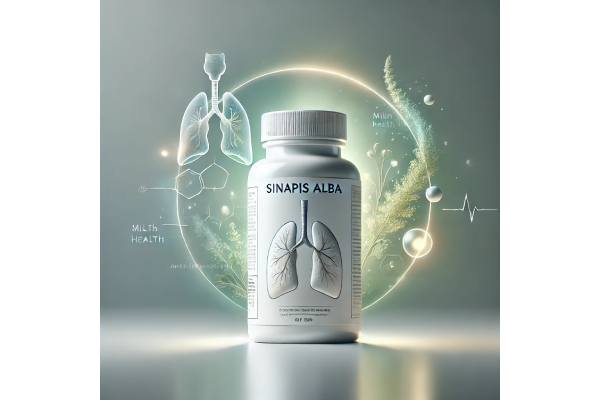
Sinapis alba, commonly known as white or yellow mustard, is far more than a condiment seed. Its small, pale seeds are rich in glucosinolates (especially sinalbin), sinapine, mucilage, fatty oil, and phenolic compounds that give it a warming, stimulating and circulation-enhancing profile. In traditional European and Asian systems, white mustard has been used internally as a mild digestive stimulant and diuretic, and externally in plasters for joint pain, chest congestion, and chronic respiratory complaints.
Modern research focuses on its bioactive components, including glucosinolates, isothiocyanates, and omega-3–rich oils, exploring potential anti-inflammatory, cardiovascular, metabolic, and antimicrobial effects. At the same time, robust clinical trials remain limited, and the most reliable role of Sinapis alba today is still culinary and as a traditional adjunct in well-defined herbal protocols. This guide explains what white mustard is, how it works, realistic benefits, practical ways to use it, reasonable dosage ranges, and important safety considerations.
Quick Facts on Sinapis alba
- White mustard seeds provide glucosinolates, phenolics, and fatty acids that support warming, circulation-enhancing, and digestive actions.
- Traditional uses include external plasters for joint pain and chest congestion, and small internal doses as a digestive and diuretic adjunct.
- A practical internal range used in herbal traditions is about 1–3 g of freshly ground seed powder once or twice daily with meals.
- Prolonged topical use or very high doses can cause skin burns, mucosal irritation, and significant discomfort.
- People with mustard allergy, severe skin sensitivity, pregnancy, or complex medical regimens should avoid self-prescribing and seek professional advice.
Table of Contents
- What is Sinapis alba and what is in it
- Main health benefits of Sinapis alba seeds
- How to use Sinapis alba in food and herbal practice
- Sinapis alba dosage guidelines for internal and external use
- Side effects, risks, and interactions of Sinapis alba
- What science currently says about Sinapis alba
What is Sinapis alba and what is in it
Sinapis alba is an annual plant in the Brassicaceae family, cultivated across Europe, Asia, and North America for its seeds, which are used in table mustard, pickling mixes, and traditional herbal preparations. The seeds are larger and milder than those of black or brown mustard, which is why they are often chosen for “yellow mustard” condiments and for topical plasters where a strong but controlled warming effect is desired.
From a phytochemical perspective, white mustard seeds are densely packed with bioactive compounds. A key group is the glucosinolates, especially sinalbin and related molecules, which are sulfur-containing glycosides. When the seed is crushed and moistened, endogenous myrosinase enzymes hydrolyze these glucosinolates into isothiocyanates and related breakdown products. These reactive compounds are responsible for the characteristic heat, pungent aroma, and many of the biological effects.
Alongside glucosinolates, Sinapis alba seeds contain substantial amounts of fatty oil (often around 25–30% of seed weight), with a mix of monounsaturated and polyunsaturated fatty acids. The exact profile varies by cultivar, but oleic and linoleic acids tend to dominate, with variable erucic acid content depending on breeding and processing. Protein content is also notable, making mustard meal a potential feed and food protein source in some industrial processes.
The seeds further provide phenolic acids (such as sinapic acid derivatives), flavonoids, condensed tannins, and tocopherols, which contribute antioxidant potential. Mucilaginous polysaccharides give white mustard its slightly slippery texture when soaked and are thought to play a soothing yet stimulating role in the digestive tract. Modern analytical work continues to identify new phenolic and glucosinolate derivatives, highlighting the chemical complexity behind a seemingly simple kitchen spice.
All these components, acting together, explain why white mustard can exert warming, circulation-enhancing, mildly irritant, and antioxidant effects, as well as why its dosage and method of application need careful control.
Main health benefits of Sinapis alba seeds
When people ask about “benefits” of Sinapis alba, they often mean both traditional uses and what modern research currently supports. It is important to distinguish symptomatic relief and physiological effects from proven disease modification. For white mustard, the evidence base is strongest in three broad areas: respiratory support, musculoskeletal comfort, and digestive and metabolic modulation, with most data coming from traditional use, preclinical research, and small or indirect clinical studies.
Respiratory and warming effects
In many European and Asian traditions, white mustard is applied externally for chronic respiratory issues such as cough with phlegm, chest congestion, and cold-type asthma patterns. Ground seeds are mixed with flour and warm water to form a paste, spread on cloth, and applied to the chest or upper back as a mustard plaster. The resulting intense warmth and mild irritation increase local blood flow and create a counterirritant effect that may loosen mucus and promote a sensation of easier breathing.
Modern pharmacological reviews of Sinapis Semen (the dried seeds of Sinapis alba and Brassica juncea) highlight bronchodilatory, antitussive, and asthma-calming actions in animal and in vitro models, along with modulation of immune mediators relevant to airway inflammation.
Musculoskeletal and joint discomfort
Mustard plasters and mustard baths have long been used for aching muscles, rheumatic pains, and stiff joints. The same circulation-promoting, rubefacient effect that makes the skin redden can, in some people, distract from deeper pain and promote relaxation around tense tissues. Commission-style herbal monographs and more recent overviews note traditional approvals of mustard poultices for arthritis and rheumatism.
The mechanism is primarily counterirritant and vasodilatory: pungent isothiocyanates stimulate cutaneous nerve endings, leading to warmth, redness, and a change in pain perception. While high-quality clinical trials are still relatively scarce, existing data support short-term symptomatic relief in some musculoskeletal conditions.
Digestive, metabolic, and general tonic actions
Internally, small amounts of Sinapis alba seed are used to stimulate appetite, support sluggish digestion, and act as a mild laxative or diuretic. The pungent compounds increase salivation and gastric secretions, while mucilage can gently lubricate the intestinal tract.
Contemporary reviews of mustard seeds as functional foods emphasize their content of glucosinolates, omega-3 and omega-6 fatty acids, and antioxidant phenolics. These compounds are being investigated for anti-inflammatory, cardioprotective, and potential chemopreventive roles. However, for Sinapis alba specifically, human outcome trials remain limited, and benefits should currently be framed as supportive or adjunctive rather than stand-alone treatments.
How to use Sinapis alba in food and herbal practice
Sinapis alba is highly versatile. You can work with it primarily as a food spice, as a gentle internal herbal adjunct, and as a carefully applied external preparation. The safest starting point for most people is culinary use, then, where appropriate, structured herbal protocols under guidance.
Culinary uses
In the kitchen, whole or ground white mustard seeds are used to:
- Make classic yellow mustard sauces when combined with vinegar, salt, and sometimes sugar and spices.
- Add a mild pungency to pickles, relishes, and brines.
- Season legumes and vegetables, especially when the seeds are briefly toasted in oil to release aroma.
Culinary quantities are generally small, often in the range of 1–2 teaspoons (roughly 2–6 g) of seed or powder spread across an entire dish serving several people. In these amounts, Sinapis alba mainly contributes flavor, mild digestive stimulation, and small amounts of beneficial oils and antioxidants.
Internal herbal use
Beyond cooking, herbal practitioners may recommend freshly ground white mustard seed in capsule form or as a simple powder taken with food. Uses include:
- Supporting appetite and digestion in cold, sluggish patterns.
- Providing mild diuretic and warming support in damp, heavy constitutions.
- Acting as a short-term laxative when combined with adequate fluid intake.
Because internal doses are higher and more concentrated than simple culinary use, they require more care. It is generally recommended to grind seeds immediately before use, both to preserve active enzymes and to avoid rancidity of oils. Powder is usually taken after meals with water to reduce gastrointestinal irritation.
External applications
Traditional external forms include:
- Mustard plasters: a mixture of ground seeds (often blended with flour) and warm water, spread on cloth and applied to the skin over chest, back, or joints.
- Mustard baths or foot soaks: adding a small amount of mustard powder to warm water for tired feet or mild muscle aches.
- Topical emulsions or creams: modern cosmetic or therapeutic formulations using standardized seed extract or volatile oil to enhance skin blood flow or drug penetration.
Key principles for any external use are dilution, time limitation, and close monitoring of the skin. White mustard is inherently irritant; the goal is a controlled, temporary reaction, not prolonged burning.
Sinapis alba dosage guidelines for internal and external use
There is no globally accepted “standard dose” for Sinapis alba, and most modern references emphasize that clinical trials are limited. Dosage must therefore be conservative, individualized, and tied to the specific preparation and route of use. The ranges below reflect traditional practice, safety data, and contemporary expert summaries, and are not a substitute for personal medical advice.
Culinary intake
For most healthy adults:
- Culinary use typically ranges from a pinch to 1–2 teaspoons of seed or powder spread across daily meals.
- This corresponds roughly to 2–6 g of seed per day, often well tolerated when part of mixed dishes.
Within these amounts, adverse effects are uncommon except in people with mustard allergy or significant gastrointestinal sensitivity.
Internal supplemental use (adults)
Traditional herbal sources often suggest:
- About 1–3 g of freshly ground white mustard seed powder, once or twice daily, after meals.
- Some Ayurvedic-style protocols stay nearer the lower end at the outset (for example, 1 g once daily), increasing only if well tolerated.
In modern practice, many clinicians prefer to keep chronic daily intake near culinary-level doses and reserve higher amounts for short-term, goal-directed use. Because isothiocyanates are irritant and biologically active, high internal doses for extended periods are not advisable without professional supervision.
External use and contact time
Topical applications demand the most caution:
- Mustard plasters are usually prepared by mixing ground seeds with flour and warm water to reduce intensity.
- Contact time is generally limited to 5–15 minutes, depending on sensitivity, until the skin becomes warm and pink but not blistered.
- The plaster should never be placed directly on broken or very delicate skin, and the area must be checked frequently.
Case reports of mustard plasters left in place for hours describe burns that resemble thermal injuries, sometimes reaching second-degree severity. Because of this, it is safer to use shorter applications, with a cloth barrier and careful monitoring, rather than aggressive, prolonged exposure.
Special situations
- For auricular acupressure (tiny seeds taped to ear points), clinical protocols often use very small whole seeds applied intermittently under professional guidance, with skin checks to avoid irritation.
- In industrial or pharmacological contexts (for example, permeation-enhancing volatile oils), dosing is tightly controlled by formulation science and is not directly applicable to home use.
In all cases, it is wise to start low, go slowly, and reassess. If burning, severe discomfort, or gastrointestinal distress occur, stop the preparation and seek medical advice.
Side effects, risks, and interactions of Sinapis alba
Despite its long culinary history, Sinapis alba is not risk free. Its same pungent, reactive compounds that promote circulation and warmth can also irritate the skin, mucosa, and respiratory tract, and mustard protein is a well-recognized allergen in many countries.
Topical irritation and burns
The most prominent safety concern is skin damage from overuse of mustard plasters or other external preparations:
- Short applications usually cause temporary redness, warmth, and mild stinging.
- Prolonged exposure or high concentrations can lead to painful burning, blister formation, and, in extreme cases, deeper tissue damage.
- Case literature and dermatology reports describe injuries when plasters were left on for much longer than the commonly recommended 10–15 minutes.
People with sensitive skin, neuropathy (reduced pain perception), or poor circulation are at higher risk because they may not feel early warning signs as clearly.
Allergic reactions
Mustard is classified as a major food allergen in several regulatory frameworks. Allergic responses to Sinapis alba can include:
- Oral itching, lip or tongue swelling, and throat tightness after ingestion.
- Urticaria (hives), generalized itching, or eczema-like rashes after skin exposure.
- Rarely, anaphylaxis with breathing difficulties and circulatory collapse.
Anyone with a confirmed mustard allergy should avoid both culinary and medicinal exposure to white mustard and carefully read ingredient labels, since mustard flour may appear in sauces, spice blends, and processed foods.
Gastrointestinal and respiratory irritation
Ingesting large quantities of mustard seeds or very strong preparations may cause:
- Heartburn, abdominal pain, nausea, or diarrhea.
- Exacerbation of pre-existing gastritis, ulcers, or reflux.
Inhalation of mustard vapors or dust can provoke coughing, throat irritation, and watery eyes, especially in poorly ventilated spaces.
Systemic effects and drug interactions
Glucosinolates and their breakdown products can influence enzymes involved in detoxification and xenobiotic metabolism. Although human data specific to Sinapis alba are limited, theoretical concerns include:
- Possible modulation of phase I and phase II liver enzymes.
- Potential interaction with other agents that rely on similar pathways.
In practice, standard culinary use is unlikely to cause significant interactions. However, for individuals on multiple medications, especially those with narrow therapeutic windows (such as certain anticoagulants, chemotherapy agents, or antiepileptics), it is prudent to discuss non-culinary mustard supplementation with a healthcare professional.
What science currently says about Sinapis alba
Research on Sinapis alba has expanded significantly in the last decade, but it is still uneven. Much of the high-quality work focuses on phytochemistry, extraction methods, and in vitro or animal models, with fewer large human trials.
Phytochemistry and composition
Recent analytical studies describe a complex profile of:
- Multiple glucosinolates (including sinalbin and related aromatic and aliphatic types).
- A broad spectrum of phenolic acids and flavonoid glycosides, contributing to antioxidant capacity.
- Oils rich in monounsaturated and polyunsaturated fatty acids, with erucic acid content modulated by plant breeding in “double low” cultivars.
Roasting and other processing methods can change the balance of these compounds, sometimes enhancing antioxidant activity but also altering glucosinolate breakdown and flavor.
Pharmacological and functional effects
A comprehensive 2023 systematic review of Sinapis Semen outlines a range of pharmacological actions attributed to white mustard seed preparations, including:
- Cough-suppressing, asthma-calming, and mucus-regulating effects in respiratory models.
- Anti-inflammatory, analgesic, and neuroprotective actions in various cell and animal systems.
- Cardiovascular protective and metabolic effects, such as improved lipid profiles or reduced oxidative stress markers.
- Skin permeation–promoting properties of white mustard seed oils and extracts, making them candidates as penetration enhancers for transdermal drug delivery.
Work on volatile oils from Sinapis alba shows that they can increase transdermal absorption of model drugs, supporting traditional topical uses while also highlighting the need for safety monitoring.
Clinical and translational evidence
Human data are more limited and heterogeneous:
- Some small studies use whole seeds taped to auricular or meridian points to influence sleep, fatigue, or body weight, suggesting modest supportive effects.
- Observational and traditional reports describe symptomatic relief for joint pain and respiratory discomfort with mustard plasters, but robust randomized trials are scarce.
- Nutritional reviews suggest that regular intake of mustard seeds as part of a balanced diet may contribute to cardiometabolic health due to glucosinolates, omega-3 fatty acids, and antioxidants, although quantifying this contribution is challenging.
Overall, current science supports seeing Sinapis alba as a multifunctional functional food and a traditional medicinal seed with plausible biological mechanisms, but not yet as a rigorously proven stand-alone treatment for specific diseases. Its best-supported roles remain culinary, as a carefully used topical counterirritant, and as a modest adjunct within evidence-based care plans.
References
- Sinapis Semen: A review on phytochemistry, pharmacology, toxicity, analytical methods and pharmacokinetics 2023 (Systematic Review)
- Phytochemical analysis and biological study on Sinapis alba L. seeds extract incorporated with metal nanoparticles, in vitro approach 2025 (Experimental Study)
- Brassicaceae Mustards: Phytochemical Constituents, Pharmacological Effects, and Mechanisms of Action against Human Disease 2024 (Review)
- Glucosinolates and Omega-3 Fatty Acids from Mustard Seeds 2022 (Review)
- Mustard Uses, Benefits and Dosage 2025 (Clinical Overview)
Disclaimer
This guide is intended for general educational purposes and does not replace personalized medical advice, diagnosis, or treatment. Sinapis alba (white mustard) products are not approved to prevent, treat, or cure any disease, and their effects can vary widely depending on formulation, dose, duration of use, and individual health status. Do not use mustard plasters or strong internal preparations as an alternative to medical care for respiratory, cardiac, digestive, or joint conditions. Always consult a qualified healthcare professional who is familiar with your medical history before starting, changing, or stopping any supplement or herbal remedy, especially if you are pregnant, breastfeeding, living with chronic illness, have known allergies, or take prescription medications. Seek urgent medical help if you experience signs of severe allergic reaction, breathing difficulty, chest pain, persistent vomiting, or burns after using mustard preparations.
If you found this article useful, you are warmly invited to share it on Facebook, X (formerly Twitter), or any platform you prefer, and to follow our future work on social media. Your considerate support through sharing helps our team continue to research, write, and maintain high-quality, evidence-informed health content.