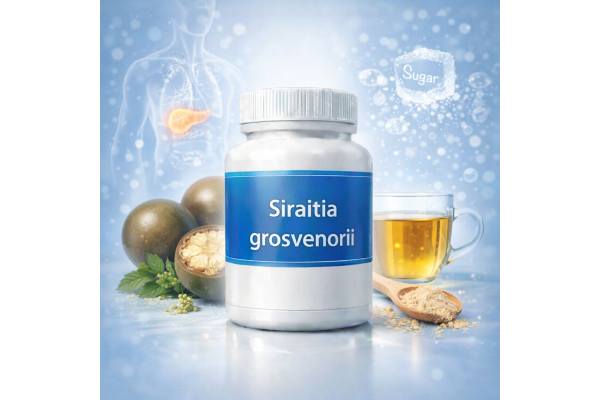
Siraitia grosvenorii, better known as monk fruit or Luo Han Guo, has moved from traditional Chinese herbal teas into protein powders, soft drinks, and home baking mixes worldwide. Its appeal lies in an unusual combination: intense sweetness with virtually no calories and minimal impact on blood sugar. The fruit’s signature compounds, called mogrosides, are natural high-intensity sweeteners and also show antioxidant and anti-inflammatory activity in experimental research.
Today, Siraitia grosvenorii extract is used as a sugar substitute in foods for people watching their weight or managing diabetes, and as a soothing ingredient in throat and respiratory remedies in traditional practice. At the same time, questions remain about long-term safety, ideal dosage, and how it compares with other sweeteners in everyday use.
This guide walks you through what Siraitia grosvenorii is, how it works, realistic benefits, practical usage tips, dosage considerations, side effects, and what current research actually tells us—so you can make informed decisions together with your healthcare professional.
Quick Facts for Siraitia grosvenorii
- Monk fruit extract from Siraitia grosvenorii provides sweetness roughly 100–250 times stronger than sugar with negligible calories and minimal effect on blood glucose.
- Mogrosides from the fruit show antioxidant and anti-inflammatory activities in laboratory and animal studies, with emerging data on metabolic and respiratory support.
- Typical human intakes in studies have reached about 60 mg/kg body weight per day of monk fruit extract without clear adverse effects, while everyday use is usually far lower.
- Long-term human safety data are still limited, and some commercial products blend monk fruit with sugar alcohols that can cause bloating or diarrhea at high intakes.
- People with severe food allergies (especially to gourds), significant digestive disorders, or complex chronic illness should speak with a clinician before using concentrated monk fruit products regularly.
Table of Contents
- What is Siraitia grosvenorii and how does it work?
- Benefits and uses of Siraitia grosvenorii sweetener
- How to use Siraitia grosvenorii in daily life
- Dosage guidelines and product types for Siraitia grosvenorii
- Side effects, interactions, and who should avoid Siraitia grosvenorii
- What current research says about Siraitia grosvenorii
What is Siraitia grosvenorii and how does it work?
Siraitia grosvenorii is a small, round, green-brown fruit from a vine in the Cucurbitaceae (gourd) family, native to the subtropical mountains of southern China. Locally called Luo Han Guo, it has been used for centuries in traditional Chinese medicine as a “food-medicine” for soothing sore throats, moistening the lungs, and easing cough. Dried fruits are still commonly brewed into herbal teas.
The modern story of Siraitia grosvenorii centers on mogrosides, a group of cucurbitane-type triterpene glycosides concentrated in the fruit’s pulp. Mogroside V is the best-known member and is mainly responsible for the intense sweetness of monk fruit extract. Depending on purity, commercial extracts can taste 100–400 times sweeter than sucrose without adding sugar or meaningful calories.
From a metabolic standpoint, mogrosides behave differently from sugar. They are poorly absorbed in the upper gastrointestinal tract and reach the colon largely intact. There, gut microbes cleave off attached glucose units, using some as fuel. The remaining mogrol backbone and its metabolites are mostly excreted, with only small amounts entering the bloodstream and being eliminated in urine. Because of this limited absorption and rapid clearance, monk fruit sweetener does not significantly raise blood glucose in healthy people and appears neutral in short-term studies in people with diabetes.
In cell and animal models, mogrosides also modulate oxidative stress and inflammation. They can reduce the formation of reactive oxygen species, regulate signaling pathways involved in inflammatory responses, and influence enzymes related to fat and glucose metabolism. These findings underpin claims that Siraitia grosvenorii might support metabolic health or protect tissues from damage under certain conditions. However, most of this evidence remains preclinical, and translation into clear, proven benefits in humans is still in progress.
Commercially, “monk fruit sweetener” usually means a purified extract standardized to a specific content of mogroside V or total mogrosides. This extract may be sold alone as a high-intensity sweetener or blended with carriers such as erythritol or allulose to create spoon-for-spoon sugar replacements. The exact composition, sweetness, and metabolic impact therefore vary by product, which is why label reading and understanding the ingredient list are essential.
Benefits and uses of Siraitia grosvenorii sweetener
The most immediate benefit of Siraitia grosvenorii is practical: it allows food and beverage manufacturers, as well as home cooks, to create sweet-tasting products with little or no added sugar. This makes it an attractive option for:
- people with diabetes who need to manage blood glucose
- individuals with prediabetes or metabolic syndrome
- anyone aiming to reduce added sugar for weight management or dental health
Because monk fruit extract is so sweet, only tiny amounts are needed to achieve the desired taste. This keeps calorie contribution very low even when used in drinks, yogurts, desserts, or sauces. Controlled human studies have generally found that monk fruit sweeteners have minimal or no effect on immediate blood glucose or insulin levels when they replace sugar in meals, which supports their use as part of a lower-glycemic eating pattern.
Beyond sweetness, Siraitia grosvenorii holds a place in respiratory and throat support, especially in East Asian herbal traditions. Decoctions of the dried fruit are commonly consumed for dry coughs, hoarseness, or throat irritation. While detailed clinical trials are limited, the demulcent nature of the fruit and its anti-inflammatory actions in preclinical research provide a plausible basis for the soothing effects people report.
Emerging data suggest other potential advantages:
- Antioxidant support: Mogrosides can scavenge free radicals and upregulate endogenous antioxidant defenses in experimental models.
- Metabolic modulation: Animal studies indicate improvements in insulin resistance, blood lipid profiles, and body weight in the context of high-fat or high-sugar diets when mogrosides are provided.
- Oral health: Because mogrosides are not fermentable sugars, monk fruit sweetener does not feed cariogenic bacteria in the same way sucrose does, which may reduce the risk of dental caries compared with sugar-heavy diets.
- Possible anti-inflammatory and neuroprotective actions: Research in models of inflammation and nerve injury shows signaling changes that may translate into longer-term benefits, though this has not been proven in large human trials.
In everyday life, these benefits show up as practical substitutions: swapping sugar-sweetened beverages for monk-fruit-sweetened ones, using monk fruit blends in baking instead of white sugar, or choosing lozenges that use Siraitia grosvenorii instead of glucose-heavy bases. The key is to view monk fruit as a tool to reduce added sugar intake while maintaining enjoyment of sweet flavors, not as a stand-alone cure for metabolic or respiratory disease.
How to use Siraitia grosvenorii in daily life
Translating the science into everyday use starts with understanding the types of products on the market and how they behave in recipes. Monk fruit sweeteners come in several general forms:
- Pure or high-purity monk fruit extract (often powdered)
- Blends with erythritol, allulose, or other bulking agents designed to mimic sugar one-for-one
- Liquid drops, often highly concentrated
- Traditional dried fruits or granules used for herbal teas and soups
For tabletop sweetening—adding to coffee, tea, smoothies, or yogurt—liquid drops or granular blends are easiest. Begin with a small amount; because these products are much sweeter than sugar, it is easy to overshoot and end up with an overly intense or slightly bitter aftertaste. Many brands provide a conversion chart (for example, one teaspoon of blend equals two teaspoons of sugar) that is worth following at first.
Baking and cooking require more thought. Sugar does more than sweeten: it contributes bulk, browning, moisture retention, and texture. Pure monk fruit extract cannot replicate these roles, which is why most baking-oriented products combine Siraitia grosvenorii with bulk sweeteners that behave more like sugar. When you use these blends:
- Start with recipes specifically developed for monk fruit or low-sugar baking.
- If adapting an existing recipe, replace only part of the sugar at first (for example, 25–50 percent) to preserve texture while reducing total sugar.
- Be prepared for subtle differences in browning, crispness, and volume, especially in cookies and cakes.
Traditional dried Luo Han Guo fruits are typically split and simmered in water to make herbal tea. One fruit is often enough for a pot, and the infusion can be enjoyed warm for throat comfort or cooled as a naturally sweet drink. This preparation has a gentler sweetness than purified extracts and includes other plant components such as polysaccharides and flavonoids.
When choosing products, consider:
- Ingredient list: Does it contain only monk fruit extract, or is it blended with sugar alcohols or other sweeteners?
- Intended use: Some products are optimized for beverages, others for baking.
- Added flavors or fillers: Vanilla, inulin, or fiber may be included to modify taste and texture.
Finally, think about your overall diet. Siraitia grosvenorii can help reduce added sugar, but it is most effective when combined with broader habits: plenty of whole foods, balanced macronutrients, regular activity, and attention to total calorie intake. For some people, lowering exposure to intense sweetness over time—rather than simply swapping one sweetener for another—also helps reset taste perception and makes naturally sweet foods like fruit more satisfying.
Dosage guidelines and product types for Siraitia grosvenorii
Unlike vitamins or medications, there is no universally agreed “dose” of Siraitia grosvenorii for the general population. Regulatory assessments have focused on safety at realistic food-use levels rather than on therapeutic dosing. Still, some practical reference points can guide everyday consumption.
Toxicology studies have given animals very high doses of monk fruit extract—thousands of milligrams per kilogram of body weight per day—without clear evidence of toxicity. Human tolerance studies and regulatory reviews indicate that intakes up to around 60 mg/kg body weight per day of monk fruit extract have not produced significant adverse effects in the short to medium term. For a 70 kg adult, that translates to about 4,000 mg of extract per day, which is much more than most people would consume through normal food use.
In practice, typical intakes are far lower. A sachet or teaspoon-equivalent of a monk fruit tabletop sweetener may contain tens to a few hundred milligrams of extract, depending on the formulation. A flavored drink or yogurt might deliver similar amounts. Many people stay within a range of two to four servings of monk-fruit-sweetened products per day without approaching the levels used in safety studies.
Product type matters:
- Pure extract powders: Extremely sweet; serving sizes may be as small as 20–40 mg. These are best measured with tiny spoons or drops and are not ideal for casual, unmeasured use.
- Blends for 1:1 sugar replacement: Usually contain a lower percentage of monk fruit extract plus erythritol, allulose, or similar. Here, a teaspoon often matches the sweetness of a teaspoon of sugar, making portioning easier.
- Traditional dried fruit: The whole fruit used in tea provides a more diffuse, moderate exposure to mogrosides and other constituents and is unlikely to approach high experimental doses.
Because there is no established acceptable daily intake threshold from all authorities, a sensible approach is:
- Use monk fruit sweetener as one tool among several for reducing added sugar.
- Spread intake across the day rather than consuming very large amounts at once.
- Pay attention to how your body responds, especially if the product also contains sugar alcohols.
Children, pregnant or breastfeeding individuals, and people with chronic illnesses were included to a limited extent in formal evaluations, and short- to mid-term use at typical food levels appears acceptable in several regulatory reviews. Even so, these groups have less long-term data, so staying comfortably below the highest tested ranges and involving a healthcare professional in decisions about heavy or prolonged use is prudent.
Side effects, interactions, and who should avoid Siraitia grosvenorii
Overall, Siraitia grosvenorii extract has a favorable safety profile when consumed at levels commonly found in foods and beverages. Most people tolerate monk fruit sweeteners without noticeable side effects, particularly when they are used to replace sugar in moderate amounts. Still, there are several nuances worth understanding.
At food-use levels, pure monk fruit extract itself rarely causes problems. When side effects do occur, they are more often related to co-ingredients than to the mogrosides. For example, many commercial products blend monk fruit with erythritol or other sugar alcohols. At high doses, sugar alcohols can cause bloating, gas, abdominal discomfort, or loose stools, especially in people with irritable bowel syndrome or sensitive digestion. This is one reason to read labels: if symptoms appear, the sugar alcohol may be the culprit rather than Siraitia grosvenorii.
Allergic reactions to monk fruit are uncommon but theoretically possible, particularly in people with known sensitivity to other members of the gourd family (such as melon, cucumber, or pumpkin). Signs of an allergic reaction include itching, hives, swelling of the lips or face, wheezing, or difficulty breathing after exposure. Any such reaction requires immediate medical evaluation, and future use should be avoided unless a specialist gives clear guidance.
In terms of broader safety, regulatory bodies in several countries have reviewed subchronic toxicity, reproductive toxicity, and genotoxicity data for monk fruit extract and have not identified strong safety signals at proposed use levels. At the same time, some authorities have noted gaps in very long-term data and have highlighted the need for more information on chronic consumption at higher doses. This is part of the reason why regulatory status differs by region, with some jurisdictions permitting monk fruit as a general sweetener and others authorizing only specific extracts or uses.
Because mogrosides are not sugar, they do not interact with many medications the way glucose or fructose might. However, for people with diabetes who adjust their medication based on carbohydrate intake, substantial replacement of sugar with non-nutritive sweeteners can change overall glycemic control. Healthcare providers may need to review blood glucose records and medication doses if monk fruit becomes a major part of the diet.
Groups who should be more cautious or seek professional advice before using concentrated monk fruit products include:
- Individuals with a history of severe food or drug allergies
- People with chronic gastrointestinal diseases or significant sensitivity to sugar alcohols
- Pregnant or breastfeeding individuals planning to use high amounts for extended periods
- Children, particularly very young children, when intake would be substantial relative to body weight
- People with complex chronic illnesses who are already taking multiple medications
For most healthy adults, using Siraitia grosvenorii sweetener as part of a balanced diet and within the range of typical food-use levels is considered compatible with safe practice. As with any concentrated bioactive ingredient, moderation, attention to personal responses, and open communication with healthcare providers remain wise.
What current research says about Siraitia grosvenorii
Recent scientific work on Siraitia grosvenorii has expanded in two directions: detailed characterization of the fruit’s composition and bioactive components, and controlled studies of monk fruit extract as a non-nutritive sweetener in humans.
Comprehensive reviews of the fruit describe a rich phytochemical profile that includes triterpenoid mogrosides, flavonoids, polysaccharides, amino acids, and various micronutrients. Among these, mogrosides, especially mogroside V, stand out as both the main sweet-tasting compounds and important bioactive agents. Laboratory studies demonstrate antioxidant activity, modulation of inflammatory pathways, and influences on enzymes involved in glucose and lipid metabolism.
In animal models of metabolic disease, monk fruit extract and isolated mogrosides have been shown to improve markers of insulin resistance, reduce fasting blood glucose, and attenuate weight gain under high-fat or high-sugar diet conditions. Additional experiments point to potential protective effects in models of liver injury, neurological damage, and certain types of cancer. These findings support the idea that Siraitia grosvenorii is more than just a neutral sweetener, though they do not by themselves prove equivalent benefits in humans.
Human research has focused on two main themes:
- Sweetener substitution and metabolic impact
Trials comparing monk fruit sweetener to sugar in beverages or meals generally find that monk fruit does not raise blood glucose or insulin to the same degree as sucrose. In some short-term interventions, replacing sugar with monk fruit helps reduce overall calorie and carbohydrate intake, which can contribute to weight and glycemic management as part of broader lifestyle changes. - Safety and tolerability
Subchronic studies and human tolerance assessments have not identified major safety concerns at realistic consumption levels. Regulatory reviews summarize data from animal and human studies, including assessments of reproductive toxicity and genotoxicity, and conclude that monk fruit extract is of low acute toxicity and well tolerated at proposed use levels. However, some panels emphasize that long-term human data are still limited, and that more research would be useful, particularly at higher chronic intakes and in sensitive populations.
A systematic review of randomized controlled trials has started to integrate these findings, concluding that monk fruit sweeteners appear metabolically neutral or favorable compared with sugar in the short term, with hints of additional antioxidant and anti-inflammatory benefits. At the same time, the authors note that many trials are small, short in duration, and often industry-sponsored, which calls for cautious interpretation and a push for more independent, longer-term studies.
Taken together, the evidence supports Siraitia grosvenorii as a credible, low-calorie sweetener with promising biological activities and a generally good safety profile at typical food-use doses. It is not a substitute for comprehensive dietary and lifestyle management, nor a confirmed therapeutic agent for specific diseases, but it can be a useful ingredient for reducing added sugar while ongoing research continues to clarify its broader health impacts.
References
- Recent Advances in the Distribution, Chemical Composition, Health Benefits, and Application of the Fruit of Siraitia grosvenorii 2024 (Review)
- Research progress of pharmacological effects of Siraitia grosvenorii extract 2022 (Review)
- Monk Fruit Extract and Sustainable Health: A PRISMA-Guided Systematic Review of Randomized Controlled Trials 2025 (Systematic Review)
- Safety of use of Monk fruit extract as a food additive in different food categories 2019 (Regulatory Safety Opinion)
- Aspartame and Other Sweeteners in Food 2025 (Regulatory Overview)
Disclaimer
The information in this article is for educational purposes only and is not a substitute for personalized medical advice, diagnosis, or treatment. Siraitia grosvenorii and monk fruit extracts are bioactive ingredients that can influence health and interact with overall dietary patterns. Regulatory assessments indicate a good safety profile at normal food-use levels, but long-term data and experience in certain populations remain limited. Always consult a qualified healthcare professional before making significant changes to your intake of any sweetener, especially if you have diabetes, gastrointestinal disease, severe allergies, are pregnant or breastfeeding, or are managing complex medical conditions. Never disregard professional medical advice or delay seeking it because of something you have read here.
If you found this guide helpful, you are warmly encouraged to share it on Facebook, X (formerly Twitter), or any platform you prefer, and to follow our future updates on social media. Thoughtful sharing helps support our work so we can continue to provide carefully researched, balanced, and practical health information.