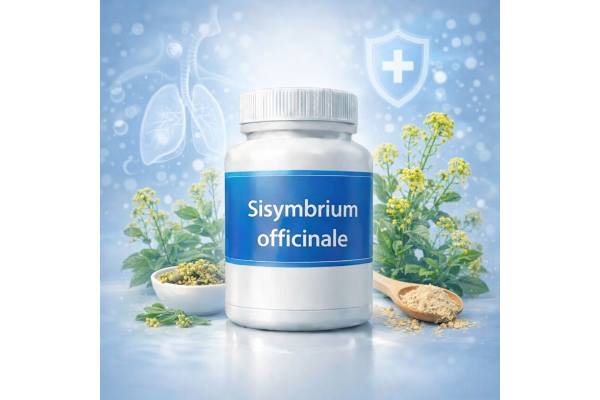
Sisymbrium officinale, commonly known as hedge mustard or “the singers’ plant,” is a modest wild herb with a long reputation among actors, teachers, and vocal performers. Traditionally, its flowering tops and seeds have been used as soothing remedies for hoarseness, scratchy throat, and dry, irritating cough. Modern research is beginning to explore how its active compounds—especially glucosinolates, isothiocyanates, and mucilages—might support these effects through mild anti-inflammatory, antioxidant, and antimicrobial actions.
Today, Sisymbrium officinale appears in lozenges, syrups, sprays, teas, and liquid extracts sold for voice comfort and upper respiratory relief. At the same time, regulators classify it as a traditional herbal product: human studies are limited, and it should be used with realistic expectations and sensible caution. This guide walks you through what the plant is, how it is used, typical dosage ranges, potential benefits and limitations, and key safety points so you can discuss it more confidently with a qualified health professional.
Essential Insights for Sisymbrium officinale
- Traditionally used for mild hoarseness, throat irritation, and dry cough in singers and speakers.
- Contains glucosinolates, isothiocyanates, flavonoids, and mucilage that may support soothing, antioxidant, and antimicrobial effects.
- Typical standardized dry extracts for adults provide about 7.5–10 mg per lozenge up to 10–12 times daily, or 80–90 mg in liquid products 3–4 times daily.
- Should be avoided in pregnancy, breastfeeding, and in children below 3–6 years depending on the dosage form, unless a doctor advises otherwise.
- People with thyroid disease, significant medical conditions, or multiple medicines should seek medical advice before use.
Table of Contents
- What is Sisymbrium officinale and how does it work?
- Benefits and traditional uses for voice and throat
- How to use Sisymbrium officinale in practice
- Typical dosage ranges and preparations
- Side effects, precautions, and who should avoid it
- Research and evidence overview for Sisymbrium officinale
What is Sisymbrium officinale and how does it work?
Sisymbrium officinale (L.) Scop. is an annual herb in the cabbage family Brassicaceae. It grows along roadsides, field edges, and disturbed soils across much of Europe, Asia, and North Africa. The plant has upright, wiry stems, small yellow flowers, and narrow seed pods. Traditionally, herbalists use the semi-fresh flowering aerial parts and, less often, the seeds.
Several common names point to its main reputation: hedge mustard, erysimum, and “the singers’ plant.” For centuries, it has been prepared as infusions, syrups, or candies to ease hoarseness, loss of voice, and irritation in the larynx and pharynx. In modern European regulations, preparations from this herb are recognized as traditional herbal medicinal products for relief of throat irritation, hoarseness, and dry cough, based on long-standing use rather than robust clinical trial data.
From a phytochemical perspective, Sisymbrium officinale contains:
- Glucosinolates (notably isopropyl glucosinolate) and their breakdown products, isothiocyanates
- Mucilage, which can form a soothing layer over mucous membranes
- Flavonoids and phenolic compounds with antioxidant activity
- Small amounts of essential oil and other volatile constituents
When plant tissues are crushed, myrosinase enzymes convert glucosinolates into isothiocyanates. These compounds are pungent and biologically active. Laboratory research suggests that some of them can activate TRPA1 ion channels, which are involved in the perception of pungency and in sensory pathways related to irritation and inflammation in the throat and airways. This may partly explain the “clearing” or stimulating sensations people report when using the herb.
Other experimental work points to mild antimicrobial effects against certain bacteria and fungi, as well as smooth-muscle relaxation in airway tissue and general antioxidant activity. Taken together, these properties create a plausible rationale for the traditional use of Sisymbrium officinale in minor self-limiting throat discomfort. However, these mechanisms are still being mapped, and the strength of effect in humans remains uncertain.
Benefits and traditional uses for voice and throat
The best-known role of Sisymbrium officinale is in supporting the voice and soothing an irritated throat. Classical sources and modern ethnobotanical surveys describe it as a remedy for:
- Hoarseness after overuse of the voice
- Functional voice strain in singers, teachers, and public speakers
- Dry, scratchy, or raw sensations in the throat
- Mild, non-productive (dry) cough associated with irritation
- Early or mild laryngitis and pharyngitis, as part of a broader care plan
In traditional practice, semi-fresh flowering tops are infused and sipped warm, sometimes sweetened with honey. The herb is often combined with other soothing plants such as malva, plantain, thyme, or liquorice in complex throat teas and lozenges.
Potential mechanisms that could contribute to these effects include:
- Demulcent action of mucilage
Mucilage can form a thin, protective film on irritated mucous membranes, helping to reduce friction and dryness. This may ease discomfort during speaking or swallowing. - Sensory modulation through pungent isothiocyanates
Isothiocyanates provide a pungent, tingling sensation and can stimulate salivation and mucous secretion, which may relieve the sense of dryness and “catch” in the throat. - Mild anti-inflammatory and analgesic effects
Early pharmacological work has shown modest anti-inflammatory and pain-modulating effects in experimental models. Although it is not comparable to standard anti-inflammatory drugs, this may contribute to subjective relief. - Antimicrobial and antioxidant contributions
Extracts have demonstrated inhibitory effects on some bacteria and fungi in vitro, as well as notable free-radical scavenging capacity. For self-limiting upper respiratory symptoms, these properties could support the body’s natural defences, although this has not been conclusively proven in clinical trials.
A small clinical study in people with vocal tract discomfort reported improvements in subjective measures of voice-related disability after several weeks of using Sisymbrium officinale preparations. However, the study design was preliminary, with limited sample size and no strong blinding or placebo control. Therefore, the results should be seen as encouraging but not definitive.
In summary, Sisymbrium officinale may be most appropriately viewed as a traditional, soothing support for mild, short-term hoarseness and irritation, especially related to voice overuse. It should not be relied upon as a treatment for serious infections, persistent cough, or unexplained voice changes, where medical evaluation is essential.
How to use Sisymbrium officinale in practice
In everyday use, Sisymbrium officinale typically appears not as raw plant material, but as finished herbal products designed for throat comfort. Understanding the main forms helps you choose and discuss them wisely.
Common preparations include:
- Lozenges or tablets for oromucosal use
These are dissolved slowly in the mouth, allowing the active components to act directly on throat and laryngeal tissues. They may contain standardized dry extracts of the herb, sometimes blended with honey, propolis, or other botanicals such as thyme or Iceland moss. - Liquid extracts and syrups
These can be swallowed directly or mixed with water. Some are formulated specifically as cough syrups, combining Sisymbrium officinale with ginger, peppermint, or lemon juice for added flavour and functionality. - Herbal teas and infusions
Dried aerial parts are steeped in hot water for several minutes. Teas are commonly used during colds, after heavy vocal use, or before and after performances. - Voice “drinks” and functional foods
In some research and artisanal products, the plant has been incorporated into honey, kombucha-like beverages, beers, and other functional drinks aimed at people who use their voices professionally.
When considering practical use, people often ask how to integrate Sisymbrium officinale into their routine:
- For acute hoarseness after heavy voice use
- A typical pattern is to use lozenges or a syrup several times per day for a few days.
- Warm, non-irritating fluids (including herbal teas) are usually encouraged alongside vocal rest, gentle steam inhalation, and avoidance of smoke or alcohol.
- Before or during voice-demanding days
- Some performers use a lozenge or warm infusion in the hours leading up to a show or long speaking engagement, then repeat in breaks and afterwards.
- Hydration, vocal warm-ups, and proper technique remain more important than any single herbal product.
- As part of general cold and flu self-care
- The herb may be combined with other supportive measures such as saline gargles, rest, and over-the-counter remedies when appropriate.
- Symptoms such as high fever, shortness of breath, chest pain, or persistent cough require medical attention rather than self-treatment.
Always follow the exact instructions on the product label, as extracts can differ widely in strength. If you have a chronic voice or respiratory condition, or if you use professional voice therapy, involve your doctor or speech-language pathologist in decisions about herbal products. They can help you ensure that Sisymbrium officinale is used, if at all, as a complement to—not a replacement for—evidence-based care.
Typical dosage ranges and preparations
There is no single universal dosage for Sisymbrium officinale, because products differ in extraction method, strength, and intended use. However, European regulators have published traditional-use posology for specific standardized dry extracts, which provides a useful orientation.
For adults, typical doses in authorized herbal medicinal products include:
- Oromucosal tablets or lozenges (water dry extract, DER 3.5–5.5:1)
- 10 mg of extract per lozenge
- Taken about 10–12 times daily (one lozenge every 1–2 hours while awake), dissolved slowly in the mouth without chewing.
- Oromucosal tablets or lozenges (water dry extract, DER 6–8:1)
- 7.5–10 mg of extract per lozenge
- Also taken roughly 10–12 times daily.
- Oral liquid preparations (water dry extract, DER 6–8:1)
- Around 82.5 mg of extract per dose
- Taken 3–4 times daily, usually diluted in water or taken directly as directed on the product label.
For children, authorized products use lower frequencies and doses, and they also impose age limits. Generally:
- Oromucosal preparations are not recommended below 6 years of age.
- Oral liquid preparations are not recommended below 3 years of age.
- Above these ages, doses are typically about half or one-third of adult doses, depending on the product design.
Herbal teas and traditional preparations are less standardized, but common household guidance is:
- 1–2 teaspoons (about 1–2 g) of dried aerial parts per 150–200 ml of hot water,
- Steeped for 5–10 minutes and drunk up to three or four times per day.
For seed powders, some traditional sources mention 3–6 g of crushed seeds per day divided into several doses, but this form is less frequently used in modern standardized products and may carry a higher risk of concentrated glucosinolate intake.
Regardless of the form:
- Do not exceed the maximum daily dose listed on the label.
- Limit self-treatment to about one week; if symptoms persist or worsen, a doctor or qualified health professional should review your situation.
- Be especially cautious with high-frequency intake of lozenges in children or small adults, as the cumulative daily dose adds up quickly.
Because Sisymbrium officinale belongs to the same family as cabbages and other glucosinolate-rich plants, very high or prolonged intake could theoretically contribute to thyroid stress in susceptible individuals, especially when dietary iodine is low. While this has not been clearly documented in humans for this specific herb, it reinforces the principle of using it at recommended doses and for limited periods, rather than continuously at high levels.
Side effects, precautions, and who should avoid it
Overall, Sisymbrium officinale has a relatively favourable safety profile when used at traditional doses for short periods. Regulatory reviews have not identified consistent serious adverse effects, and no confirmed cases of overdose have been reported in the literature. However, “generally well tolerated” does not mean “risk-free,” and there are important cautions to keep in mind.
Possible side effects reported or considered plausible include:
- Mild gastrointestinal discomfort (nausea, stomach upset)
- Local irritation in the mouth or throat due to pungent isothiocyanates
- Allergic or hypersensitivity reactions (rash, itching, swelling) in sensitive individuals
- Very rarely, worsening of cough or respiratory irritation if used inappropriately
If you notice any unexpected reaction—especially difficulty breathing, widespread rash, or significant swelling—stop the product immediately and seek urgent medical help.
Key precautions and groups who should exercise particular care:
- Children
- Oromucosal lozenges are not recommended under 6 years of age.
- Oral liquid preparations are not recommended under 3 years.
- For older children, use only products that specify paediatric dosing and follow the instructions closely. Young children may choke on lozenges.
- Pregnancy and breastfeeding
- Safety during pregnancy and lactation has not been established, and traditional-use monographs advise against use in these periods.
- Pregnant or nursing individuals should avoid Sisymbrium officinale unless a physician with expertise in herbal medicine specifically recommends it.
- Thyroid disorders
- Because the plant contains glucosinolates similar to those in other Brassicaceae vegetables, very high or prolonged intake might theoretically interfere with thyroid function, especially with low iodine intake.
- People with hypothyroidism, on thyroid medication, or with a history of thyroid disease should discuss any regular use with their endocrinologist or primary care physician.
- Serious respiratory symptoms
- If hoarseness or cough is accompanied by shortness of breath, high fever, chest pain, or purulent (yellow-green) sputum, self-treatment with herbs is not appropriate. Medical evaluation is essential.
- Sudden unexplained voice loss, persistent hoarseness beyond two to three weeks, or voice changes in smokers should be assessed by an ear, nose, and throat specialist.
- Allergy and cross-reactivity
- Individuals with known allergy to other members of the cabbage family should approach Sisymbrium officinale cautiously. Any signs of immediate hypersensitivity require discontinuation.
No clinically relevant interactions with conventional medicines are currently documented, but formal interaction studies are lacking. It is prudent to inform your doctor or pharmacist if you use Sisymbrium officinale alongside prescription drugs, particularly anticoagulants, thyroid medication, or multiple long-term therapies.
In summary, use Sisymbrium officinale for mild, short-term throat irritation only, at recommended doses, and avoid it in pregnancy, breastfeeding, very young children, and in significant or unexplained respiratory symptoms unless guided by a healthcare professional.
Research and evidence overview for Sisymbrium officinale
Scientific interest in Sisymbrium officinale has grown in the last decade, but the evidence base is still modest compared with more widely studied herbs. The current knowledge comes from four main areas: phytochemistry, in vitro and animal studies, cultivation and quality research, and limited human observations.
- Phytochemical and sensory studies
Modern analytical work has characterized the glucosinolate and isothiocyanate content of Sisymbrium officinale. Research has identified iso-propyl isothiocyanate and 2-butyl isothiocyanate as notable volatile compounds. These studies also explored how preparation methods—such as infusions, honey preparations, or fermented drinks—change the profile and concentration of active volatiles. Some forms, like kombucha-type fermentations, appear to reduce isothiocyanate levels, while others retain them more effectively. Sensory analyses suggest that these isothiocyanates are strong agonists of TRPA1 channels, which are involved in trigeminal (somatosensory) perception. This supports the idea that the “tingling” and pungency experienced when consuming the herb or enriched foods are linked to specific, measurable compounds. - Antioxidant, antimicrobial, and anticancer assays
Laboratory experiments with ethanolic extracts of the plant have shown:
- High total phenolic and flavonoid content
- Robust free-radical scavenging capacity in standard antioxidant assays
- Inhibitory zones against both Gram-positive and Gram-negative bacteria, including strains of Streptococcus, Staphylococcus, and Escherichia coli
- Low-to-moderate cytotoxic effects on certain cancer cell lines in vitro These findings support the classification of Sisymbrium officinale as a plant with bioactive phenolic and glucosinolate-derived constituents. However, in vitro activity does not automatically translate into clinical efficacy or safety at typical human doses.
- Agronomic and quality studies
Since interest in the plant as a functional vegetable and herbal resource is increasing, agronomy research has evaluated how fertilization levels, cultivation conditions, and harvest timing affect yield and phytochemical content. Some studies suggest that moderate nutrient levels can maintain or even enhance glucosinolate and phenolic concentrations without compromising yield, which is relevant for standardized production of high-quality raw material. - Clinical and observational data
Human data remain limited:
- A small, non-randomized trial in individuals with vocal tract disorders reported reduced perceived vocal disability after using preparations of Sisymbrium officinale over several weeks.
- Case series and observational reports describe subjective improvements in hoarseness and throat discomfort, particularly in professional voice users.
- No large, well-controlled randomized clinical trials have yet established clear efficacy over placebo for specific indications such as acute laryngitis or cough.
Regulatory bodies therefore classify Sisymbrium officinale preparations as traditional herbal medicinal products, where authorization relies on long-standing experience rather than high-level clinical evidence. The current research supports plausible mechanisms and an acceptable safety profile when used within recommended limits, but it does not justify strong therapeutic claims.
For clinicians and scientifically minded readers, this means that Sisymbrium officinale can be considered as a complementary, tradition-based option for mild symptoms, while ongoing research continues to clarify its precise benefits, effective dosing, and long-term safety.
References
- European Union herbal monograph on Sisymbrium officinale (L.) Scop., herba 2014 (Guideline)
- Sisymbrium officinale, the Plant of Singers: A Review of Its Properties and Uses 2020 (Systematic Review)
- Sisymbrium Officinale (the Singers’ Plant) as an Ingredient: Analysis of Somatosensory Active Volatile Isothiocyanates in Model Food and Drinks 2021 (Experimental Study)
- Assessment of antioxidant, antimicrobial, and anticancer activities of Sisymbrium officinale plant extract 2022 (Experimental Study)
- Effect of Fertilization on Yield and Quality of Sisymbrium officinale (L.) Scop. Grown as Leafy Vegetable Crop 2019 (Agronomic Study)
Disclaimer
The information in this article is for general educational purposes only and does not replace personalized medical advice, diagnosis, or treatment. Sisymbrium officinale products should not be used to self-treat serious, chronic, or unexplained symptoms, especially those involving breathing difficulties, persistent cough, or significant voice changes. Always consult a qualified healthcare professional before starting, stopping, or combining any herbal supplement with prescription or over-the-counter medicines, particularly if you are pregnant, breastfeeding, have a chronic illness, or are considering use in a child.
If you found this guide helpful, you are warmly invited to share it with others on Facebook, X (formerly Twitter), or any platform you prefer, and to follow our work on social media. Your respectful support by sharing our articles helps our team continue to create clear, carefully researched health content for a wider community.