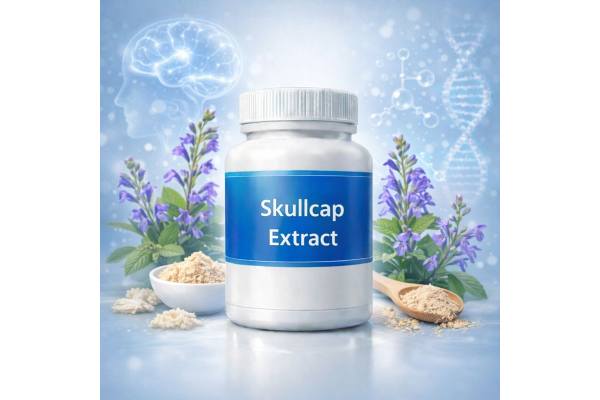
Skullcap extract is an herbal preparation made from plants in the Scutellaria genus, most commonly American skullcap (Scutellaria lateriflora) and Chinese skullcap (Scutellaria baicalensis). Traditionally, American skullcap has been used as a calming “nervine” to ease restlessness, nervous tension, and difficulty sleeping, while Chinese skullcap root features in East Asian formulas for inflammation, infections, and liver support.
Modern supplements concentrate flavonoids such as baicalin, baicalein, and scutellarin, which appear to influence GABA and other neurotransmitters, and may modulate inflammation and oxidative stress. Emerging clinical research suggests standardized skullcap extracts can improve sleep quality and may support mood and immune responses in specific settings. At the same time, case reports of liver injury and strong sedative effects mean skullcap is not a benign bedtime tea for everyone.
This guide explains how skullcap extract works, realistic benefits, evidence-based dosage ranges, and safety issues so you can evaluate whether it belongs in your routine and how to discuss it with your health professional.
Quick Summary for Skullcap Extract
- Standardized skullcap extract (often 100–400 mg per day) has shown benefits for sleep quality and mild anxiety in small clinical studies.
- Traditional preparations of American skullcap (Scutellaria lateriflora) use about 0.25–12 g of dried herb tops per day for adults, often as teas or tinctures.
- Skullcap can cause drowsiness and has been linked, rarely, to serious liver injury, especially in multi-herb products or people with underlying risk factors.
- People with liver disease, those who are pregnant or breastfeeding, children, and anyone taking sedatives or anticonvulsants should avoid unsupervised skullcap use.
- Choosing well-characterized single-herb products from reputable brands and using them for limited periods under medical guidance is the safest approach.
Table of Contents
- What is skullcap extract and which types exist?
- Skullcap extract benefits for anxiety, stress, and sleep
- How to take skullcap extract and typical dosages
- Other potential uses of skullcap extract
- Skullcap extract side effects and who should avoid it
- What the research says and how to use skullcap wisely
What is skullcap extract and which types exist?
“Skullcap” refers to several species in the Scutellaria genus, named for their helmet-shaped flowers. Two species appear most often in supplements:
American skullcap (Scutellaria lateriflora) is a North American herb whose aerial parts (tops) are used. Traditional Western herbal medicine describes it as a calming tonic for nervous tension, restlessness, and trouble sleeping, and also for menstrual discomfort and muscle spasms.
Chinese skullcap (Scutellaria baicalensis) is a different plant used in traditional Chinese medicine. Its dried root (Huang Qin) is included in formulas for infections, respiratory conditions, allergies, and liver support. Modern research often focuses on its antioxidant and anti-inflammatory flavonoids.
Both plants are rich in flavonoids such as baicalin, baicalein, wogonin, and scutellarin. Laboratory work suggests these compounds can:
- Interact with GABA receptors and enzymes that break down GABA, the main calming neurotransmitter.
- Reduce inflammatory signaling and oxidative stress.
- Influence serotonin and other mood-related pathways in preclinical models.
In supplements, skullcap extract usually appears in one of three ways:
- Single-herb American skullcap extract, standardized to a specific flavonoid content.
- Chinese skullcap (S. baicalensis) extract, often as part of multi-herb formulas or immune/anti-inflammatory blends.
- Combination products that list “skullcap” along with several other herbs for sleep, anxiety, pain, or joint health.
You will also see traditional preparations:
- Dried herb for teas and infusions.
- Tinctures and fluid extracts (herb extracted in alcohol and water).
- Capsules containing dried herb powder rather than concentrated extract.
This variety makes it essential to read labels carefully. “Skullcap” on a bottle may mean S. lateriflora, S. baicalensis, or a mix, and potency can vary widely between a gentle tea and a standardized extract capsule.
A further complication is quality. Past cases of “skullcap toxicity” have sometimes involved adulteration with other herbs like germander or mislabeling of species. Choosing products from reputable manufacturers that test for identity and contaminants is one of the most important safety steps you can take.
Skullcap extract benefits for anxiety, stress, and sleep
Anxiety, stress, and sleep problems are the main reasons people reach for skullcap. Traditionally, American skullcap teas and tinctures have been used as “nervines” to calm a racing mind and ease muscle tension without the heavy sedation of pharmaceutical tranquilizers.
Modern research supports a modest calming effect. Small human trials using standardized S. lateriflora extracts have reported:
- Improvements in subjective anxiety and mood scores in healthy volunteers after short-term use.
- Significant increases in calmness and reductions in tension relative to placebo in some, though not all, studies.
- Good tolerability at typical doses, with drowsiness and lightheadedness as the main reported adverse effects.
More recently, a chemically characterized American skullcap extract has been studied in people with primary insomnia. A randomized, double-blind crossover trial using a 400 mg daily dose found:
- Improved sleep–wake balance and sleep quality scores compared with placebo.
- Beneficial changes in parameters such as sleep onset, sleep efficiency, and total sleep time.
- No serious adverse events, and no significant residual “hangover” effect on waking function in participants.
These findings suggest that standardized skullcap extract can help some individuals fall asleep more easily, stay asleep longer, and feel more rested, especially when insomnia is driven by mental overactivity and stress rather than severe underlying psychiatric or medical illness.
Mechanistically, flavonoids in skullcap appear to:
- Inhibit enzymes that break down GABA, increasing its calming influence in the brain.
- Bind to benzodiazepine sites on GABA-A receptors (particularly wogonin in preclinical work), providing a gentler, plant-based modulation compared with pharmaceutical benzodiazepines.
- Interact with serotonin receptors and other targets linked to mood regulation.
However, it is important to keep expectations realistic:
- Studies are relatively small and short-term, often lasting a few weeks.
- Outcomes rely heavily on subjective questionnaires rather than long-term clinical endpoints.
- Not every trial shows strong effects, and individual responses vary.
Skullcap is best viewed as a complementary approach for mild to moderate stress-related insomnia or situational anxiety, not a stand-alone treatment for major depressive disorder, severe generalized anxiety, or complex sleep disorders such as sleep apnea. Anyone with significant mental health symptoms should seek a full medical assessment rather than relying on skullcap alone.
How to take skullcap extract and typical dosages
Dosing for skullcap depends on the plant species, preparation type, and your health goals. Many labels are vague, so using established monographs and clinical trials as reference points is helpful.
For American skullcap (Scutellaria lateriflora), a recent national monograph for natural health products suggests for adults 18 years and older:
- About 0.25–12 g per day of dried herb tops, taken as teas, powders, or non-standardized extracts.
- Higher amounts (toward the upper end of that range) typically divided across several doses per day.
Traditional dosing examples include:
- Infusion (tea): 1–2 g of dried herb steeped in hot water, taken up to three times daily.
- Tincture (1:5 or similar): roughly 2–6 mL up to three times daily, adjusted based on product strength and practitioner guidance.
For standardized skullcap extracts, clinical trials provide more specific ranges:
- 100–350 mg per day of S. lateriflora extract for calming and mood support in short-term human studies.
- 400 mg per day of standardized S. lateriflora extract for sleep management in insomnia, usually taken in the evening.
Chinese skullcap (S. baicalensis) extracts appear mainly in combination formulas, so per-herb dosing is less consistent. In immune-support trials, participants have taken 500 mg per day of an Acacia catechu plus S. baicalensis blend (UP446) divided into two doses, but this should not be applied to other products without professional input.
Practical steps to use skullcap more safely:
- Clarify your goal.
Decide whether you are seeking occasional support for stressful days, targeted help with sleep onset, or practitioner-guided support for longer-term nervous system issues. - Choose a single-herb product when possible.
Single-herb S. lateriflora extracts with clear milligram amounts and standardization are easier to dose and monitor than multi-herb “sleep blends”. - Start low and go slow.
Begin at the lower end of the suggested range (for example, 100–200 mg of standardized extract in the evening), and increase only if needed and tolerated. - Take skullcap at appropriate times.
Evening dosing is common for sleep, while smaller doses earlier in the day may be used for stress or tension. Because drowsiness can occur, avoid first-time use right before important tasks. - Limit duration unless supervised.
A few days to a few weeks is typical for self-care. If you feel you need daily skullcap for longer, involve a health professional who can monitor liver function, interactions, and overall mental health.
People already using sedatives, antidepressants, anticonvulsants, muscle relaxants, or other central nervous system–active medications should not add skullcap without explicit approval from their prescribing clinician.
Other potential uses of skullcap extract
Beyond its calming and sleep-related effects, skullcap extract has been investigated for a range of other potential actions. Most of this evidence is preliminary and should be interpreted as promising but not definitive.
Pain and menstrual discomfort are traditional indications for American skullcap. Historical texts and modern monographs describe its use as an antispasmodic for menstrual cramps and muscular tension. These uses rely largely on traditional knowledge rather than robust clinical trials, although the herb’s antispasmodic and nervine properties make them plausible.
Chinese skullcap (Scutellaria baicalensis) is more prominent in the scientific literature. Its root is a key ingredient in many multi-herb formulas, and its flavonoids baicalin and baicalein have been studied extensively. Laboratory and animal research suggests:
- Anti-inflammatory effects through down-regulation of NF-κB and other inflammatory pathways.
- Antioxidant activity, reducing oxidative stress in neural and hepatic tissues.
- Antiviral, antibacterial, and antifungal properties in vitro.
- Neuroprotective actions in models of Parkinson’s disease, Alzheimer’s disease, and cerebral ischemia.
Preclinical studies and a recent systematic review in animal models indicate that S. baicalensis and its active compounds may have antidepressant-like effects, possibly via modulation of monoamine neurotransmitters, brain-derived neurotrophic factor, HPA axis activity, and inflammatory cytokines. These findings raise the possibility that Chinese skullcap could one day contribute to integrative approaches for mood disorders, but human trials are still sparse.
In immune function, a randomized, triple-blind trial using a proprietary formula combining Acacia catechu and S. baicalensis (UP446) found improved antibody responses to influenza vaccination and enhanced antioxidant status in older adults. This suggests a role for Chinese skullcap constituents in fine-tuning immune responses, although the formula contains more than one active plant and cannot be equated with skullcap alone.
Topically, S. baicalensis extracts are used in cosmetics and skin-care formulations for their antioxidant and brightening effects. A safety assessment of cosmetic ingredients derived from S. baicalensis concluded they are generally safe as used in topical products, though this does not automatically extend to oral supplements.
Because these broader applications often involve multi-herb formulas or proprietary blends, it is difficult to isolate the effect of skullcap itself. Anyone considering skullcap for chronic inflammatory conditions, immune modulation, or neurodegenerative diseases should view it as experimental and use it only under guidance from clinicians experienced in herbal medicine and conventional care.
Skullcap extract side effects and who should avoid it
Although many people tolerate skullcap well at modest doses, side effects and serious adverse reactions can occur. Safety depends on the species, product quality, dose, duration, and individual risk factors.
Common side effects reported with skullcap include:
- Drowsiness and sedation, sometimes pronounced.
- Dizziness or lightheadedness.
- Mental fog or slowed reaction time.
- Gastrointestinal upset, such as nausea or stomach discomfort, in some users.
Because of these effects, official monographs advise caution when driving or operating machinery while using skullcap, particularly when you first start or increase the dose.
More serious concerns relate to the liver. Skullcap has been linked to rare but clinically significant cases of acute liver injury, sometimes progressing to liver failure. Key points from case reports and safety reviews:
- Liver injury has been reported with both American skullcap (S. lateriflora) and Chinese skullcap (S. baicalensis), often in combination with other herbs such as valerian or black catechu.
- Onset of symptoms typically occurs within several weeks to a few months of starting the product.
- Laboratory tests show marked elevations in liver enzymes (hepatocellular pattern), sometimes accompanied by jaundice and hospitalization.
- Most patients recover fully after stopping the supplement, but at least one case of fatal or transplant-requiring liver failure has been described.
- Some historical “skullcap” liver injuries were later found to involve adulteration with germander, an herb known to be hepatotoxic, underscoring the importance of accurate labeling.
Given this background, the following groups should avoid unsupervised skullcap use:
- People with current or past significant liver disease, unexplained elevated liver enzymes, or heavy alcohol use.
- Individuals taking other potentially hepatotoxic drugs (for example, certain antifungals, methotrexate, high-dose acetaminophen) unless their specialist approves.
- Pregnant or breastfeeding individuals, due to limited safety data and official contraindications in monographs.
- Children and adolescents, unless prescribed and monitored by a clinician trained in pediatric herbal medicine.
- People with a history of severe psychiatric disorders or seizures, especially if they use anticonvulsants, antipsychotics, or sedating antidepressants.
Skullcap also has potential interaction risks:
- Additive sedation with benzodiazepines, sleep medications, opioids, antihistamines, or alcohol.
- Possible influence on how the body processes other drugs via liver enzymes, though human data are limited.
Warning signs that require immediate medical attention include yellowing of the skin or eyes, dark urine, pale stools, severe fatigue, abdominal pain, confusion, or unexplained flu-like symptoms after starting skullcap. In such cases, stop the product and seek urgent evaluation, mentioning all supplements you have taken.
Even for otherwise healthy adults, long-term high-dose skullcap use is not advisable without periodic monitoring of liver function and a clear medical rationale.
What the research says and how to use skullcap wisely
When you step back from individual studies, a clearer picture of skullcap extract emerges. The evidence base is strongest for mild calming and sleep support, thinner but intriguing for immune and mood effects, and accompanied by enough safety signals to justify a cautious, individualized approach.
For American skullcap (S. lateriflora):
- Traditional herbal use and modern monographs converge on its role as a nervine that helps relieve restlessness, nervousness, and difficulty sleeping.
- Human trials with standardized extracts show improvements in mood and sleep scores in some populations, with doses around 100–400 mg per day over several weeks.
- A recent randomized crossover clinical trial in people with insomnia reported significant benefits for sleep–wake regulation and good tolerability using a chemically characterized extract.
For Chinese skullcap (S. baicalensis):
- Preclinical research demonstrates anti-inflammatory, antioxidant, neuroprotective, and antidepressant-like effects of its flavonoids.
- A systematic review of animal studies suggests potential for depressive symptoms, but human trials are still limited.
- Nutraceutical combinations containing S. baicalensis, such as UP446, have improved vaccine responses and antioxidant markers in older adults, though the contribution of skullcap alone is not fully clear.
Across both species, safety data highlight:
- Rare but real risk of liver injury, particularly with multi-herb formulas and in individuals with other risk factors.
- Sedative effects that can impair alertness.
- Regulatory monographs that recommend adult-only use, short-term or intermittent dosing, and avoidance during pregnancy and breastfeeding.
Putting this together, skullcap extract can be used more wisely by following several principles:
- Match the product to your goal. Choose American skullcap for calming and sleep; Chinese skullcap should be reserved for specific indications under professional guidance.
- Prioritize quality. Use products that specify the botanical species, plant part, extraction ratio, and milligram content, ideally with third-party testing.
- Use the lowest effective dose for the shortest necessary time. For many people, a few weeks of evening use during a stressful period may be sufficient.
- Integrate, do not substitute. Combine skullcap with foundational measures such as sleep hygiene, stress management, nutrition, and appropriate medical care, rather than using it instead of indicated treatments.
- Monitor your body. If you notice unusual fatigue, mood changes, digestive symptoms, jaundice, or worsening sleep, stop the supplement and seek advice.
Skullcap is neither a cure-all nor an inherently dangerous herb when used responsibly. It is a potent plant with measurable nervous system and liver-related effects. Treating it with the same respect you would give a prescription medicine—careful selection, appropriate dosing, and ongoing monitoring—helps you gain potential benefits while reducing preventable risks.
References
- Efficacy and Tolerability of a Chemically Characterized Scutellaria lateriflora L. Extract-Based Food Supplement for Sleep Management: A Single-Center, Controlled, Randomized, Crossover, Double-Blind Clinical Trial 2025 (RCT)
- NATURAL HEALTH PRODUCT SKULLCAP – SCUTELLARIA LATERIFLORA 2024 (Guideline/Monograph)
- Skullcap – LiverTox: Clinical and Research Information on Drug-Induced Liver Injury 2020 (Safety Monograph)
- Role of Acacia catechu and Scutellaria baicalensis in Enhancing Immune Function Following Influenza Vaccination of Healthy Adults: A Randomized, Triple-Blind, Placebo-Controlled Clinical Trial 2023 (RCT)
- The effect of scutellaria baicalensis and its active ingredients on major depressive disorder: a systematic review and meta-analysis of literature in pre-clinical research 2024 (Systematic Review)
Disclaimer
This article is intended for general informational purposes only and does not constitute medical advice, diagnosis, or treatment. Skullcap extract can interact with prescription drugs and underlying health conditions, and it has been associated with rare but serious liver injury. Decisions about using skullcap or any herbal supplement should be made in consultation with a qualified health care professional who can review your medical history, medications, and laboratory results. Never start, adjust, or stop any medication or supplement based solely on online information, and seek urgent medical care for symptoms such as jaundice, severe fatigue, confusion, or persistent insomnia.
If you found this guide helpful, you are welcome to share it on Facebook, X (formerly Twitter), or any other platform you prefer, and to follow our work on social media. Your thoughtful sharing helps support our team in continuing to develop careful, evidence-based content for readers who value clear and balanced health information.