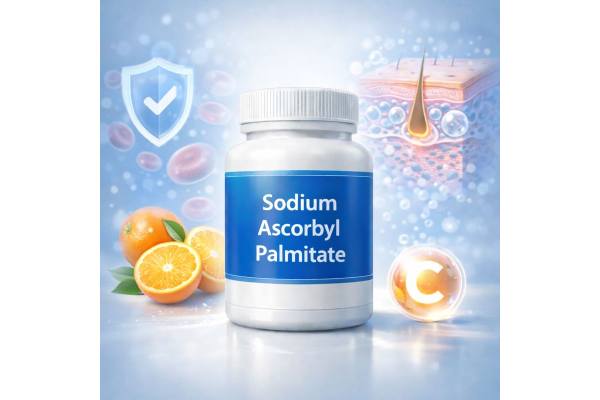
Sodium ascorbyl palmitate is a vitamin C derivative that blends the water-loving nature of ascorbic acid with the fat-loving character of palmitic acid. In practice, this makes it far more stable than regular vitamin C and able to sit comfortably in oils, creams, capsules, and processed foods without breaking down as quickly. Many products simply call it “ascorbyl palmitate” or “vitamin C palmitate,” and some formulas include the sodium salt form to improve solubility and handling.
Beyond its role as a nutrient source of vitamin C, sodium ascorbyl palmitate acts as a powerful antioxidant, protecting fats and cell membranes from oxidation. It is used in dietary supplements, skin care, pharmaceuticals, and as a food additive to help keep oils and fat-rich products from going rancid. This guide walks you through what it is, how it works, where it is used, typical dosage ranges, and what is known about its safety and potential side effects so you can discuss it more confidently with your healthcare professional.
Key Insights on Sodium Ascorbyl Palmitate
- Fat-soluble vitamin C derivative used as an antioxidant in supplements, foods, and skincare.
- May support collagen formation, photoprotection, and product stability more effectively than plain vitamin C in fats and oils.
- Typical supplemental intakes are often in the range of 50–500 mg per day, depending on product design and total vitamin C intake.
- Generally well tolerated at usual intakes, but high doses of vitamin C can cause digestive upset in some people.
- People with kidney stones, iron overload disorders, or complex medication regimens should avoid unsupervised high-dose use and consult a clinician first.
Table of Contents
- What sodium ascorbyl palmitate is
- Benefits for skin and health
- How to use in supplements and skincare
- Dosage guidelines for diet and topical use
- Side effects risks and precautions
- Evidence summary and practical takeaways
What sodium ascorbyl palmitate is
Sodium ascorbyl palmitate is the sodium salt of ascorbyl palmitate, itself an ester formed by joining ascorbic acid (vitamin C) with palmitic acid, a common long-chain fatty acid. This chemical pairing turns a normally water-soluble vitamin into a fat-soluble derivative. As a result, it behaves differently from plain vitamin C in products and in the body.
In practical terms, ascorbyl palmitate is:
- More stable to heat, oxygen, and light than pure ascorbic acid.
- More compatible with oils, fats, and lipid membranes.
- Often used at relatively low concentrations to protect sensitive ingredients.
The “sodium” part simply means the molecule is present as a sodium salt to improve handling, dispersibility, or solubility in certain formulations. Regulatory evaluations, however, typically refer to “ascorbyl palmitate” rather than listing the sodium salt separately, because both forms quickly break down to the same basic components: ascorbic acid and palmitic acid.
Once ingested or applied, enzymes and digestive processes can hydrolyze ascorbyl palmitate to release vitamin C and palmitic acid. Vitamin C then participates in its usual roles—supporting collagen synthesis, immune defense, and antioxidant protection—while palmitic acid joins the general pool of dietary fats. In skin care, the fat-soluble nature of ascorbyl palmitate may help it associate with lipid-rich structures such as cell membranes and the skin barrier, potentially improving local antioxidant activity.
In industry, sodium ascorbyl palmitate is used as:
- A food additive (antioxidant, often listed as E304).
- A stabilizer in oils and fat-rich foods (e.g., snacks, infant formulas, dairy analogs).
- An antioxidant and skin-conditioning ingredient in cosmetic formulations.
- An excipient and antioxidant in pharmaceuticals and dietary supplements.
Although consumers often see it marketed as a “gentler” or “buffered” vitamin C, its main distinguishing traits relate to stability and fat solubility rather than a fundamentally different biological role.
Benefits for skin and health
Because sodium ascorbyl palmitate behaves as both a vitamin C source and a lipid-phase antioxidant, its potential benefits span general health, product stability, and cosmetic performance.
From a nutritional standpoint, ascorbyl palmitate ultimately delivers vitamin C, which is essential for:
- Collagen formation in skin, cartilage, and blood vessels.
- Normal immune function and wound healing.
- Regenerating other antioxidants such as vitamin E.
- Supporting iron absorption from plant foods.
Where sodium ascorbyl palmitate stands out is its ability to sit within fat-rich environments—cell membranes, sebum, emulsions, and dietary fats. In these settings, it can help:
- Reduce oxidation of lipids, limiting rancidity in foods and oils.
- Stabilize active ingredients in supplements and medications, improving shelf life.
- Work alongside vitamin E in membranes to interrupt lipid peroxidation chains.
In skin care, formulations containing ascorbyl palmitate or related salts are used for several goals:
- Supporting collagen production, which can reduce the appearance of fine lines over time.
- Providing antioxidant support against environmental stressors such as UV radiation and pollution.
- Helping even out skin tone over months of consistent use, especially when paired with sunscreens and other antioxidants.
- Enhancing the stability of emulsions containing plant oils or unsaturated lipids.
Some small clinical and cosmetic studies have suggested that combinations of ascorbyl palmitate with other vitamin C derivatives or antioxidants can improve skin hydration, texture, and photoprotection compared with base formulations. These benefits tend to appear gradually with regular use rather than as an immediate change.
In the broader health context, ascorbyl palmitate has been explored for:
- Protecting fats in the bloodstream and tissues from oxidative damage.
- Acting as a co-antioxidant in formulas containing polyunsaturated fats, carotenoids, or coenzyme Q10.
- Supporting stability of sensitive actives in softgels, powders, and enteric-coated tablets.
It is important to recognize that most of the well-established health outcomes—such as reduced risk of scurvy or support for immune function—relate to achieving adequate total vitamin C intake, regardless of the specific form. Evidence that sodium ascorbyl palmitate alone provides major advantages over other forms in healthy people remains limited, but its technological and cosmetic advantages are clear.
How to use in supplements and skincare
How you use sodium ascorbyl palmitate depends on whether it is part of your diet, your supplement routine, or your topical skin care.
In supplements, sodium ascorbyl palmitate typically appears:
- As a minor component in multivitamins or antioxidant blends, often contributing to the total vitamin C content.
- As an antioxidant excipient in capsules or softgels to protect oils such as fish oil or herbal extracts.
- Occasionally as the primary vitamin C source in “fat-soluble vitamin C” products.
For most people, the practical steps are:
- Check the label for “ascorbyl palmitate,” “sodium ascorbyl palmitate,” or “vitamin C palmitate.”
- Look at how much vitamin C the product supplies in total, not just the ascorbyl palmitate amount.
- Consider all other vitamin C sources in your diet and supplements before adding a new product.
- Take the supplement with food, especially if it contains oils or fat-soluble ingredients, to support absorption and reduce digestive discomfort.
In skin care, sodium ascorbyl palmitate is usually found in:
- Serums and creams marketed for brightening, anti-aging, or antioxidant support.
- Sunscreen-adjacent products, where it can support photoprotection when used alongside a broad-spectrum SPF.
- Moisturizers designed to support skin barrier function and texture.
To integrate a topical product effectively:
- Start with once-daily use, preferably in the evening or morning under sunscreen.
- Apply to clean, dry skin after water-based serums and before heavier creams or oils.
- Allow several weeks to months for visible changes in tone and texture; antioxidant benefits are preventive and cumulative.
- Store the product away from heat and direct light and close the container tightly; even stabilized vitamin C forms eventually degrade.
People with sensitive or reactive skin may wish to:
- Patch test a new product on a small area for several days.
- Avoid combining multiple strong actives (e.g., high-strength acids, retinoids, and vitamin C derivatives) all at once; instead, introduce one product at a time.
- Use moisturizers and sunscreen consistently to support the skin barrier.
In professional or formulation settings, sodium ascorbyl palmitate is often chosen when a developer needs a vitamin C–linked antioxidant that:
- Is compatible with oils and emulsions.
- Helps protect both the formula and the skin from oxidative stress.
- Has a favorable safety record at typical cosmetic use levels.
Dosage guidelines for diet and topical use
There is no separate daily recommended intake specifically for sodium ascorbyl palmitate. Instead, dosage considerations focus on:
- Total vitamin C intake from all sources.
- Exposure limits for ascorbyl palmitate as a food additive and cosmetic ingredient.
For general health, adult recommended dietary allowances (RDAs) for vitamin C are typically in the range of about 75–90 mg per day from food and supplements combined, with higher needs in smokers and certain medical conditions. Tolerable upper intake levels (ULs) for adults are often set at 2,000 mg per day of total vitamin C from all supplemental sources, above which the risk of digestive side effects rises.
In practice, supplement products using sodium ascorbyl palmitate may supply:
- 50–250 mg per serving when combined with other vitamin C forms in a multivitamin.
- 100–500 mg per day as part of a targeted antioxidant or skin-support formula.
- Much smaller amounts (a few milligrams) when it is used mainly as an antioxidant excipient to protect oils rather than as a primary nutrient.
As a food additive, ascorbyl palmitate is typically used at low levels sufficient to prevent oxidation of fats and oils in processed foods. Regulatory evaluations have concluded that these uses are well within safe intake margins for the general population, including infants and children, when manufacturers follow authorized use levels.
Topical dosage is described in terms of concentration rather than milligrams ingested. Common ranges include:
- Approximately 0.01–0.5% in many everyday moisturizers and lotions, mainly for formula stability.
- Around 0.5–3% in targeted serums or treatments designed for antioxidant or brightening effects.
- Occasional higher concentrations in professional or specialized products, generally under dermatologist or formulator guidance.
When combining oral and topical exposure, most healthy adults still remain far below systemic levels associated with toxicity, because the skin acts as a barrier and much of the topical dose remains within the outer layers. Nonetheless, conservative use is wise:
- Stay within label directions for oral supplements and topical products.
- Avoid layering many high-strength vitamin C products at once, which may irritate the skin.
- Remember that more is not always better; benefits often plateau, while side effect risks continue to rise with increasing dose.
People with specific medical conditions—such as a history of kidney stones, iron overload, or certain enzyme deficiencies—should review their total vitamin C and antioxidant supplement plan with a health professional before using higher doses.
Side effects risks and precautions
Sodium ascorbyl palmitate is generally regarded as safe when used at typical levels in foods, cosmetics, and dietary supplements. Most safety concerns relate either to high total vitamin C intake or to rare individual sensitivities.
Possible side effects with high oral intakes of vitamin C from any form, including ascorbyl palmitate, can include:
- Digestive upset (nausea, abdominal cramps, diarrhea).
- Increased gas or bloating.
- In susceptible individuals, a higher risk of kidney stone formation, particularly calcium oxalate stones, when very high doses are taken regularly over time.
Ascorbyl palmitate itself is rapidly broken down to ascorbic acid and palmitic acid in the body, both of which are well studied. Regulatory reviews of ascorbyl palmitate as a food additive have not found evidence of genotoxicity or carcinogenicity at realistic exposures, and current authorized use levels are considered to pose no safety concern for the general population, including infants.
Topically, most people tolerate ascorbyl palmitate and its salts well, but possible reactions include:
- Mild stinging or redness, especially when applied to freshly exfoliated or compromised skin.
- Irritant or allergic contact dermatitis in sensitive individuals.
- Breakouts in acne-prone users if the overall formulation is very rich or occlusive, rather than due to the vitamin C derivative itself.
Precautions to consider:
- Kidney issues: Individuals with a history of kidney stones or chronic kidney disease should be cautious with high-dose vitamin C supplements and seek medical advice before using them regularly.
- Iron overload: People with hemochromatosis or other iron overload disorders should discuss any plan for high-dose vitamin C with their clinician, as vitamin C can enhance iron absorption.
- Drug interactions: Large doses of vitamin C may interact with certain medications, such as some anticoagulants, chemotherapy agents, or tests that rely on oxidative-reduction reactions. Always disclose supplement use to your healthcare team.
- Pregnancy and breastfeeding: Normal dietary amounts and typical prenatal multivitamin doses are considered safe, but high-dose vitamin C supplementation, including specialized forms, should only be used under medical supervision.
If you experience persistent digestive symptoms, rash, swelling, breathing difficulty, or other unexpected reactions after starting a product containing sodium ascorbyl palmitate, stop using it and seek appropriate medical assessment.
Evidence summary and practical takeaways
Most of the robust evidence surrounding sodium ascorbyl palmitate comes from three directions: evaluations of ascorbyl palmitate as a food additive, reviews of vitamin C esters in general, and clinical or cosmetic data on skin-related outcomes.
Safety assessments for food use have repeatedly concluded that ascorbyl palmitate is safe at authorized levels. These decisions are based on animal toxicity studies, metabolism data showing breakdown into vitamin C and palmitic acid, and exposure estimates across different age groups. For consumers, this means that the amounts encountered in everyday foods are not expected to pose a health risk when used according to regulations.
Scientific reviews of ascorbyl palmitate describe it as a functional vitamin C derivative with:
- Enhanced stability in the presence of light, heat, and oxygen compared with ascorbic acid.
- Lipophilic properties that enable it to protect fats and oils from oxidation.
- Applications in food preservation, pharmaceuticals, and cosmetics that go beyond pure nutrition.
In cosmetics, expert panels have assessed the ethers and esters of ascorbic acid, including ascorbyl palmitate and related derivatives, and have concluded that they are safe in current practices of use and concentration. Clinical observations and small trials suggest benefits for skin texture, hydration, and appearance when such ingredients are used consistently as part of a broader skincare routine that includes sun protection.
From a practical perspective:
- If your diet already supplies adequate vitamin C from fruits, vegetables, and perhaps a standard supplement, sodium ascorbyl palmitate is unlikely to deliver dramatically different systemic health benefits on its own.
- Its real strengths are product stability and targeted antioxidant activity in fat-rich environments, which is why formulators rely on it to protect both formulas and biological membranes.
- For skin, it can be a useful, relatively gentle vitamin C option, especially in combination with other antioxidants and daily sunscreen.
- Long-term safety data at typical exposure levels are reassuring, but very high-dose supplementation should still be approached carefully and individualized.
In short, sodium ascorbyl palmitate is best viewed as a flexible, well-characterized tool in the broader vitamin C and antioxidant toolbox—valuable for stabilization and targeted delivery, but not a substitute for an overall balanced diet, sun protection, and evidence-based medical care.
References
- Vitamin C – Health Professional Fact Sheet 2025 (Guideline)
- Opinion on the re-evaluation of ascorbyl palmitate (E 304i) as a food additive in foods for infants below 16 weeks of age and the follow-up of its re-evaluation as a food additive for uses in foods for all population groups 2020 (Guideline)
- Ascorbyl palmitate: A comprehensive review on its characteristics, synthesis, encapsulation and applications 2024 (Systematic Review)
- Safety Assessment of Ethers and Esters of Ascorbic Acid as Used in Cosmetics 2022 (Guideline)
- Assessment of the feed additives consisting of ascorbic acid, ascorbyl palmitate and ascorbyl stearate for all animal species 2025 (Guideline)
Disclaimer
The information in this article is for general educational purposes only and is not a substitute for personalized medical advice, diagnosis, or treatment. Sodium ascorbyl palmitate and other dietary supplements may not be appropriate for everyone, especially individuals with chronic health conditions, those who are pregnant or breastfeeding, or those taking prescription medications. Always consult a qualified healthcare professional before starting, stopping, or changing any supplement, and never delay seeking medical care because of something you have read online.
If you found this guide helpful, you are warmly invited to share it with others on Facebook, X (formerly Twitter), or any platform you prefer, and to follow our work on social media. Your support in sharing our articles helps our team continue to research and produce careful, high-quality health content.