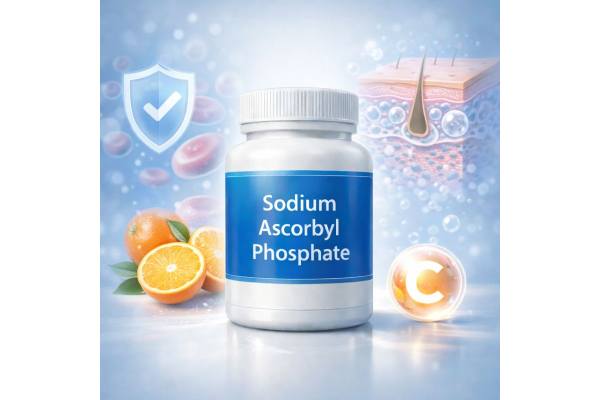
Sodium ascorbyl phosphate (SAP) is a stabilized, water-soluble form of vitamin C designed to deliver the well-known antioxidant and brightening benefits of ascorbic acid with much better shelf life and tolerability. Instead of breaking down quickly in water or light, SAP remains stable in cosmetic formulas and is converted by enzymes in the skin into active vitamin C over time. This slow conversion tends to make it gentler for sensitive or breakout-prone skin.
You will mostly see sodium ascorbyl phosphate in topical products such as serums, lotions, toners, and spot treatments aimed at dullness, fine lines, uneven tone, and acne. Research suggests that well-formulated SAP at appropriate concentrations can help reduce oxidative stress, support collagen production, and improve acne lesions with relatively low irritation compared with stronger acids. At the same time, SAP is not a cure-all, and results depend on concentration, formulation, and how consistently you use it. This guide walks you through what SAP is, how it works, realistic benefits, dosage ranges, and safety points to consider before adding it to your routine.
Key Insights for Sodium Ascorbyl Phosphate
- Sodium ascorbyl phosphate is a stable vitamin C derivative that supports antioxidant protection, collagen, and more even skin tone.
- At around 1–5% in leave-on products, SAP may help reduce acne lesions and excess sebum oxidation in some people.
- Typical cosmetic use ranges from about 0.2–3%, with targeted acne or brightening formulas sometimes using up to 5%.
- Mild stinging, dryness, or redness can occur, especially when combined with other active ingredients or used too often.
- People with very sensitive or reactive skin, or a known allergy to vitamin C derivatives, should patch test carefully or avoid SAP products.
Table of Contents
- What is sodium ascorbyl phosphate?
- How sodium ascorbyl phosphate works on skin
- Benefits of sodium ascorbyl phosphate for skin
- How to use sodium ascorbyl phosphate products
- Dosage strength and formulation guidance
- Side effects, safety and who should avoid
- Evidence and research on sodium ascorbyl phosphate
What is sodium ascorbyl phosphate?
Sodium ascorbyl phosphate is a derivative of vitamin C in which ascorbic acid is bound to a phosphate group and paired with sodium. This structural change makes SAP more stable than pure ascorbic acid in water-based products, and less prone to rapid oxidation from air, light, and heat. In skin care, that stability matters because oxidized vitamin C can lose effectiveness and potentially irritate skin.
In technical terms, SAP is a hydrophilic (water-loving) ingredient. It dissolves easily in water, so it suits gels, serums, toners, and light lotions rather than oily or anhydrous formulas. Once applied, enzymes in the skin can slowly cleave the phosphate group, releasing free ascorbic acid, the biologically active form of vitamin C the body recognizes and uses.
SAP functions primarily as:
- An antioxidant that helps neutralize free radicals from UV light and pollution
- A skin-conditioning agent that can support smoother texture and radiance
- A supporting ingredient in formulations targeting hyperpigmentation and photoaging
Unlike some vitamin C forms that require very low pH to be effective, SAP can work at the more skin-friendly pH values typical of modern formulations. That is one reason it is often chosen for sensitive or acne-prone skin, where strong acids or high levels of ethanol would be poorly tolerated.
You will encounter SAP mainly in topical products rather than oral supplements. While the underlying vitamin C chemistry is similar, safety assessments and usage data for SAP are focused on its role in cosmetics and dermatologic preparations, typically at concentrations up to about 3% in leave-on products, with some clinical acne treatments formulated at 5%.
How sodium ascorbyl phosphate works on skin
Sodium ascorbyl phosphate acts as a pro-vitamin C: it is not the final active molecule, but a stable precursor that the skin can convert into free ascorbic acid. This conversion is mediated by phosphatase enzymes naturally present in the epidermis. As the phosphate group is removed, ascorbic acid becomes available locally in the skin.
Once released, ascorbic acid can participate in several well-characterized pathways:
- Scavenging reactive oxygen species produced by UV radiation, pollution, and normal metabolism
- Regenerating other antioxidants such as vitamin E in the skin barrier
- Acting as a cofactor for enzymes involved in collagen synthesis, which helps support dermal firmness and elasticity
- Modulating melanin production by influencing tyrosinase activity and melanosome transfer, which can lead to more even skin tone
SAP itself also has documented effects before full conversion. In experimental models, SAP helps reduce oxidation of skin surface lipids, particularly squalene, a key component of sebum. Oxidized squalene is associated with comedone formation and inflammatory acne. By limiting this oxidation, SAP may reduce one of the triggers that makes pores appear clogged and inflamed.
In addition, some in vitro studies suggest that SAP can directly inhibit growth of Cutibacterium acnes (formerly Propionibacterium acnes), the bacterium linked to acne, at certain concentrations. This dual action—antioxidant protection plus antibacterial activity—likely explains why SAP has shown promise in acne studies when formulated at around 5% in lotions applied over several weeks.
Because SAP is water-soluble, its penetration profile differs from more lipophilic vitamin C esters. Formulators often use penetration enhancers or microemulsion systems to optimise delivery into the upper layers of the skin without compromising tolerance, especially in leave-on products designed for daily use.
Overall, SAP should be viewed as a controlled-release vitamin C source, designed to balance efficacy with stability and gentleness rather than delivering a rapid, high-peak dose.
Benefits of sodium ascorbyl phosphate for skin
Sodium ascorbyl phosphate offers a cluster of benefits that will be more or less noticeable depending on concentration, formula, and your skin type. The most consistently supported benefits include antioxidant protection, support for collagen, help with discoloration, and potential improvement in acne.
Antioxidant defense
By delivering vitamin C to the skin, SAP helps neutralize free radicals generated by UV light and pollution. While it does not replace sunscreen, this antioxidant activity can reduce some of the oxidative stress that contributes to fine lines, dullness, and uneven texture over time.
Collagen support and photoaging
Vitamin C is a cofactor for enzymes that stabilize and cross-link collagen fibers in the dermis. Regular use of vitamin C derivatives has been associated with improved skin firmness and a reduction in the appearance of fine wrinkles over months of use. Because SAP is milder, it is often included in anti-aging formulas intended for people who cannot tolerate high-strength L-ascorbic acid serums.
Tone evening and brightening
SAP can help reduce the look of hyperpigmentation and post-inflammatory marks by indirectly affecting melanin synthesis and transfer. This brightening effect tends to be gradual and is usually most visible when SAP is combined with other pigment-modulating ingredients (such as niacinamide or azelaic acid) and used consistently for at least 8–12 weeks.
Acne and blemish support
Several clinical studies have examined 5% SAP lotions in acne-prone skin. These trials reported reductions in inflammatory lesions and overall acne severity over periods of 8–12 weeks, sometimes performing comparably to or better than benzoyl peroxide creams, with fewer reports of dryness and irritation. In addition to controlling oxidative stress in sebum, SAP’s antibacterial and anti-inflammatory properties likely contribute to these outcomes.
Barrier compatibility and tolerability
Because SAP can work in formulas with more skin-neutral pH and is gradually converted to active vitamin C, it is usually better tolerated than low-pH, high-percentage ascorbic acid serums. Many people with combination or sensitive skin find SAP products easier to incorporate into both morning and evening routines without persistent stinging or flaking.
It is important to remember that results vary widely. SAP is not a prescription medication, and changes in wrinkles, pigmentation, or acne are typically modest and gradual rather than dramatic or immediate.
How to use sodium ascorbyl phosphate products
Using sodium ascorbyl phosphate effectively is less about complex layering rules and more about consistency, concentration, and avoiding unnecessary irritation. SAP can fit into most skin care routines with a few basic guidelines.
Where SAP fits in a routine
Most SAP products are water-based serums, essences, or light lotions. As a rule of thumb, apply them after cleansing and any very watery toners, but before thicker moisturizers and always before sunscreen in the morning. A typical order might be:
- Gentle cleanser
- Hydrating toner or essence (optional)
- SAP serum or lotion
- Moisturizer
- Broad-spectrum sunscreen (SPF 30 or higher) in the daytime
Frequency and timing
Many people start with once-daily use, often in the morning to take advantage of its antioxidant support under sunscreen. If your skin tolerates SAP well, you may increase to twice-daily use, especially if targeting uneven tone or mild acne. People with very sensitive skin may prefer evening use at first so they can monitor any delayed irritation more easily.
Amount and application technique
For face-only application, a pea-sized amount of a 1–5% SAP serum is usually enough. Smooth it over clean, dry skin, including the neck if desired, and allow it to absorb before applying moisturizer or sunscreen. The same principles apply when SAP appears in moisturizers or spot treatments—use a modest, even layer rather than multiple heavy coats.
Compatibility with other actives
SAP generally pairs well with:
- Niacinamide
- Hyaluronic acid and other humectants
- Ceramides and barrier-supporting lipids
- Vitamin E and ferulic acid
Caution is advisable when combining SAP with high-strength retinoids, alpha-hydroxy acids (AHAs), beta-hydroxy acids (BHAs), or other potentially irritating actives. If you use these, consider:
- Using SAP in the morning and stronger actives at night, or
- Alternating nights instead of stacking everything in a single routine
Always patch test new combinations on a small area for several days before applying widely, especially if you have a history of sensitivity or eczema.
Dosage strength and formulation guidance
Unlike oral supplements, topical SAP “dosage” is expressed as a percentage of the ingredient in the formula. Effective and commonly used ranges have emerged based on cosmetic safety assessments and clinical studies.
Typical strength ranges
Safety reviews of cosmetic use report SAP concentrations from about 0.01% up to 3% in leave-on products across categories such as moisturizers, serums, and night creams. Some targeted treatments and research formulations for acne have used 5% SAP lotions.
A practical way to interpret these ranges:
- 0.2–1%: Often used in everyday moisturizers for general antioxidant support and gentle brightening.
- 1–3%: Common in dedicated vitamin C serums or brightening products, balancing efficacy and tolerance for most skin types.
- 3–5%: Typically found in specialized anti-blemish or hyperpigmentation treatments, or in clinical-style formulations under dermatologist guidance.
Because the total amount of product applied to the face is small (often 0.5–1 g per application), daily exposure remains modest even at 5% in most regimens. Still, higher strengths may be more likely to cause irritation in sensitive users.
Formulation considerations that affect “real-world dose”
The labelled percentage is only one factor; how the formula is built also influences the effective dose reaching the skin:
- pH: SAP can function at a wider pH range than pure ascorbic acid, but extreme pH values may still impact stability and conversion to ascorbic acid.
- Vehicle: Serums, microemulsions, and gels may provide better delivery than brief-contact cleansers.
- Supporting ingredients: Penetration enhancers and co-antioxidants (for example, vitamin E) can improve performance but may also increase irritation risk in some people.
How to choose a strength
For most users:
- Start with 0.5–2% SAP if you have normal, combination, or mildly sensitive skin and are mainly seeking antioxidant and brightening benefits.
- Consider 2–5% SAP (often clearly labelled as an “acne” or “blemish” treatment) if you are targeting mild to moderate acne and can tolerate other active products.
- If you already use multiple strong actives, err on the lower side and adjust upward only if your skin remains calm over several weeks.
Patch testing is important: apply a small amount of the product once daily to a discreet area (such as behind the ear or along the jawline) for 3–5 days before regular facial use. If you experience persistent stinging, pronounced redness, or new breakouts that worsen after several weeks, discontinue and seek professional advice.
Side effects, safety and who should avoid
Topical sodium ascorbyl phosphate has a favourable safety profile in cosmetic use, with extensive toxicology data on vitamin C and its salts and esters. Safety assessments have reviewed animal toxicology, irritation and sensitization studies, and human exposure data, and have concluded that SAP and related ingredients are safe as used in cosmetic products at typical concentrations.
Still, any active ingredient can cause problems in certain circumstances.
Common and mild side effects
- Transient stinging or tingling on application, especially on compromised or recently exfoliated skin
- Mild redness or warmth in the treated area
- Slight dryness or flaking when SAP is combined with other exfoliating or acne-focused actives
These effects often settle as the skin barrier adapts. Reducing frequency, using a smaller amount, or buffering with a bland moisturizer can help.
Less common or more serious reactions
- Persistent burning, intense redness, or swelling that does not improve after stopping the product
- Itchy bumps, hives, or rash suggesting allergic contact dermatitis
- Worsening of inflammatory skin conditions such as active eczema or rosacea
If these occur, stop using the product immediately and seek medical advice. Patch testing with a dermatologist or allergist can help identify whether SAP or another component (such as fragrance or preservatives) is responsible.
Who should be cautious or avoid SAP
- People with known allergy or previous significant reaction to vitamin C derivatives or phosphate-containing ingredients
- Those with very reactive, barrier-impaired skin (for example, uncontrolled eczema, severe rosacea, or active facial dermatitis)
- Individuals using strong prescription treatments (systemic retinoids, topical retinoids, or aggressive peeling regimens) without medical guidance on combining products
Pregnant or breastfeeding individuals generally can use well-formulated vitamin C products, including SAP, but should still discuss their routine with a healthcare professional, especially when using multiple actives.
Because SAP is predominantly used topically and systemic absorption is low at cosmetic strengths, issues like overall sodium load are not a typical concern. However, if you have complex medical conditions or are considering unconventional high-dose or non-topical uses of SAP, you should only do so under direct supervision of a qualified clinician; such uses are outside standard cosmetic practice and are not covered by most safety reviews.
Evidence and research on sodium ascorbyl phosphate
The research base for sodium ascorbyl phosphate is substantial for a cosmetic ingredient, though smaller than for some prescription treatments. It spans safety evaluations, formulation studies, in vitro experiments, and clinical work in humans.
Safety and toxicology
A major safety assessment reviewed L-ascorbic acid and several ascorbate salts, including SAP, as used in cosmetics. This report summarized animal toxicology, irritation and sensitization studies, and human exposure data, concluding that SAP and related ingredients are safe as used in cosmetic products. Concentrations in leave-on products ranged from very low levels up to about 3%.
This safety conclusion has been revisited in more recent re-review summaries, which considered updated usage surveys and newer toxicity data. Despite increased use of SAP in modern formulations, expert panels have not found grounds to change the earlier conclusion of safety as used in cosmetics.
Formulation and stability research
Several formulation studies have looked at how best to deliver SAP into the skin. Work on topical microemulsions has shown that SAP’s hydrophilic nature and chemical structure give it improved stability compared with free ascorbic acid, while suitable delivery systems can support penetration into the stratum corneum and underlying layers.
Clinical evidence in acne and skin quality
Human trials, although relatively small, provide some practical insight:
- Open-label studies of a 5% SAP lotion applied for several weeks in subjects with acne vulgaris reported a high proportion of “good” or “excellent” responses and noted low irritation rates.
- Randomized, controlled trials comparing 5% SAP lotion to standard benzoyl peroxide creams in mild to moderate acne have shown comparable or better reductions in lesion counts, with generally better tolerability.
Laboratory studies complement these findings by showing that SAP can reduce squalene oxidation and significantly lower populations of Cutibacterium acnes in vitro, mechanisms that align with its observed clinical benefits in acne-prone skin.
Limitations of the current evidence
Most SAP trials involve small sample sizes, relatively short durations (often 8–12 weeks), and focus on topical use in mild to moderate acne or general photoaging. There is limited data for darker skin types, long-term continuous use beyond several months, or oral supplementation specifically with SAP rather than other vitamin C salts. Future research with larger, more diverse populations and standardized outcome measures would help clarify its comparative effectiveness against other vitamin C forms and established acne therapies.
For now, SAP is best understood as a well-tolerated, evidence-supported cosmetic active with modest but meaningful benefits for photodamage and acne, rather than as a stand-alone medical treatment.
References
- Final Report of the Safety Assessment of L-Ascorbic Acid, Calcium Ascorbate, Magnesium Ascorbate, Magnesium Ascorbyl Phosphate, Sodium Ascorbate, and Sodium Ascorbyl Phosphate as Used in Cosmetics 2005 (Guideline)
- Sodium ascorbyl phosphate in topical microemulsions 2003 (Formulation Study)
- Sodium ascorbyl phosphate shows in vitro and in vivo efficacy in the prevention and treatment of acne vulgaris 2005 (Clinical and In Vitro Study)
- Sodium L-ascorbyl-2-phosphate 5% lotion for the treatment of acne vulgaris 2010 (Randomized Controlled Trial)
- ReReview Summaries 2025 (Safety Re-Review Summary)
Disclaimer
The information in this article is for general educational purposes only and is not a substitute for personalized medical advice, diagnosis, or treatment. Sodium ascorbyl phosphate products can affect individuals differently depending on skin type, existing conditions, medications, and the specific formulation used. Always consult a qualified healthcare professional—such as a dermatologist, pharmacist, or primary care physician—before starting, changing, or stopping any skin care or supplement regimen, particularly if you have chronic skin disease, are pregnant or breastfeeding, or are using prescription treatments. Never disregard professional medical advice or delay seeking it because of something you have read here.
If you found this guide helpful, you are welcome to share it with others on Facebook, X (formerly Twitter), or any platform you prefer, and to follow our work on social media. Your respectful support through sharing helps our team continue to research, write, and update reliable, evidence-informed content for readers like you.