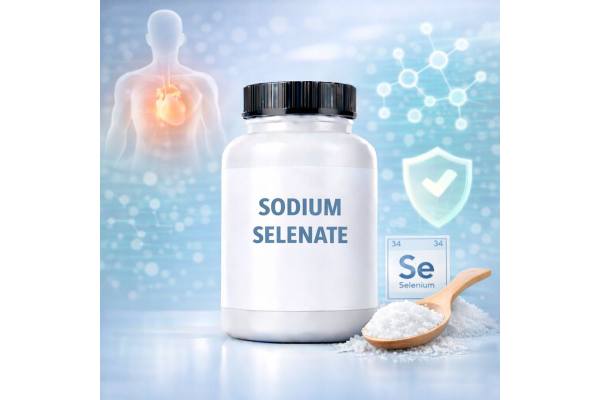
Sodium selenate is a concentrated inorganic form of selenium, an essential trace mineral that your body needs in very small amounts but uses in many critical processes. It helps build selenoproteins that support antioxidant defenses, thyroid hormone balance, immunity, reproduction, and brain function. Sodium selenate appears in some dietary supplements and medical nutrition products as one of several possible selenium sources. It has also attracted scientific interest as a potential therapy in conditions linked to abnormal tau proteins and oxidative stress, although this work is still early and highly experimental.
Because selenium has a narrow “safe zone” between helpful and harmful intakes, using sodium selenate wisely matters. This guide walks you through what sodium selenate is, how it compares with other selenium forms, what benefits are supported by evidence, how dosage is usually approached, and which risks and side effects to keep in mind. You will also see who should be especially cautious and how to discuss supplements with your healthcare team.
Key Insights for Sodium Selenate Use
- Sodium selenate is a bioavailable inorganic selenium source that supports antioxidant enzymes, thyroid function, and overall selenium status.
- Research is exploring high-dose sodium selenate as a possible therapy in tau-related brain diseases, but this remains experimental and should not be self-initiated.
- Typical supplemental selenium intakes for healthy adults are around 50–200 mcg per day from all sources, with an upper intake level of 400 mcg per day in many guidelines.
- Selenium toxicity (selenosis) can occur if high doses are taken over time, leading to hair loss, brittle nails, and neurological symptoms.
- People with kidney disease, thyroid disorders, high dietary selenium intake, or those already using selenium-containing products should avoid additional sodium selenate unless advised by a clinician.
Table of Contents
- What is sodium selenate and how does it work?
- What are the main benefits and common uses?
- How to take sodium selenate and typical dosage
- Which factors affect your response to sodium selenate?
- Side effects, toxicity, and who should avoid it
- What does the research actually show?
What is sodium selenate and how does it work?
Sodium selenate is an inorganic salt in which selenium is present in the “selenate” form (SeO₄²⁻) bound to sodium. In supplements and medical formulas, it acts as a concentrated, water-soluble source of elemental selenium. When you ingest sodium selenate, it is efficiently absorbed in the small intestine and then metabolized to forms that the body can use to build selenoproteins. Absorption of selenium from selenate, selenite, and common organic forms such as selenomethionine is generally high, often approaching 90%.
After absorption, sodium selenate is reduced to selenide and incorporated into selenocysteine, the unique amino acid that appears in at least two dozen human selenoproteins. These selenoproteins include several glutathione peroxidases and thioredoxin reductases, which help neutralize harmful reactive oxygen species. Others contribute to thyroid hormone activation, immune competence, and reproductive function.
In foods, selenium is usually present as organic forms (not sodium selenate), but supplements and parenteral nutrition formulas often use inorganic forms like sodium selenate or sodium selenite because they are stable, predictable, and easy to formulate. Although selenate and selenite differ chemically—selenate is the more oxidized form—they share central metabolic pathways once absorbed. Observed differences in their biological effects likely relate more to dose, context, and how quickly they are converted to active or excreted metabolites than to fundamental differences in their end products.
Sodium selenate has a special place in research on neurodegenerative diseases. In cell and animal models, it appears to activate the enzyme protein phosphatase 2A (PP2A), which helps remove excessive phosphate groups from tau proteins. Hyperphosphorylated tau is a hallmark of Alzheimer’s disease and several other “tauopathies,” so compounds that modulate PP2A are of interest as potential disease-modifying agents. Sodium selenate’s role here is still under investigation and is separate from its basic role as a micronutrient source.
Overall, sodium selenate is best thought of as a highly bioavailable selenium source with some distinctive research uses, rather than a unique everyday nutrient with radically different functions from other selenium forms.
What are the main benefits and common uses?
The most robust, well-established benefit of sodium selenate is that it can correct or prevent selenium deficiency when used at appropriate doses. Selenium deficiency is uncommon in many high-income countries but can still occur in individuals with restrictive diets, malabsorption, or dependence on long-term parenteral nutrition. In such settings, sodium selenate or similar forms are used within carefully designed medical regimens to ensure that patients meet their daily selenium requirements.
When selenium intake is low, raising it toward the recommended range supports several systems:
- Antioxidant defense, by supplying selenium for glutathione peroxidases and related enzymes
- Thyroid hormone conversion, especially the activation of T₄ to T₃ via deiodinase enzymes
- Immune function, including defense against infections
- Fertility and reproductive health, particularly in men, via selenium-rich sperm proteins
Most people who use sodium selenate do so indirectly through multivitamin or multimineral supplements where it is one of several selenium sources. Standalone selenium products may also list sodium selenate among their ingredient forms. In both cases, the intended outcome is better overall selenium status, rather than a specific “sodium selenate effect.”
Beyond baseline nutrition, sodium selenate has been studied for several potential roles:
- Neurodegenerative disease research, where high-dose sodium selenate has been examined in small clinical trials for Alzheimer’s disease and related disorders
- Cardiometabolic health, since selenium status has been linked to cardiovascular risk and insulin sensitivity, though large trials have shown mixed or neutral effects in well-nourished adults
- Cancer risk modulation, an area where earlier enthusiasm has been tempered by more recent data suggesting that supplementing beyond adequate levels does not reliably reduce cancer incidence and may carry risks at higher intakes
In agriculture and veterinary medicine, sodium selenate can be used to fortify animal feeds or fertilizers in low-selenium regions. While this helps address deficiency at the population level, it is managed through regulatory frameworks rather than consumer-level choices.
For most individuals, any benefit from sodium selenate will come from ensuring adequate—but not excessive—selenium intake, usually via a balanced diet plus modest supplementation if needed, rather than from high-dose or disease-targeted use.
How to take sodium selenate and typical dosage
Because sodium selenate is potent and selenium has a relatively narrow safety margin, dosage and total daily intake are more important than the specific brand or format. In many countries, the recommended dietary allowance (RDA) for selenium in adults is about 55 mcg per day, with slightly higher targets during pregnancy and lactation.
Typical supplemental intakes fall in these ranges:
- Multivitamin or multimineral products: commonly 50–70 mcg of selenium per daily serving
- Antioxidant or “immune” formulas: often 50–200 mcg selenium per day
- Selenium-only supplements: frequently 100–200 mcg, sometimes up to 400 mcg per day in some formulations
From a safety standpoint, a commonly cited tolerable upper intake level (UL) for adults is 400 mcg of selenium per day from all sources (food plus supplements). Intakes above this level, especially if sustained, increase the risk of selenosis and other adverse effects.
Practical guidelines for everyday use:
- Aim for adequacy, not megadoses. For most adults who already eat a varied diet, a supplement providing 50–150 mcg selenium per day (from sodium selenate or other forms) is usually sufficient, unless a clinician advises otherwise.
- Count total selenium, not just sodium selenate. Add up selenium from all supplements (multivitamin, “hair and nails” products, immune formulas) plus any very high-selenium foods you eat regularly, such as Brazil nuts.
- Take with food. Sodium selenate is well absorbed and generally gentle on the stomach when taken with a meal. This also helps spread intake across the day.
- Avoid self-prescribed high-dose regimens. Clinical trials in Alzheimer’s disease have tested very high doses of sodium selenate over extended periods, but these are conducted under strict monitoring, with regular lab tests and imaging. These regimens are experimental and not appropriate for self-directed supplementation.
If you and your clinician decide to use a selenium supplement that contains sodium selenate, it is wise to:
- Review your diet and existing supplements to estimate baseline selenium intake.
- Choose a product that lists the exact micrograms (mcg) of selenium per serving, not just milligrams of sodium selenate.
- Start at the lower end of the dose range if your dietary intake is already moderate or high.
- Reassess the need for continued supplementation periodically rather than assuming it should be lifelong.
Children, pregnant or breastfeeding individuals, and people with kidney disease, thyroid disorders, or complex medication regimens require individualized dosing advice from a qualified health professional.
Which factors affect your response to sodium selenate?
Not everyone responds to sodium selenate in the same way. The same tablet can have different impacts depending on your baseline nutritional status, health conditions, and even genetics. Understanding these variables helps you and your clinician fine-tune whether supplementation is needed and at what level.
Baseline selenium intake and status
If you live in a region with selenium-rich soils, eat seafood or meat regularly, or frequently consume Brazil nuts or fortified foods, your selenium intake may already be at or above recommended levels. In that case, adding sodium selenate on top of an already adequate intake may provide little benefit and could push you toward the upper safety limit. Conversely, people in low-selenium regions, strict vegetarians or vegans, and those with highly restricted diets may benefit more from modest supplementation.
Digestive and absorption issues
Conditions that impair digestion or absorption—such as celiac disease, inflammatory bowel disease, chronic pancreatitis, or certain bariatric surgeries—can reduce selenium uptake from foods. In such cases, carefully dosed supplements or medically supervised nutrition formulas that include sodium selenate may help improve status, but they should be integrated into a broader medical plan.
Kidney and liver function
Selenium is primarily excreted in urine. Reduced kidney function can alter how selenium is handled, potentially leading to higher blood levels for a given intake. Liver disease can also affect selenium transport proteins and metabolism. People with these conditions should not adjust selenium intake without professional guidance, and blood monitoring may be appropriate in some cases.
Other nutrients and diet patterns
Selenium does not act in isolation. Its antioxidant roles often complement vitamins C and E, zinc, and other trace elements. Very high intakes of one antioxidant nutrient can sometimes disturb the overall balance. Diets extremely rich in certain high-selenium foods combined with sodium selenate supplements can unintentionally create excessive exposure.
Medications and medical conditions
Sodium selenate and other selenium forms can interact with, or modify, the effects of:
- Thyroid medications, because selenium influences thyroid hormone metabolism
- Certain chemotherapeutic regimens, where antioxidants might, in theory, affect treatment mechanisms
- Long-term steroid or immunosuppressive therapy, where micronutrient status is often closely managed
Emerging research also suggests that genetic differences in selenoprotein genes and selenium metabolism may partly explain why some individuals appear more sensitive to additional selenium than others, particularly regarding cancer risk at higher intakes.
Because of this variability, sodium selenate should be used as one piece of a larger nutritional and medical picture, not as a stand-alone “fix.”
Side effects, toxicity, and who should avoid it
Selenium is essential, but more is not always better. Sodium selenate, like other concentrated selenium forms, can cause adverse effects if used at excessive doses or combined with high dietary selenium. Understanding the signs of toxicity and knowing who is most at risk is critical for safe use.
Short-term side effects at typical supplement doses
At doses close to recommended intake levels (for example, 50–150 mcg selenium per day), most people tolerate selenium well. Occasional side effects can include mild digestive upset, metallic taste, or headache, particularly when starting a supplement or taking it on an empty stomach. These effects often improve when the supplement is taken with food and at a consistent time of day.
Chronic selenium excess (selenosis)
When intake regularly exceeds the upper intake level (around 400 mcg per day for adults) over weeks or months, chronic toxicity—called selenosis—can develop. Reported features include:
- Hair loss or thinning
- Brittle or discolored nails, sometimes with nail loss
- Skin rashes or lesions
- Gastrointestinal distress (nausea, diarrhea)
- Fatigue and irritability
- In more serious cases, neurological symptoms such as numbness or difficulty walking
Selenosis is usually reversible if intake is reduced promptly, but prolonged high exposure may cause more lasting effects. Very high acute doses can be life-threatening, although this is rare and typically related to industrial accidents or gross formulation errors.
Groups that should be especially cautious or avoid sodium selenate supplementation
- Children and adolescents, whose selenium needs are lower and for whom the margin between adequate and excessive intake is smaller
- Pregnant or breastfeeding individuals, who often already receive selenium through prenatal supplements and should not add extra without medical advice
- People with kidney disease, because reduced clearance of selenium can lead to higher circulating levels for the same intake
- Those with high dietary selenium intake, such as regular consumers of Brazil nuts combined with selenium-containing supplements
- Individuals with a history of high-dose antioxidant use or certain cancers, in whom additional selenium may not be beneficial and could be harmful
If you suspect selenium toxicity—because of compatible symptoms plus high supplemental intake—stop all selenium-containing products and seek medical evaluation. Your clinician may order blood tests, review your intake, and guide safe adjustments.
What does the research actually show?
The science around selenium and sodium selenate is active and sometimes complex. It helps to separate three questions: Does selenium deficiency harm health? Does correcting low status help? And does taking extra selenium beyond sufficiency provide added benefits?
Deficiency and correction
Evidence is clear that severe selenium deficiency can cause serious health problems, such as Keshan disease (a cardiomyopathy) and contribute to conditions like Kashin–Beck disease in certain low-selenium regions. Supplementation with inorganic selenium, including selenite and selenate, has been shown to reduce the risk of deficiency-related diseases when used in public health programs.
For people with marginal intakes, modest selenium supplements can normalize biomarkers of status and support selenoprotein function. This is the core, well-supported role of sodium selenate: providing sufficient selenium where diet alone falls short.
Beyond adequacy: mixed results
Large randomized trials in generally well-nourished adults have not demonstrated strong protective effects of selenium supplements against common cancers or cardiovascular disease. Some findings even raise concerns about increased risk in people with already high selenium status who take additional supplements. Overall, current evidence does not support routine high-dose selenium supplementation for disease prevention in selenium-replete populations.
Sodium selenate in brain health and tauopathies
Sodium selenate’s most distinctive research role lies in tau-related neurodegenerative diseases. Preclinical experiments suggest that sodium selenate can activate PP2A, promote tau dephosphorylation, and reduce tau pathology in animal models.
Human studies have taken this a step further:
- A phase IIa randomized controlled trial in mild-to-moderate Alzheimer’s disease evaluated high sodium selenate doses over several months, with a focus on safety and exploratory cognitive and biomarker outcomes. The study found that the regimen was generally tolerable under close monitoring and provided preliminary signals on neurodegeneration markers, but it was not designed to prove definitive clinical benefit.
- An open-label extension and related analyses suggested that long-term sodium selenate use remained relatively safe and might influence measures of brain atrophy, but these findings still need confirmation in larger, controlled trials.
A recent hypothesis paper and related reviews synthesize these data, proposing sodium selenate as a promising disease-modifying candidate for tauopathies, while emphasizing that more robust trials are essential.
What this means for everyday use
- For now, sodium selenate should be regarded primarily as a nutritional selenium source for individuals whose intake is insufficient, not as a proven therapy for Alzheimer’s disease or other neurological conditions.
- Experimental high-dose regimens should remain within clinical trials, where participants can be closely monitored for benefits and harms.
- If you are considering selenium for cognitive health, it is important to discuss realistic expectations with your clinician. Current evidence indicates that in people who are already selenium-replete, extra selenium alone does not reliably prevent cognitive decline.
In summary, the research supports a cautious, targeted role for sodium selenate: it is valuable for achieving adequate selenium status and is scientifically interesting as a candidate neurotherapeutic, but it is not a confirmed disease-modifying treatment at this time.
References
- Selenium – Health Professional Fact Sheet 2024 (Guideline)
- Sodium selenate as a therapeutic for tauopathies: A hypothesis paper 2022 (Hypothesis / Narrative Review)
- A Phase IIa Randomized Control Trial of VEL015 (Sodium Selenate) in Mild-Moderate Alzheimer’s Disease 2016 (RCT)
- Sodium selenate as a disease-modifying treatment for mild to moderate Alzheimer’s disease: An open-label extension study 2021 (Clinical Study)
Disclaimer
The information in this article is intended for general educational purposes and does not replace personalized medical advice, diagnosis, or treatment. Sodium selenate and other selenium-containing products can be helpful or harmful depending on your individual health status, diet, and medications. Always consult a qualified healthcare professional before starting, stopping, or changing any supplement, especially if you are pregnant or breastfeeding, have kidney or thyroid disease, have a history of cancer or cardiovascular disease, or take prescription medicines. Never use sodium selenate or any other supplement as a substitute for prescribed therapies or as a self-directed treatment for serious conditions such as Alzheimer’s disease.
If you found this guide useful, you are warmly invited to share it with others on Facebook, X (formerly Twitter), or any platform you prefer, and to follow our work on social media. Your thoughtful sharing helps support our team so we can continue creating careful, evidence-informed content on nutrition and health.