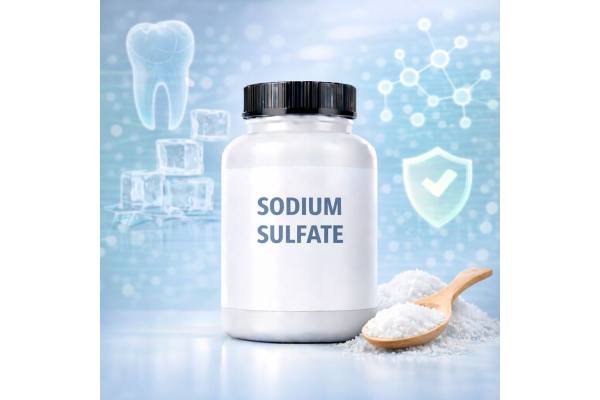
Sodium sulfate is an inorganic salt that shows up in surprising places: in medical bowel preparations, in some foods as an additive, and widely in cosmetics and household products. In health care, it is best known as one of the active ingredients in prescription bowel cleansing solutions used before a colonoscopy, where it acts as an osmotic laxative to flush the bowel by drawing water into the intestine.
Outside clinical settings, sodium sulfate helps control thickness in shampoos and bath products and can be added in small quantities to certain processed foods. At those low levels it has a wide safety margin, although very large doses used for medical bowel prep or laxative effects must be handled carefully.
This guide explains what sodium sulfate is, how it works in the body, its main medical and everyday uses, typical dosage patterns, possible side effects, and who should avoid it. You will also see how regulators and researchers view its safety, so you can place sodium sulfate–containing products in the right context.
Quick Overview for Sodium sulfate
- Sodium sulfate is an inorganic salt used mainly as an osmotic laxative in combination bowel prep products and as a functional additive in foods and cosmetics.
- At low levels in cosmetics and foods it has a low toxicity profile, but high single doses for colon cleansing can cause fluid loss and electrolyte shifts.
- Typical prescription colon prep regimens provide about 17.5 g sodium sulfate per dose, taken twice with large volumes of water under medical supervision.
- People with kidney disease, heart failure, significant electrolyte problems, or bowel obstruction should not use sodium sulfate–based bowel preps unless specifically directed and monitored by a specialist.
Table of Contents
- What is sodium sulfate and how does it work?
- What health benefits and uses does sodium sulfate have?
- Where is sodium sulfate found in medical and everyday products?
- Sodium sulfate dosage and how to take it safely
- Side effects, risks, and who should avoid sodium sulfate
- Science, evidence, and key questions about sodium sulfate
What is sodium sulfate and how does it work?
Sodium sulfate (chemical formula Na₂SO₄) is the sodium salt of sulfuric acid. It occurs in nature as minerals such as mirabilite (the decahydrate, historically called Glauber’s salt) and thenardite (anhydrous sodium sulfate). In pure form it is a white, crystalline solid that dissolves readily in water.
From a chemistry perspective, sodium sulfate is straightforward: it dissociates in water into sodium ions (Na⁺) and sulfate ions (SO₄²⁻). The body already contains both ions, and sulfate is a normal metabolite involved in detoxification and structural roles in tissues. What makes sodium sulfate important in medicine is less about complex biochemistry and more about simple physics: when dissolved in sufficient concentration in the gut, the resulting solution is hyperosmotic, meaning it draws water into the intestinal lumen.
In bowel preparation products, sodium sulfate is combined with other sulfate salts (magnesium sulfate and potassium sulfate). Together, these poorly absorbed ions remain in the intestinal space. Water follows the osmotic gradient into the bowel, increasing fluid volume, softening stool, and producing a brisk laxative effect that rapidly empties the colon.
Unlike stimulant laxatives, which directly act on enteric nerves and smooth muscle, sulfate-based osmotic laxatives rely mainly on osmotic forces and secondary stimulation of peristalsis as stool becomes more liquid and voluminous. This mechanism is effective but nonselective: water is drawn from the body into the gut and then lost in stool. That is why adequate hydration before, during, and after bowel prep is essential to avoid dehydration and electrolyte imbalance.
Outside the bowel, sodium sulfate is not usually taken in doses high enough to have systemic pharmacological effects. At the smaller quantities used in foods and cosmetics, it functions mainly as a processing aid, viscosity modifier, or inert bulking agent. Toxicology studies in animals and humans show a high acute oral lethal dose, no strong evidence of mutagenicity or carcinogenicity at typical exposure levels, and a low overall order of toxicity when used within normal limits.
What health benefits and uses does sodium sulfate have?
It is helpful to distinguish between the direct health benefit of sodium sulfate and its supporting role in various products.
The clearest health-related usefulness of sodium sulfate is in colon cleansing before colonoscopy. In combination with magnesium sulfate and potassium sulfate, it forms a prescription-only osmotic laxative solution that is highly effective at clearing intestinal contents so that the colon lining can be examined for polyps, cancer, and other abnormalities.
This role is clinically important: a well-prepared colon reduces the risk of missed lesions and repeat procedures. When taken exactly as instructed, sodium sulfate–based preparations produce a predictable sequence of watery stools, leaving the colon relatively free of solid material. The benefit is not that sodium sulfate “detoxes” or “cleanses” the body in a general sense, but that it prepares the bowel for a specific diagnostic or therapeutic procedure.
In some traditions and older medical literature, sodium sulfate (especially Glauber’s salt) has been used as a stand-alone saline laxative to relieve constipation. Today, this use is less common, largely replaced by polyethylene glycol–based solutions and other agents with broader safety and comfort data. Where sodium sulfate is used, it is usually under professional guidance and for short periods only.
Beyond laxative applications, sodium sulfate has indirect benefits arising from its role as an excipient:
- In cosmetics, it serves as a viscosity-increasing and bulking agent in products such as bath powders and bubble baths, helping achieve the desired feel and dispersion. Safety evaluations have found it generally safe in rinse-off and leave-on formulations at typical use levels.
- In processed foods, sodium sulfate (E514) can be used as a processing aid or additive at controlled levels, with regulatory bodies in several regions concluding that current uses do not pose a safety concern.
What sodium sulfate does not offer is a broad, evidence-based set of systemic wellness benefits when taken chronically in small supplemental doses. It is not a vitamin or essential trace mineral and is not typically recommended as a daily dietary supplement. Claims that it promotes general detoxification or weight loss through its laxative effects are oversimplified and can be misleading, especially if they encourage repeated high-dose use that risks dehydration or electrolyte imbalance.
Where is sodium sulfate found in medical and everyday products?
Because sodium sulfate is inexpensive, stable, and highly soluble, industry uses it widely. As a consumer, you might encounter it in several categories:
1. Prescription bowel prep solutions
The highest, most pharmacologically active exposures to sodium sulfate typically occur through prescription colon cleansing solutions. These products usually contain fixed combinations of sodium sulfate, potassium sulfate, and magnesium sulfate. A common adult regimen involves two doses, each providing approximately 17.5 g sodium sulfate, along with specified amounts of the other sulfates, diluted to 16 ounces and followed by additional water.
These preparations are taken under medical supervision and require strict adherence to instructions regarding timing (often split into an evening and morning dose), hydration, and dietary restrictions.
2. Over-the-counter laxatives and cleansing kits
Historically, sodium sulfate–based solutions and Glauber’s salt have been marketed as non-prescription laxatives. Modern over-the-counter products more often rely on other agents, but some “colon cleanse” kits and saline laxative formulas may still contain sulfates, including sodium sulfate. In these cases, doses are usually lower than those in prescription bowel preps but can still cause significant diarrhea and fluid shifts if misused.
3. Cosmetics and personal care products
Sodium sulfate has an established role in cosmetics as a viscosity-increasing agent and filler. Safety reviews of available animal and human data conclude that sodium sulfate is safe in the concentrations and product types where it is currently used, such as bath powders, bubble baths, and certain skin products. Mild irritation is possible under exaggerated test conditions, but routine consumer use at recommended levels is not associated with serious adverse effects.
4. Foods and beverages
As food additive E514, sodium sulfate may be present in small quantities as a processing aid, acidity regulator, or carrier. Regulatory risk assessments have generally found no need for a numerical acceptable daily intake at reported use levels, reflecting a low toxicological concern at normal dietary exposures.
5. Industrial and household applications
Outside health and nutrition, sodium sulfate is used in:
- Detergent and cleaning product manufacture
- Pulp and paper processing
- Glass production
- Textile dyeing and finishing
These uses rarely translate into significant systemic exposure for consumers under normal use, because sodium sulfate is bound in matrices or rinsed away. Occupational settings, however, may involve inhalation of dust or contact with concentrated solutions, in which case standard industrial hygiene practices apply.
Sodium sulfate dosage and how to take it safely
There is no general “daily dosage” recommendation for sodium sulfate as a nutrient, because the body does not require it in the same way it requires essential vitamins or trace elements. Instead, dosage guidance applies to specific medical uses, mainly colon cleansing.
Typical prescription colon prep regimen
For adults preparing for colonoscopy, a common sodium sulfate–based regimen uses an oral solution supplied as two bottles. Each bottle typically contains about 17.5 g sodium sulfate, 3.13 g potassium sulfate, and 1.6 g magnesium sulfate. The standard dosing schedule is:
- Dose 1 (evening before procedure)
- Pour one bottle into the provided container.
- Add cool water to the fill line (usually 16 ounces), mix, and drink the entire amount.
- Follow with two additional containers of water, each filled to the same line, over the next hour.
- Dose 2 (morning of procedure)
- Repeat the same steps 10–12 hours after the first dose, finishing at least a few hours before the colonoscopy start time, according to your doctor’s instructions.
Total sodium sulfate intake over the two doses is about 35 g, delivered over several hours each time. This is a large osmotic load, so strict adherence to fluid instructions is essential to limit dehydration and electrolyte disturbances.
Key safety principles when taking sodium sulfate–based bowel preps
- Use them only when prescribed or explicitly recommended by a healthcare professional for procedures such as colonoscopy.
- Follow the specific dosing schedule and clear liquid diet described in your preparation instructions; do not improvise or take extra doses.
- Do not take other oral medicines within about 1 hour before starting and for several hours after taking the solution, since rapid transit can reduce absorption of other drugs.
- Avoid additional laxatives, alcohol, red or purple liquids, and solid foods during the prep window unless your care team advises otherwise.
- Contact your doctor promptly if you develop severe vomiting, dizziness, confusion, failure to pass stool, or signs of dehydration such as extreme thirst or reduced urination.
Use in children
Sodium sulfate–based colon prep solutions are generally approved for children 12 years and older, typically with the same or weight-adjusted regimens. Safety and efficacy in children under 12 are not well established and should only be considered under specialist supervision, often with alternative preparations.
Because the doses used for colon cleansing are high, sodium sulfate is not appropriate as a routine laxative for mild constipation. Safer long-term options (dietary fiber, adequate fluids, and specific laxatives with better chronic-use data) are usually preferred.
Side effects, risks, and who should avoid sodium sulfate
At the low concentrations found in foods and cosmetics, sodium sulfate has a favorable safety profile, with toxicology data showing high lethal dose thresholds in animals and generally minimal systemic toxicity. Some individuals may experience mild skin or eye irritation from concentrated solutions or under patch test conditions, but serious harm is unlikely with normal consumer use.
The picture is different when sodium sulfate is ingested in the large amounts used for colon cleansing.
Common short-term side effects of bowel prep solutions
When taken as directed for colonoscopy, sodium sulfate–containing regimens frequently cause:
- Abdominal bloating and cramping
- Nausea and vomiting
- Generalized discomfort or fatigue
- Sleep disturbance (due to frequent trips to the bathroom)
These effects are often transient and reflect the intended rapid movement of fluid through the bowel.
More serious risks
Because sulfate-based bowel preps pull water into the gut and trigger copious diarrhea, they can lead to:
- Significant fluid loss and dehydration
- Electrolyte disturbances (changes in sodium, potassium, magnesium)
- Worsening kidney function in susceptible individuals
- Rare but serious neurologic events such as seizures, particularly in people with underlying electrolyte disorders or those on interacting medications
Overdosage or failing to drink the recommended additional water can intensify these risks.
Who should avoid sodium sulfate–based bowel preps or use them only with special caution
People are typically advised not to use these products, or to do so only with careful monitoring, if they have:
- Known or suspected bowel obstruction or ileus
- Bowel perforation
- Toxic colitis or toxic megacolon
- Significant gastric retention
- Hypersensitivity to any component of the solution
Caution is especially important in those with:
- Kidney disease or reduced kidney function
- Congestive heart failure or conditions prone to fluid overload or imbalance
- Preexisting electrolyte disturbances (such as low sodium, potassium, or magnesium)
- Seizure disorders
- Use of medications that affect kidney function or fluid balance (diuretics, ACE inhibitors, ARBs, NSAIDs, certain antidepressants, and others)
Elderly patients and those with fragile health often require closer monitoring, tailored hydration plans, and sometimes alternative bowel prep regimens with different risk profiles.
People who regularly use sodium sulfate–containing “cleansing” products without medical indication risk cycles of dehydration, cramping, and electrolyte imbalance without clear long-term benefit. Anyone who notices persistent weakness, palpitations, confusion, or neurological symptoms after such products should stop using them and seek medical evaluation.
Science, evidence, and key questions about sodium sulfate
The scientific literature on sodium sulfate spans toxicology, cosmetic safety, food additive regulation, and clinical use in colon cleansing.
Toxicology and cosmetic safety
Safety assessments of sodium sulfate in cosmetics have examined animal studies and human exposure data and concluded that it is safe in current cosmetic uses. Studies in rodents report high oral lethal doses, no reproductive or developmental toxicity at tested levels, and negative results in standard mutagenicity assays. Clinical observations in humans do not show significant systemic adverse effects with dermal, oral, or inhalation exposure at typical levels, although some irritation can occur at high concentrations under patch test conditions.
These findings are consistent with standard safety data sheets for laboratory-grade sodium sulfate, which do not classify it as acutely toxic or carcinogenic under widely used criteria, while still advising routine precautions for handling dusts and concentrated solutions.
Food additive evaluations
Regulatory agencies have reviewed sodium sulfate (E514) alongside related sulfate salts for use as food additives. At reported levels in foods, exposure estimates are generally low, and risk assessments have not identified a need for a numerical acceptable daily intake, concluding that current uses do not raise safety concerns.
Mechanism and clinical evidence in bowel prep
From a pharmacological standpoint, sodium sulfate’s laxative effect is well explained by osmotic principles: sulfate ions remain largely unabsorbed, drawing water into the intestinal lumen and promoting diarrhea. The strength of the effect depends on dose, dilution, and the presence of other poorly absorbed solutes such as magnesium and potassium sulfates.
Clinical trials of sulfate-based bowel prep solutions have compared them with other regimens (like polyethylene glycol solutions). Overall, these products achieve high-quality colon cleansing when patients follow instructions, with side-effect profiles dominated by transient gastrointestinal symptoms and fluid shifts. Safety sections in prescribing and guideline documents highlight the importance of adequate hydration, preprocedure assessment of comorbidities, and careful monitoring in at-risk groups.
Unanswered questions and practical takeaways
Open questions include whether certain patient groups might benefit more from non-sulfate-based preparations and how best to predict which individuals are most vulnerable to electrolyte disturbances. There is also ongoing interest in improving the palatability and volume requirements of bowel preps to improve adherence.
For everyday users, the key messages are:
- Sodium sulfate is not an essential nutrient and does not need to be supplemented in healthy individuals.
- Its main medical value is in short-term, supervised colon cleansing, not long-term detoxification or weight management.
- At low levels in foods and cosmetics, it has a reassuring safety profile, but high-dose use should always follow professional guidance and product labeling.
Understanding sodium sulfate in this context helps separate justified medical use and routine consumer exposure from unproven or risky self-experimentation.
References
- Magnesium Sulfate, Potassium Sulfate, and Sodium Sulfate: MedlinePlus Drug Information 2021 (Guideline)
- Sodium Sulfate, Potassium Sulfate, Magnesium Sulfate Oral Solution: Package Insert / Prescribing Info / MOA 2025 (Guideline)
- Sodium sulfate, potassium sulfate, and magnesium sulfate (oral route) – Side effects and dosage – Mayo Clinic 2025 (Guideline)
- Sodium Sulfate | Na2SO4 | CID 24436 – PubChem 2023 (Reference Database)
- Final Report on the Safety Assessment of Sodium Sulfate 2000 (Safety Assessment)
Disclaimer
This article is for general information only and does not replace personalized medical advice, diagnosis, or treatment. Sodium sulfate–containing products, especially prescription bowel preparations, can cause significant fluid and electrolyte changes and should be used only as directed by a qualified healthcare professional. Always discuss your medical history, current medications, and kidney, heart, or gut conditions with your clinician before using any colon cleansing or laxative product. Never start, stop, or change prescribed medicines or procedures based on online information alone. In case of concerning symptoms after using sodium sulfate–containing products, seek medical attention promptly.
If you found this guide helpful, please consider sharing it on Facebook, X (formerly Twitter), or any platform you prefer, and follow our work on social media. Your support through sharing helps our team continue to produce careful, evidence-informed content on health and nutrition topics.