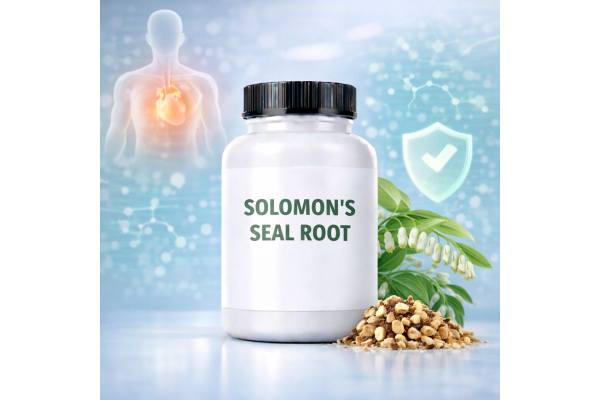
Solomon’s seal root comes from the underground rhizomes of plants in the Polygonatum genus, long used in both European folk medicine and Asian traditions. In Traditional Chinese Medicine, processed rhizomes are considered nourishing tonics for fatigue, dry lungs, and age-related decline, while Western herbalists turn to the root for joints, ligaments, and connective tissue support. Modern laboratory research points to complex polysaccharides, saponins, and flavonoids that show antioxidant, immune-modulating, and metabolic effects, though human clinical trials remain limited.
Because of this gap, Solomon’s seal root is best viewed as a traditional supportive herb rather than a proven treatment for specific diseases. Still, many people are curious about using it for joint comfort, resilience during stress, or long-term vitality. This guide walks you through what is known so far: potential benefits, mechanisms, practical ways to use it, typical dosage ranges, and important safety and side-effect considerations so you can have an informed conversation with a qualified health professional.
Essential insights on Solomon’s seal root
- Traditional use focuses on joint, connective tissue, lung, and energy support, with modern data suggesting antioxidant and immune-modulating effects.
- Common supplement doses provide roughly 500–1,500 mg dried root equivalent per day in capsules, or about 1–4 ml tincture split into two or three servings.
- Evidence in humans is still limited; people with chronic conditions, on multiple medications, or with blood sugar concerns should only use it under professional guidance.
- Pregnant or breastfeeding individuals, children, and anyone with significant heart, liver, or kidney disease should avoid unsupervised use of Solomon’s seal root.
Table of Contents
- What is Solomon’s seal root?
- How does Solomon’s seal root work in the body?
- What are the benefits of Solomon’s seal root?
- How to use Solomon’s seal root in daily life
- Solomon’s seal root dosage and timing
- Side effects, interactions, and who should avoid it
- What does the research say about Solomon’s seal root?
What is Solomon’s seal root?
Solomon’s seal is the common name for several species in the Polygonatum genus, part of the Asparagaceae family. The plants are woodland perennials with graceful arching stems and drooping, bell-shaped flowers. Herbal products are made from the rhizome – a thick, horizontal underground stem often called the “root” in everyday language.
Several Polygonatum species are used in herbal and traditional medicine systems. In East Asia, Polygonatum sibiricum, Polygonatum kingianum, and Polygonatum cyrtonema are processed into the tonic herb often known as “Huang jing,” while Polygonatum odoratum is known as “Yuzhu.” In Europe and North America, Polygonatum biflorum and related species are more common. Despite regional differences, all are rhizome-based remedies typically consumed as decoctions, powders, or tinctures.
It is important to distinguish “true” Solomon’s seal (Polygonatum species) from “false Solomon’s seal” (Maianthemum racemosum). False Solomon’s seal belongs to a different genus, with somewhat different traditional uses and safety considerations; they should not be treated as interchangeable, even though they share a common name.
Traditional uses vary but tend to cluster around similar themes:
- Tonic support for fatigue, weakness, and age-related decline
- Soothing dry, irritated lungs and throat
- Supporting digestion and appetite
- Helping with joint stiffness, sprains, and overuse injuries
- Nourishing yin (fluids and reserves) in Chinese medicine terms
Modern supplement products usually contain dried, sliced rhizome, milled powder in capsules, or hydroalcoholic extracts. Some topical preparations use oil infusions or salves aimed at localized joint or soft-tissue discomfort.
Although Polygonatum species have a long history of being prepared as food-like tonics, the raw rhizomes can be irritating and are traditionally processed (often by repeated steaming and drying) to reduce harsh constituents and improve tolerability.
How does Solomon’s seal root work in the body?
Solomon’s seal root contains a complex mix of compounds, but most modern research focuses on its polysaccharides, steroidal saponins, and flavonoids. These components interact with several biological pathways in cells and animal models, which hints at how the herb might work in humans.
Polysaccharides from Polygonatum species appear to be the main active constituents. They behave somewhat like soluble dietary fibers and immunomodulatory polysaccharides found in other tonic herbs. In laboratory studies, these molecules show antioxidant activity, helping to neutralize reactive oxygen species and reduce markers of oxidative stress.
In immune models, Polygonatum polysaccharides can stimulate or rebalance immune responses. They have been observed to increase the activity of macrophages, natural killer cells, and T cells in cell cultures and in immunosuppressed animals. At the same time, they may lower pro-inflammatory cytokines such as TNF-α and IL-1β while supporting beneficial cytokines, suggesting a fine-tuning rather than a simple “boosting” effect.
Steroidal saponins and flavonoids contribute additional actions. These compounds are linked with:
- Anti-inflammatory signaling, including effects on pathways like NF-κB
- Modulation of blood lipids and glucose handling in animal models
- Potential protective effects on bone-forming cells and cartilage, aligning with traditional joint support uses
Another interesting area is metabolic and cardiovascular regulation. In rodent studies, Polygonatum extracts have improved lipid profiles, reduced markers of non-alcoholic fatty liver disease, enhanced antioxidant defenses in heart tissue, and attenuated weight gain on high-fat diets. They may influence enzymes and receptors involved in lipid metabolism and insulin signaling, and interact with the gut microbiota in ways that affect inflammation and metabolic health.
Because nearly all mechanistic data come from animals or cell cultures, we cannot assume the same strength of effect in humans. Still, these pathways help explain why traditional uses emphasize resilience, restoration, and long-term support rather than quick symptom relief.
What are the benefits of Solomon’s seal root?
When people search for Solomon’s seal root, they are usually interested in its potential for joints, connective tissue, energy, and metabolic health. It is essential to separate three layers of evidence: long-standing traditional use, modern preclinical research, and the relatively small amount of direct human data currently available.
Joint and connective tissue support
In Western herbal practice, Solomon’s seal is often described as a “moistening” herb for tendons, ligaments, and joint spaces. Topical oils and internal extracts are used by herbalists to support recovery from sprains, strains, overuse injuries, and stiffness, particularly in the hips, knees, and shoulders. Scientific research in this exact context is sparse, but Polygonatum polysaccharides have shown promising effects on bone and cartilage cells in vitro, including promoting osteogenic activity and protecting against oxidative damage.
Energy, fatigue, and aging
Traditional texts describe Polygonatum rhizomes as longevity tonics, used for fatigue, weakness, and recovery after illness. Modern work in animals reports anti-fatigue and anti-aging effects: extracts can improve endurance, reduce markers of oxidative stress, and support cognitive function in aged or stressed animals. These findings are consistent with tonic use but still need confirmation in well-designed human trials.
Metabolic and cardiovascular support
Animal studies suggest that Polygonatum preparations can improve cholesterol and triglyceride levels, reduce fatty liver changes, enhance antioxidant defenses in heart tissue, and improve insulin sensitivity. Reviews of this research highlight the potential of Polygonatum components to help prevent or mitigate cardiovascular disease through anti-inflammatory, lipid-lowering, and anti-atherosclerotic mechanisms.
Immune and gut health
Polygonatum polysaccharides appear to modulate immune responses and may help restore immune function in models of drug-induced immunosuppression. Some studies also show changes in gut microbiota composition, with increases in beneficial bacteria, suggesting a prebiotic-like role and a possible link to improved metabolic and immune health.
Overall, the best-supported benefits – still mostly in animals and lab systems – include antioxidant, immunomodulatory, metabolic, and bone-supportive actions. These align with the traditional picture of Solomon’s seal as a moistening, restorative tonic, but they do not yet translate into clear, evidence-based disease treatments for humans.
How to use Solomon’s seal root in daily life
If you and your practitioner decide that Solomon’s seal root may be appropriate, it is helpful to understand the main forms available and how they are typically used. Because there is no universally accepted therapeutic dose, the goal is usually gentle, consistent support rather than aggressive dosing.
Common preparation forms
- Dried sliced root (rhizome): Often simmered as a tea or decoction, sometimes combined with other herbs in traditional formulas.
- Powder or capsules: Finely milled rhizome, standardized or non-standardized, used for convenience.
- Tinctures and fluid extracts: Hydroalcoholic preparations (for example, 1:5 root to solvent ratio) taken in drops or milliliters, usually diluted in water.
- Topical oils and salves: Fresh or dried roots infused into oil, then applied to joints or muscles.
Practical usage patterns
- Start low, go slow.
Begin at the lower end of any recommended range on the product label. Because Solomon’s seal is often used tonically, small amounts taken consistently over weeks are usually favored over short-term high doses. - Consider your main goal.
- For joint and connective tissue support, people may use both internal preparations (capsules or tincture) and topical products.
- For energy, recovery, or dry respiratory symptoms, traditional approaches emphasize decoctions or processed tonic formulations, often in combination with other herbs chosen by a practitioner.
- Pair with lifestyle measures.
Solomon’s seal root is not a substitute for physical therapy, good posture, strength training, or cardiovascular risk management. Think of it as a potential adjunct to, not a replacement for, core medical and lifestyle strategies. - Evaluate response over time.
Many people who use tonic herbs check in after 4–8 weeks. If there is no clear benefit by then, continuing long term may not be justified, especially given the limited human evidence.
For safety, always verify that your product states the exact species, plant part (rhizome), extraction ratio (for tinctures), and any processing steps (such as steaming). Look for third-party testing for contaminants and avoid wildcrafted products from threatened habitats unless you are confident in the supplier’s sustainability practices.
Solomon’s seal root dosage and timing
No authoritative clinical guideline sets a standard dose for Solomon’s seal root. Available ranges are drawn from traditional practices, herbal-reference texts, and the doses used in animal studies scaled conservatively for humans. Because products differ, your specific dose should be guided by the label and a knowledgeable practitioner.
Typical supplemental ranges (adults)
These values refer to daily intakes for generally healthy adults, not medical treatment doses:
- Dried root decoction (tea):
Often 2–6 g of dried, sliced root per day, simmered in water for 20–30 minutes and taken in one or two servings. - Capsules or powder:
Common product ranges are about 500–1,500 mg dried root equivalent per day, sometimes divided into two doses. - Tincture or fluid extract:
For a common 1:5 tincture (1 part root to 5 parts solvent), herbal sources often suggest around 1–4 ml per day, split into 2–3 servings (such as 20–40 drops two or three times daily).
If you are sensitive, older, or taking several medications, it is prudent to start at about half these amounts and increase only if well tolerated.
Timing with food and other supplements
- Taking Solomon’s seal with food may reduce the chance of stomach upset.
- If you are on medications where timing is important (such as thyroid medications, some diabetes drugs, or anticoagulants), leave at least a 2-hour gap unless your clinician advises otherwise.
- Because of potential effects on blood sugar and lipids suggested by animal studies, people with diabetes, hypoglycemia, or metabolic syndrome should monitor their responses carefully and coordinate dosage with their healthcare team.
Duration of use
For tonic purposes, many practitioners reassess after 4–12 weeks. Long-term continuous use has historical precedent, especially in food-like preparations, but modern safety data are still limited. Periodic breaks (for example, 1–2 weeks off after every 6–8 weeks of use) are a cautious approach unless your clinician advises a specific schedule.
Children, pregnant or breastfeeding individuals, and people with serious organ disease (heart, liver, kidney) should not use Solomon’s seal root without specialist supervision; in many cases, alternative options with better-established safety profiles are preferred.
Side effects, interactions, and who should avoid it
Despite its history of use and inclusion of some Polygonatum species as medicinal foods in China, detailed human safety data for Solomon’s seal supplements are sparse. Most information comes from traditional practice, toxicity studies in animals, and general knowledge of similar compounds.
Possible side effects
At commonly used doses, many people tolerate Solomon’s seal root without obvious problems. When side effects do occur, they are usually mild and may include:
- Digestive upset (nausea, loose stools, or stomach discomfort)
- Headache or dizziness
- Allergic reactions in sensitive individuals (skin rash, itching, rarely swelling)
Unprocessed or raw rhizomes can be more irritating and are not generally recommended for internal use. The plant’s berries are considered toxic and are not used medicinally.
Potential interactions
Because Polygonatum extracts may influence blood sugar, blood lipids, and cardiovascular pathways in animals, there are several theoretical interactions to keep in mind:
- Diabetes medications and insulin: Risk of additive blood-sugar lowering, leading to hypoglycemia.
- Antihypertensive drugs: Possible additive effects on blood pressure.
- Anticoagulants or antiplatelet drugs: Some herbalists exercise caution because many saponin-rich herbs can subtly affect platelet function, though this has not been clearly documented for Solomon’s seal.
- Immunosuppressant drugs: Given the immunomodulatory effects seen in animals, theoretical interactions exist, especially at higher doses.
Because most of these concerns are based on mechanism rather than direct clinical reports, they should not cause panic but do justify consultation with a clinician who can monitor your health markers.
Who should avoid unsupervised use
It is safest to avoid self-directed Solomon’s seal supplementation if you:
- Are pregnant, trying to conceive, or breastfeeding
- Are a child or adolescent
- Have significant heart, liver, or kidney disease
- Have an autoimmune condition or are on immunosuppressive therapy
- Take multiple prescription medications, particularly for diabetes, high blood pressure, clotting disorders, or heart rhythm
- Have a known allergy to Polygonatum species or related plants
If you notice palpitations, severe dizziness, shortness of breath, swelling of the face or throat, or other alarming symptoms after taking Solomon’s seal, stop the product and seek urgent medical care.
What does the research say about Solomon’s seal root?
Over the last decade, research interest in Polygonatum species has increased, driven by both their long traditional use and their complex chemistry. However, most studies remain preclinical, and high-quality human trials are rare.
Comprehensive reviews of the genus have cataloged numerous medicinal species, many identified compounds, and a broad range of pharmacological activities. These include antioxidant, anti-inflammatory, anti-fatigue, metabolic, neuroprotective, immune-modulating, and bone-supportive effects, usually linked to polysaccharides, steroidal saponins, and flavonoids.
Recent work on Polygonatum polysaccharides has gone deeper, detailing extraction methods, structural features, and relationships between structure and bioactivity. These polysaccharides show effects on immune cells, bone cells, adipose tissue, and the gut microbiota in animal and cell models. They also appear to have relatively low toxicity when processed appropriately, which supports their use in functional foods and tonics, though this does not replace formal clinical safety studies.
Cardiovascular research is an especially active area. Reviews highlight multiple cardioprotective mechanisms in animal models: reduced oxidative stress in heart tissue, improved lipid profiles, anti-atherosclerotic effects in genetically susceptible mice, and attenuation of cardiac fibrosis. These findings suggest that Polygonatum constituents might one day contribute to adjunct therapies for heart and vascular disease, but they are far from establishing a standard clinical treatment.
Despite this rich preclinical picture, robust randomized controlled trials in humans are still lacking. Existing human evidence tends to involve:
- Small observational or pilot studies using Polygonatum-containing formulas, rather than isolated Solomon’s seal root
- Traditional clinical experience in Chinese medicine and other systems, which is valuable but methodologically different from modern randomized trials
For now, the best way to interpret Solomon’s seal root is as a promising, traditionally valued herb whose mechanisms are increasingly understood but whose clinical effects in humans are not yet firmly defined. It can be considered as one piece of a broader integrative strategy, ideally under professional guidance, rather than a lone solution for serious conditions.
References
- The genus Polygonatum: A review of ethnopharmacology, phytochemistry and pharmacology 2018 (Systematic Review).
- A Review of Polygonatum Mill. Genus: Its Taxonomy, Chemical Constituents, and Pharmacological Effect Due to Processing Changes 2022 (Review).
- Review on the genus Polygonatum polysaccharides: Extraction, purification, structural characteristics and bioactivities 2023 (Systematic Review).
- Advances in Polygonatum sibiricum polysaccharides: Extraction, purification, structure, biosynthesis, and bioactivity 2022 (Review).
- Pharmacological properties of Polygonatum and its active ingredients for the prevention and treatment of cardiovascular diseases 2024 (Systematic Review).
Disclaimer
The information in this article is for educational purposes only and is not a substitute for personalized medical advice, diagnosis, or treatment. Solomon’s seal root is an herbal supplement with limited human clinical data, and it should not be used to delay or replace conventional care for any medical condition. Always consult a qualified healthcare professional before starting, stopping, or combining any supplement, especially if you are pregnant or breastfeeding, have a medical condition, or take prescription or over-the-counter medications. Never ignore medical advice or delay seeking it because of something you have read here.
If you found this guide helpful, please consider sharing it on Facebook, X (formerly Twitter), or any platform you prefer, and follow us on social media. Your support in sharing our articles helps our team continue creating thoroughly researched, high-quality health content.