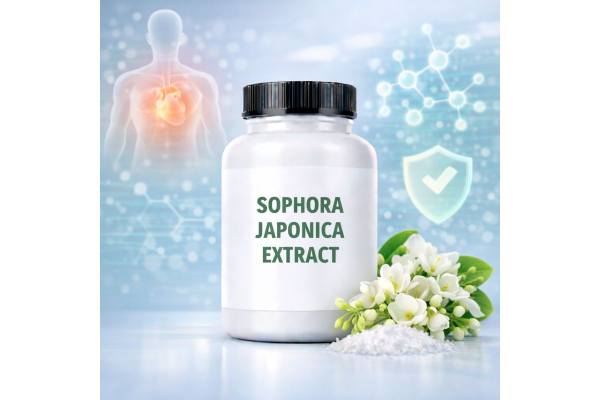
Sophora japonica, often called the Japanese pagoda tree or Huai Hua in traditional Chinese medicine, is best known today as one of the richest natural sources of rutin and other flavonoids. Modern “Sophora japonica extract” supplements usually concentrate these compounds from the flower buds, turning an old hemostatic and circulation herb into a highly targeted antioxidant and vascular support ingredient.
You will see Sophora japonica extract in capsules for vein health, hemorrhoids, capillary strength, and general antioxidant support, as well as in cosmetics aimed at redness, pigmentation, and photoaging. At the same time, the extract is pharmacologically active enough that dose, duration, and background health all matter. This guide explains what the extract actually is, how it works, what benefits are reasonably supported by science, sensible dosage ranges, and the main risks and situations where it should be avoided, so you can have an informed discussion with your clinician rather than guessing from supplement labels.
Quick Facts for Sophora japonica extract
- Sophora japonica flower and bud extracts are rich in rutin and quercetin, supporting capillary tone, antioxidant status, and anti-inflammatory pathways.
- Experimental studies show benefits for intestinal inflammation, hemorrhoidal bleeding, venous insufficiency symptoms, and skin protection, mainly through flavonoid mechanisms.
- Typical supplemental rutin doses range from about 250–1,000 mg per day, while traditional crude flower use is around 5–10 g daily, always divided and usually short term.
- Mild digestive upset, headache, or skin reactions are possible, and higher flavonoid doses may interact with drugs or stress the liver and kidneys in vulnerable people.
- Pregnant or breastfeeding individuals, children, and people on multiple medications (especially for clotting, cancer, or blood pressure) should avoid self-prescribing Sophora japonica extract.
Table of Contents
- What is Sophora japonica extract?
- Main benefits of Sophora japonica extract
- How Sophora japonica extract works in the body
- Sophora japonica extract dosage and forms
- Side effects and who should avoid Sophora japonica extract
- How to use Sophora japonica extract wisely
What is Sophora japonica extract?
Sophora japonica L. is a medium-sized deciduous tree in the legume family, traditionally planted as a shade and ornamental tree in East Asia and now naturalised in many parts of the world. In traditional medicine, it goes by names such as Huai, Huai Hua (flower), and Huai Mi (immature flower bud). The dried flower buds (Flos Sophorae Immaturus) and fruits (Fructus Sophorae) are listed in major pharmacopoeias and have been used for centuries to “cool the blood” and stop bleeding, especially from hemorrhoids, the intestines, and the uterus, as well as to help hypertension and headaches.
From a modern phytochemical perspective, Sophora japonica is notable because its flower buds are an exceptionally rich and inexpensive industrial source of rutin, alongside other flavonoids such as quercetin, kaempferol, isorhamnetin, and their glycosides. These constituents, along with smaller contributions from triterpenes, alkaloids, and polysaccharides, are responsible for its antioxidant, anti-inflammatory, and vascular effects.
When you see “Sophora japonica extract” on a supplement label, it can mean several things:
- A crude bud or flower extract standardised to a certain percentage of total flavonoids.
- A highly purified rutin concentrate (often 95% rutin) that happens to be derived from Sophora japonica.
- A quercetin-rich extract labelled with the plant source for marketing, even though the physiological effects are largely those of quercetin itself.
The same plant is also used in food technology (for instance, to fortify foods with rutin), as a natural color stabiliser, and in cosmetics aimed at redness, visible capillaries, or photoaging.
This variety of uses is helpful, but it also means “Sophora japonica extract” is not a single standardised medicine. When evaluating a product, it is more useful to know its rutin or quercetin content, dosage per capsule, and any other active ingredients than to rely on the plant name alone.
Main benefits of Sophora japonica extract
The best way to think about Sophora japonica extract is as a delivery system for high levels of rutin and related flavonoids with a long history of hemostatic and vascular use. Most modern evidence focuses on a few key areas: gut health, venous and capillary support, cardiovascular and metabolic health, and skin or mucosal protection.
For gut and intestinal health, the standout modern data come from animal models. A 2022 Food Chemistry study used Sophora japonica flower extract and pure rutin in mice with chemically induced colitis. Both reduced inflammatory markers, improved oxidative stress, and tightened the gut barrier, partly by modulating NF-κB signalling and gut microbiota composition. Translating this to humans is not straightforward, but it supports traditional use where Sophora is combined with other herbs for bleeding or inflamed intestines.
In the circulation and vein-health realm, Sophora japonica’s rutin-derived compounds overlap with the broader class of “venoactive” flavonoids used for chronic venous insufficiency, varicose veins, and hemorrhoids. Hydroxyethylrutosides and other rutoside preparations—synthetic derivatives of rutin often originally sourced from plants like Sophora—have demonstrated improvements in leg swelling, heaviness, cramps, and night pain in chronic venous disease, with reasonable tolerability. This gives indirect support for high-quality Sophora-derived rutin extracts as part of a venous support approach.
Traditional and modern sources also describe benefits for:
- Capillary fragility and easy bruising, where rutin and quercetin help maintain capillary integrity.
- Hemorrhoids, especially when combined with other hemostatic herbs and dietary changes.
- Cardiometabolic markers, where rutin has shown modest effects on blood pressure, lipid profiles, and oxidative stress in various experimental models.
- Skin health, including reduced UV-induced damage and support for collagen preservation and pigmentation balance, which has led to inclusion of Sophora japonica extracts in cosmeceuticals.
Overall, the most realistic benefits for supplement users are modest but meaningful improvements in capillary and venous tone, support during hemorrhoidal flares, and general antioxidant protection—particularly when Sophora japonica extract is standardised and paired with lifestyle and medical care, rather than used as a stand-alone cure.
How Sophora japonica extract works in the body
Sophora japonica extract acts primarily through its flavonoid fraction, especially rutin, quercetin, and related glycosides. These molecules have overlapping but distinct actions on blood vessels, inflammatory pathways, oxidative stress, and cell signalling.
Rutin is a quercetin–rhamnose–glucose glycoside. Once ingested, intestinal bacteria and digestive enzymes gradually cleave the sugar portion, releasing quercetin aglycone, which is then absorbed and further metabolised. Because of this, Sophora japonica extract effectively behaves as a timed-release source of quercetin and associated polyphenols, with additional minor compounds from the plant.
Key mechanisms include:
- Antioxidant and free-radical scavenging: Rutin and quercetin directly neutralise reactive oxygen species and upregulate endogenous antioxidant enzymes such as superoxide dismutase, catalase, and glutathione-related systems. This reduces oxidative stress in vascular walls and inflamed tissues.
- Anti-inflammatory signalling: Flavonoids from Sophora japonica inhibit pro-inflammatory transcription factors such as NF-κB and AP-1, lowering production of cytokines like TNF-α, IL-1β, and IL-6. The murine colitis study with Sophora flower extract showed reduced inflammatory signalling and improved barrier function, fitting this pattern.
- Vasoprotective and microcirculatory effects: Rutin and its derivatives improve venous tone, reduce capillary permeability, and decrease edema in chronic venous insufficiency models and clinical use. This is thought to involve modulation of nitric oxide pathways, improved lymphatic drainage, and stabilisation of endothelial tight junctions.
- Hemostatic modulation: Traditional work on Sophora japonica identified both anti-hemorrhagic and anti-hemostatic fractions. In practice, the crude herb is applied to bleeding that is considered “due to heat” in traditional terms. Modern pharmacology suggests that rutin and other flavonoids can mildly influence platelet function, vascular tone, and capillary resistance, but the net effect depends on dose and context.
- Metabolic and tissue-specific actions: Rutin has been shown in various models to reduce LDL oxidation, support endothelial function, and modulate glucose and lipid metabolism. Other specialized Sophora constituents, such as sophoricoside, add anti-allergic or dermatologic effects in experimental systems.
Importantly, these actions are dose-dependent and time-dependent. At nutraceutical doses, Sophora japonica extract mainly functions as a supportive antioxidant and vasoprotective agent. At higher doses or when combined with other polyphenol concentrates, there is greater potential for interactions with drug-metabolising enzymes, cellular stress pathways, and organ systems such as the liver and kidneys.
Sophora japonica extract dosage and forms
There is no single universally accepted “correct” dose for Sophora japonica extract, because products differ widely in strength and composition. Still, you can navigate dosing more safely by distinguishing between traditional crude herb use and modern isolated flavonoid supplements.
In traditional Chinese medicine, typical adult daily doses listed in formal pharmacopoeias are in the approximate range of 5–10 g of dried flower buds (Flos Sophorae Immaturus) or 6–9 g of dried fruits (Fructus Sophorae), usually decocted in water and combined with other herbs in a formula. Treatment courses are often short to medium term, aimed at specific problems like bleeding hemorrhoids or intestinal bleeding, rather than indefinite daily use.
Modern supplements commonly present Sophora japonica extract in three ways:
- Rutin-standardised powders or capsules (for example, “Sophora japonica extract 95% rutin”), providing anywhere from about 100 mg to 500 mg rutin per capsule.
- Quercetin and rutin blends, where the plant source is Sophora japonica but the label emphasises the flavonoid name.
- Broad-spectrum flower or bud extracts, declared as, for instance, “500 mg Sophora japonica flower extract, standardised to 50% total flavonoids.”
For general vascular and antioxidant support in otherwise healthy adults, many practitioners stay within a total rutin intake of roughly 250–1,000 mg per day from all sources, often divided into two doses. That might translate to 250–500 mg of a 95% rutin Sophora extract once or twice daily, depending on body weight, renal and hepatic function, and concurrent medications.
Key practical guidelines include:
- Start at the low end of the product’s suggested range, particularly if you are petite, over 65, or on medications.
- Avoid stacking multiple rutin- or quercetin-heavy products (for example, separate quercetin capsules plus a Sophora extract plus a mixed “vein formula”) unless a clinician has reviewed the total intake.
- Use short initial trial periods—two to four weeks—before deciding whether the extract is helpful enough to justify longer use.
- For traditional-style use of crude buds or teas, stay within the 5–10 g crude flower equivalent per day unless under direct professional supervision.
Children, pregnant or breastfeeding individuals, and people with significant kidney or liver disease should not use Sophora japonica extract without specialist guidance, and they often should avoid it altogether.
Side effects and who should avoid Sophora japonica extract
Compared with some stronger botanicals, Sophora japonica extract is often presented as “gentle” because rutin and quercetin are found naturally in foods. However, supplement doses can be far higher than typical dietary intake, and Sophora preparations may contain additional constituents beyond pure rutin. That means side effects and contraindications deserve real attention.
At mild to moderate doses in healthy adults, common side effects, when they occur, are usually non-specific:
- Digestive upset such as nausea, fullness, or loose stools.
- Headache or a sense of mental fatigue.
- Mild skin reactions like flushing, itching, or rash.
These typically resolve when the dose is lowered or the supplement is stopped. Persistent symptoms should be evaluated medically, especially if other drugs are involved.
More serious safety concerns are subtler and mostly arise in vulnerable groups or at higher exposures:
- Pregnancy and fetal development: Human and animal data on rutin-like compounds suggest that very high flavonoid doses, especially certain rutoside derivatives, may be associated with teratogenic effects when taken in early pregnancy. Because of the uncertainty and the lack of robust safety data, pregnant people should avoid concentrated Sophora japonica extracts unless they are part of a closely monitored clinical regimen.
- Liver and kidney stress: Rutin and quercetin themselves are generally regarded as having low intrinsic toxicity, but they are metabolised and cleared through the liver and kidneys. In people with existing organ impairment, taking multiple polyphenol-rich supplements, high doses over long periods, or combining with hepatotoxic or nephrotoxic drugs may add to overall stress on these organs.
- Drug interactions: Flavonoids can modulate cytochrome P450 enzymes and drug transporters, potentially altering the levels of medications such as anticoagulants, antiplatelet agents, some chemotherapies, immunosuppressants, and certain blood pressure or cholesterol drugs. The direction of the effect (higher or lower levels) can vary with dose, timing, and the specific medicine.
- Bleeding and clotting balance: While Sophora japonica has a long history as a hemostatic herb, rutin and quercetin can influence platelet function and vascular tone. For someone already on anticoagulants or antiplatelet therapy, the combined effect might modestly shift bleeding or clotting risk.
People who should generally avoid unsupervised Sophora japonica extract include:
- Individuals with active liver disease, chronic kidney disease, or a history of unexplained abnormal liver tests.
- Pregnant or breastfeeding individuals, and children or adolescents, unless enrolled in a formal study or under specialist care.
- Anyone on blood thinners, strong cardiovascular drugs, immunosuppressants, or anticancer medications, unless their prescribing physician explicitly approves the supplement.
- People with a history of allergic reactions to legumes or previous reactions to rutin, quercetin, or Sophora-containing products.
If you develop dark urine, pale stools, jaundice, unusual bruising, marked abdominal pain, or sudden worsening of fatigue while using Sophora japonica extract, stop the product and seek medical evaluation promptly.
How to use Sophora japonica extract wisely
Because Sophora japonica extract sits at the intersection of traditional herbal medicine and modern nutraceuticals, wise use means borrowing the best habits from both worlds: personalised indication, appropriate dosing, and clear stop rules.
Start by clarifying your goal in specific terms. Are you hoping to reduce leg heaviness from mild venous insufficiency, calm hemorrhoidal flares, support general antioxidant status, or improve skin redness? Each goal has other evidence-based strategies—compression garments, fibre intake, exercise, medical management of blood pressure, and targeted skincare—that are often more foundational than any single supplement. Sophora japonica extract tends to work best as an adjunct, not a replacement.
Before starting, review your full medication and supplement list with a knowledgeable professional. Good options include a physician with experience in integrative medicine, a pharmacist familiar with herb–drug interactions, or a licensed practitioner trained in traditional Chinese medicine who regularly works alongside medical doctors. This is particularly important if you take blood thinners, antiplatelet agents, or drugs that are hard to dose correctly.
When choosing a product, look for:
- Clear labelling of rutin or total flavonoid content per capsule, not just the raw extract weight.
- Third-party testing or quality certification where possible.
- Formulas that avoid unnecessary overlap with other high-dose flavonoid concentrates unless specifically designed as a combination and reviewed by a clinician.
Once you begin, treat the first four weeks as a trial:
- Start at the low end of the intended dose range.
- Track key symptoms—leg swelling, pain, hemorrhoid bleeding, energy levels, digestion—in a simple journal.
- Reassess at two to four weeks with your practitioner; if there is no clear benefit, it is usually better to stop than to escalate dose indefinitely.
Periodic breaks are sensible, especially for long-term vascular support. For example, some people use Sophora-derived rutin for several weeks during times of increased venous load (long travel, hot weather, pregnancy preparation before conception) and then pause.
Above all, avoid the temptation to treat Sophora japonica extract as a “natural fix” that allows you to skip medical evaluation for persistent bleeding, severe leg swelling, or chronic pain. Those symptoms can flag serious conditions that require proper diagnosis. Used in partnership with appropriate care, this extract can be a useful adjunct; used instead of care, it can delay needed treatment.
References
- Local and traditional uses, phytochemistry, and pharmacology of Sophora japonica L.: A review 2016 (Review)
- Sophora japonica flowers and their main phytochemical, rutin, regulate chemically induced murine colitis in association with targeting the NF-κB signaling pathway and gut microbiota 2022 (Preclinical Study)
- Extraction and Application of Natural Rutin From Sophora japonica to Prepare the Novel Fluorescent Sensor for Detection of Copper Ions 2021 (Method and Phytochemistry Study)
- The Pharmacological Potential of Rutin 2017 (Review)
- Rutin-Associated Hepatoprotection: A Review of Mechanisms and Therapeutic Prospects 2025 (Review)
Disclaimer
This article is for general information only and does not provide medical, diagnostic, or treatment advice. Sophora japonica extract and its flavonoid constituents can interact with medications and may not be appropriate for people with certain health conditions. Never start, stop, or change any supplement or medicine based solely on online information. Always consult a qualified healthcare professional who knows your medical history, current medications, and laboratory results before using Sophora japonica extract or any new supplement. If you experience concerning symptoms such as bleeding, severe pain, jaundice, or sudden swelling, seek prompt in-person medical care.
If you found this guide useful, you are kindly invited to share it on Facebook, X (formerly Twitter), or any platform you prefer, and to follow our work on social media. Sharing our articles helps support our team so we can continue creating careful, evidence-informed content for readers like you.