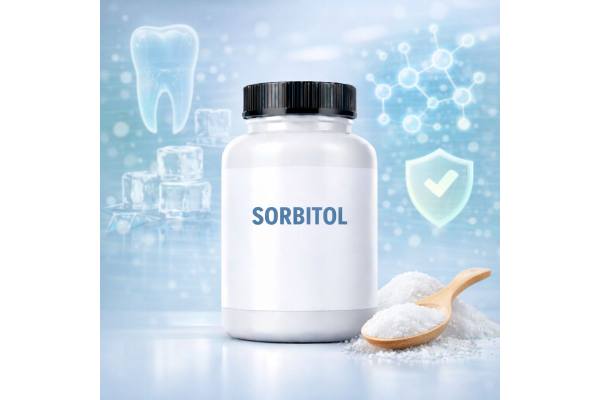
Sorbitol is a sugar alcohol that appears in many “sugar free” foods, oral care products, and pharmaceutical preparations. It provides sweetness with fewer calories than table sugar and has functional uses as a humectant, thickener, and bulk sweetener. In medicine, sorbitol also acts as an osmotic laxative and as an excipient in tablets, syrups, and injectable solutions.
Although sorbitol occurs naturally in some fruits, most commercial sorbitol is manufactured from glucose and used as food additive E420. Regulatory agencies classify it as a food additive with an acceptable daily intake “not specified,” meaning it is considered low toxicity at typical exposure levels. Still, its laxative effect at higher doses and its role in certain metabolic pathways make dose and individual sensitivity very important.
This guide explains how sorbitol works, where it can be helpful, where it may cause problems, and what current research suggests about long term use, so you can evaluate it realistically in your diet or product formulations.
Key Insights for Sorbitol Use
- Sorbitol is a low calorie bulk sweetener that helps reduce sugar content while maintaining texture and moisture.
- Regular intakes above about 20 g per sitting or 50 g per day can trigger gas, bloating, and diarrhea in many adults.
- Typical total dietary intakes from foods are best kept around 5–20 g per day in most adults, adjusting downward for children and people with sensitive digestion.
- People with irritable bowel syndrome, fructose or polyol intolerance, or unexplained chronic diarrhea should be cautious with sorbitol containing products.
Table of Contents
- What is sorbitol and how is it used?
- What are the main benefits of sorbitol?
- How sorbitol works in the body
- How much sorbitol per day is safe?
- Sorbitol side effects and who should avoid it
- Practical tips for using sorbitol wisely
What is sorbitol and how is it used?
Sorbitol (also called D-sorbitol or D-glucitol) is a polyol, or sugar alcohol, produced by reducing glucose. In nature, it occurs in modest amounts in fruits such as apples, pears, peaches, and prunes. Commercially, it is manufactured at large scale from corn or wheat starch, then purified into syrups or crystalline powders.
As a food additive (E420), sorbitol serves several technological functions. It is moderately sweet—about 60 percent as sweet as sucrose—with a clean taste and no intense aftertaste. Because it is not fermented by oral bacteria to the same extent as sucrose, it is considered non-cariogenic and is commonly used in sugar free chewing gums, candies, lozenges, and toothpaste. Regulatory assessments of sugar replacers, including sorbitol, support claims around maintenance of tooth mineralisation and reduced post-prandial blood glucose when they replace sugar in foods.
Beyond sweetness, sorbitol attracts and holds water, which makes it valuable as a humectant in baked goods, confectionery, and cosmetics such as creams, lotions, and gels. It helps prevent products from drying out, improves mouthfeel, and stabilises texture. In pharmaceuticals, sorbitol appears in syrups, elixirs, chewable tablets, and as a vehicle in some injectable formulations where its osmotic and stabilising properties are useful.
Medically, concentrated sorbitol solutions (often around 70 percent) can be given orally or as an enema as an osmotic laxative for occasional constipation. It is also used in some diagnostic preparations and in parenteral nutrition formulas in carefully controlled settings.
Put simply, sorbitol is both a functional ingredient for industry and a widely consumed sweetener for consumers, which is why understanding its benefits and limits is important.
What are the main benefits of sorbitol?
Sorbitol’s appeal lies in a mix of nutritional, dental, technological, and cost-related advantages. From a calorie perspective, sorbitol provides about 2.4 kcal per gram, compared with 4 kcal per gram for sucrose. That reduction, while modest per gram, becomes meaningful in sugar free confectionery, chewing gum, or specialised diet products where sorbitol replaces large proportions of sugar.
Because sorbitol is absorbed slowly from the small intestine and partially reaches the colon, it produces a lower post-meal rise in blood glucose and insulin compared with an equivalent amount of sucrose. In regulatory evaluations of sugar replacers, sorbitol containing foods were allowed to claim a contribution to lower post-prandial glycaemic responses when they replace sugars in otherwise comparable products. For people managing glucose excursions—such as those with diabetes or prediabetes—this can be a useful property when combined with overall dietary planning.
Dental health is another recognised benefit. Polyols such as sorbitol do not readily fuel the acid production by oral bacteria that leads to tooth demineralisation. Long term use of sugar free chewing gums and candies with polyols has been associated with reduced caries risk compared to sugar-sweetened products, and sorbitol is a workhorse ingredient in many of those formulations.
Technologically, sorbitol brings several functional advantages:
- It acts as a humectant, helping baked goods and bars stay soft.
- It provides bulk in “no added sugar” products where high-intensity sweeteners alone would not supply texture.
- It stabilises moisture and improves freeze–thaw behaviour in frozen desserts.
- In cosmetics, it improves skin feel and prevents drying in gels and creams.
Cost and availability also matter. Sorbitol is widely available, relatively inexpensive, and has a long history of use, making it a default bulk sweetener in many formulations.
However, these advantages come with the trade-off of gastrointestinal side effects at higher doses, so the benefits are best realised when sorbitol is used within tolerance limits and in the right contexts.
How sorbitol works in the body
Sorbitol’s behaviour in the body depends on whether it is ingested as a food additive or produced inside tissues. After oral intake, sorbitol is absorbed slowly and incompletely in the small intestine via passive diffusion and carrier-mediated transport. A portion is metabolised in enterocytes and the liver, where sorbitol dehydrogenase converts it to fructose, which then enters standard carbohydrate metabolism. The remainder passes to the large intestine, where colonic bacteria ferment it to short-chain fatty acids, gases, and small amounts of energy.
This limited absorption and fermentation explain both its lower caloric value and its laxative potential. By increasing the osmotic load in the intestinal lumen, unabsorbed sorbitol draws water into the gut, softening stools and promoting peristalsis—useful when used intentionally as a laxative, uncomfortable when excessive intake is accidental.
Endogenously, sorbitol is produced via the polyol pathway, in which the enzyme aldose reductase reduces glucose to sorbitol, which is then oxidised to fructose by sorbitol dehydrogenase. In chronic hyperglycaemia (as in poorly controlled diabetes), excess flux through this pathway can lead to sorbitol accumulation in tissues with limited sorbitol dehydrogenase activity, including the lens, retina, and peripheral nerves. This build-up is linked to osmotic stress and oxidative damage contributing to diabetic complications such as cataracts, retinopathy, and neuropathy.
Recent animal studies suggest that long term high-dose sorbitol intake may have systemic effects beyond the gut. In mice, several weeks of sorbitol administration altered gut microbiome composition and induced glucose intolerance, highlighting that even “nutritive” sweeteners can influence metabolic health when consumed chronically in high amounts. Another mouse study found that chronic consumption of 5 percent sorbitol in drinking water over three months affected hippocampal brain-derived neurotrophic factor (BDNF) levels and was associated with cognitive decline in aged mice.
While these findings are preclinical and used higher exposures than typical human dietary intakes, they underscore that sorbitol is biologically active and not metabolically inert. The key takeaway is that dose, duration, and individual health status determine whether sorbitol functions as a useful tool or a potential stressor.
How much sorbitol per day is safe?
Unlike many intense sweeteners, sorbitol has an “ADI not specified” designation from the Joint FAO/WHO Expert Committee on Food Additives, which means it is considered of low toxicological concern at amounts needed for typical food uses. Safety issues are mainly functional—gastrointestinal tolerance—rather than classical toxicity.
Human tolerance studies and regulatory evaluations converge on similar thresholds. In adults, consumption exceeding about 50 g of sorbitol per day is consistently associated with diarrhoea and marked laxative effects. Even lower intakes, around 20 g in a single sitting, can cause bloating, gas, and loose stools in susceptible individuals or those unaccustomed to polyols. Reviews of sugar alcohols note that tolerance varies widely and can improve over time as the gut microbiota adapt.
This leads to practical intake guidance rather than a strict universal limit:
- General adult population (without IBS or polyol intolerance):
- Aim for ≤10–15 g per serving and ≤20–30 g per day from all sources combined for everyday consumption.
- Occasional single doses up to 20 g are often tolerated but may cause symptoms in some people.
- Children:
- Because of smaller body size, problem thresholds are lower; children may develop laxative symptoms at 10–20 g per day, or even less in sensitive individuals.
- As an intentional laxative:
- Medical sorbitol preparations (often 70 percent solution) are dosed far above typical food intakes and should be used only under health professional guidance, especially in older adults and those with kidney or heart disease.
The “hidden” contribution from multiple products is easy to overlook. Sugar free candies, chewing gums, medicated lozenges, fibre bars, and oral liquid medications may all contain sorbitol. A person with chronic constipation might tolerate higher intakes, while someone with irritable bowel syndrome, small intestinal bacterial overgrowth, or post-infectious gut sensitivity may experience symptoms at much lower doses.
In practice, the safest strategy is to start low, monitor symptoms, and keep total daily intake within conservative ranges unless you have specific advice from a clinician or dietitian.
Sorbitol side effects and who should avoid it
The most common side effects of sorbitol are gastrointestinal. Because unabsorbed sorbitol draws water into the intestine and is fermented by colonic bacteria, higher intakes can cause:
- Bloating and abdominal distension
- Excessive gas and flatulence
- Cramping or colicky pain
- Loose stools or frank diarrhoea
Controlled studies and reviews of sugar alcohols show that these symptoms appear at lower doses in children, people with irritable bowel syndrome, and individuals with functional gut disorders, sometimes at intakes well below 20 g per day. Chronic ingestion of large amounts—as can happen with overuse of “diet” sweets or cough syrups—may lead to persistent diarrhoea, dehydration, or unintended weight loss.
In people with diabetes, endogenous sorbitol accumulation in tissues is more closely linked to chronic hyperglycaemia than to dietary sorbitol, but high intake from supplements adds another load that may not be helpful. Diabetic patients with neuropathy, retinopathy, or kidney disease should be cautious about frequent, high-dose sorbitol products and prioritise overall glycaemic control.
Recent animal data raise additional questions about long term high-dose use. In mice, prolonged sorbitol consumption altered the gut microbiome and induced glucose intolerance, suggesting that, at least in this model, chronic exposure might impair metabolic flexibility rather than improve it. Another study in aged mice linked three months of 5 percent sorbitol intake to reduced hippocampal BDNF and cognitive decline, even while some gingival aging markers improved. These findings do not prove harm in humans at normal food intakes, but they support avoiding unnecessary chronic high exposures.
Groups who should be especially cautious or seek professional advice before using sorbitol include:
- People with IBS, IBD during flare, or diagnosed FODMAP sensitivity
- Individuals with unexplained chronic diarrhoea or malabsorption syndromes
- Children, particularly if consuming multiple sorbitol-rich sweets or syrups daily
- Older adults or those on multiple medications that already affect bowel habits
- People with advanced diabetes complications or poor glycaemic control
Allergic reactions to sorbitol are rare, but any new medication or product should be stopped and evaluated if rashes, facial swelling, or breathing difficulties occur.
Practical tips for using sorbitol wisely
Sorbitol can be part of a thoughtful nutrition or product strategy if used intentionally rather than passively. For everyday consumers, the first step is label awareness. On ingredient lists, sorbitol may appear as “sorbitol,” “sorbitol syrup,” or E420. In many regions, products containing significant amounts of polyols must also carry advisory statements about possible laxative effects, especially when total polyol content exceeds 10 percent or when typical portion sizes could deliver more than about 20 g.
If you use several sugar free products—gum, mints, throat lozenges, “no added sugar” chocolates, and fibre bars—estimate how much sorbitol you consume in a day. Manufacturers sometimes list polyol grams per serving; if not, be cautious with portion sizes. Spacing sorbitol-containing items across the day rather than consuming large amounts at once can reduce symptoms.
For people with sensitive digestion or on a low-FODMAP plan, trial elimination is often informative. Removing sorbitol rich foods for several weeks, then reintroducing a small, measured amount can help determine your personal tolerance. Keeping a simple symptom diary—tracking dose, timing, bloating, stool frequency, and consistency—turns subjective discomfort into actionable information you can discuss with a clinician or dietitian.
If you are developing or reformulating products, consider:
- Combining sorbitol with other polyols that have different laxation thresholds.
- Using blends of bulk polyols and high-intensity sweeteners to reduce total sorbitol per serving while achieving target sweetness.
- Designing serving sizes so that single-serve packs stay below typical discomfort thresholds, especially for children.
- Providing clear front-of-pack or near-nutrition-panel indications when polyol content is high.
Finally, remember that sorbitol is just one lever in a broader pattern. For glycaemic management, overall carbohydrate quality, fibre intake, and total energy balance matter more than any single sweetener. For dental health, regular oral hygiene and check-ups remain central, with polyol gums and lozenges as supportive tools rather than cures.
Used in moderation, sorbitol can support lower sugar formulations and product stability. Used in excess or without attention to individual tolerance, it can quickly become a source of discomfort rather than benefit.
References
- WHO | JECFA 2021 (Database entry summarising JECFA evaluation of sorbitol; ADI not specified and functional classes).
- Long-term consumption of the sugar substitute sorbitol alters gut microbiome and induces glucose intolerance in mice – PubMed 2022 (RCT-style animal study on chronic sorbitol intake, microbiome changes, and glucose intolerance).
- Long-term sorbitol consumption affects the hippocampus and alters cognitive function in aged mice – PubMed 2024 (Animal study linking chronic sorbitol intake with hippocampal changes and cognition).
- Gastrointestinal Disturbances Associated with the Consumption of Sugar Alcohols with Special Consideration of Xylitol: Scientific Review and Instructions for Dentists and Other Health-Care Professionals – PubMed 2016 (Scientific review on polyol tolerance, GI effects, and adaptation).
- Polyols, versatile ingredients for food (re-)formulation 2015 (Industry and regulatory summary including EFSA 2011 opinion on sugar replacers, dental health, and glycaemic responses).
Disclaimer
The information in this article is for general educational purposes only and does not replace personalised medical, dietary, or pharmaceutical advice. Sorbitol responses vary widely, especially in people with digestive disorders, diabetes, kidney disease, or in children. Never start, stop, or change any medication, laxative regimen, or restrictive diet based solely on online information. Always discuss concerns about sorbitol intake, chronic diarrhoea, unexplained weight loss, or metabolic health with a qualified healthcare professional who can assess your individual situation, review your medications, and interpret relevant test results. Emergency symptoms such as severe abdominal pain, dehydration, blood in stool, or signs of an allergic reaction require immediate medical attention.
If you found this guide useful, you are warmly invited to share it on Facebook, X (formerly Twitter), or any social media platform you prefer, and to follow our work there. Your support in sharing our articles helps our team continue producing careful, evidence based content for readers looking to make informed health and nutrition decisions.