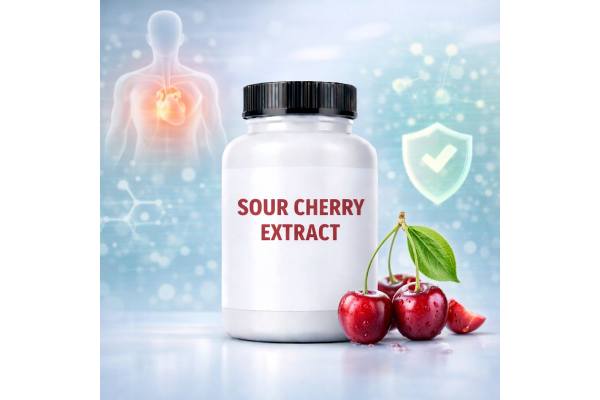
Sour cherry extract, often derived from Montmorency tart cherries (Prunus cerasus), has moved from traditional folk use into sports nutrition and sleep support shelves. This deep red concentrate is rich in anthocyanins and other polyphenols that act as antioxidants and mild anti-inflammatory agents. Modern studies have explored its impact on muscle recovery after intense exercise, sleep quality, uric acid levels relevant to gout, and markers of oxidative stress.
At the same time, sour cherry extract is still a food-based supplement, not a cure-all. Effects tend to be modest and vary between individuals, with some benefits clearer in specific groups such as athletes or people with high uric acid. There are also questions about long term use, sugar content in juices, and interactions with existing medications.
This guide walks through how sour cherry extract works, where evidence is strongest, how to think about dosage, and which safety points deserve careful attention before adding it to your routine.
Quick Overview for Sour Cherry Extract
- Sour cherry extract provides anthocyanins and polyphenols that may support sleep quality, muscle recovery, and control of uric acid.
- Human trials report small to moderate benefits for post-exercise soreness and recovery when taken for several days around strenuous training.
- Common study doses range from 240–480 mL tart cherry juice daily or about 250–1000 mg sour cherry extract in capsules.
- People taking anticoagulants, with kidney disease, or with very high uric acid should speak with a clinician before regular supplementation.
Table of Contents
- What is sour cherry extract and how is it made?
- Evidence based benefits of sour cherry extract
- How sour cherry extract works in the body
- Sour cherry extract dosage and how to take it
- Side effects of sour cherry extract and who should avoid it
- Practical tips for choosing and using sour cherry extract
What is sour cherry extract and how is it made?
Sour cherry extract comes primarily from Montmorency tart cherries, a variety naturally higher in certain polyphenols than sweet cherries. In supplements and functional foods, “sour cherry extract” usually refers to a concentrated form of juice, skin, or whole-fruit powder that standardises key active compounds such as anthocyanins.
Commercially, sour cherries are harvested, pitted, and processed into:
- Juice concentrate: The juice is pressed, filtered, and then gently evaporated under reduced pressure to remove water. The result is a thick, intensely flavoured concentrate that can be diluted back into juice or encapsulated as a dried powder.
- Powdered extracts: Juice or whole cherries are spray-dried or freeze-dried, sometimes after an extraction step with water or a water–ethanol mixture. Manufacturers often standardise these powders to a declared percentage of anthocyanins or total polyphenols.
- Whole-fruit powders: Less processed powders may include peel, pulp, and juice, ground and dried with less emphasis on standardised active content but higher in fibre and other phytonutrients.
Labels may use terms such as “tart cherry”, “sour cherry”, “Montmorency cherry”, or the Latin name Prunus cerasus. In many products, especially sports and sleep support formulations, sour cherry extract is combined with magnesium, L-theanine, melatonin, or other botanicals.
Nutritionally, the original sour cherries contain vitamin C, potassium, small amounts of fibre, and a suite of polyphenols. Juice and concentrated extracts preserve much of this, although the fibre content is lower in clear juices and higher in whole-fruit powders. Some products add sugar; others rely on the natural fruit sugars alone.
Sour cherry extract is marketed for several key areas: supporting sleep, assisting recovery after hard exercise, modulating inflammation and oxidative stress, and helping manage uric acid levels in people prone to gout. This variety of proposed benefits reflects the wide range of phytochemicals present in the fruit, but it also means users need to look closely at the form, dose, and quality of the specific product they choose.
Evidence based benefits of sour cherry extract
Research on sour and tart cherry products spans sleep, exercise recovery, cardiometabolic markers, and uric acid control. The strength of evidence differs by outcome, and most data come from juices or concentrates rather than isolated capsules.
Sleep quality and duration
Several controlled trials have reported improved sleep after short courses of tart cherry juice. In older adults with sleep difficulties, daily consumption of tart cherry juice concentrate for one to two weeks has been associated with longer total sleep time and higher sleep efficiency measured by actigraphy and sleep diaries. Similar benefits have been described in small trials involving people with insomnia and in athletes undergoing heavy training, where nocturnal melatonin and subjective sleep quality improved modestly.
These effects are often modest rather than dramatic, but they suggest sour cherry extract may help smooth sleep patterns in people with mild disturbances, especially when combined with good sleep hygiene.
Muscle soreness and exercise recovery
One of the most studied areas is exercise-induced muscle damage. A systematic review and meta-analysis of tart cherry supplementation trials concluded that, overall, sour cherry products produce small but meaningful reductions in post-exercise muscle soreness, with moderate benefits for recovery of strength and power after strenuous exercise.
In practice, this has included protocols such as:
- Drinking tart cherry juice or concentrate twice daily for seven to ten days around a marathon, intense resistance training, or repeated sprint exercise.
- Taking 500–1000 mg of tart cherry extract in capsule form for several days before and after a heavy training bout.
Participants receiving cherry products typically report less soreness and show faster recovery of strength compared with placebo, although not all trials are positive and the effect size varies.
Inflammation, oxidative stress, and joint comfort
Sour cherry extract is rich in anthocyanins and other phenolic compounds with antioxidant and anti-inflammatory actions in laboratory settings. Human trials have shown reductions in markers such as C-reactive protein and some inflammatory cytokines in certain populations, particularly in overweight or obese adults with raised baseline inflammation. People with osteoarthritis have reported small improvements in pain and stiffness scores in some trials, although this area needs more large-scale studies.
Uric acid and gout
For individuals with high uric acid, sour cherry products have attracted attention as a dietary adjunct. In overweight adults, daily intake of 100 percent tart cherry juice has been shown to reduce serum uric acid by nearly one fifth on average over several weeks, with some accompanying reductions in inflammatory markers. Other trials and observational studies suggest that regular cherry consumption may be associated with fewer gout flare-ups, although results are not uniform and cherry products are not a replacement for standard urate-lowering therapy.
Cardiometabolic markers and cognition
Longer-term trials (around three months) in middle-aged adults using tart cherry concentrate have examined blood pressure, arterial stiffness, lipids, glucose, and inflammatory markers. Results so far are mixed: some studies report reductions in systolic blood pressure in older adults or those with higher baseline values, while others show no meaningful change in normotensive participants. A few studies in older adults have also explored cognitive outcomes, with some suggesting improvements in certain measures of attention or memory, but the evidence is still early.
Overall, sour cherry extract looks most promising for modest support of sleep, exercise recovery, and uric acid management, with possible additional benefits for inflammation in selected groups. It should be viewed as an adjunct to, not a replacement for, broader lifestyle and medical strategies.
How sour cherry extract works in the body
The potential actions of sour cherry extract arise from several classes of bioactive components that influence overlapping pathways in the body.
Anthocyanins and other polyphenols
Sour cherries are rich in anthocyanins, especially cyanidin-based compounds, along with flavonols and phenolic acids. These molecules act as antioxidants in vitro, scavenging reactive oxygen species and reducing lipid peroxidation. In humans, anthocyanins are absorbed, extensively metabolised, and interact with gut microbes. Their benefits likely stem less from simple “antioxidant” activity and more from modulation of cell signalling, gene expression, and microbial composition.
In the context of exercise recovery, these compounds may dampen excessive inflammation and oxidative stress after intense muscle work. This can help preserve contractile function and reduce secondary muscle damage, which might explain the improvements in strength and soreness seen in some tart cherry trials.
Melatonin and sleep-related compounds
Sour cherries naturally contain melatonin, the hormone that helps regulate the sleep–wake cycle, as well as tryptophan and related molecules involved in serotonin and melatonin synthesis. Studies have shown that tart cherry juice consumption can raise circulating melatonin metabolites and adjust markers of the sleep–wake rhythm.
By modestly increasing melatonin availability and interacting with inflammatory pathways that influence sleep architecture, sour cherry extract may help lengthen sleep time and improve continuity, particularly in older adults whose endogenous melatonin production has declined.
Effects on uric acid and inflammation
The link between sour cherry intake and uric acid likely involves several mechanisms:
- Reduced xanthine oxidase activity, an enzyme involved in uric acid production.
- Increased urinary excretion of uric acid in some individuals.
- Indirect effects through improved endothelial function or reduced oxidative stress.
At the same time, anthocyanins and other polyphenols may decrease expression of inflammatory mediators that participate in gout flares. This could explain why tart cherry juice has lowered serum urate in overweight adults and why some studies report fewer gout attacks in people who regularly consume cherry products.
Cardiometabolic and vascular pathways
Anthocyanins have been investigated for their capacity to influence endothelial nitric oxide production, arterial stiffness, and lipid metabolism. Short-term trials with tart cherry juice have documented transient reductions in blood pressure and improvements in certain markers of oxidative stress. However, longer-term studies in relatively healthy, middle-aged adults show less consistent changes, suggesting that baseline risk and dosing schedules are important.
Gut microbiome interactions
Polyphenols from sour cherry extracts reach the colon, where gut bacteria transform them into smaller phenolic metabolites. These in turn may affect microbial composition and host metabolic signalling. Research is ongoing, but it appears that sour cherry products, like other polyphenol-rich foods, may help shape a more favourable gut environment in some individuals.
Taken together, sour cherry extract does not act through a single dominant pathway. Instead, it likely exerts small effects across several systems—oxidative stress, inflammation, uric acid handling, vascular function, and sleep regulation—which can add up to meaningful benefits in people whose health or lifestyle stresses those systems.
Sour cherry extract dosage and how to take it
There is no universally agreed “standard dose” for sour cherry extract, but many human trials cluster around certain ranges. These can guide discussions with a healthcare professional and help you interpret product labels.
Typical study doses
Most clinical studies have used one of three main forms:
- Tart cherry juice
- Often 240 mL (about 8 fl oz) once or twice daily.
- Some sleep and gout trials have used 240 mL per day, while exercise recovery protocols sometimes use 480 mL per day divided into two servings.
- Juice concentrate
- Commonly 30 mL of concentrate twice daily, diluted in water or juice.
- This roughly corresponds to several servings of whole cherries in terms of anthocyanin content, depending on the product.
- Capsules or tablets
- Doses typically range from about 250 mg to 1000 mg of tart cherry extract daily.
- In exercise studies, 500–1000 mg per day for several days before and after strenuous activity is common.
These amounts are intended for short to medium-term use in specific contexts (for example, a training block, a few weeks of sleep support, or a study period evaluating uric acid). They are not long term medical prescriptions.
How to match products to these ranges
Because supplement labels vary, it is important to look for:
- The amount per serving (in mg of extract, mL of juice, or mL of concentrate).
- Whether the product is standardised for anthocyanin or polyphenol content.
- Whether additional ingredients such as sugar, melatonin, magnesium, or other botanicals are included.
As a very general orientation (not as personal medical advice):
- Many adults aiming for exercise recovery effects use the equivalent of about 240–480 mL tart cherry juice per day or 500–1000 mg of extract, taken for 4–10 days around intense training or competition.
- For sleep support, studies have often used about 240–480 mL juice or 60 mL concentrate daily, taken in the evening or split between morning and evening.
- For uric acid modulation, trials in overweight adults have used about 240 mL juice daily for several weeks.
Children, pregnant or breastfeeding individuals, and people with kidney disease or complex medication regimens should not simply copy adult doses from studies and should seek medical guidance instead.
Timing and duration
Timing may matter:
- For sleep, taking sour cherry extract 1–2 hours before bedtime seems logical given melatonin’s role in circadian rhythm.
- For exercise recovery, protocols often start several days before a demanding event and continue for a few days afterward, rather than a single post-workout dose.
- For uric acid, daily intake over weeks appears necessary to see changes in serum levels.
Because long term safety data at higher supplemental doses are still limited, many people and clinicians prefer to use sour cherry extract in defined “blocks” with breaks, rather than continuously year-round, especially at the upper end of dosing ranges.
Side effects of sour cherry extract and who should avoid it
Sour cherry extract is generally well tolerated in clinical trials, but “generally safe” does not mean risk-free. Side effects depend on form (juice versus capsules), dose, and individual health status.
Common and mild side effects
At typical study doses, the most frequently reported issues include:
- Gastrointestinal discomfort such as bloating or mild cramping
- Soft stools or transient diarrhoea, especially when large volumes of juice are consumed
- Mild nausea in some people when taken on an empty stomach
These symptoms often lessen if the dose is split across the day or taken with food. Juices naturally contain fruit sugars, which can contribute to discomfort in people with fructose malabsorption or irritable bowel syndrome.
Sugar and calorie load from juice
One overlooked aspect is that 100 percent tart cherry juice, while free of added sugar, still provides a substantial amount of natural sugars and calories. For individuals with diabetes, prediabetes, non-alcoholic fatty liver disease, or those managing weight, adding 240–480 mL of juice daily may not be appropriate. In these cases, capsules or lower-volume concentrates may be preferable, but they should still be integrated into the overall carbohydrate plan.
Uric acid and kidney considerations
Although sour cherry products can reduce serum uric acid in some studies, they are not substitutes for prescribed urate-lowering medications. People with:
- Very high uric acid
- Frequent gout attacks
- Advanced chronic kidney disease
should not attempt to self-manage with cherry extract alone. Sudden changes in uric acid, dehydration, or interactions with diuretics and other medications can complicate gout management and kidney function. Any use in these contexts should be coordinated with a rheumatologist or nephrologist.
Interactions with medications
Sour cherry extract may theoretically interact with medications in several ways:
- Antioxidant and anti-inflammatory effects could alter responses to certain anti-inflammatory drugs, although concrete evidence is limited.
- Fruit juices sometimes affect drug-metabolising enzymes; while grapefruit is the classic example, caution is prudent with high intakes of any concentrated juice.
- For people on anticoagulants, antiplatelet agents, or multiple cardiovascular drugs, adding any new supplement that has vascular or anti-inflammatory actions should be discussed with a prescribing physician.
Allergy and intolerance
True allergy to cherries is uncommon but possible, especially in those with related pollen–fruit syndromes. Signs such as itching in the mouth, swelling of the lips or throat, hives, or breathing difficulties require immediate cessation and urgent medical attention.
Who should be cautious or seek medical advice first
Extra caution and prior professional advice are advisable for:
- Individuals with diabetes, metabolic syndrome, or weight management goals, especially if using juice forms.
- Those with chronic kidney disease, history of kidney stones, or significant fluid restrictions.
- People with recurrent gout who are already on urate-lowering drugs.
- Anyone with autoimmune disease or on immune-modulating therapies, until potential interactions are reviewed.
- Pregnant or breastfeeding individuals, due to limited targeted safety data at supplemental doses.
In short, sour cherry extract is not a high-risk supplement for most healthy adults when used in studied ranges, but it is still a biologically active preparation that deserves the same respect as any other medicinal food.
Practical tips for choosing and using sour cherry extract
Putting the science into practice means choosing appropriate products, matching them to your goals, and monitoring your response.
Clarify your primary goal
Before buying a supplement, decide what you are actually trying to address:
- Occasional support for sleep quality
- Faster recovery after specific high-intensity training blocks or events
- Dietary support alongside medical management of high uric acid
- General anti-inflammatory or wellness use
Different goals favour different forms and schedules. For example, athletes may use sour cherry extract around competitions, while someone with frequent gout attacks might explore a regular but moderate intake, under medical supervision, over several weeks.
Compare product types
When reading labels, consider:
- Form: Juice, concentrate, capsules, powders, gummies.
- Standardisation: Look for indications such as “standardised to X mg anthocyanins per dose” or “Y mg total polyphenols”. This helps compare products.
- Sugar and calorie content: Essential for juices and ready-to-drink beverages.
- Additives: Flavours, sweeteners, colourings, or additional active ingredients like melatonin or magnesium.
Capsules and powders usually deliver active compounds with minimal sugar, which may suit people with metabolic concerns. Juices and concentrates may be better studied in certain contexts but require more attention to calories and carbohydrate load.
Introduce the supplement gradually
Rather than jumping straight to a high dose:
- Start at the lower end of the range used in studies (for instance, one serving of juice or a single daily capsule).
- Take it with food, at a consistent time each day.
- Monitor for changes in digestion, sleep, energy, and any relevant symptoms such as joint pain or post-exercise soreness.
- After one to two weeks, review whether the perceived benefits justify continuing or adjusting the dose.
Keeping a brief log that notes dose, timing, and key outcomes (sleep duration, soreness ratings, gout symptoms) can make the pattern much easier to interpret.
Coordinate with your overall plan
Sour cherry extract will be most effective when aligned with broader strategies:
- For sleep, pair it with consistent bedtimes, reduced evening screen exposure, and a quiet sleep environment.
- For exercise, integrate it with periodised training, adequate protein, and balanced recovery practices.
- For uric acid, focus on hydration, body weight management where appropriate, and professional guidance on restricting alcohol and purine-rich foods.
Evaluate periodically and avoid indefinite escalation
Because long term, high-dose data are limited, it is sensible to:
- Use sour cherry extract in time-limited blocks (for example, several weeks, then reassess).
- Avoid continual dose escalation if effects plateau.
- Recheck blood tests such as uric acid, glucose, and lipids with your clinician if you are using sour cherry extract as part of a plan to manage chronic conditions.
If you do not see a clear, meaningful benefit after a reasonable trial period, it may be preferable to redirect effort and resources to other evidence-based interventions.
References
- Effect of tart cherry juice (Prunus cerasus) on melatonin levels and enhanced sleep quality 2012 (Randomized Controlled Trial).
- Tart Cherry Supplementation and Recovery From Strenuous Exercise: A Systematic Review and Meta-Analysis 2021 (Systematic Review and Meta-Analysis).
- Effect of cherry consumption on blood pressure: a systematic review and meta-analysis of randomized controlled trials 2022 (Systematic Review and Meta-Analysis).
- Consumption of 100% Tart Cherry Juice Reduces Serum Urate in Overweight and Obese Adults 2019 (Randomized Controlled Trial).
- The Influence of Tart Cherry (Prunus cerasus, cv Montmorency) Concentrate Supplementation for 3 Months on Cardiometabolic Risk Factors in Middle-Aged Adults: A Randomised, Placebo-Controlled Trial 2021 (Randomized Controlled Trial).
Disclaimer
This article is intended for general informational purposes only and does not provide medical, nutritional, or pharmaceutical advice for any individual person. Sour cherry extract may interact with health conditions, medications, and broader dietary patterns in ways that require professional assessment. You should not start, stop, or change any treatment, nor rely on sour cherry extract to manage gout, cardiovascular disease, insomnia, or any other medical condition, without speaking to a qualified healthcare professional who knows your medical history, medications, and laboratory results. If you experience severe symptoms such as intense joint pain, sudden breathing difficulty, chest pain, or signs of an allergic reaction after using any cherry product, seek urgent medical attention immediately.
If you found this guide helpful, you are welcome to share it on Facebook, X (formerly Twitter), or any social media platform you prefer, and to follow our future updates there. Sharing our articles supports the ongoing work of our team and helps more readers access clear, carefully researched information about supplements and health.