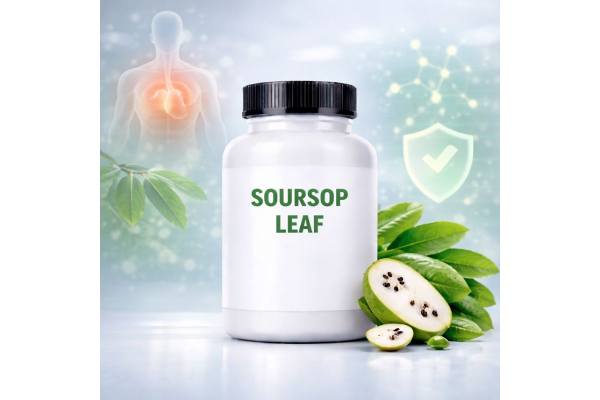
Soursop leaf, from the tropical tree Annona muricata, has a long history in folk medicine across the Caribbean, Latin America, Africa, and Southeast Asia. Traditionally, the leaves are prepared as teas, decoctions, or poultices to address pain, infections, high blood pressure, sleep problems, and inflammation. Modern laboratory research has identified a rich mix of phytochemicals in the leaves, including acetogenins, flavonoids, and alkaloids, which show antioxidant, anti-inflammatory, antimicrobial, and cytotoxic properties in cell and animal models. At the same time, some of these compounds, especially the acetogenin annonacin, have raised safety concerns because of potential neurotoxicity with long-term, high intake.
This guide walks you through what soursop leaf is, where the evidence currently stands, how people use it in supplements and teas, and what is known about dosage, side effects, and risk factors. The goal is to help you discuss this plant more confidently with a qualified health professional before deciding whether it has a place in your routine.
Essential insights on soursop leaf
- Soursop leaves contain antioxidant and anti-inflammatory compounds that may support liver, metabolic, and tissue health in preclinical studies.
- Early animal data suggest hepatoprotective and cardiometabolic effects, but there are no large, high-quality clinical trials in humans yet.
- Typical supplement ranges are around 250–1000 mg of standardized soursop leaf extract per day, or about 1–3 cups of herbal tea, under professional supervision.
- Soursop leaf contains annonacin and related acetogenins that may be neurotoxic at high, long-term exposures, especially when combined with high fruit intake.
- Individuals with Parkinson’s disease, other movement disorders, or a strong family history of these conditions should avoid concentrated soursop leaf products unless advised otherwise by a specialist.
Table of Contents
- What is soursop leaf and how is it used?
- Proven and possible benefits of soursop leaf
- How soursop leaf works in the body
- How to take soursop leaf and dosage
- Side effects of soursop leaf and who should avoid it
- What science says about soursop leaf today
What is soursop leaf and how is it used?
Soursop, or graviola, is the common name for Annona muricata, a small evergreen tree native to northern South America and the Caribbean but now grown widely across the tropics. Its large, spiny fruits are eaten fresh and processed into juices, desserts, and traditional drinks. The leaves, bark, roots, and seeds have all been used in folk remedies, but the leaf is the most common part in modern supplements and herbal teas.
The leaves are thick, dark green, and aromatic when crushed. Traditional preparations usually involve:
- Leaf teas or decoctions: Fresh or dried leaves simmered in water and consumed once or several times per day.
- Topical applications: Leaves softened by heat and applied to the skin for pain or swelling.
- Multicomponent remedies: Leaves combined with other herbs to address fever, infections, or digestive problems.
Today, you will typically find soursop leaf in:
- Capsules or tablets containing dried leaf powder or standardized extracts.
- Loose dried leaf for brewing at home.
- Tea bags that combine soursop leaf with other calming or antioxidant herbs.
- Tinctures or liquid extracts that aim to concentrate certain phytochemicals.
Marketing often emphasizes immune support, antioxidant protection, blood sugar balance, and “natural cancer support.” It is important to understand that most of these claims are based on laboratory and animal data, not robust human trials. The same compounds that may be biologically active can also carry risk if used inappropriately or for long periods.
Because of concerns about neurotoxicity at high exposure, some regulators and scientists advise caution with concentrated soursop leaf products, especially when used chronically.
Proven and possible benefits of soursop leaf
When people ask about “benefits” of soursop leaf, they usually have one of three interests: antioxidant support, metabolic or liver health, and potential anticancer effects. The strength of evidence varies sharply across these areas.
Antioxidant and anti-inflammatory effects
Soursop leaves are rich in phenolic compounds, including flavonoids and phenolic acids. These molecules can neutralize free radicals and modulate inflammatory pathways in vitro and in animals. In a recent food science study, hydroalcoholic soursop leaf extract showed strong antioxidant activity and protected pork patties from lipid oxidation, suggesting that the leaf acts as a potent natural antioxidant in a real food matrix.
Animal models also indicate that soursop leaf preparations may reduce markers of inflammation and oxidative damage, particularly in tissues under chemical stress.
Liver and metabolic support (preclinical)
Several studies in rodents suggest that A. muricata leaf extracts:
- Reduce liver enzyme elevations and improve histological appearance in chemically induced liver injury.
- Lower blood glucose and improve lipid profiles (for example, lowering LDL cholesterol and raising HDL) in some experimental designs.
In one liver-injury model, oral administration of Annona muricata improved liver architecture and biochemical markers toward normal, suggesting a hepatoprotective effect in that setting.
These findings are promising but remain preclinical. They show what can happen under controlled experimental conditions, not what reliably happens in humans taking supplements.
Antimicrobial and anticancer potential
In cell culture, soursop leaf extracts demonstrate:
- Antimicrobial effects against selected bacteria and parasites.
- Cytotoxic effects on cancer cell lines, including colon, breast, and liver cells, partly through induction of apoptosis (programmed cell death).
These results drive much of the marketing around “anticancer” benefits. However:
- Concentrations used in vitro are often far higher than what is achievable in human tissues via oral dosing.
- Very few human trials have tested soursop leaf as an adjunct to cancer therapy, and no large, well-controlled clinical outcomes trials exist.
For now, soursop leaf should not be viewed as a treatment or cure for cancer. At best, it is an experimental botanical that might one day contribute to supportive care, once safety and efficacy are clarified.
Symptom relief in traditional use
Historically, people have used soursop leaf teas for:
- Mild pain and muscle aches
- Sleep and relaxation
- Digestive upset and parasites
- High blood pressure and “nerves”
These uses are based on experiential and traditional knowledge rather than modern controlled studies. Some may be explained by sedative, antispasmodic, or anti-inflammatory actions of the leaf, but they remain largely anecdotal in the scientific sense.
Taken together, the benefits of soursop leaf are plausible but not proven for most health goals. The strongest current evidence is for antioxidant and liver-protective actions in animals, not in humans.
How soursop leaf works in the body
Soursop leaves contain multiple classes of bioactive compounds. Their combined actions may explain both the potential benefits and the safety concerns.
Key constituents
Major groups of compounds include:
- Acetogenins (such as annonacin) – long-chain fatty acid derivatives unique to Annonaceae plants.
- Alkaloids – nitrogen-containing compounds that can affect the nervous system and blood pressure.
- Flavonoids and other phenolics – antioxidant and anti-inflammatory agents.
- Tannins and saponins – compounds that can influence antioxidant status, gut microbiota, and membrane permeability.
Antioxidant and anti-inflammatory mechanisms
Phenolic compounds in the leaves can:
- Donate electrons to neutralize reactive oxygen species.
- Upregulate endogenous antioxidant enzymes such as superoxide dismutase and catalase in experimental models.
- Modulate inflammatory mediators, potentially reducing certain cytokines or enzyme activities.
This combination can help protect cell membranes, DNA, and proteins from oxidative damage in preclinical systems.
Hepatoprotective and metabolic actions
In liver injury models, soursop leaf extracts appear to:
- Reduce oxidative stress in liver tissue.
- Improve liver enzyme levels.
- Support regeneration of hepatocytes and reduce fibrosis markers in some experiments.
In metabolic studies, aqueous leaf extracts lowered blood glucose and improved lipid profiles in animals fed high-sugar or high-fat diets, possibly via improved insulin sensitivity and decreased oxidative stress.
Neurotoxic potential of acetogenins
Acetogenins, especially annonacin, are potent inhibitors of mitochondrial complex I, an enzyme critical for energy production in neurons. Experimental work shows that annonacin can:
- Enter the brain.
- Disrupt mitochondrial function.
- Induce degeneration of dopaminergic and other neurons in regions affected in atypical parkinsonism.
Epidemiological studies in the French West Indies have found unusually high rates of atypical parkinsonism in areas where heavy consumption of soursop fruits, juices, and herbal teas is common. Patients with these syndromes reported higher lifetime intake of Annonaceae products than controls.
While these findings do not prove that occasional soursop tea is dangerous, they strongly suggest that high, chronic exposure to annonacin-rich products, including leaf preparations, may carry neurological risks, especially in susceptible individuals.
In summary, soursop leaf acts on multiple systems: antioxidant, liver, metabolic, and nervous. The same compounds that may help protect tissues can, under certain exposure conditions, stress or damage neurons. This dual nature is why careful dosage, duration, and individual risk assessment are so important.
How to take soursop leaf and dosage
There is no universally accepted therapeutic dose for soursop leaf. Recommendations are based on traditional use, animal toxicology, and limited human experience, not on large clinical trials.
Common forms
- Herbal tea (infusion or decoction)
- 1–2 grams of dried leaf (roughly 1–2 teaspoons) steeped in hot water for 10–15 minutes.
- Typically taken 1–3 times per day in traditional practice.
- Standardized extract capsules or tablets
- Products often provide 250–500 mg of soursop leaf extract per capsule.
- Label instructions usually suggest 1–2 capsules once or twice daily.
- Tinctures or liquid extracts
- Doses vary widely (for example, 1–2 mL in water up to three times per day), depending on the concentration.
Because formulations differ greatly, it is essential to read the exact strength and follow professional guidance rather than copying a dose from another brand.
Practical dosage guidelines (for discussion with a clinician)
Subject to individual medical review, some practitioners might consider:
- Conservative starting range for adults:
- 250–500 mg standardized leaf extract once daily, or
- 1 cup of tea made from 1–2 grams of dried leaf once daily.
- Possible upper range under supervision:
- Up to 1000 mg per day of standardized extract (often divided doses), or
- 2–3 cups of tea per day.
Higher doses or combinations of extract, tea, and heavy fruit intake significantly increase total exposure to annonacin and related compounds and may not be advisable, especially for long-term use.
Duration of use
Because of unresolved safety questions, many experts recommend:
- Using soursop leaf, if at all, in short cycles (for example, a few days to a few weeks) rather than continuous long-term intake.
- Avoiding simultaneous high consumption of soursop fruit, juice, and leaf products.
In acute and subchronic animal toxicity studies, aqueous leaf extracts had relatively high median lethal doses and subchronic dosing did not produce obvious organ toxicity at moderate levels. However, these studies do not address subtle long-term neurological outcomes.
Special considerations
- Always adjust dose more cautiously in individuals with low body weight, reduced kidney or liver function, or multiple medications.
- Do not use soursop leaf as a replacement for prescribed treatments, especially for cancer, diabetes, hypertension, or neurological disease.
- Children, pregnant women, and breastfeeding women should not use soursop leaf supplements unless specifically directed by a specialist familiar with the evidence and risks.
Given the gaps in data, any dosing decision should be individualized, conservative, and regularly re-evaluated.
Side effects of soursop leaf and who should avoid it
Soursop leaf can cause side effects, and certain groups face higher risks. Importantly, the absence of immediate symptoms does not guarantee long-term safety.
Short-term side effects
Reported or plausible short-term reactions include:
- Digestive upset: nausea, stomach discomfort, or diarrhea, especially at higher doses or when taken on an empty stomach.
- Lowered blood pressure: dizziness or lightheadedness in susceptible individuals.
- Sedation or drowsiness: especially when combined with other sedative herbs or medications.
- Allergic reactions: skin rash, itching, or respiratory symptoms in people sensitive to Annonaceae plants.
If you experience pronounced dizziness, palpitations, shortness of breath, or signs of an allergic reaction, stop using soursop leaf and seek medical care.
Potential neurological risks
The most serious concern is the possible link between chronic, high intake of Annonaceae products and atypical parkinsonism observed in certain Caribbean populations. Epidemiological data from these regions show:
- Increased rates of Parkinson-plus syndromes.
- Higher lifetime consumption of soursop fruit and herbal teas among affected patients compared with controls.
- Clinical features and brain changes resembling those seen with mitochondrial toxins.
While these studies are observational and were not designed around leaf supplements specifically, the mechanistic data on annonacin’s neurotoxicity make it prudent to treat high-dose, long-term soursop leaf intake as a potential risk factor.
Organ toxicity
In several animal studies, acute and subchronic administration of A. muricata leaf extracts did not cause major liver or kidney toxicity at moderate doses and showed protective effects in chemically induced liver injury models. However, animal safety at certain doses does not guarantee human safety, especially over many years or in combination with other exposures.
Drug and condition interactions
Use particular caution if you:
- Take blood pressure medications – soursop leaf may enhance hypotensive effects.
- Take diabetes medication – possible additive blood sugar lowering could cause hypoglycemia.
- Use sedatives, sleep aids, or alcohol – sedative effects may be stronger.
- Have kidney or liver disease – impaired elimination could increase exposure to bioactive compounds.
Who should avoid soursop leaf products?
It is generally advisable to avoid soursop leaf supplements (and limit teas) if you:
- Have Parkinson’s disease, other parkinsonian syndromes, tremor disorders, or unexplained movement symptoms.
- Have a strong family history of early or atypical parkinsonism.
- Are pregnant or breastfeeding.
- Are a child or adolescent, unless guided by a specialist in pediatric herbal medicine.
- Have significant kidney or liver impairment unless a specialist carefully supervises use.
- Are undergoing cancer treatment, unless your oncology team explicitly approves its use.
For others, any use should still be discussed with a healthcare professional who can look at your full medication list, medical history, and overall risk profile.
What science says about soursop leaf today
Research on soursop leaf has expanded over the last two decades, but it remains heavily weighted toward laboratory and animal studies rather than rigorous human trials.
What is relatively well supported
- Antioxidant activity: Multiple studies show that soursop leaf extracts scavenge free radicals and protect lipids and proteins from oxidation, including in real food systems such as meat products.
- Hepatoprotective effects in animals: Leaf extracts can mitigate chemically induced liver injury and improve biochemical and histological markers in rats.
- General toxicology in animals: Acute and subchronic toxicity studies suggest high median lethal doses and absence of severe organ pathology at modest doses, though these do not address subtle neurological changes.
What remains uncertain or concerning
- Neurological safety at real-world exposures:
The observational link between heavy Annonaceae consumption and atypical parkinsonism, combined with mechanistic data on annonacin, raises legitimate concern about long-term neurological safety, particularly for high intake of fruits, juices, and teas over many years. - Human efficacy:
There are very few controlled human studies assessing soursop leaf for specific outcomes such as blood pressure control, glucose regulation, sleep, pain, or cancer-related endpoints. Most “benefit” claims extrapolate from preclinical data. - Standardization and quality:
Commercial products vary widely in: - Plant part used (leaf alone versus mixtures).
- Extraction method (water, ethanol, hydroalcoholic).
- Concentration of acetogenins and other actives. Without standardization, two products labeled “soursop leaf extract” can deliver very different profiles and amounts of bioactive and potentially neurotoxic compounds.
How to interpret the current state of evidence
A balanced interpretation is:
- Soursop leaf is pharmacologically active, not a neutral tea.
- The strongest evidence supports antioxidant and hepatoprotective actions in animals, suggesting possible future therapeutic roles.
- There is insufficient clinical evidence to recommend soursop leaf for specific diseases, especially cancer, as a primary or stand-alone therapy.
- Given the potential for neurotoxicity, especially at high and chronic exposure, safety questions must be resolved before aggressive or long-term use can be endorsed.
For now, the most prudent approach is cautious, time-limited use in low to moderate doses, if at all, under professional guidance, with strict avoidance in high-risk neurological groups.
References
- Antioxidant Activity and Acute Oral Toxicity of Soursop (Annona muricata L.) Leaf and Its Effect on the Oxidative Stability of Mexican Hairless Pork Patties, 2025 (Food Science and Toxicology)
- Histopathological Evaluation of Annona muricata in TAA-Induced Liver Injury in Rats, 2022 (Animal Study)
- Evaluation of acute and subchronic toxicity of Annona Muricata Linn aqueous extract in animals, 2011 (Toxicology)
- Atypical parkinsonism in Guadeloupe: a common risk factor for two closely related phenotypes?, 2007 (Epidemiology)
- Possible relation of atypical parkinsonism in the French West Indies with consumption of tropical plants: a case-control study. Caribbean Parkinsonism Study Group, 1999 (Case-Control Study)
Disclaimer
The information in this article is for general educational purposes only and is not a substitute for personalized medical advice, diagnosis, or treatment. Soursop leaf is a pharmacologically active botanical with potential benefits and risks, including possible neurological effects with long-term or high-dose use. Never start, stop, or change any medication, supplement, or treatment plan based solely on what you read online. Always consult a qualified healthcare professional who can consider your individual medical history, current medications, and health goals before you use soursop leaf or any other herbal product. If you have symptoms such as tremor, stiffness, balance problems, or other neurological changes, seek prompt medical evaluation rather than self-treatment.
If you found this guide helpful, you are warmly invited to share it on Facebook, X (formerly Twitter), or any platform you prefer, and to follow our work on social media. Your support in sharing our articles helps our team continue to research, write, and provide carefully reviewed, high-quality health content for readers around the world.