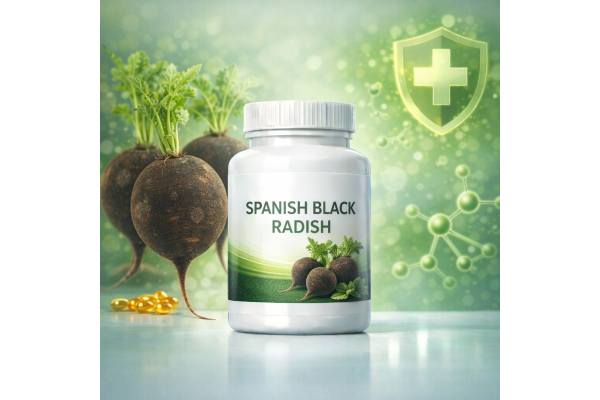
Spanish black radish is an old root vegetable that has recently become a modern “detox” supplement. Under its dark skin and white flesh, it contains distinctive sulfur-rich compounds called glucosinolates that your body can convert into isothiocyanates. These plant compounds may support liver detoxification pathways, bile flow, and antioxidant defenses. Spanish black radish is usually taken as a tablet or capsule, although some people still use the fresh root in food or juice.
This guide walks you through what Spanish black radish is, how it appears to work, where it might be helpful, and what to watch out for. You will learn about potential benefits for liver and gallbladder support, digestion, cholesterol and bile balance, oxidative stress, and immune modulation, along with realistic expectations based on current evidence. You will also find practical information about dosage ranges, timing, duration of use, and safety, so you can discuss it in an informed way with a qualified health professional.
Spanish black radish key insights
- Spanish black radish provides sulfur-rich glucosinolates that may support liver detoxification and bile flow.
- Supplements are mainly used for liver, gallbladder, digestion, and general “detox” support rather than as a daily multivitamin.
- Typical supplemental intake ranges from about 500 mg to 2,250 mg of dried root per day, often divided with meals.
- People with gallstones, bile duct obstruction, thyroid disease, or cruciferous vegetable allergies should only use it under medical guidance or avoid it.
- Short-term use appears well tolerated in healthy adults, but long-term safety data and pregnancy or lactation data are limited.
Table of Contents
- What is Spanish black radish?
- Spanish black radish benefits and uses
- How to take Spanish black radish daily
- How much Spanish black radish per day?
- Side effects and who should avoid it
- What research says about Spanish black radish
What is Spanish black radish?
Spanish black radish (Raphanus sativus L. var. niger) is a specific variety of radish with a thick, black outer skin and crisp white interior. It belongs to the Brassicaceae family, the same group as broccoli, cabbage, and Brussels sprouts. Compared with common salad radishes, it has a stronger, pungent, almost peppery taste and a higher concentration of certain sulfur-containing compounds.
Traditionally, Spanish black radish has been used in European and folk herbal medicine to support digestion, gallbladder function, and bile flow. People consumed it raw, juiced, or in cooked dishes, often alongside heavy or fatty meals. Over time, standardized extracts and tablets were developed to deliver consistent doses of the root’s active constituents.
The key functional compounds in Spanish black radish are glucosinolates, especially derivatives such as glucoraphasatin. When the plant tissue is chopped or chewed, natural enzymes convert these glucosinolates into isothiocyanates and related sulfur compounds. These metabolites can interact with cellular signaling pathways involved in detoxification, antioxidant defense, and inflammatory responses.
Modern supplements typically contain dried or powdered organic Spanish black radish root. Labels often list the amount of root per tablet or capsule, for example 500 mg or 750 mg. Many products also highlight that the root is organically grown and minimally processed to preserve its glucosinolate content.
It is important to distinguish Spanish black radish from generic “radish” supplements or extracts made from other Brassica vegetables. The composition of glucosinolates can vary substantially among varieties and species, and results from one preparation cannot automatically be applied to another. When you read research summaries or product labels, it helps to check that they refer specifically to Spanish black radish or Raphanus sativus var. niger.
Spanish black radish benefits and uses
Most people are interested in Spanish black radish for its potential liver and gallbladder benefits. The root’s glucosinolates and their isothiocyanate metabolites appear to stimulate the activity of enzymes involved in phase I and phase II detoxification in liver cells. These include enzymes that help transform and conjugate certain toxins and xenobiotics so that they can be excreted more easily.
Some supplements position Spanish black radish as a support for bile flow and gallbladder function. Bile is produced by the liver and stored in the gallbladder, then released into the small intestine to help digest fats and carry waste products out of the body. Traditionally, bitter and sulfurous foods such as radishes were used to stimulate bile production and flow. Modern data suggest that Spanish black radish extracts can influence bile acid profiles and may encourage more efficient elimination of some compounds through bile, although this is still an emerging area of research.
Beyond detoxification, Spanish black radish is being explored for several other potential roles:
- Digestive comfort: Some people find that it helps with a feeling of fullness, sluggish digestion after heavy meals, or minor bloating, possibly through effects on bile and digestive secretions.
- Liver health under metabolic stress: Animal studies suggest that black radish extracts can help protect liver cells from certain diet-induced and chemical insults by reducing oxidative stress and lipid peroxidation.
- Cholesterol and bile balance: Experimental models show that black radish may influence cholesterol metabolism and bile composition, which could be relevant to gallstone risk, although this has not been proven in large human trials.
- Alcohol metabolism and hangover support: Fermented black radish extracts have been tested in animals and appear to enhance liver enzymes that metabolize alcohol and acetaldehyde, potentially supporting faster clearance.
In practice, Spanish black radish is seldom used alone as a complete liver remedy. It is more often combined with a broader nutrition plan, adequate protein and micronutrients, and sometimes other herbs or nutrients chosen by a clinician. The current human evidence base is still relatively small, so it makes sense to treat Spanish black radish as a targeted adjunct, not a magic solution.
How to take Spanish black radish daily
Spanish black radish is available as fresh root, juice, dried powder, tablets, capsules, and sometimes as part of complex “detox” formulas. The way you take it affects how your body experiences the taste, sulfur load, and potential digestive impact.
For most people, tablets or capsules are the most practical form. Common products provide between 500 mg and 750 mg of dried Spanish black radish root per serving. Manufacturers often recommend one to three servings per day, taken with meals. This pattern aims to spread the sulfur load over the day and align with times when the liver and gallbladder are already stimulated by food intake.
If you are new to Spanish black radish, a gradual approach is sensible:
- Start low: Begin with one tablet or capsule daily with a main meal, ideally lunch or dinner.
- Monitor response: Over a week, pay attention to changes in digestion, bowel movements, energy, and any discomfort such as gas, cramping, or reflux.
- Adjust gradually: If well tolerated and advised by your practitioner, increase to twice daily and then possibly three times daily, always with food.
- Cycle use: Many clinicians prefer using Spanish black radish in “rounds,” for example 4–8 weeks of use followed by a break, rather than continuous year-round intake, especially when used for focused detox protocols.
Some people also incorporate the fresh root into their diet by grating it into salads, mixing it into slaws with carrots and apples, or juicing a small piece with other vegetables. Because the flavor is intense, culinary use naturally limits the dose and mimics traditional dietary patterns.
Practical tips that often help:
- Take the supplement with a meal that contains some healthy fat to encourage bile release.
- Drink adequate water across the day to support kidney filtration and waste removal.
- Do not combine high-dose Spanish black radish with other strong detox or bile-stimulating agents unless you are under professional supervision.
- If you experience significant nausea, upper right abdominal pain, or pale stools, stop use and seek prompt medical evaluation.
Spanish black radish is not a replacement for medical treatment of liver or gallbladder disease. It is best viewed as a supportive food-based supplement within a larger plan that addresses diet, alcohol intake, medications, metabolic health, and physical activity.
How much Spanish black radish per day?
There is no universally accepted “standard” dose of Spanish black radish for all purposes. Most guidance is based on traditional use, supplement label directions, and a relatively small number of human and animal studies. Dosage also depends on whether you are using it as a gentle daily food-based support or as part of a more intensive short-term protocol.
For healthy adults using standard supplements, typical ranges are:
- General support dose:
- 500–1,000 mg of dried Spanish black radish root per day, usually as one or two doses with food.
- Common supplement label ranges:
- 750 mg per tablet or capsule, taken one to three times daily, providing 750–2,250 mg per day.
- Food-level intake:
- One small to medium fresh root a few times per week, grated or sliced in meals, offers a milder, more culinary exposure.
At present, higher-dose regimens beyond about 2,250–3,000 mg of root per day have not been extensively studied in humans for long durations. Short-term clinical work in healthy adults suggests that daily supplementation for several weeks is generally well tolerated, with changes observed in detoxification markers but no major safety concerns. However, these studies are small and not designed to define an upper safe limit for all populations.
Some practical dosage considerations:
- People with sensitive digestion may do better starting closer to 500–750 mg per day and increasing slowly if needed.
- Those on multiple medications, particularly drugs processed by the liver, should stay on the lower end and only adjust dosage in consultation with a qualified professional who can monitor for interactions.
- Because Spanish black radish can influence bile flow, individuals with small, stable gallstones or a history of biliary colic should not push the dose quickly and must be medically supervised if they use it at all.
Timing also matters. Taking Spanish black radish with meals tends to reduce stomach discomfort and align its bile-stimulating effects with digestion. Some practitioners prefer focusing doses earlier in the day to avoid potential gastrointestinal stimulation close to bedtime, although evidence on timing is limited.
Ultimately, the most appropriate dose is the lowest amount that achieves the desired effect while maintaining good tolerance and safety. Long-term daily use at higher doses should be periodically reviewed with a healthcare provider, especially if liver tests, cholesterol levels, or symptoms change over time.
Side effects and who should avoid it
Spanish black radish is generally well tolerated in healthy adults when used at typical supplemental doses for short periods. In clinical and observational use, most reported side effects are mild and related to the digestive tract. However, any compound that influences liver enzymes, bile flow, and immune signaling requires a thoughtful look at safety.
Common, usually mild effects may include:
- Increased gas, bloating, or abdominal cramping, especially when starting or increasing the dose.
- Changes in stool frequency or consistency, such as looser stools in some people.
- Temporary changes in body odor or breath due to the sulfur content.
These effects often improve when the dose is reduced, when the supplement is taken with food, or when the body adjusts over a week or two.
Less common but more important considerations:
- Because Spanish black radish can stimulate bile flow, there is a theoretical risk of triggering gallbladder discomfort in people with gallstones or biliary obstruction. Sharp right upper abdominal pain, nausea, or vomiting during use requires immediate medical assessment.
- Modulation of detoxification enzymes in the liver could alter how certain drugs are processed. While definitive human interaction data are limited, caution is advisable for people taking medicines with narrow therapeutic windows, such as some anticoagulants, antiepileptics, or immunosuppressants.
- Individuals with thyroid disorders who are very sensitive to goitrogens in cruciferous vegetables may wish to limit high, long-term intakes of cruciferous extracts and should discuss this with an endocrinologist or knowledgeable clinician.
Groups that should avoid Spanish black radish unless specifically advised by a physician:
- People with known obstruction of the bile ducts or active gallbladder inflammation.
- Individuals with a history of severe gallstone attacks or recent gallstone-related surgery, unless cleared by their surgeon or gastroenterologist.
- Anyone with a known allergy to radish, other Brassica vegetables, or components of the supplement.
- Pregnant or breastfeeding women, due to limited safety data for concentrated supplements in these life stages.
- Children, unless under the direct guidance of a pediatric clinician.
If you choose to use Spanish black radish, monitor how you feel during the first few weeks. New or worsening fatigue, dark urine, yellowing of the skin or eyes, unexplained itching, or persistent digestive pain are signals to stop the product and seek medical evaluation. These symptoms are not typical responses to Spanish black radish, but they matter because they may indicate underlying liver or biliary disease that needs prompt attention.
As with all supplements that influence detoxification pathways, it is wise to avoid combining multiple strong liver and “cleanse” products at high doses unless you are working with a practitioner who understands your medical history, medications, and laboratory results.
What research says about Spanish black radish
The evidence base for Spanish black radish is still developing. It includes in vitro experiments, animal models, and a small human pilot trial. These studies provide interesting mechanistic clues and early outcome data, but they do not yet justify bold disease-treatment claims.
In liver cell models, aqueous extracts of Spanish black radish have been shown to increase the activity of several detoxification enzymes, including phase I enzymes such as certain cytochrome P450 isoforms and phase II enzymes like glutathione S-transferase and quinone reductase. This pattern suggests an enhanced capacity to transform and conjugate various compounds, which may improve the clearance of some toxins.
In rodents, black radish and fermented black radish extracts have demonstrated several potentially beneficial effects. Studies report support for alcohol metabolism through increased activities of alcohol dehydrogenase and aldehyde dehydrogenase, with faster clearance of ethanol and acetaldehyde and no significant short-term liver toxicity. Other experiments show protective effects against diet-induced fatty liver changes and chemically induced liver injury, with reduced oxidative stress markers and better-preserved liver histology.
There is also preclinical work exploring the influence of Spanish black radish on cholesterol and bile composition, as well as studies in rats exposed to toxic chemicals such as benzene. These suggest possible protective effects on blood cell counts and liver markers when black radish extracts are administered after toxic exposure. Although promising, these findings come from controlled laboratory conditions and higher relative doses than most human dietary supplements.
The most relevant human data come from a small open-label pilot study in healthy men. Participants took a Spanish black radish-based supplement for several weeks, and researchers tracked changes in acetaminophen metabolite patterns and hormone levels, along with standard safety labs. The trial found shifts toward greater formation of certain phase II acetaminophen metabolites and a reduction in one liver enzyme marker, without significant adverse events. However, the study did not include a placebo group, involved a modest number of participants, and focused on biochemical markers rather than long-term clinical outcomes.
Taken together, current research supports a few cautious conclusions:
- Spanish black radish is biologically active, especially in relation to liver detoxification enzymes and antioxidant pathways.
- Short-term supplementation in healthy adults appears to be safe and well tolerated when monitored.
- Potential benefits likely relate to subtle shifts in detoxification capacity, bile flow, and oxidative stress management rather than dramatic clinical effects on their own.
- Larger, controlled human trials are needed to clarify its role in specific conditions such as nonalcoholic fatty liver disease, gallstone risk modification, or support during medically supervised detoxification programs.
For now, Spanish black radish is best viewed as a targeted, food-derived supplement that may complement other liver-friendly lifestyle choices, including a balanced diet, moderated alcohol intake, physical activity, and management of metabolic risk factors.
References
- An open label pilot study to evaluate the efficacy of Spanish black radish on the induction of phase I and phase II enzymes in healthy male subjects 2014 (Clinical Trial)
- Aqueous extract from Spanish black radish (Raphanus sativus L. var. niger) induces detoxification enzymes in the HepG2 human hepatoma cell line 2007 (Experimental Study)
- Effects of Raphanus sativus var. niger (Black Radish) Fermented with Lactobacillus plantarum on Alcohol Metabolism in Rats 2021 (Animal Study)
- Inhibitory Effect of Black Radish (Raphanus sativus L. var. niger) Extracts on Lipopolysaccharide-Induced Inflammatory Response in the Mouse Monocyte/Macrophage-Like Cell Line RAW 264.7 2020 (Experimental Study)
- Possible Protective Effect of Spanish Black Radish on Hematological Parameters Aganist Benzene – Induced Leukemia in Rats 2023 (Animal Study)
Disclaimer
The information in this article is for educational purposes only and is not a substitute for personalized medical advice, diagnosis, or treatment. Spanish black radish supplements are not intended to diagnose, treat, cure, or prevent any disease. Because this ingredient can influence liver detoxification pathways, bile flow, and other physiological processes, it may not be appropriate for everyone, especially individuals with liver, gallbladder, thyroid, hematologic, or autoimmune conditions, or those taking prescription medications. Always consult a qualified healthcare professional before starting, changing, or stopping any supplement, particularly if you are pregnant, breastfeeding, planning surgery, or managing a chronic illness. Never disregard or delay seeking professional medical advice because of something you have read here.
If you found this guide useful, please consider sharing it with others on Facebook, X (formerly Twitter), or any platform you prefer, and follow our work on social media. Your support by sharing our articles helps our team continue to research and create clear, evidence-informed content for you and your community.