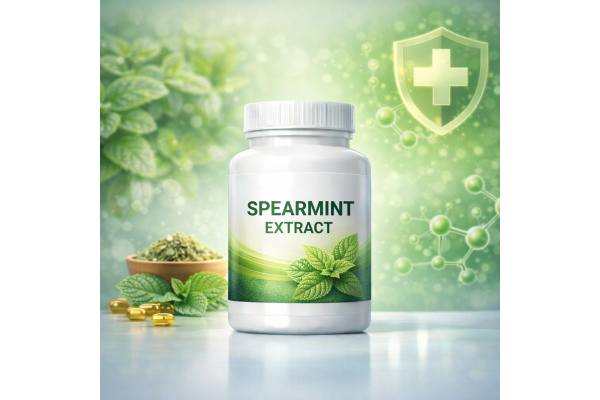
Spearmint extract, derived from the fragrant leaves of Mentha spicata, has moved far beyond a simple flavoring for gum or herbal tea. Standardized spearmint extracts now appear in cognitive support formulas, hormone balance blends, digestive products, and general wellness supplements. These extracts concentrate key phytochemicals such as rosmarinic acid, carvone, and diverse flavonoids that may support attention, working memory, antioxidant defenses, and a healthier balance of androgens in certain women.
At the same time, spearmint remains a gentle culinary herb, which can give a misleading impression that highly concentrated extracts are automatically risk free. In practice, dose, formulation, individual sensitivity, and underlying conditions all matter. This guide walks you through what spearmint extract is, how it appears to work, its most studied benefits, typical dosage ranges, and the main side effects and cautions to keep in mind. The goal is to help you use spearmint extract in an informed, realistic, and safe way.
Spearmint Extract Key Insights
- Standardized spearmint extract may support attention, working memory, and mental clarity when taken daily at 300–900 mg.
- Concentrated spearmint preparations may modestly reduce excess androgens in some women and may complement care for mild hirsutism or polycystic ovary syndrome.
- Common supplemental intakes range from 300 mg to 900 mg per day for cognitive support, and 1–2 cups of strong spearmint tea twice daily in traditional hormone-related use.
- People who are pregnant, trying to conceive, or dealing with significant hormone-sensitive conditions should avoid high-dose spearmint extract unless advised by a clinician.
- Those with allergies to mint family plants or who use multiple medications should discuss spearmint extract with a healthcare professional before starting it.
Table of Contents
- What is spearmint extract and how does it work?
- Evidence based benefits of spearmint extract
- How to use spearmint extract in daily life
- Spearmint extract dosage and timing guide
- Side effects, interactions and who should avoid it
- How to choose a quality spearmint extract supplement
What is spearmint extract and how does it work?
Spearmint extract is a concentrated preparation made from the aerial parts (mainly leaves) of Mentha spicata, a mint species with a sweet, mild flavor. While culinary spearmint focuses on aroma and taste, standardized extracts are designed around bioactive compounds, especially rosmarinic acid and carvone, along with other phenolic acids and flavonoids. These molecules appear to drive most of the health effects associated with modern spearmint supplements.
There are several forms:
- Aqueous or hydroalcoholic herb extracts – usually powdered and standardized for rosmarinic acid or total phenolics.
- Proprietary brain health extracts – often concentrated to deliver specific amounts of rosmarinic acid and related polyphenols per capsule.
- Essential oil–focused products – rich in carvone and other volatile monoterpenes, used more for aroma, digestion, or topical applications than for high oral doses.
Mechanistically, spearmint extract appears to act through several overlapping pathways:
- Antioxidant and anti-inflammatory actions: Rosmarinic acid and related phenolics can neutralize reactive oxygen species and modulate inflammatory signaling in cell and animal models.
- Neuroprotective and neuromodulatory effects: Polyphenols may help maintain synaptic integrity, support cerebral blood flow, and influence neurotransmitter systems involved in attention and working memory.
- Mild anti-androgen and hormone-modulating effects: Traditional and modern clinical data suggest that spearmint tea and extracts can modestly lower free testosterone and shift hormone balance in some women with excess androgens.
- Antimicrobial and digestive support: Mint-derived essential oils exhibit activity against certain microbes and may relax smooth muscle in the gut, which can contribute to digestive comfort.
The exact effect you experience depends on the preparation (whole herb vs. standardized extract), dose, and your own physiology. A high-rosmarinic-acid cognitive formula will behave differently from a simple spearmint tea used for digestion or hormone support.
Evidence based benefits of spearmint extract
Spearmint has a long history in traditional medicine as a digestive and calming herb. Modern extracts build on that history and focus on several more specific benefit areas, most of which have at least some human data behind them.
1. Cognitive performance and mental clarity
Standardized spearmint extracts rich in rosmarinic acid have been studied in adults with age-associated memory issues and in younger, healthy adults. In clinical research, daily supplementation improved domains such as sustained attention, working memory, and complex attention over several weeks to months. These improvements typically emerge gradually, not after a single dose, and are most evident when objective cognitive test batteries are used. People often describe the experience more as “clearer focus” and less as a stimulant-type buzz.
2. Support for women with elevated androgens
Several small human trials using spearmint tea in women with hirsutism or polycystic ovary syndrome (PCOS) have reported reductions in free testosterone and subjective improvements in unwanted hair growth over one to three months. The changes are modest rather than dramatic, but they suggest that spearmint may have mild anti-androgen activity. Concentrated extracts are sometimes included in hormone balance formulas for this reason, although they should complement, not replace, medical treatment.
3. Antioxidant and cellular protection
Laboratory and animal studies show that spearmint phenolics can increase total antioxidant capacity, limit lipid peroxidation, and support endogenous defense enzymes such as superoxide dismutase and catalase. While these findings do not automatically translate into disease prevention in humans, they support the idea that spearmint extract contributes to an overall antioxidant network, especially when used alongside a nutrient-dense diet.
4. Digestive comfort and mild antimicrobial effects
Spearmint shares some properties with peppermint but tends to be gentler. Its essential oil components can relax smooth muscle and may help ease gas, minor spasms, and digestive discomfort. Extracts and essential oils also show activity against certain bacteria and fungi in vitro, which may partially explain traditional use for gastrointestinal and respiratory complaints.
Overall, the most convincing human data currently support spearmint extract as a nootropic aid for attention and working memory, with secondary roles in supporting women with mild androgen excess and contributing to antioxidant and digestive wellness.
How to use spearmint extract in daily life
Spearmint extract can be used in several ways, from simple teas to encapsulated standardized products. Choosing the right format depends on your goal, your sensitivity, and how structured you like your supplement routine to be.
For cognitive support
Many people use a standardized spearmint extract capsule as part of a morning routine. A typical pattern might look like:
- Take 450–900 mg of a standardized spearmint extract with breakfast.
- Use it consistently for at least 4–8 weeks to gauge changes in focus, working memory, and mental stamina.
- Avoid combining it with high doses of stimulants initially, so you can distinguish its effects from caffeine or other nootropics.
Because the cognitive benefits seem to accumulate over time, spearmint extract works more like a “nutritional training program” for the brain than a quick energy shot.
For hormone balance–oriented use
Women with mild hirsutism or PCOS sometimes incorporate spearmint as:
- Herbal tea: 1–2 cups of strong spearmint tea, usually taken twice per day, made with 1–2 teaspoons (about 2–4 g) of dried leaves per cup.
- Combination formulas: Spearmint extract paired with inositol, N-acetylcysteine, or other supportive ingredients, following product-specific directions.
It is important that this use happens under medical guidance, especially for those already on hormonal medications or with fertility goals.
For digestion and general wellness
In this context, spearmint extract is often used at lower doses or in more culinary formats:
- A cup of spearmint tea after meals for mild digestive discomfort.
- Low-dose tinctures or capsules combined with other carminative herbs such as ginger and fennel.
Practical tips
- Start with a lower dose or fewer cups per day and increase gradually if well tolerated.
- Take note of any changes in menstrual patterns, libido, or skin, particularly if you are sensitive to hormone shifts.
- If you take several medications, stagger spearmint extract by at least two hours unless your clinician suggests otherwise.
Used thoughtfully, spearmint extract can fit into a daily routine as a subtle but meaningful support for mental clarity, comfort, and metabolic balance.
Spearmint extract dosage and timing guide
Because different products use different extraction methods, there is no single universal spearmint extract dose. However, emerging human data and traditional practice suggest several reasonable ranges.
Common supplemental dosages
- Cognitive performance formulas:
- 300–900 mg per day of a standardized spearmint extract, usually providing a defined amount of rosmarinic acid.
- Often taken as 1–3 capsules once daily with food.
- Herbal tea for hormone-related use:
- 1–2 cups of strong spearmint tea, twice daily.
- Each cup prepared with roughly 2–4 g of dried spearmint leaves, steeped 5–10 minutes.
- General wellness or digestive support:
- 200–600 mg of spearmint extract daily, sometimes in blends with other herbs.
- Alternatively, 1–3 cups of spearmint tea spread throughout the day.
Timing considerations
- For focus and attention, taking spearmint extract in the morning or early afternoon makes sense, aligning with work or study hours.
- For digestive comfort, timing closer to meals or shortly after may be more helpful.
- For hormonal support, consistency day-to-day appears more important than specific clock time.
Duration of use
- Cognitive benefits in trials generally became clear after 30–90 days of daily use. Plan on at least a one-month trial before judging its value.
- For hormone support, herbal tea trials often lasted one to three months; women considering longer use should have periodic evaluations of symptoms and overall hormone status with a clinician.
Upper limits and safety margins
There is no official tolerable upper intake level for spearmint extract. Human data at 900 mg per day of standardized extract for several months have not shown major safety concerns in healthy adults. Very high doses or long-term use above studied ranges should be avoided outside a research or medical setting.
Because products differ, always follow the manufacturer’s instructions first, then adjust within studied ranges based on guidance from a healthcare professional who knows your history.
Side effects, interactions and who should avoid it
Spearmint is widely used as a culinary herb, and spearmint-flavored products are considered safe for the general population in typical amounts. However, concentrated extracts introduce much higher exposure to active compounds, which deserves more careful attention.
Commonly reported side effects
At usual supplement doses, most healthy adults tolerate spearmint extract well. When side effects occur, they are often mild and transient:
- Digestive upset, such as nausea, loose stools, or stomach discomfort.
- Headache or a sense of fogginess in the first few days, especially if combined with other nootropics.
- Rarely, skin irritation or allergic-type symptoms in those sensitive to mint family plants.
Reducing the dose or taking the extract with food often improves tolerance.
Possible hormonal effects
Because spearmint can modestly lower free testosterone in some women with elevated androgens, it raises reasonable questions about broader hormonal impact:
- In women with normal or low baseline androgens, high-dose or long-term use might, in theory, contribute to reduced libido, menstrual changes, or fatigue. These effects are not well documented but should be watched for.
- In men, robust human data are limited. Occasional concerns about reduced testosterone are mostly theoretical at typical dietary levels, but men using high doses of concentrated extract should be monitored if they notice changes in libido, mood, or performance.
Drug interactions
Potential interaction areas include:
- Hormonal medications (oral contraceptives, anti-androgens, fertility treatments): spearmint’s mild hormone-modulating effects could, in theory, add to or slightly alter drug effects.
- Sedatives and central nervous system–active drugs: while spearmint is not a sedative, any agent influencing mood or cognition should be introduced cautiously alongside psychoactive medications.
- Drugs with narrow therapeutic windows: out of caution, people on complex medication regimens (for example, transplantation, epilepsy, or severe cardiovascular disease) should only use spearmint extract with explicit medical approval.
Who should avoid spearmint extract or use it only under supervision
- Women who are pregnant, trying to conceive, or breastfeeding.
- Individuals with hormone-sensitive conditions such as certain breast, ovarian, or prostate cancers, unless a specialist approves it.
- Anyone with a known allergy to mint family plants (Mentha species, basil, oregano, rosemary, thyme).
- People with significant liver or kidney disease, due to limited data on high-dose spearmint extract in these groups.
If you develop new or troubling symptoms after starting spearmint extract—particularly menstrual irregularities, mood changes, or severe digestive reactions—stop the product and speak with a healthcare professional.
How to choose a quality spearmint extract supplement
The market for spearmint extract is diverse. Some products use highly standardized, research-backed extracts; others rely on unspecified powders with little quality control. Paying attention to a few key details can help you choose more wisely.
1. Standardization and label transparency
Look for products that clearly state:
- The plant name and part used (for example, “Mentha spicata leaf extract”).
- The extraction solvent (water, ethanol, or hydroalcoholic) and ratio (for example, 10:1 extract).
- The active marker compounds and their standardized levels, most often rosmarinic acid (for example, “standardized to 14.5% rosmarinic acid”).
Named, patented spearmint extracts used in clinical research typically specify their phenolic profile and rosmarinic acid content; this increases the likelihood that your supplement matches doses tested in studies.
2. Evidence-informed dosing per capsule
A quality product will make it easy to reach studied daily intakes—for instance, 450 mg or 900 mg per day—without requiring impractically large numbers of capsules. Avoid formulas that include spearmint extract only as a “fairy dust” ingredient at very low doses, especially when the marketing promises cognitive or hormone-balancing effects.
3. Purity, testing, and additives
Check for:
- Third-party testing seals or explicit statements about screening for heavy metals, pesticides, and microbial contamination.
- Minimal unnecessary additives: simple excipients such as cellulose and magnesium stearate are common; avoid products loaded with artificial colors and sweeteners.
- Allergen information, especially if you are sensitive to gluten, soy, or dairy.
4. Product type and your goal
- For brain support, research-backed, rosmarinic-acid–standardized spearmint extracts are preferable.
- For digestive comfort or gentle daily use, a high-quality organic spearmint tea or simple leaf extract may be enough.
- For hormone-oriented formulas, consider whether other ingredients (like inositol or chromium) fit your needs and medication profile.
5. Brand reputation and professional guidance
Choose brands with a track record in botanical supplements, clear contact information, and realistic claims. When in doubt—especially if you have medical conditions or take prescription drugs—review the product and its dose with a licensed healthcare professional for a personalized risk-benefit assessment.
References
- Spearmint (Mentha spicata L.) Phytochemical Profile: Impact of Pre/Post-Harvest Processing and Extractive Recovery 2022 (Research Article)
- The traditional uses, phytochemistry and pharmacology of spearmint (Mentha spicata L.): A review 2021 (Systematic Review)
- Effect of spearmint (Mentha spicata Labiatae) teas on androgen levels in women with hirsutism 2007 (RCT)
- Spearmint herbal tea has significant anti-androgen effects in polycystic ovarian syndrome. A randomized controlled trial 2010 (RCT)
- The attention-enhancing effects of spearmint extract supplementation in healthy men and women: a randomized, double-blind, placebo-controlled, parallel trial 2019 (RCT)
Disclaimer
The information in this article is for general educational purposes only and is not a substitute for individualized medical advice, diagnosis, or treatment. Spearmint extract can interact with medications and may not be appropriate for people with hormone-sensitive conditions, complex medical histories, or those who are pregnant, planning pregnancy, or breastfeeding. Always discuss new supplements, including spearmint extract and spearmint tea taken in therapeutic amounts, with a qualified healthcare professional who understands your personal health status and medications. Never delay or disregard professional medical advice because of something you have read online.
If you found this guide helpful, you are welcome to share it with others on Facebook, X (formerly Twitter), or any platform you prefer, and to follow our future updates on social media. Your thoughtful support by sharing our work helps our team continue creating carefully researched, high-quality health content.