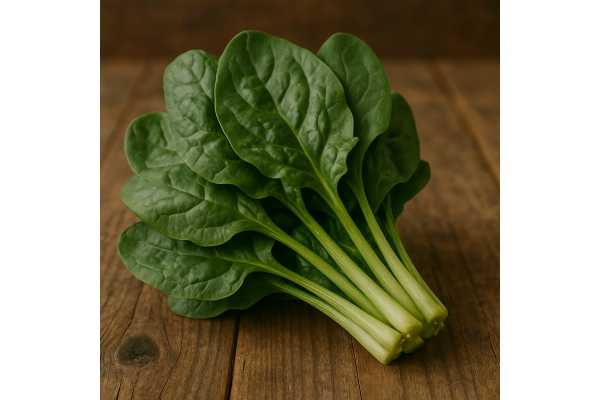
Spinach is one of the most nutrient-dense leafy greens you you can put on your plate. This tender leaf from the Amaranthaceae family offers an impressive mix of vitamins, minerals, antioxidants, and plant compounds in very few calories. Raw spinach slips easily into salads, sandwiches, and smoothies, while cooked spinach anchors sautés, soups, stews, and pasta dishes around the world.
Beyond its reputation from cartoons, modern research links regular intake of leafy greens like spinach with better heart and vascular health, reduced risk of some chronic diseases, and support for eye, bone, and metabolic health. Spinach is also naturally rich in nitrates, carotenoids such as lutein and zeaxanthin, and vitamin K. At the same time, its high oxalate and vitamin K content means that some people need to treat spinach with a bit more care. This guide walks you through the practical details: nutrition, benefits, risks, preparation, and smart serving ideas.
Spinach At a Glance
- One 100 g serving of raw spinach provides only about 23 kcal but supplies more than 50 percent of the daily value for vitamin A and around 400 percent for vitamin K.
- Regular intake of leafy greens, including spinach, is associated with lower risk of cardiovascular disease and may support metabolic health, although evidence is mostly observational.
- Spinach is high in oxalates and nitrates; people with a history of calcium oxalate kidney stones or on certain medications may need to limit large, frequent portions.
- A practical serving is 1 cup (about 30 g) raw or ½ cup (about 75–90 g) cooked spinach, enjoyed most days of the week as part of varied vegetable intake.
- Individuals with calcium oxalate kidney stones, those taking vitamin K–sensitive blood thinners, and infants under 6 months should be cautious with high spinach intake and seek personalised medical advice.
Table of Contents
- Spinach Essentials and Uses
- Spinach Nutrition Profile
- Spinach Health Benefits
- Spinach Risks and Interactions
- Choosing Spinach and Storage
- Cooking Spinach and Nutrients
- Spinach Portions and FAQs
Spinach Essentials and Uses
Spinach (Spinacia oleracea) is a cool-season leafy vegetable believed to have originated in Persia and now cultivated worldwide. Botanically it sits among the leafy greens, but nutritionally it stands out for its extremely high vitamin K and folate content, generous vitamin A and vitamin C levels, and a wide range of minerals and carotenoids.
You will most often find three broad types:
- Flat or smooth-leaf spinach, with broad, smooth leaves that wash easily and work well in canned or frozen products.
- Savoy spinach, with crinkled leaves and a more robust texture that suits cooking.
- Baby spinach, harvested young, with small tender leaves ideal for salads and raw dishes.
Raw spinach has a mild, slightly metallic or earthy taste. Cooking concentrates its flavour and softens the leaves, turning them silky and compact. Because spinach wilts dramatically, a large bowl of raw leaves cooks down to a small portion, which is helpful when you want to eat more greens without chewing through a mountain of salad.
Common everyday uses include:
- Tossed into salads with citrus, berries, nuts, or cheese.
- Blended into smoothies for extra micronutrients with little impact on flavour.
- Folded into omelettes, frittatas, and scrambled eggs.
- Wilted into pasta, curry, stew, or bean dishes near the end of cooking.
- Layered in lasagne, cannelloni, spanakopita, or stuffed breads.
A standard household portion is about 1 cup (loosely packed) raw spinach, around 30 g, or ½ cup cooked. For most adults, including spinach or other leafy greens on most days aligns well with general vegetable recommendations.
While spinach is versatile and feels “light,” it is not entirely neutral. The same compounds that make it nutritionally dense also introduce considerations: high vitamin K for people on warfarin, high oxalate content for people with certain kidney stones, and high natural nitrate content, which is generally beneficial for adults but raises questions for young infants. These issues are explored in detail in the risks section so you can enjoy spinach in a way that matches your health needs.
Spinach Nutrition Profile
Most of spinach’s value lies in the fact that it delivers substantial amounts of key vitamins and minerals at very low energy cost. The figures below refer to raw spinach per 100 g, based primarily on databases that compile USDA FoodData Central values.
Macros and Electrolytes (per 100 g)
| Nutrient | Amount per 100 g | Approx. %DV* |
|---|---|---|
| Energy | 23 kcal | 1% |
| Protein | 2.86 g | 6% |
| Total carbohydrate | 3.63 g | 1% |
| Dietary fibre | 2.2 g | 8% |
| Total fat | 0.39 g | 1% |
| Saturated fat | 0.06 g | <1% |
| Sodium | 79 mg | 3% |
| Potassium | 558 mg | 12% |
| Magnesium | 79 mg | 19% |
| Calcium | 99 mg | 8% |
| Iron | 2.71 mg | 15% |
*%DV based on general adult Daily Values.
Spinach is low in digestible carbohydrate and has a very low glycaemic impact; estimates of its glycaemic index are in the low range (roughly 30 or below), and a typical serving has a negligible glycaemic load.
Vitamins (per 100 g)
| Vitamin | Amount per 100 g | Approx. %DV |
|---|---|---|
| Vitamin A (as retinol activity equivalents) | 469 µg | 52% |
| Vitamin C (ascorbic acid) | 28.1 mg | 31% |
| Vitamin K (phylloquinone) | 483 µg | ~400% |
| Folate (Vitamin B9, as DFE) | 194 µg | 49% |
| Vitamin E (alpha-tocopherol) | 2.03 mg | 14% |
| Vitamin B6 (pyridoxine) | 0.195 mg | 12% |
| Riboflavin (Vitamin B2) | 0.189 mg | 15% |
| Thiamin (Vitamin B1) | 0.078 mg | 7% |
| Niacin (Vitamin B3) | 0.724 mg | 5% |
Spinach is particularly notable for vitamin K, folate, and vitamin A, all of which support processes such as blood clotting, DNA synthesis, immune function, and epithelial integrity.
Minerals, Bioactives, and Anti-nutrients
| Component | Approx. Amount per 100 g | Notes |
|---|---|---|
| Manganese | 0.897 mg | Around 40% DV; cofactor for antioxidant enzymes. |
| Lutein plus zeaxanthin | ~12 mg | Carotenoids concentrated in the retina, important for eye health. |
| Nitrate | ~500–1000 mg | Natural nitrate levels vary widely by soil and growing conditions; spinach is consistently among the highest-nitrate vegetables. |
| Oxalate (total oxalic acid) | Roughly 650–1300 mg | Very high-oxalate food; values differ by cultivar and measurement method. |
From a nutritional perspective, spinach is rich in bioactives:
- Carotenoids (lutein, zeaxanthin, beta-carotene) with antioxidant and potential eye and cognitive benefits.
- Nitrates, which may improve nitric oxide availability and influence vascular tone and exercise performance.
- Polyphenols, present in smaller amounts but contributing to antioxidant capacity.
At the same time, spinach contains anti-nutrients:
- Oxalates, which can bind calcium and iron in the gut, modestly reducing their absorption and contributing to kidney stone risk in susceptible people.
- Nitrate-derived compounds, which are mostly beneficial when sourced from vegetables but can raise theoretical concerns in infants and in the context of high nitrite exposure.
No typical commercial spinach is “fortified” with extra vitamins or minerals; any enrichment is usually due to recipe ingredients (for example, cheese in creamed spinach).
Spinach Health Benefits
Evidence for spinach’s health effects comes mostly from research on leafy greens as a group, supported by mechanistic understanding of the nutrients and phytochemicals it contains. Spinach is best viewed as one valuable part of an overall healthy dietary pattern, rather than a stand-alone cure.
Cardiovascular and Vascular Health
Large cohort and meta-analytic data show that higher intakes of vegetables, particularly green leafy vegetables, are associated with lower risk of cardiovascular disease and all-cause mortality. Several mechanisms make spinach a strong contributor:
- Natural nitrates from spinach can be converted in the body to nitric oxide, which helps blood vessels relax, supports healthy blood pressure, and improves endothelial function.
- Vitamin K1 may help slow vascular calcification by activating proteins that bind calcium in vessel walls, a mechanism supported by observational work linking higher vitamin K intake from greens with lower cardiovascular risk.
- Folate, potassium, and magnesium support homocysteine metabolism, blood pressure regulation, and cardiac rhythm.
While these relationships are robust at the population level, they remain mostly observational. Adding spinach to your routine is best viewed as one of several heart-supportive habits (alongside overall diet, activity, sleep, and avoidance of tobacco) rather than a single “fix.”
Metabolic and Blood Sugar Support
Systematic reviews and meta-analyses suggest that higher intake of green leafy vegetables is associated with a modest reduction in risk of type 2 diabetes, although not all studies agree and the effect size is relatively small.
Spinach may support metabolic health through:
- Low glycaemic load and modest fibre content, helping blunt post-meal glucose rises when spinach displaces refined starches and sugars.
- Magnesium and potassium, which are involved in glucose handling and insulin signalling.
- Polyphenols and carotenoids, which may modulate oxidative stress and inflammation linked to insulin resistance.
In small trials, meals enriched with leafy greens sometimes improve postprandial glucose or blood pressure, but results are not uniform; responses depend on the entire meal context and individual physiology.
Eye, Brain, and Bone Health
Spinach is one of the richest dietary sources of lutein and zeaxanthin, carotenoids that accumulate in the macula of the eye, where they filter blue light and act as antioxidants. Higher intakes of these compounds from leafy greens are associated with lower risk of age-related macular degeneration and may support cognitive health in ageing, although the evidence is more observational than interventional.
Other relevant effects include:
- Bone health: Vitamin K, calcium, and magnesium in spinach support bone metabolism. Vitamin K helps activate osteocalcin, a protein important for bone mineralisation.
- Immune function and skin: Vitamin A, vitamin C, and folate play roles in immune cell function, epithelial integrity, and DNA synthesis.
- Digestive health: Although spinach is not the highest-fibre vegetable, its combination of fibre and water can modestly support bowel regularity when eaten frequently.
Overall, when you include spinach and other leafy greens in a varied, minimally processed diet, the pattern tends to correlate with better long-term health outcomes, especially for cardiovascular and possibly metabolic and cognitive domains.
Spinach Risks and Interactions
For most healthy adults, spinach is safe and beneficial when eaten as part of a varied diet. However, a few specific issues deserve attention.
Oxalates and Kidney Stones
Spinach is one of the highest-oxalate foods available, with estimates often around 900–1000 mg of oxalate per 100 g, and clinical research showing that both raw and cooked spinach can be major contributors to dietary oxalate load in stone-forming patients.
Oxalate can bind calcium in the urine to form calcium oxalate kidney stones. Current kidney stone prevention guidance generally advises people with calcium oxalate stones or high urinary oxalate to:
- Limit very high-oxalate foods such as spinach, beet greens, rhubarb, and certain nuts.
- Pair moderate portions of higher-oxalate foods with calcium-rich components (for example, spinach with yoghurt, cheese, or tofu set with calcium) to trap oxalate in the gut.
- Maintain high fluid intake to dilute urinary stone-forming compounds.
People without a history of stones can usually enjoy spinach without strict oxalate counting, but it is still wise not to base your entire vegetable intake on spinach alone.
Vitamin K and Blood Thinners
Spinach’s vitamin K content is extremely high; a 100 g serving can provide four times the typical daily requirement. For individuals taking vitamin K–sensitive anticoagulant medications (such as warfarin), sudden changes in vitamin K intake can interfere with dose control.
Most clinical guidelines do not require complete avoidance of vitamin K–rich foods, but they strongly emphasise consistency. If you live with such a medication, discuss with your clinician or anticoagulation clinic how much spinach you can include regularly, then keep your intake steady rather than cycling between “none” and “large servings.”
Nitrates and Infants
Vegetable nitrates are generally considered health-promoting in adults. However, in very young infants (especially under 6 months), high nitrate exposure from home-prepared purees of spinach, beets, or other nitrate-rich vegetables can theoretically contribute to methemoglobinemia (“blue baby syndrome”), particularly when combined with contaminated water or infection.
Many paediatric and public health authorities therefore recommend:
- Avoiding spinach and other very high-nitrate vegetables as a major part of complementary feeding in the first months.
- Introducing them in modest amounts only after the recommended age and with guidance from a paediatric professional.
Allergies, Digestive Issues, and Drug Interactions
True spinach allergy is uncommon but possible; symptoms can include itching, swelling, hives, or, rarely, more severe reactions. Anyone with suspected allergy should seek assessment from an allergy specialist.
Other considerations:
- Digestive sensitivity: The combination of fibre, sorbitol, and organic acids may trigger bloating or loose stools in some people with irritable bowel syndrome or sensitive digestion.
- Kidney function: High intakes of potassium-rich foods like spinach may require monitoring in individuals with advanced kidney disease, especially if they are on medications that raise potassium.
- Iron absorption: Oxalate and some polyphenols in spinach reduce non-heme iron absorption, so while spinach contains iron, it is not as strong a practical iron source as many believe. Pairing spinach with vitamin C–rich foods (such as citrus or bell peppers) and other iron sources improves the overall picture.
In summary, spinach is safe for most people but should be consumed with special caution by individuals with calcium oxalate kidney stones, those on vitamin K–sensitive anticoagulants, people with significant kidney disease, and infants under 6 months, all of whom should discuss personalised guidance with their clinicians.
Choosing Spinach and Storage
Good spinach selection and storage practices protect both flavour and nutrient value, while limiting waste and food safety issues.
How to Choose Fresh Spinach
When buying fresh bunches or bags:
- Look for vibrant, deep green leaves with a firm, crisp texture.
- Avoid leaves that are yellowing, slimy, wilting, or have dark, water-soaked patches; these are signs of decay and microbial growth.
- Stems should be flexible but not mushy, and there should be minimal pooling liquid in bags.
Baby spinach is often pre-washed and ready to eat, but you should still check the best-before date and inspect for off odours. Larger, mature leaves may carry more soil and require thorough washing.
Fresh, Frozen, or Canned?
- Fresh spinach offers the most versatility, especially for salads and gentle sautés.
- Frozen spinach is highly convenient, typically harvested at peak freshness and blanched before freezing. It retains many nutrients, especially carotenoids and minerals, though some vitamin C and folate are lost during blanching.
- Canned spinach is shelf-stable but often softer in texture and lower in some heat-sensitive vitamins. It can be useful in soups and casseroles but may contain added sodium.
From a sustainability perspective, frozen spinach can reduce waste because it keeps longer and can be portioned easily, whereas fresh spinach is prone to spoilage if not used promptly.
Storing Spinach Safely
For fresh spinach:
- Refrigerate soon after purchase, ideally below 5°C (41°F).
- Keep in its original breathable packaging or transfer to a container lined with paper towels to absorb excess moisture.
- Avoid crushing the leaves under heavy items.
- Use within 3–5 days for best quality; baby spinach may have a slightly shorter window.
For cooked spinach:
- Cool quickly, then refrigerate in shallow containers and use within 2–3 days.
- Reheat only once to minimise nutrient loss and reduce food safety risks.
For long-term storage:
- Blanch spinach briefly (1–2 minutes in boiling water, then cool in ice water), drain thoroughly, and freeze in portions. This process inactivates enzymes that would otherwise degrade nutrients and texture.
Sustainability Notes
Spinach has a relatively low environmental footprint compared with animal foods, but loss during storage and transport is common. Buying only what you can use, choosing seasonal and local produce when possible, and using stems (in smoothies, soups, or stocks) can make your spinach habit more resource-efficient.
Cooking Spinach and Nutrients
How you prepare spinach influences its nutrient profile, palatability, and potential impact on issues like oxalate load.
Raw versus Cooked Spinach
- Raw spinach preserves the highest levels of heat-sensitive nutrients such as vitamin C and some folate. It works well in salads, smoothies, wraps, and sandwiches.
- Cooked spinach concentrates minerals and fat-soluble nutrients per bite because much of the water volume is lost. Cooking also softens cell walls, which can improve the bioavailability of carotenoids such as lutein and beta-carotene.
At the same time, boiling or prolonged high-heat cooking causes losses of vitamin C and some B vitamins into cooking water or through heat degradation.
Oxalates, Nitrates, and Cooking
Cooking alters anti-nutrient levels:
- Boiling and discarding the water can significantly reduce soluble oxalates in spinach, which is useful for people advised to limit oxalate intake. Studies on spinach and similar leafy greens suggest meaningful reductions in soluble oxalate content with boiling.
- The same boiling process also leaches nitrates into the cooking water; one study found about 40 percent of nitrate ions removed from spinach by boiling, while roughly 80 percent of lutein was retained.
For most healthy adults, moderately cooked spinach by steaming, sautéing, or microwaving strikes a reasonable balance between nutrient retention and taste.
Practical Cooking Methods
- Quick sauté:
- Heat a small amount of oil, add garlic or spices if desired.
- Add washed, still-damp spinach; cook for 2–3 minutes until just wilted.
- Season lightly with salt, pepper, lemon, or vinegar.
This preserves texture and many nutrients while improving carotenoid availability.
- Steaming:
- Place spinach in a steamer basket above simmering water.
- Steam for 2–4 minutes.
- Finish with olive oil, herbs, or seeds.
Steaming minimises water contact, so fewer water-soluble nutrients are lost compared with boiling.
- Boiling (for lower oxalate):
- Boil spinach in ample water for a few minutes.
- Drain well and discard the water.
- Use the cooked leaves in pies, patties, or sauces where additional flavourings are added.
This approach is particularly relevant for stone-formers following low-oxalate guidance.
- Blending:
- Add raw or lightly steamed spinach to smoothies, soups, or sauces.
- Combine with vitamin C–rich fruits or vegetables to support iron absorption.
Food Safety Tips
- Always wash fresh spinach under running water, even when labelled “pre-washed,” especially if you intend to eat it raw.
- Do not consume spinach that smells sour, feels slimy, or has noticeable mould.
- Avoid leaving cooked spinach at room temperature for extended periods; prompt refrigeration reduces the risk of bacterial growth and toxin formation.
Spinach Portions and FAQs
Because spinach is so light and compact when cooked, serving sizes can be confusing. Here is how to think about practical amounts and common questions.
How Much Spinach Counts as a Serving?
For general adult vegetable intake, public health recommendations often count:
- 1 cup (about 30 g) of raw leafy greens as one “vegetable serving,” or
- ½ cup (about 75–90 g) cooked spinach as an equivalent serving.
Large cohort analyses and more recent work on vitamin K–rich leafy greens suggest that around 1 to 1.5 cups of leafy greens per day is associated with reduced cardiovascular risk in older adults, although this does not prove causation.
For many people, aiming for a big handful of raw spinach or a generous serving spoon of cooked spinach most days is a sensible, achievable target, alongside other vegetables.
Who Should Limit Spinach?
- People with calcium oxalate kidney stones or high urinary oxalate: often advised to limit high-oxalate foods like spinach and use preparation methods that reduce oxalates.
- Individuals on vitamin K–sensitive anticoagulants: should keep spinach intake consistent and coordinate with their care team.
- Infants under 6 months: should not receive large amounts of spinach or other high-nitrate pureed vegetables without medical guidance.
- Some people with advanced kidney disease: may need to watch potassium intake, including from spinach, depending on lab values and medical advice.
For these groups, “limiting” typically means using spinach sparingly and not daily, but exact amounts depend on individual risk factors and should be set with a clinician or dietitian.
Common Questions
Is raw or cooked spinach healthier?
Both forms have strengths. Raw spinach retains more vitamin C and some folate, while cooked spinach offers higher per-bite amounts of minerals and carotenoids and lower soluble oxalate content if boiled. A mix of raw and cooked preparations across the week covers both angles.
Is spinach a good iron source?
Spinach contains moderate iron (about 2.7 mg per 100 g), but much of it is bound by oxalate, so absorption is limited. It can contribute to overall iron intake, especially when paired with vitamin C and other iron sources, but it is not the single best iron remedy.
Is spinach safe during pregnancy?
For most pregnant individuals, moderate spinach intake is safe and beneficial. Folate, vitamin K, and iron support normal development and maternal health. It is important to handle and wash spinach carefully to minimise foodborne risk, and to follow any specific guidance regarding vitamin K intake if on anticoagulant therapy.
How does spinach compare with other leafy greens?
Spinach is extremely high in vitamin K and lutein, moderate in folate and vitamin C, and very high in oxalate. Kale, by contrast, tends to have more vitamin C and calcium and significantly lower oxalate levels, while lettuces generally have milder nutrient densities and much lower oxalates. Rotating between spinach and other leafy greens can balance strengths and limitations.
Can I eat spinach every day?
Most healthy adults can include some spinach daily, particularly if they combine it with other vegetables and maintain a varied diet. People with the specific medical considerations already discussed should individualise frequency and portion size.
References
- Nutrients for Spinach, raw (vegetable spinach) | Foundation G+E 2024 (Nutrient database)
- Nitrates and Nitrites in Vegetables and the Health Risk 2025 (Systematic Review)
- Relation of Different Fruit and Vegetable Sources With Incident Cardiovascular Outcomes: A Systematic Review and Meta-analysis of Prospective Cohort Studies 2020 (Systematic Review)
- Dietary oxalate and kidney stone formation 2018 (Review)
- Association between leafy vegetable consumption and incidence of metabolic syndrome and its symptoms: a systematic review of prospective cohort and randomised control trials 2025 (Systematic Review)
Medical Disclaimer
The information in this article is intended for general educational purposes only. It does not constitute medical advice and is not a substitute for personalised assessment, diagnosis, or treatment by a qualified healthcare professional. Nutritional needs and health risks vary widely between individuals, especially for those with chronic conditions, on prescription medications, during pregnancy or breastfeeding, or in childhood. Always consult your doctor, registered dietitian, or other qualified health provider before making significant changes to your diet, particularly if you have kidney disease, a history of kidney stones, clotting or bleeding disorders, or are taking anticoagulant medications.
If you found this article helpful, you are warmly invited to share it with others on Facebook, X (formerly Twitter), or any platform you prefer. Thoughtful sharing helps more people access reliable nutrition information and supports the ongoing work needed to create high-quality content like this.