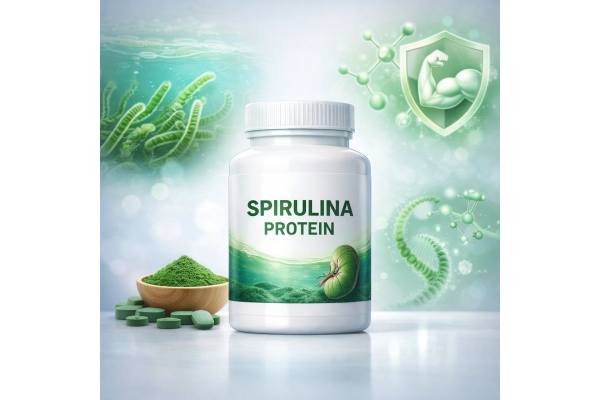
Spirulina protein comes from a blue green microalga that has been used as food for centuries and is now one of the most studied algae based supplements. It is unusually rich in protein for a plant based source, often providing around two thirds of its dry weight as protein, along with iron, B vitamins, and pigments such as phycocyanin. For people who eat little or no animal protein, spirulina can help fill gaps in essential amino acids and micronutrients.
Beyond basic nutrition, spirulina protein is being researched for potential support of cardiometabolic health, immune function, inflammation balance, and exercise recovery. At the same time, questions remain about optimal dosage, long term safety, and risks from contaminated products. This guide walks through what spirulina protein is, its potential benefits and limitations, how to use it in everyday life, and who should avoid it. The goal is to give you a balanced, practical overview so you can discuss it confidently with your healthcare professional.
Quick Facts for Spirulina protein
- Spirulina protein is a concentrated plant based protein source supplying all essential amino acids plus iron and antioxidant pigments.
- Clinical trials suggest spirulina may modestly improve cholesterol, blood pressure, and markers of oxidative stress in some people.
- Common supplemental intakes are roughly 1–3 g per day of whole spirulina, with some studies using up to about 8–10 g per day under supervision.
- People who are pregnant or breastfeeding, children, those with autoimmune diseases, phenylketonuria, severe allergies to algae, or on immunosuppressive or blood thinning drugs should avoid spirulina unless cleared by their clinician.
Table of Contents
- What is spirulina protein and how does it work?
- Spirulina protein benefits for health and performance
- How to use spirulina protein in daily life
- Spirulina protein dosage for different goals
- Spirulina protein side effects and who should avoid it
- What current research says about spirulina protein
What is spirulina protein and how does it work?
Spirulina is the common name for several species of Arthrospira, a spiral shaped blue green microalga that grows naturally in alkaline lakes and is now cultivated worldwide in controlled ponds. When the algae biomass is harvested and dried, it forms a deep green powder that is unusually dense in nutrients. Spirulina protein refers either to the protein fraction of this powder or to more concentrated protein isolates produced from it.
On a dry weight basis, spirulina generally contains around 55–70 percent protein, which is far higher than most cereals or legumes. The protein includes all nine essential amino acids, with particularly notable amounts of leucine and other branched chain amino acids that are important for muscle protein synthesis. Methionine and cysteine tend to be relatively lower, so spirulina is best seen as one part of a varied protein pattern rather than the sole source.
Spirulina protein is stored inside soft cell walls made largely of polysaccharides rather than tough cellulose. That structure appears to support relatively high digestibility compared with many plant proteins. In laboratory and animal studies, spirulina protein isolates often show good solubility and functional properties like emulsifying and foaming capacity, which is why they are being tested in high protein foods and meat alternatives.
Beyond amino acids, spirulina protein products naturally carry other components of the algae, including phycocyanin (a blue pigment protein), carotenoids, minerals such as iron and magnesium, and small amounts of gamma linolenic acid. Phycocyanin in particular is thought to contribute antioxidant and anti inflammatory activity. Together, these compounds may influence oxidative stress, lipid metabolism, and immune signaling, which is what makes spirulina more than “just another” protein powder in many formulations.
Spirulina protein benefits for health and performance
Most human data relates to whole spirulina powder or tablets, not isolated spirulina protein, but the protein fraction and associated pigments likely drive many of the observed effects. Several areas of potential benefit have emerged in clinical and preclinical studies.
For cardiometabolic health, spirulina supplementation in gram level doses has repeatedly been associated with modest reductions in total and LDL cholesterol, triglycerides, and sometimes blood pressure in people with metabolic syndrome, type 2 diabetes, obesity, or hypertension. Improvements are not universal, but when present they are usually in the range considered clinically meaningful for supportive nutrition rather than a replacement for medication.
Spirulina protein also appears to influence oxidative stress and inflammation. Phycocyanin and other bioactive components can scavenge free radicals and modulate pathways such as NF-κB in experimental models. In some human trials, spirulina has increased total antioxidant capacity and reduced markers like malondialdehyde, suggesting less lipid peroxidation. That pattern is of interest for conditions where chronic oxidative stress plays a role, including cardiovascular disease and certain metabolic disorders.
The high protein and micronutrient density of spirulina can support general vitality in people whose diets are limited, such as older adults with low appetite, individuals on restrictive diets, or those in low resource settings. Spirulina’s iron content, combined with vitamin C rich foods, may assist with iron status in people who cannot tolerate higher dose iron tablets, though evidence is still evolving.
For exercise and performance, preliminary work suggests spirulina may slightly improve endurance capacity, perceived fatigue, and recovery in some athletes when taken daily for several weeks. Mechanisms could include antioxidant support, effects on hemoglobin, and improved lipid utilization. However, results are mixed and spirulina should be viewed as a minor adjunct rather than a primary performance enhancer.
Finally, there is early research exploring spirulina in areas such as immune support, allergy symptoms, and adjunctive care in certain chronic diseases. While some small trials are encouraging, they are not strong enough to support disease treatment claims. Spirulina protein is better regarded as a nutrient dense food supplement that may gently support several systems rather than a targeted therapy.
How to use spirulina protein in daily life
Spirulina protein is available in several forms, and the best choice depends on your goals, taste preferences, and tolerance for its characteristic flavor.
The most common forms are:
- Powder made from dried spirulina biomass
- Tablets or capsules containing compressed powder
- Protein enriched powders or isolates blended into plant based protein products
- Functional foods where spirulina protein is added to snacks, bars, or dairy alternatives
If you are new to spirulina, powder can be economical but its earthy, slightly marine taste is strong. Many people start with capsules or tablets, which mask the flavor and allow controlled dosing in the gram range used in studies. Once you know that you tolerate spirulina, you can experiment with powder in smoothies, yogurt, or savory dishes.
Practical ways to incorporate spirulina protein include:
- Blending 1–2 grams of spirulina powder into a smoothie with fruit, yogurt, and other protein sources.
- Stirring a small amount into hummus, pesto, or salad dressings, where herbs and lemon balance the flavor.
- Using a spirulina enriched protein blend as part of a post workout shake.
- Taking pre measured tablets with meals if taste is a major barrier.
When using spirulina primarily as a protein source, it is helpful to think in terms of actual grams of protein rather than grams of powder. If a product is 60 percent protein by weight, 5 g of powder provides about 3 g of protein. Many people aiming for higher protein intakes will therefore combine spirulina with other proteins such as legumes, dairy, eggs, or other plant protein powders.
Because spirulina can interact with some conditions and medications, it is wise to:
- Review the supplement with a healthcare professional if you have any chronic health issues.
- Choose products from reputable brands that provide testing information on contaminants such as heavy metals and microcystins.
- Start with a low amount and increase gradually over one to two weeks while you monitor digestion, energy levels, and any unusual symptoms.
Used thoughtfully, spirulina protein can become one part of a broader nutrition strategy alongside whole foods and established medical care.
Spirulina protein dosage for different goals
There is no single universally accepted dosage for spirulina protein, and almost all guidance is based on studies of whole spirulina, not isolated protein concentrates. That said, most human trials and traditional uses fall within a fairly consistent range.
For general wellness and nutrient support in otherwise healthy adults, daily intakes of about 1–3 g of spirulina powder are common. At typical protein contents, that provides roughly 0.6–2 g of spirulina protein plus associated pigments and micronutrients. This range is often used in multicomponent supplements and functional foods.
For specific cardiometabolic outcomes such as lipid profile or blood pressure, many controlled trials have used doses between about 2 and 8 g per day for periods of 8–24 weeks. Effects do not appear to increase steadily with dose beyond a certain point, and higher intakes can increase the burden of minerals such as iron or the risk of digestive side effects in sensitive people.
If your primary aim is supplemental protein, a reasonable starting point is to obtain around 5–10 g of protein per day from spirulina, which might correspond to roughly 8–15 g of spirulina powder or a comparable amount of a more concentrated protein isolate. That protein contribution is modest and should sit alongside other dietary protein sources spread across meals.
Some reviews have suggested that daily intakes up to about 10 g of spirulina are generally well tolerated in adults when products are free from contamination. Intakes above this level, or long term use in people with complex medical conditions, should be undertaken only under professional supervision. Children, pregnant and breastfeeding individuals, and people on multiple medications should not self prescribe spirulina at any dose.
A sensible stepwise approach might look like this for a healthy adult cleared by their clinician:
- Start with 0.5–1 g per day for a week.
- If tolerated, increase to 2–3 g per day divided with meals.
- For specific goals, and if advised by a professional, consider up to 5–8 g per day for a defined trial period, while monitoring lab markers and overall wellbeing.
Because supplement labels can be confusing, always check serving sizes, protein content per serving, and any added ingredients such as sweeteners or other botanicals that may influence tolerance or interactions.
Spirulina protein side effects and who should avoid it
When produced and used appropriately, spirulina has a long history of use and is generally well tolerated in many adults. However, like any concentrated supplement, spirulina protein is not risk free, and certain groups should be particularly cautious or avoid it altogether.
Mild side effects are the most common and can include digestive discomfort such as gas, bloating, or loose stools, especially when people begin at higher doses. Some individuals report headaches, mild nausea, or a temporary change in stool color due to the pigments in spirulina. These effects often improve when the dose is reduced and increased more gradually.
More serious concerns relate largely to product quality and individual medical conditions. Spirulina is cultivated in water, and if the growing environment is contaminated or not well controlled, the final product can contain unwanted substances such as heavy metals, harmful bacteria, or cyanotoxins like microcystins from other blue green algae. These contaminants can stress the liver and other organs, especially with long term use.
People who should avoid spirulina unless a knowledgeable clinician specifically recommends and monitors it include:
- Individuals with autoimmune conditions (for example, multiple sclerosis, rheumatoid arthritis, lupus), because spirulina may influence immune activity.
- Those taking immunosuppressive drugs, high dose anticoagulants, or multiple long term medications.
- People with phenylketonuria (PKU), since spirulina protein contributes phenylalanine.
- Anyone with a known allergy to spirulina, other algae, or components of the product.
- Children, pregnant individuals, and those who are breastfeeding, due to limited safety data.
Those with chronic liver or kidney disease, a history of gout or high uric acid, or iron overload disorders should only use spirulina under close medical guidance because of its nutrient density and potential impact on these systems.
To reduce risk, choose spirulina products from reputable manufacturers that provide information about third party testing for microcystins and heavy metals. Avoid products with unclear origin or very low prices that raise concerns about production standards. If you develop jaundice, dark urine, persistent abdominal pain, muscle weakness, rash, difficulty breathing, or any other alarming symptoms after starting spirulina, stop it immediately and seek medical care.
What current research says about spirulina protein
Scientific interest in spirulina has grown steadily, and recent years have seen an expansion of both basic and clinical research. While not every study focuses specifically on the protein fraction, spirulina’s protein and its associated compounds are central to many observed effects.
On the nutritional side, detailed analyses of spirulina protein isolates show high levels of essential amino acids and promising functional properties for use in food technology. Studies examining solubility, water holding, and emulsifying capacity support its potential as an ingredient in meat analogues, high protein snacks, and specialized nutrition products. These technical investigations help explain why spirulina protein is increasingly appearing on ingredient lists rather than only as a stand alone supplement.
In clinical nutrition, several randomized controlled trials and systematic reviews have evaluated spirulina supplementation in adults with obesity, type 2 diabetes, hypertension, or broader cardiometabolic risk. Many of these syntheses report modest but statistically significant improvements in markers such as total and LDL cholesterol, triglycerides, and diastolic blood pressure, particularly when spirulina is used for at least eight weeks at gram level doses. Some trials also suggest benefits for insulin sensitivity and inflammatory markers, though findings are more variable.
A large systematic review and meta analysis has assessed spirulina supplementation alone or combined with exercise in overweight and obese adults. It found that spirulina, especially when combined with structured training, tended to improve lipid profiles and certain anthropometric measures, while effects on fasting glucose and some body composition indices were less consistent. This type of work helps refine our understanding of who may benefit most and under what conditions.
Safety research has examined both intrinsic effects of spirulina and extrinsic contamination risks. Reviews of toxicology data, together with many years of human consumption, support the view that spirulina from controlled production systems is generally safe for adults when used within typical dosage ranges. At the same time, surveys of commercial products have identified batches with concerning levels of cyanotoxins or microbial contaminants. These findings underscore the importance of regulation, quality control, and transparent testing.
Overall, the evidence base for spirulina is stronger than for many botanical supplements, especially in the area of cardiometabolic support, but it still has gaps. Most trials are relatively short, many have small sample sizes, and few focus specifically on purified spirulina protein. Future research will need to address long term safety, individualized responses, and optimal formulations before more definitive clinical recommendations can be made.
References
- Functional Properties and Amino acid Profile of Spirulina platensis Protein Isolates 2016 (Experimental Study)
- Bioactive Compounds from Spirulina spp.—Nutritional Value, Extraction, and Application in Food Industry 2024 (Review)
- Spirulina maxima supplementation: benefits and limitations – results of latest studies 2024 (Systematic Review)
- Effects of spirulina supplementation alone or with exercise on cardiometabolic health in overweight and obese adults: a systematic review and meta-analysis 2025 (Systematic Review and Meta-analysis)
- Microbiota and Cyanotoxin Content of Retail Spirulina Supplements 2023 (Safety and Contamination Study)
Disclaimer
The information in this article is for general educational purposes only and is not a substitute for personal medical advice, diagnosis, or treatment. Spirulina protein and related supplements should not be used to replace prescribed medications or professional care for any health condition. Always consult a qualified healthcare professional before starting, stopping, or changing any supplement, especially if you are pregnant or breastfeeding, have existing medical conditions, or take prescription or over the counter medicines. The safety, purity, and effectiveness of individual spirulina products can vary, and inclusion in this article does not imply endorsement of any specific brand.
If you found this guide useful, you are warmly invited to share it with others on Facebook, X (formerly Twitter), or any platform you prefer, and to follow our work on social media. Your thoughtful support helps our team continue developing careful, evidence informed content for readers like you.