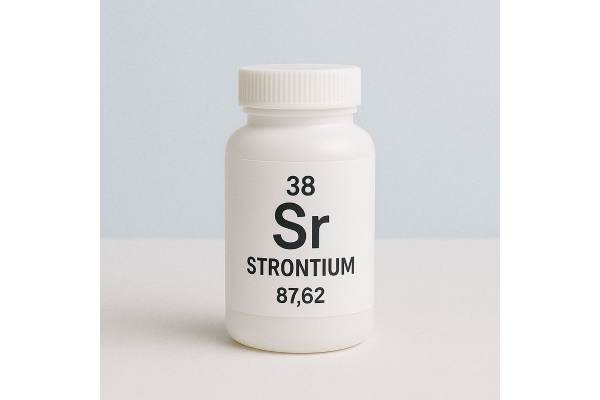
Srontium (more commonly spelled strontium) is a naturally occurring trace mineral that has attracted attention for its role in bone health and osteoporosis management. In nature, it resembles calcium and can partially replace it in bone tissue, which is why researchers have explored strontium-based drugs and supplements to support bone density and reduce fracture risk. However, most of the evidence comes from a prescription drug form (strontium ranelate), not from over-the-counter versions such as strontium citrate.
Because of this, srontium sits in a grey zone: it may offer meaningful benefits for specific people with high fracture risk, yet it also carries safety concerns and technical limitations, such as artificially inflating bone density scan results. This guide walks you through how srontium works, potential benefits, evidence-based dosage ranges, major risks, and the situations in which it is better to avoid it or to consider other, more established treatments.
Key Insights
- Srontium can integrate into bone and may improve measured bone mineral density and reduce fracture risk in certain high-risk patients.
- Most robust clinical data involve the prescription drug strontium ranelate, not common supplement forms like srontium citrate or carbonate.
- Typical studied intakes equal about 680 mg elemental srontium per day; many experts advise staying at or below roughly 340–680 mg elemental srontium daily and limiting long-term self-use.
- People with cardiovascular disease, clotting risk, significant kidney impairment, pregnancy, or unexplained skin rashes should generally avoid srontium supplements.
Table of Contents
- What is Srontium and how does it work?
- Srontium benefits for bone density and health
- How to take Srontium for bone support
- Common Srontium mistakes to avoid
- Srontium dosage and timing explained
- Srontium side effects, risks, and precautions
- What research says about Srontium supplements
What is Srontium and how does it work?
Srontium is a naturally occurring mineral that belongs to the same chemical family as calcium and magnesium. In the body, it is not considered an essential nutrient, meaning there is no known deficiency disease or official recommended daily intake. Still, because it can partially replace calcium in bone, scientists have studied it as a tool to strengthen skeletal tissue and reduce fracture risk.
In bone, srontium behaves in two main ways. First, it can be incorporated into the mineral matrix, where it substitutes for some of the calcium in hydroxyapatite crystals. Because srontium atoms are heavier and interact more strongly with X-rays than calcium, this substitution can make bone density scans (DXA) show higher values even if real bone strength has improved only modestly. Second, some data suggest that srontium may have a “dual action”: it can modestly stimulate bone-building osteoblast cells while slowing down bone-resorbing osteoclast cells.
There are important differences between forms.
- Strontium ranelate is a prescription drug used in some countries for severe postmenopausal osteoporosis.
- Strontium citrate, carbonate, and other salts are sold as dietary supplements and are not regulated like prescription medications.
Most of the high-quality fracture data involve strontium ranelate, so we cannot assume that every supplement form will produce identical benefits or carry the same risk profile.
Because srontium accumulates in bone over time and clears slowly, decisions about using it should be made thoughtfully, ideally in consultation with a clinician familiar with osteoporosis treatment and bone density testing.
Srontium benefits for bone density and health
The main interest in srontium lies in its potential to reduce fractures in people with osteoporosis. Large randomized trials of the prescription drug form in postmenopausal women with established osteoporosis found meaningful reductions in vertebral and non-vertebral fractures over several years of treatment. These studies also reported substantial increases in bone mineral density at the spine and hip compared with placebo.
However, the apparent gains in bone density partly reflect the way X-rays interact with srontium. When srontium replaces some of the calcium in bone, dual-energy X-ray absorptiometry (DXA) overestimates bone mineral density, and research suggests that a considerable portion of the observed increase is due to this measurement artefact rather than true mineral content alone. Even after correcting for this effect, though, there still appears to be a real improvement in fracture risk in high-risk patients treated with strontium ranelate.
Beyond bone density, several potential advantages have been explored:
- Vertebral fracture reduction in older women with multiple fracture risk factors.
- Non-vertebral fracture reduction, including hip fractures, in certain high-risk subgroups.
- Improvements in microarchitecture and bone quality in preclinical models, such as ovariectomized mice, with different strontium formulations.
For over-the-counter srontium supplements (often citrate or carbonate), direct evidence is much thinner. Most human data are small case reports or observational series, sometimes showing large increases in DXA scores. Because DXA is artificially boosted by bone srontium, these impressive numbers can be misleading and may not translate into proportional reductions in fracture risk.
Outside of bone, srontium has been studied in experimental settings for effects on cartilage, dental sensitivity, and bone healing. These areas remain early-stage and do not justify routine supplement use.
In practice, the clearest potential benefit of srontium is as part of a carefully supervised osteoporosis treatment strategy in selected patients at high fracture risk who cannot tolerate or have contraindications to standard first-line therapies. For otherwise healthy people or for “general wellness,” the benefit-risk balance is much less favorable.
How to take Srontium for bone support
Because srontium is not an essential nutrient and has a complex safety profile, there is no universal, one-size-fits-all protocol. How it is used depends heavily on whether you are dealing with a prescription drug (strontium ranelate) under medical supervision or an over-the-counter supplement such as strontium citrate.
In clinical trials, strontium ranelate was usually taken once daily at bedtime, at least two hours after the last meal, with only water. This schedule minimized interference with absorption from calcium, magnesium, or food. A similar pattern is often recommended when people take srontium supplements:
- Take srontium on an empty stomach, ideally at night.
- Separate it from calcium, magnesium, and iron supplements by at least two hours.
- Avoid taking it with dairy products or high-calcium foods, which can reduce absorption.
For people already on a comprehensive osteoporosis plan, srontium is generally considered an add-on or alternative, not a replacement for the basics. The foundation still includes:
- Adequate calcium intake from food and, if needed, supplements.
- Sufficient vitamin D to support calcium and bone metabolism.
- Regular weight-bearing and resistance exercise.
- Fall-prevention strategies and lifestyle measures (no smoking, moderate alcohol).
If srontium is used, it should be integrated into a broader treatment strategy that might also include FDA-approved osteoporosis medications like bisphosphonates, denosumab, or anabolic agents, where appropriate and tolerated.
Close follow-up is crucial. Because srontium distorts DXA readings, your clinician may need to interpret bone density scans with caution, possibly using alternative measures such as vertebral fracture assessment, trabecular bone score, or clinical risk models (like FRAX) to track progress.
Finally, it’s important to discuss srontium with a clinician who is aware of its cardiovascular and skin-related risks and who can monitor for side effects, drug interactions, and changes in kidney function over time.
Common Srontium mistakes to avoid
Because srontium is marketed as a “bone-building” mineral, it’s easy to overestimate what it can do and underestimate its downsides. Avoiding common mistakes can significantly reduce risk and prevent disappointment.
1. Treating srontium as a simple calcium substitute
Some people assume that srontium is just a stronger version of calcium and that more is always better. In reality, srontium is not an essential nutrient, and excessive incorporation into bone may alter mineralization in ways that are not fully understood. Replacing too much calcium with srontium could theoretically affect bone quality over the long term.
2. Assuming supplement forms equal prescription drugs
Most fracture-reduction data come from strontium ranelate, a specific drug compound with a defined dose and quality controls. Over-the-counter forms such as strontium citrate, carbonate, or gluconate are regulated as supplements, not medications. Their bioavailability, safety, and long-term fracture benefits are not automatically equivalent to the drug used in clinical trials.
3. Ignoring DXA distortion
One of the biggest pitfalls is interpreting rising bone mineral density scores as a guarantee of stronger bones. Srontium increases DXA values both by real effects and by measurement artefact. A modest true improvement in bone strength can appear as a dramatic jump on scans, leading to overconfidence and underestimation of fracture risk if other factors are not considered.
4. Using high doses without supervision
Some supplement regimens push doses beyond levels studied in clinical trials, combining multiple srontium products or pairing them with poorly balanced mineral formulas. Long-term safety at very high intakes has not been established, and higher elemental srontium doses may be harmful.
5. Overlooking contraindications and drug interactions
People with cardiovascular disease, a history of blood clots, or impaired kidney function are more vulnerable to complications. Taking srontium alongside multiple other supplements or medications without professional review can increase risk.
Avoiding these mistakes starts with realistic expectations: srontium is a specialized tool, not a universal solution. It should never take the place of proven osteoporosis therapies when those are appropriate and available.
Srontium dosage and timing explained
There is no official recommended daily allowance for srontium, and typical dietary intake from food is relatively low compared with the doses used in supplements or medications. Understanding how dosage has been used in research can help frame what might be reasonable—and what may be excessive.
In large osteoporosis trials, the prescription drug strontium ranelate was given at 2 g per day of the ranelate salt, which corresponds to roughly 680 mg of elemental srontium daily. This regimen was usually continued for several years under close medical supervision, with regular monitoring of bone density, kidney function, and cardiovascular status.
For over-the-counter supplements, labels often state amounts such as 340–680 mg of “strontium”, usually in the form of srontium citrate or carbonate. The elemental srontium content of these salts varies, so the actual elemental dose may differ from what appears at first glance. Many practitioners therefore recommend focusing on total elemental srontium rather than the weight of the compound.
A cautious, generalized framework sometimes used in clinical practice is:
- Lower-dose range (rough guide): around 250–340 mg elemental srontium per day, typically as one capsule, taken on an empty stomach.
- Upper-dose range (similar to drug trials): up to about 680 mg elemental srontium per day, usually not exceeded without specialist oversight.
Because long-term safety at high doses is uncertain, many experts advise:
- Avoiding doses higher than those used in clinical trials.
- Limiting unsupervised use, particularly beyond a few years.
- Regularly reassessing whether srontium is still needed or whether another treatment is more appropriate.
Timing tips:
- Take srontium at least two hours away from calcium, magnesium, iron, or antacids to maximize absorption.
- A once-daily bedtime schedule helps maintain separation from meals and other supplements.
- Pair srontium with consistent intakes of vitamin D and calcium over the rest of the day, but not in the same dosing window.
These ranges are not personalized medical advice. Individual needs depend on kidney function, fracture history, cardiovascular risk, concurrent medications, and the availability of other osteoporosis therapies. Any plan involving srontium should be designed and monitored by a qualified healthcare professional.
Srontium side effects, risks, and precautions
Srontium’s risk profile is complex and depends heavily on the specific form and the person taking it. The most detailed safety data come from trials of strontium ranelate, which led to regulatory restrictions in some regions because of cardiovascular concerns.
Common or mild side effects observed with strontium ranelate and supplements can include:
- Nausea, diarrhea, or abdominal discomfort
- Mild headache or fatigue
- Transient skin reactions or itching
These are not unique to srontium, but persistent or severe symptoms should always be discussed with a clinician.
More serious risks reported with strontium ranelate—particularly in older adults with pre-existing risk factors—include:
- Increased risk of venous thromboembolism (VTE), such as deep vein thrombosis or pulmonary embolism.
- Potential increase in cardiovascular events, including heart attack, in certain high-risk groups.
- Rare but serious skin reactions, including drug reaction with eosinophilia and systemic symptoms (DRESS) and severe dermatitis.
Because of these findings, regulators in some regions restricted strontium ranelate to patients with severe osteoporosis who cannot use other treatments and who do not have significant cardiovascular disease or clotting risk.
Similar high-quality data for srontium citrate and other supplement forms are lacking, but it is prudent to assume that high doses over long periods could pose comparable risks, especially in susceptible individuals.
Caution or avoidance is generally recommended for:
- People with a history of heart disease, stroke, or uncontrolled hypertension.
- Those with previous blood clots or strong risk factors for VTE.
- Patients with moderate to severe chronic kidney disease, because srontium is cleared in part by the kidneys.
- Anyone with a history of serious drug rashes or unexplained multi-system reactions to medications.
- Pregnant or breastfeeding women, and children or adolescents, because safety data are insufficient.
Srontium can also interfere with the absorption of certain oral medications—particularly those that bind minerals—if taken at the same time. Spacing it at least two hours away from other drugs (especially antibiotics like tetracyclines or quinolones) is a sensible precaution.
If you are taking srontium and develop chest pain, sudden shortness of breath, leg swelling, unusual bruising, or a widespread rash, seek immediate medical care and inform your clinicians about your srontium use.
What research says about Srontium supplements
The research picture for srontium can be confusing because it spans different compounds, doses, and populations. A clear understanding starts with separating drug-grade strontium ranelate from dietary supplements such as srontium citrate.
Large randomized trials of strontium ranelate in postmenopausal women with osteoporosis showed:
- Significant reductions in vertebral fractures.
- Moderate reductions in non-vertebral fractures, including in certain high-risk subgroups.
- Apparent increases in spine and hip bone mineral density of around 8–14% over three to five years.
Subsequent analyses demonstrated that about half of the observed DXA gain could be explained by the heavier atomic weight and X-ray attenuation of srontium rather than purely by mineral addition. Nevertheless, the fracture data suggest that there is a real, clinically meaningful effect beyond this measurement artefact.
Preclinical work in animal models has compared different forms—ranelate, citrate, and chloride—on bone density, architecture, and strength. These studies generally support the idea that strontium salts can improve bone parameters, but they are not direct substitutes for human fracture trials. Results in mice or rats do not automatically translate into safe and effective long-term therapy in humans.
For over-the-counter srontium citrate, the evidence is mostly:
- Small case reports and open-label experiences showing rapid increases in DXA spine scores.
- Observations that these gains often exceed what would be expected from fracture reductions alone, highlighting the measurement distortion issue.
- Isolated case reports of adverse skin reactions and other side effects in individuals using strontium citrate supplements.
High-level osteoporosis guidelines and expert reviews generally emphasize that:
- Srontium is not an essential nutrient and is not required in the diet beyond trace background intake.
- Prescription osteoporosis medications with strong, long-term fracture data (bisphosphonates, denosumab, anabolic agents) remain the mainstay of treatment.
- Srontium-containing drugs should be reserved for selected patients who cannot use standard therapies and who have acceptable cardiovascular risk profiles.
- Over-the-counter srontium supplements should be approached cautiously, especially when used at high doses or without professional oversight.
In short, the research supports a narrow, specialized role for srontium rather than broad, routine use as a general bone health supplement.
References
- Influence of Various Strontium Formulations (Ranelate, Citrate, and Chloride) on Bone Mineral Density, Morphology, and Microarchitecture: A Comparative Study in an Ovariectomized Female Mouse Model of Osteoporosis 2024 (Preclinical Study)
- Strontium ranelate reduces the risk of nonvertebral fractures in postmenopausal women with osteoporosis: Treatment of Peripheral Osteoporosis (TROPOS) study 2005 (RCT)
- Effect of bone strontium on BMD measurements 2007 (Clinical/Methodological Study)
- Essential Nutrients for Bone Health and a Review of their Availability in the Average North American Diet 2012 (Review)
- Frequently Asked Questions – Bone Health & Osteoporosis Foundation 2023 (Guideline/Patient Resource)
Disclaimer
The information in this article is for general educational purposes only and is not a substitute for personalized medical advice, diagnosis, or treatment. Srontium use—whether as a prescription drug or as a dietary supplement—carries potential risks that depend on your medical history, other medications, and overall fracture risk. Decisions about osteoporosis treatment, including whether to use srontium, should always be made with a qualified healthcare professional who can assess your individual situation, interpret bone density scans appropriately, and monitor for side effects over time. Never start, stop, or change any medication or supplement regimen based solely on online information.
If you found this article helpful, please consider sharing it on Facebook, X (formerly Twitter), or any social media platform you prefer, and follow our work there. Your support in sharing our content helps our team continue to create accurate, in-depth health guides for readers like you.