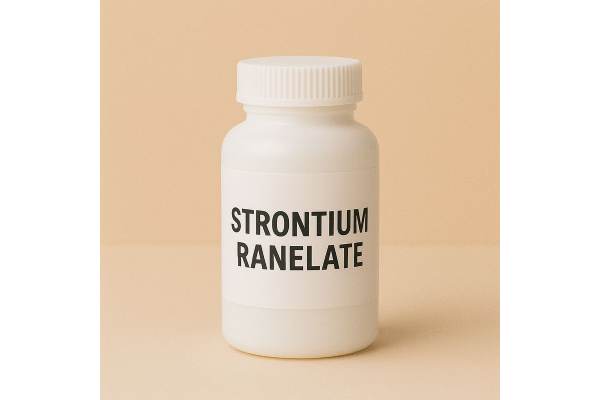
Strontium ranelate is a prescription medicine developed specifically for osteoporosis, not a simple mineral supplement. It contains two atoms of the trace element strontium bound to ranelic acid and is designed to reduce the risk of fractures in people with fragile bones, especially postmenopausal women and, in some countries, men with severe osteoporosis. For many years it was promoted as a “dual action” agent because it appears to both reduce bone breakdown and support bone formation.
Over time, regulators have tightened how and when it can be used because of concerns about heart and circulation risks. As a result, strontium ranelate is now reserved for selected patients at very high fracture risk and is available only in certain countries under specialist supervision.
This guide explains how strontium ranelate works, what its real-world benefits look like, how it is prescribed and dosed, which side effects matter most, and who is advised to avoid it.
Key Insights for Strontium ranelate
- Strontium ranelate can lower the risk of spine and some non-spine fractures in people with severe osteoporosis.
- It acts on bone turnover in a different way from standard bisphosphonates and can increase measured bone mineral density.
- Typical treatment uses 2 g once daily by mouth, usually taken at bedtime at least 2 hours after eating.
- Because of cardiovascular and clot risk, people with existing serious heart or circulation disease are usually advised not to take strontium ranelate.
- The medicine should be used only under specialist supervision, with regular checks of blood pressure, kidney function, and overall fracture and heart risk.
Table of Contents
- What is strontium ranelate and how it works
- Benefits of strontium ranelate for bone health
- How strontium ranelate is used in practice
- Strontium ranelate dosage how much per day
- Side effects and safety of strontium ranelate
- Who should avoid strontium ranelate today
What is strontium ranelate and how it works
Strontium ranelate is a synthetic compound that combines two stable (non-radioactive) strontium ions with an organic carrier molecule called ranelic acid. It was developed as an oral treatment for osteoporosis to lower the risk of fractures in people with fragile bones. Unlike over-the-counter products such as strontium citrate or strontium chloride, strontium ranelate is a regulated prescription drug with specific dosing, safety monitoring, and long-term trial data behind it.
Strontium behaves chemically like calcium, and about 99% of ingested strontium is taken up into bone. When strontium ranelate is absorbed from the gut, the strontium ions can replace some calcium in the mineral component of bone and become incorporated into the bone matrix. This incorporation increases the apparent density of bone on standard bone density scans, because strontium absorbs X-rays more strongly than calcium.
At the cellular level, strontium ranelate has been shown to influence both osteoclasts (cells that resorb bone) and osteoblasts (cells that build bone). In laboratory and animal studies, strontium exposure reduces osteoclast differentiation and activity and promotes osteoblast replication, differentiation, and survival. These effects appear to be mediated in part through the calcium-sensing receptor on bone cells and through downstream signalling pathways involved in bone formation and bone resorption.
In people, the picture is more nuanced. Clinical trials show that strontium ranelate reduces fracture rates and raises bone mineral density, but modern analyses suggest the drug’s main benefit may come from changes in bone material properties and mineralization rather than from a strong anabolic (bone-building) effect. Regardless of the exact mechanism, its net impact in high-risk osteoporosis has been a meaningful reduction in vertebral and some non-vertebral fractures in appropriately selected patients.
Strontium ranelate is not a general multivitamin or first-line therapy. It is usually considered after other osteoporosis medicines are unsuitable or not tolerated and must always be combined with adequate calcium and vitamin D intake.
Benefits of strontium ranelate for bone health
The main reason strontium ranelate was introduced into clinical practice is its fracture-reduction benefit in people with osteoporosis. Large, long-term randomized trials in postmenopausal women with established osteoporosis showed that daily treatment leads to fewer vertebral fractures compared with placebo. In one pivotal study of women with previous spine fractures, three years of treatment reduced the risk of new vertebral fractures by around 40%. Benefit was already visible after the first year of therapy and persisted with longer use.
Another major study in older women with osteoporosis focused on non-vertebral fractures, including hip fractures. Over three years, strontium ranelate reduced overall non-vertebral fractures by a modest but statistically significant margin. In a subgroup of very high-risk women (older age and very low hip bone density), a larger reduction in hip fractures was observed. These results helped position strontium ranelate as an option for patients at particularly high risk, especially when other therapies were not tolerated or contraindicated.
Bone mineral density (BMD), measured by dual-energy X-ray absorptiometry (DXA), rises substantially during treatment. In trials, lumbar spine BMD often increased by 10% or more over several years, which is larger than typical gains seen with many standard anti-resorptive drugs. However, because strontium is heavier than calcium, some of this increase reflects the presence of strontium in bone rather than a true one-to-one gain in mineral content. Even after adjusting for this effect, there is still evidence that bone strength improves.
Other potential benefits reported in some studies include reduced back pain and improved quality of life related to physical function, likely because fewer painful fractures occur. The drug has also been explored for slowing structural progression of knee osteoarthritis, with some positive signals, although this is not a primary licensed indication in most regions.
Overall, the benefits of strontium ranelate are clearest in people with severe osteoporosis and a very high risk of fractures, particularly vertebral fractures. For these patients, fracture reduction can translate into less pain, fewer hospitalisations, and greater independence. Whether these advantages outweigh the cardiovascular and other risks depends on individual health status, which is why careful patient selection is essential.
How strontium ranelate is used in practice
In modern practice, strontium ranelate is not a first-line drug for osteoporosis. It is reserved for patients with severe osteoporosis and high fracture risk who cannot take, or have failed to respond to, more commonly used therapies such as oral bisphosphonates or certain injectable agents. In some countries, its use is restricted to prescription by specialists in metabolic bone disease or rheumatology.
Before starting treatment, clinicians typically perform a detailed assessment that includes:
- Confirmation of osteoporosis or very high fracture risk, usually with a history of fractures, low BMD, and risk calculation tools.
- A cardiovascular review, checking for past heart attack, angina, stroke, peripheral arterial disease, or uncontrolled high blood pressure.
- Kidney function testing, because the drug is not recommended in severe chronic kidney disease.
- Evaluation of calcium and vitamin D intake, correcting deficiencies before and during therapy.
Strontium ranelate is supplied as granules in sachets, usually 2 g per sachet. The contents are mixed with water and taken as a suspension. To optimize absorption, patients are advised to take it at bedtime at least two hours after the last meal, and not together with milk, dairy products, or calcium supplements. This separation is important because calcium and some other minerals can reduce strontium absorption from the gut.
In daily life, adherence requires building a simple routine: for example, finishing dinner by a set time, taking any evening calcium supplement earlier, and then using strontium ranelate right before going to bed with a glass of water. People who already take many tablets often find the sachet format slightly different but straightforward once it becomes a habit.
Regular follow-up visits allow clinicians to monitor blood pressure, review any new cardiovascular or clotting events, check kidney function, and assess for skin rashes or other side effects. Bone density scans may be repeated after a couple of years, but the results must be interpreted carefully because of strontium’s effect on DXA readings. The more meaningful indicators of benefit are changes in fracture occurrence and overall clinical stability.
Because regulatory recommendations and availability vary between countries, patients should always check whether strontium ranelate is licensed and funded in their region and under what conditions. In some areas, the original brand has been withdrawn for commercial reasons, but generic versions remain available under specialist supervision.
Strontium ranelate dosage how much per day
For osteoporosis, the standard dose of strontium ranelate used in clinical trials and in product information is 2 g once daily by mouth. Each 2 g sachet contains strontium ranelate corresponding to roughly 680 mg of elemental strontium. Doses higher than this are not recommended, because no additional benefit has been proven and side effects may increase.
The sachet is usually taken at bedtime, mixed in a glass of water. Several practical dosing rules are important:
- Take strontium ranelate at least 2 hours after the last meal of the day.
- Avoid taking it together with milk, yoghurt, cheese, or calcium supplements. Leave at least a 2-hour gap before or after these products.
- Leave similar spacing from other oral medicines known to bind multivalent cations, such as certain antibiotics (tetracyclines, quinolones) and some antacids, unless your prescriber has advised a specific schedule.
If a dose is forgotten, the usual advice is to take the next sachet at the regular time the following day and not to double up. Because the drug’s effects build up over months and years, missing an occasional dose is unlikely to be critical, but frequent missed doses will reduce effectiveness.
Treatment duration is individualized. In many patients, the intended course is several years, often three to five, with regular reassessment of fracture risk, cardiovascular status, and kidney function. Some people may stop earlier if side effects occur or if newer, more suitable medicines become available; others may continue longer if the balance of benefits and risks remains favourable.
Dose adjustment is needed for kidney problems. Strontium ranelate is usually not recommended if creatinine clearance is below about 30 mL/min (severe renal impairment). In moderate impairment, prescribers may use the standard dose but with closer monitoring and a lower threshold for stopping if kidney function worsens. The medicine is not recommended for children, adolescents, or during pregnancy and breastfeeding.
Because strontium in bone affects DXA measurements, any change in BMD during and after treatment should be interpreted by professionals familiar with this effect. Even after stopping strontium ranelate, strontium remains within bone for several years, so apparent BMD may stay higher than it would be with calcium alone.
Side effects and safety of strontium ranelate
Strontium ranelate has a complex safety profile that led regulators to restrict its use. Understanding its main risks is essential before starting treatment.
Common side effects are usually mild and often improve with time. They include:
- Nausea, loose stools, or diarrhoea, particularly in the first weeks.
- Headache and mild dizziness in some people.
- Skin reactions such as itching or mild rash.
More serious, but less frequent, adverse reactions have shaped current prescribing rules:
- Cardiovascular events
Randomised trials and later analyses found an increased rate of heart problems in patients with pre-existing cardiovascular disease who took strontium ranelate, especially heart attacks and some other ischaemic events. This signal was strongest in people with a history of coronary artery disease, cerebrovascular disease, or peripheral arterial disease. As a result, the medicine is now contraindicated in patients with current or past serious heart disease or uncontrolled high blood pressure in many jurisdictions. - Venous thromboembolism (VTE)
An increased risk of blood clots in the veins, including deep vein thrombosis and pulmonary embolism, has been reported. This risk appears higher in patients with other VTE risk factors such as prior clots, prolonged immobility, or known clotting disorders. Careful assessment and risk minimisation strategies are needed in anyone with a history suggesting higher clotting risk. - Severe skin reactions
Although rare, serious hypersensitivity reactions have occurred, including drug rash with eosinophilia and systemic symptoms (DRESS) and Stevens–Johnson syndrome. These can be life-threatening. Warning signs include widespread rash, fever, swollen lymph nodes, facial swelling, and involvement of internal organs such as liver or kidneys. Any such symptoms require immediate medical attention and permanent discontinuation of the drug. - Laboratory and scan changes
Because strontium interferes with some colour-based laboratory assays, calcium and certain other parameters may appear abnormal unless the laboratory uses methods that are not affected. Strontium in bone also increases DXA BMD measurements beyond the true mineral content, which can mislead interpretation if not corrected for.
Most people who are carefully selected and monitored can take strontium ranelate without major problems, but the consequences of serious adverse reactions can be substantial. That is why its use is limited to patients whose fracture risk is high enough that potential benefits outweigh these risks, and why regular follow-up and prompt reporting of new symptoms are so important.
Who should avoid strontium ranelate today
Because of safety concerns, strontium ranelate is now restricted to a relatively narrow group of patients in many countries. In general, it is considered only when:
- Osteoporosis is severe, with very low bone density and/or multiple fragility fractures.
- The person is at high short-term risk of new fractures.
- Other established osteoporosis treatments are unsuitable, not tolerated, or ineffective.
There are also clear groups who are usually advised not to take strontium ranelate at all:
- People with a current or past history of ischaemic heart disease, such as previous heart attack or angina.
- Those with cerebrovascular disease, including previous stroke or transient ischaemic attack.
- People with peripheral arterial disease, such as symptomatic narrowing of leg arteries.
- Anyone with uncontrolled hypertension despite treatment.
- Patients with a history of venous thromboembolism (deep vein thrombosis or pulmonary embolism) or known high clotting risk.
- Individuals with severe renal impairment (commonly defined as creatinine clearance below about 30 mL/min).
- People who have experienced severe hypersensitivity reactions, including DRESS, Stevens–Johnson syndrome, or other serious skin eruptions after any prior exposure.
Strontium ranelate is not intended for use during pregnancy, breastfeeding, or in children and adolescents. It should not be confused with non-prescription strontium salts sold as dietary supplements, which have different regulatory oversight and far less robust safety and efficacy data for fracture prevention.
Regulatory positions differ between countries. In some, the original branded strontium ranelate has been withdrawn for commercial reasons, but generic forms are still available under tight prescribing restrictions. In others, it may not be marketed at all. Health professionals therefore weigh:
- The individual fracture risk and previous treatment history.
- The presence or absence of cardiovascular and clotting risk factors.
- Local and national guidelines, reimbursement rules, and product availability.
For many patients, safer and better-studied options exist, especially as newer osteoporosis drugs have been introduced. For a minority with very high fracture risk and limited alternatives, carefully monitored strontium ranelate therapy remains one possible part of a comprehensive fracture-prevention plan that also includes lifestyle measures, fall prevention, and optimisation of calcium and vitamin D.
References
- The effects of strontium ranelate on the risk of vertebral fracture in women with postmenopausal osteoporosis 2004 (RCT)
- Strontium ranelate reduces the risk of nonvertebral fractures in postmenopausal women with osteoporosis: Treatment of Peripheral Osteoporosis (TROPOS) study 2005 (RCT)
- A review of the latest insights into the mechanism of action of strontium in bone 2020 (Systematic Review)
- The Influence of Strontium on Bone Tissue Metabolism and Its Application in Orthopedic Surgery 2021 (Review)
- The effect of bone strontium on BMD is different for different manufacturers’ DXA Systems 2010 (Clinical Study)
Disclaimer
The information in this guide is for general educational purposes only and does not replace personal medical advice, diagnosis, or treatment. Strontium ranelate is a prescription medicine with important risks and is not appropriate for many people with osteoporosis. Decisions about its use must be made by a qualified health professional who knows your full medical history, medications, test results, and local regulatory guidance. Never start, change, or stop any prescription drug, including strontium ranelate, without discussing it with your doctor or specialist. If you experience chest pain, shortness of breath, leg swelling, sudden rash, or any other worrying symptoms while taking this medicine, seek urgent medical care.
If you found this article useful, you are warmly invited to share it on Facebook, X (formerly Twitter), or any other platform you prefer, and to follow our work on social media. Your support in sharing helps our team continue creating clear, trustworthy health articles for readers around the world.