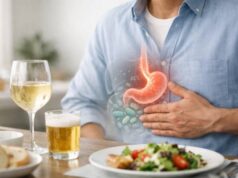
Sugar alcohols are a quiet workhorse of modern food and medicine: they sweeten without acting exactly like sugar, help keep “sugar-free” products palatable, and—especially with xylitol—can support dental health when used in gum or lozenges. The same chemistry that makes them useful is also why they can be rough on the gut. Many sugar alcohols are only partly absorbed in the small intestine, so they reach the colon where they pull in water and become fuel for gut microbes. For some people this is barely noticeable. For others, it can mean bloating, loud gas, cramping, and urgent diarrhea that seems to appear out of nowhere.
What makes this topic tricky is that symptoms depend on the type of sugar alcohol, the dose and speed you take it in, and your baseline gut sensitivity. With a few practical rules, you can usually predict when trouble is likely—and prevent it.
Quick facts
- Sugar alcohols can reduce added sugar and blood-sugar spikes, but they commonly cause bloating and loose stools at higher doses.
- Gas happens when unabsorbed polyols reach the colon and are fermented by gut microbes.
- Diarrhea is often osmotic: water is pulled into the bowel when too much polyol remains unabsorbed.
- People with IBS, faster gut transit, or recent antibiotic use may react at lower amounts than expected.
- Track total daily “polyols” and test tolerance by reducing, then reintroducing small portions over 1–2 weeks.
Table of Contents
- What sugar alcohols are and where you find them
- Why sugar alcohols cause gas and bloating
- Why they cause diarrhea and cramps
- Dose limits and which polyols hit hardest
- Who reacts most and what to rule out
- Practical ways to reduce symptoms
What sugar alcohols are and where you find them
Sugar alcohols—also called polyols—are carbohydrates that chemically resemble sugar but behave differently in digestion. They are not “fake sugar” in the same way as aspartame or sucralose. Most polyols provide some calories, but usually fewer than table sugar because they are incompletely absorbed.
Common names to recognize
You will most often see:
- Sorbitol
- Xylitol
- Mannitol
- Maltitol
- Isomalt
- Lactitol
- Erythritol
Many labels also group them under “sugar alcohols” or “polyols” in the nutrition panel.
Why manufacturers use them
Polyols do several jobs at once:
- Add sweetness with a smaller effect on blood glucose than sucrose for many people
- Improve texture (softness in bars, chew in candy, thickness in syrups)
- Help prevent crystallization in “sugar-free” sweets
- Provide a cooling sensation (common with xylitol and erythritol)
- Support dental goals in certain gums and oral products (xylitol is the best-known example)
That versatility explains why sugar alcohols show up in places you might not expect.
Where “mystery doses” come from
People often blame a single item—like a sugar-free candy—when the real issue is stacking across the day. Frequent sources include:
- Sugar-free gum, mints, and hard candies
- “Keto” and “low net carb” protein bars and baked goods
- Diet-friendly ice creams and dessert pints
- Chewable vitamins, cough drops, and liquid medicines (some use sorbitol for sweetness and texture)
- Certain toothpastes and mouth products (usually swallowed in small amounts, but it can add up in children)
A key pattern: symptoms are more likely when polyols are consumed in concentrated form, quickly, or across multiple servings.
Why sugar alcohols cause gas and bloating
Gas from sugar alcohols is not a character flaw or “weak digestion.” It is a predictable outcome of how polyols move through the gut.
Step one: incomplete absorption
Most sugar alcohols are absorbed slowly and incompletely in the small intestine. Unlike glucose, they do not have a highly efficient, dedicated transport system. Some portion stays in the intestinal lumen instead of crossing into the bloodstream.
Two practical consequences follow:
- The more you consume at once, the more likely you exceed absorption capacity.
- Polyols mixed together (or combined with other poorly absorbed carbs) can amplify symptoms because the gut is dealing with a larger total “unabsorbed load.”
Step two: fermentation in the colon
Whatever is not absorbed travels into the large intestine. There, gut microbes treat these carbohydrates as fuel. Fermentation produces:
- Hydrogen and carbon dioxide, which increase gas volume
- Short-chain fatty acids, which can be beneficial in some contexts but may also increase movement and sensitivity in others
- A shift in the balance of microbial activity depending on diet and recent exposures (including antibiotics)
This is why the timing can feel delayed. You might chew gum at 2 p.m. and feel bloated at 6 p.m., when the unabsorbed polyol reaches the colon.
Why bloating can feel intense even with “normal” gas
Bloating is not only about gas volume. It is also about:
- Visceral sensitivity (how strongly you feel stretching in the gut)
- Motility patterns (whether gas moves along smoothly or gets trapped)
- Abdominal wall response (some people develop visible distension even with modest gas)
In IBS and other gut-brain interaction disorders, the same amount of gas can feel dramatically worse.
A common confounder: swallowed air
Sugar-free gum and candies also increase air swallowing, which can add belching and upper-abdominal pressure. In other words, a “gum bloat” episode can be a mix of swallowed air and polyol fermentation.
The takeaway is simple: gas is often dose-related, delayed, and strongly shaped by baseline gut sensitivity.
Why they cause diarrhea and cramps
Diarrhea from sugar alcohols is usually osmotic, meaning it is driven by water movement rather than infection.
The osmotic effect in plain language
When a substance stays in the gut without being absorbed, it raises the concentration of particles in the intestinal lumen. Water follows that concentration gradient. The result is:
- More water retained in the small intestine and colon
- Softer stools, then loose stools
- Sometimes urgent, watery diarrhea if the dose is high enough
Because this mechanism is chemical and physical, it can occur even when the gut lining is healthy.
Why cramps and urgency happen
As water and unabsorbed carbohydrates increase the “bulk” inside the intestine, the bowel responds by moving contents forward. That can cause:
- Cramping from stronger contractions
- Urgency because the rectum fills faster
- A sense of incomplete emptying in sensitive individuals
For some people, diarrhea appears only after a threshold is crossed—then it feels sudden. That threshold can be lower when the gut is already reactive.
Why dose and concentration matter more than you think
Two servings can be very different experiences depending on how you consume them:
- A single large “sugar-free candy binge” is more likely to cause diarrhea than the same total amount spread across the day.
- Polyols in liquid or semi-liquid form (certain syrups, drinks, or chewables) can move through more quickly, leaving less time for partial absorption.
- Eating polyols on an empty stomach may worsen symptoms for some people because transit can be faster.
How long does it last?
Osmotic diarrhea often improves within a day or two after the trigger is reduced, especially if the main issue is a concentrated dose from candy, gum, or a new “keto” product. Persistent diarrhea suggests one of three scenarios:
- Continued exposure you have not identified (often a supplement, medicine, or “healthy snack”)
- A sensitized gut state (post-infectious, IBS flare, recent antibiotic use)
- A different cause entirely (lactose intolerance, celiac disease, bile acid diarrhea, inflammatory disease)
If diarrhea is severe, frequent, or accompanied by dehydration, blood, fever, or weight loss, it is safer to seek medical evaluation rather than assuming sugar alcohols are the whole story.
Dose limits and which polyols hit hardest
Not all sugar alcohols behave the same. The most useful way to predict symptoms is to think in two variables: absorption and fermentability. Lower absorption generally means more osmotic pull and more substrate for microbes.
Polyols that commonly cause symptoms
In day-to-day practice, these often trigger symptoms at relatively modest intakes:
- Sorbitol and mannitol (often the biggest offenders)
- Maltitol and isomalt (common in “sugar-free” chocolate and baked goods)
- Lactitol (sometimes used in confections and specialty products)
Xylitol: effective, but dose-sensitive
Xylitol tends to sit in the middle: many people tolerate small amounts, but larger single doses can cause gas and diarrhea. It is common in gums and mints, where repeated use can unintentionally stack a meaningful daily total.
Erythritol: often better tolerated, but not symptom-free
Erythritol is absorbed more efficiently than many other polyols, which is why it is often marketed as “gentler.” Many people do tolerate it better. Still, large amounts—or combinations with other polyols—can cause symptoms, especially in sensitive guts.
Why “total polyols” beats “one ingredient”
Symptoms often reflect cumulative load rather than a single substance. Two patterns matter:
- Combination effect: a bar with erythritol plus a candy with sorbitol can behave like a larger, mixed polyol dose.
- Serving distortion: “per serving” amounts may look small, but packages often contain multiple servings.
A practical label habit is to check:
- The ingredient list for polyol names (sorbitol, xylitol, etc.)
- The nutrition panel for total grams of “sugar alcohols” or “polyols”
- Whether you are realistically eating one serving or two or three
Real-world thresholds vary widely
Research and clinical experience show large person-to-person differences. Some people can consume moderate daily amounts with minimal symptoms, while others—especially those with IBS—react to smaller doses. If you are trying to identify your personal limit, the most reliable approach is temporary reduction, then small-step reintroduction (covered in the last section) so you learn your threshold without repeated flare-ups.
Who reacts most and what to rule out
Sugar alcohol symptoms are common, but they are not evenly distributed. If you feel like “everyone else can eat this stuff,” you may simply be in a higher-sensitivity group.
People who often react at lower doses
You may notice stronger symptoms if you have:
- Irritable bowel syndrome (IBS): fermentation and water shifts can be amplified by visceral hypersensitivity and altered motility.
- A history of food-triggered bloating: especially if FODMAP-type foods often cause symptoms.
- Rapid gut transit or anxiety-related flares: less time in the small intestine can mean less absorption.
- Recent antibiotic use: shifts in gut microbes can change how well polyols are metabolized and tolerated.
- Quiescent inflammatory bowel disease: some people in remission still have heightened sensitivity to osmotic and fermentable triggers.
- Children: smaller body size and different eating patterns can turn “a little candy” into a large dose relative to body weight.
When sugar alcohols mimic other conditions
Polyol intolerance can look like lactose intolerance, fructose malabsorption, or bile acid diarrhea because the symptoms overlap: gas, urgency, loose stools. If you are repeatedly symptomatic, it can help to consider whether:
- Symptoms occur only with “sugar-free” and polyol-containing products (more likely polyols)
- Symptoms are strongly tied to dairy, fruit juices, or wheat-based meals (other triggers may be involved)
- Symptoms persist even after removing polyols for 1–2 weeks (consider broader evaluation)
Red flags that deserve medical attention
Do not self-diagnose “sweetener intolerance” if you have:
- Blood in stool, black stools, fever, or severe abdominal pain
- Unintentional weight loss, persistent nighttime diarrhea, or anemia symptoms
- Dehydration signs (dizziness, very dark urine, fainting)
- Diarrhea lasting more than 2–3 weeks
These features can point to infections, inflammatory disease, medication side effects, or malabsorption problems that require targeted care.
A practical safety note for households with pets
If you keep dogs at home, treat xylitol-containing products as hazardous to them. Store gum, mints, and baked goods securely and clean up dropped pieces immediately.
Practical ways to reduce symptoms
You do not need to choose between “never touch sugar alcohols” and “accept diarrhea as the price of sugar-free.” Most people can find a workable middle by lowering exposure, choosing better-tolerated options, and matching intake to their gut’s capacity.
Step 1: Identify your main sources
For 3–7 days, write down:
- All “sugar-free,” “keto,” and “no added sugar” foods
- Gum, mints, cough drops, chewables, and liquid supplements
- How many servings you actually consume
Look for patterns: symptoms are often linked to a specific product category (candies, bars, or gum) rather than every polyol source.
Step 2: Reduce for 7–14 days
Aim for a clean trial:
- Stop polyol-heavy candies and gum first (these are common hidden drivers).
- Replace with non-polyol options when possible (or smaller portions).
- Keep the rest of the diet stable so you can interpret results.
If symptoms improve clearly during this window, you have strong evidence that polyols are a meaningful contributor.
Step 3: Reintroduce with small, spaced “tests”
Use a controlled approach:
- Choose one product with one primary polyol.
- Start with a small portion on a day when your gut is calm.
- Wait 24 hours to judge effects before increasing.
- Keep tests separated so you are not stacking multiple new exposures.
This method teaches you your personal threshold more reliably than guessing.
Step 4: Use dose-shaping strategies
These simple tweaks often help:
- Spread intake across the day instead of one large dose
- Avoid concentrated polyols on an empty stomach if you notice faster transit and urgency
- Prefer options that use smaller amounts or polyols you tolerate better
- Watch for “combo exposure” (a bar plus gum plus sugar-free dessert)
When a structured low-FODMAP trial makes sense
If you have IBS-like symptoms and react to multiple fermentable foods—not only sugar alcohols—a time-limited, structured approach that reduces fermentable carbohydrates (including polyols) can be useful. Ideally, do this with guidance so the plan stays nutritionally adequate and does not become unnecessarily restrictive.
If you continue to have frequent diarrhea, significant weight change, or symptoms that interfere with daily life despite careful polyol reduction, it is reasonable to discuss testing and a broader evaluation with a clinician.
References
- A Systematic Review of the Effects of Polyols on Gastrointestinal Health and Irritable Bowel Syndrome 2017 (Systematic Review)
- High fat intake sustains sorbitol intolerance after antibiotic-mediated Clostridia depletion from the gut microbiota 2024 (Mechanistic Study)
- Effects of a 5-week intake of erythritol and xylitol on vascular function, abdominal fat and glucose tolerance in humans with obesity: a pilot trial 2023 (RCT)
- ACG Clinical Guideline: Management of Irritable Bowel Syndrome 2021 (Guideline)
- Beyond Sugar: A Holistic Review of Sweeteners and Their Role in Modern Nutrition 2025 (Review)
Disclaimer
This article is for general educational purposes and does not provide medical advice, diagnosis, or treatment. Digestive symptoms such as diarrhea and abdominal pain can have many causes, and sugar alcohol intolerance can overlap with conditions like IBS, food intolerances, medication side effects, infections, and inflammatory bowel disease. If you have severe symptoms, dehydration, blood in stool, fever, unexplained weight loss, anemia symptoms, or diarrhea that persists beyond a couple of weeks, seek medical evaluation promptly. If you are managing a chronic digestive condition, consider discussing dietary changes with a clinician or registered dietitian to keep your plan safe and nutritionally adequate.
If you found this guide helpful, please consider sharing it on Facebook, X (formerly Twitter), or any platform you prefer.