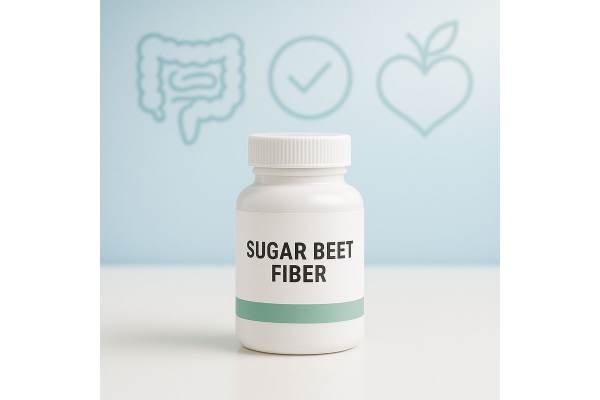
Sugar beet fiber sits at an interesting crossroads between food technology and everyday nutrition. Derived from the pulp that remains after extracting sugar from beets, it transforms what used to be a by-product into a functional ingredient that can support digestive health, help manage appetite, and improve the texture and nutrition profile of foods.
Because it contains both insoluble and soluble fiber, sugar beet fiber can add bulk to the stool while still being fermentable by gut bacteria, which may support a healthier microbiome and the production of short-chain fatty acids. Modern food manufacturers use it in breads, cereals, meat products, and drinks to increase fiber content without drastically changing taste.
If you are considering sugar beet fiber as a supplement or as part of a “high-fiber” product, it helps to understand how it works, realistic benefits, safe dosage ranges, and when it might not be appropriate. This guide walks you through all of that in practical, evidence-informed detail.
Key Insights for Sugar Beet Fiber
- Sugar beet fiber provides a mix of insoluble and soluble fiber that can support bowel regularity and stool bulk.
- It may modestly improve markers like postprandial blood glucose, cholesterol, and satiety when used alongside an overall healthy diet.
- Typical supplemental intakes range from about 5–15 g sugar beet fiber per day, within a total daily fiber intake of roughly 25–38 g.
- People with strict fluid restrictions, significant gut narrowing, or active inflammatory bowel flare should only use concentrated sugar beet fiber under professional guidance.
Table of Contents
- What is sugar beet fiber and how is it made?
- Health benefits of sugar beet fiber
- How to use sugar beet fiber in food and supplements
- Dosage: how much sugar beet fiber per day?
- Side effects, safety, and interactions
- Who should avoid sugar beet fiber and practical tips
What is sugar beet fiber and how is it made?
Sugar beet fiber is a concentrated dietary fiber ingredient produced from sugar beet pulp. When sugar factories extract sucrose from sliced beets, they are left with a moist, fibrous pulp. After washing and pressing, this pulp is dried, milled, and sometimes further processed into powders or granules that can be added to foods or supplements.
Chemically, sugar beet fiber is a complex mix of non-starch polysaccharides. Typical composition of dried beet pulp and derived fibers includes:
- Cellulose and hemicellulose (insoluble structural fibers)
- Pectins (a more soluble, gel-forming fiber fraction)
- Small amounts of lignin and residual sugars
- Minor amounts of protein, minerals, and polyphenols
This combination gives sugar beet fiber a medium to high water-holding capacity and some viscosity when hydrated. That means it can absorb water, swell, and contribute to stool bulk, while the soluble fractions can be fermented by colonic bacteria into short-chain fatty acids.
You may see sugar beet fiber listed on labels as:
- “Sugar beet fiber”
- “Sugar beet fibre” (European spelling)
- “Sugar beet pulp fiber”
- Trademarked names such as “Fibrex®” or similar ingredients based on beet pulp
Unlike isolated fibers such as inulin or psyllium, sugar beet fiber is structurally closer to the original plant cell wall. This “whole-matrix” nature can make it more versatile in foods: it can thicken, bind water, improve texture, and lower calorie density while also adding fiber.
Importantly, sugar beet fiber is not sugar itself. The sugar has been largely removed during processing; remaining sugars are typically a small fraction of the total dry weight. For people watching their sugar intake, sugar beet fiber ingredients usually contribute negligible sugar but meaningful fiber.
Health benefits of sugar beet fiber
Sugar beet fiber has been studied for several decades in both human and animal research. While the body of evidence is smaller than for more famous fibers like oat beta-glucan or psyllium, there are some well-documented benefits.
1. Improved bowel function and stool bulk
One of the clearest effects is on bowel function. The insoluble portion of sugar beet fiber absorbs water and increases stool volume, which can:
- Promote more regular bowel movements
- Help prevent or relieve simple constipation
- Improve stool consistency in people with a low-fiber diet
Because sugar beet fiber also contains fermentable soluble fractions, it supports the growth of gut bacteria that produce short-chain fatty acids such as butyrate. These molecules help nourish colon cells and may support overall gut health.
2. Effects on cholesterol and bile acids
Several human intervention studies using sugar beet fiber preparations have shown:
- Increased excretion of cholesterol in intestinal effluent
- Changes in bile acid excretion patterns
- Modest reductions in total and low-density lipoprotein (LDL) cholesterol in some groups
Mechanisms likely include binding of bile acids and cholesterol in the gut, as well as fermentation-related effects. The results are not uniform across all studies, and sugar beet fiber should not be viewed as a stand-alone cholesterol treatment, but it can support a heart-healthy diet.
3. Glycemic response and post-meal metabolism
In controlled test-meal studies, adding sugar beet fiber to formula diets has:
- Reduced post-meal blood glucose rises
- Reduced post-meal insulin response
- Slightly modified other markers linked to protein breakdown
These effects appear even with relatively modest amounts (around 5–7 g of sugar beet fiber providing roughly 5 g of total dietary fiber) added to test meals. The viscosity and delayed gastric emptying from the hydrated fiber, as well as slower absorption of sugars, likely explain much of this effect.
4. Satiety and weight-management support
By increasing volume and water-holding capacity without adding many calories, sugar beet fiber can:
- Make foods more filling at a given calorie level
- Help some people feel satisfied with smaller portions
- Contribute to a slower rate of eating when used in solid foods like breads or cereals
Evidence here is more indirect, often coming from studies on fiber-enriched foods and total dietary fiber intake, rather than sugar beet fiber alone. Still, its physical properties make it a reasonable candidate within a weight-management plan that also emphasizes protein, minimally processed foods, and overall calorie awareness.
5. Food-technology benefits that indirectly support health
Food manufacturers add sugar beet fiber to products not only for health claims but also to improve:
- Texture (more body in low-fat foods)
- Moisture retention and freshness in baked goods
- Stability in processed meats or plant-based analogues
- Calorie density (more volume per calorie due to water and fiber)
These properties can make “better-for-you” versions of familiar foods more acceptable to consumers, which indirectly helps people reach recommended fiber intakes.
How to use sugar beet fiber in food and supplements
Sugar beet fiber is versatile. You can meet your intake through foods that contain it, concentrated powders, or a combination of both.
1. In everyday foods
Sugar beet fiber is commonly used in:
- Breads and rolls: to increase fiber without making the crumb too dense
- Breakfast cereals and granola: as a bulking, texturizing ingredient
- Meat products (sausages, patties, meatballs): to improve water retention and reduce fat content
- Plant-based meat alternatives: for juiciness and bite
- Snack bars and biscuits: to reduce calorie density and increase fiber
- Dairy or dairy-like products: in some yogurts, puddings, or drinks for added texture and fiber
When reading labels, you might see “sugar beet fiber” or “sugar beet pulp” among the ingredients. If the product also lists “high in fiber” or “source of fiber”, sugar beet fiber may be doing some of the heavy lifting to meet those claims.
2. As a stand-alone supplement
Sugar beet fiber supplements are often sold as:
- Fine powders that disperse in water or smoothies
- Coarse granules that can be sprinkled over cereal, yogurt, or into dough
- Fiber blends, where sugar beet fiber is combined with other fibers (for example, oat, chicory, or wheat fibers)
Practical ways to use it include:
- Stirring a spoonful into porridge or overnight oats
- Mixing into bread, muffin, or pancake batter (usually a few percent of flour weight)
- Adding to minced meat or plant-based mince to increase fiber and reduce shrinkage
- Blending into smoothies, particularly thicker blends where added viscosity is welcome
Because sugar beet fiber can absorb a lot of water, always account for extra liquid in recipes. If you add a tablespoon of sugar beet fiber powder to dough or batter, you usually need to increase liquid slightly to maintain texture.
3. Combining with other fibers
No single fiber source is perfect. Sugar beet fiber combines reasonably well with:
- Viscous soluble fibers (like oat beta-glucan) for more pronounced cholesterol or glycemic effects
- Resistant starch and whole grains for greater fermentation and gut-microbiota diversity
- Inulin or fructo-oligosaccharides if a product is aiming for a specific prebiotic profile
From a practical standpoint, using sugar beet fiber as part of a broader dietary fiber strategy makes sense. Think high-fiber foods first (vegetables, fruits, legumes, whole grains), then targeted functional ingredients like sugar beet fiber to fill gaps or improve specific recipes.
4. Storage and stability
Sugar beet fiber powders and granules are generally:
- Shelf-stable when kept dry and in a sealed container
- Resistant to moderate heat during baking or cooking
- Neutral to mildly cereal-like in flavor, so they usually stay in the background
Check the package for any specific storage instructions, but in most cases, a cool, dry cupboard is sufficient.
Dosage: how much sugar beet fiber per day?
There is no official recommended daily allowance specifically for sugar beet fiber. Instead, it contributes to your total daily dietary fiber intake.
General fiber targets often recommended by health authorities are approximately:
- About 25 g total fiber per day for most adult women
- About 30–38 g total fiber per day for most adult men
Sugar beet fiber can form a part of that total. Clinical studies have used quite varied amounts, but some practical ranges for everyday use are:
- Low range: 3–5 g sugar beet fiber per day, often from fortified foods
- Moderate range: 5–15 g sugar beet fiber per day from a mix of foods and supplements
- Higher range used in studies: up to around 20–30 g per day of sugar beet fiber preparations in structured diets
For most people, staying in the 5–15 g per day range, within an overall fiber intake of 25–38 g, is a realistic and generally well-tolerated target.
How to introduce sugar beet fiber safely
- Start low
Begin with about 2–3 g per day (for example, one small teaspoon of powder or a single serving of a fortified product). - Increase gradually
Every three to five days, increase by another 2–3 g, watching how your digestion responds. This helps your gut bacteria adjust and reduces gas and bloating. - Match with fluid
Because sugar beet fiber absorbs water, drink enough fluids throughout the day. Most adults do well with roughly 1.5–2 liters of total fluid from beverages and high-water foods, unless medically restricted. - Coordinate with medications
Take medications at least one to two hours apart from a large dose of any fiber supplement, including sugar beet fiber, to avoid interference with absorption.
Special dosage considerations
- Constipation relief: Some people notice benefits around 5–10 g per day as part of an overall high-fiber diet.
- Metabolic support (glucose or cholesterol): Studies that reported changes often used mid- to higher-range intakes and structured diets. In real life, the effect will depend on your baseline diet quality and health status.
- Children: Use smaller amounts proportional to body size, and only under guidance from a pediatric professional, especially in very young children or those with digestive conditions.
If you already consume a high-fiber diet and then add a large dose of sugar beet fiber suddenly, you are more likely to experience digestive discomfort. Slow, stepwise increases and attention to fluid intake make a big difference.
Side effects, safety, and interactions
Sugar beet fiber is generally considered safe when used in foods and supplements at customary levels. However, like all concentrated fibers, it can cause problems if introduced too quickly, taken in very high amounts, or used by people with specific medical conditions.
Common, usually mild side effects
When people first increase their intake, they may experience:
- Gas and bloating
- Abdominal cramping or a feeling of fullness
- Changes in stool consistency (softer or bulkier stools)
- Temporary changes in bowel frequency
These effects are usually self-limiting and tend to improve as the gut microbiota adapts. Reducing the dose, splitting it into two or three smaller servings over the day, and increasing gradually can mitigate these issues.
Less common but important concerns
- Excessive stool bulk: Very high fiber intakes (from all sources) combined with inadequate fluid can make stools hard to pass in some individuals, especially those who are immobilized or have pelvic floor dysfunction.
- Partial blockage risk: People with known narrowing (strictures) of the intestine, scar tissue, or significant motility disorders may be at higher risk of obstruction from bulky fiber. They should only use concentrated fibers like sugar beet fiber under close medical supervision.
- Worsening of some IBS symptoms: While fiber helps many people with irritable bowel syndrome, others—especially those sensitive to bloating—may find that certain fibers worsen discomfort. A dietitian can help tailor the type and amount of fiber.
Potential interactions
Sugar beet fiber does not interact chemically with medications in a specific, targeted way, but any bulky, water-absorbing fiber can:
- Slow gastric emptying and intestinal transit for some people
- Temporarily reduce or delay the absorption of some medications or micronutrients by binding them or trapping them in the fiber matrix
To minimize this, it is prudent to:
- Take oral medications at least one to two hours before or after a larger dose of fiber.
- Pay particular attention if you take narrow-therapeutic-window drugs (for example, thyroid hormone, certain heart medications, or anti-seizure medicines) and discuss fiber timing with your prescriber.
Allergy and intolerance
Allergic reactions to sugar beet fiber itself appear to be rare. However:
- People with known allergies to beet or related plant materials should exercise caution.
- Some individuals may react to residues or processing aids in specific commercial products. If you experience rash, swelling, or breathing difficulty, stop using the product and seek urgent care.
Quality and contamination
Reputable manufacturers test sugar beet fiber ingredients for contaminants such as:
- Microbial load
- Heavy metals
- Pesticide residues
Choosing products from established brands that provide quality information increases safety. For people with coeliac disease, look for clear statements on cross-contamination with gluten-containing grains if the product is produced in mixed facilities.
Who should avoid sugar beet fiber and practical tips
Although sugar beet fiber can benefit many people, it is not suitable for everyone in all circumstances. Understanding when to be cautious is as important as knowing the potential benefits.
Groups who should seek medical guidance before using sugar beet fiber supplements
- People with inflammatory bowel disease (IBD) in active flare (Crohn’s disease or ulcerative colitis): High or coarse fiber can worsen symptoms or increase pain in some flare phases.
- Individuals with known intestinal strictures, adhesions, or a history of bowel obstruction: Added bulk from concentrated fiber may heighten obstruction risk.
- Those on strict fluid restrictions, for example due to advanced heart failure or kidney disease: Bulky fibers need adequate fluid for safe transit.
- People after recent gastrointestinal surgery, especially where bowel diameter or motility is temporarily reduced.
- Children with complex medical conditions: Any fiber supplementation should be supervised.
In these situations, a healthcare professional or dietitian can help decide whether sugar beet fiber is appropriate, in what form, and at what dose.
Practical tips for everyday use
- Focus on whole-diet patterns
Sugar beet fiber works best as a supporting player in a diet already rich in vegetables, fruits, legumes, nuts, seeds, and whole grains. Think of it as a way to close the gap between current and ideal fiber intake, not as a stand-alone solution. - Choose your format wisely
- If you prefer minimal changes to taste and texture, start with foods naturally fortified with sugar beet fiber (breads, cereals).
- If you like to cook or bake, try powder or granules you can add to doughs and batters.
- If you need precise dosing for digestive issues, a plain, single-ingredient supplement may be useful.
- Read labels beyond the word “fiber”
A “high-fiber” snack that is also high in sugars and refined fats may not support your long-term goals, even if it contains sugar beet fiber. Look at:
- Total fiber per serving
- Added sugars
- Type of fat and overall calorie content
- Tune dosage to your goals
- For gentle bowel-regularity support: A small daily amount (3–8 g sugar beet fiber) may be sufficient.
- For more structured metabolic goals: Discuss whether more targeted doses within your total fiber budget make sense for you.
- Monitor your own response
Keep an eye on:
- Bowel movement frequency and comfort
- Bloating and abdominal sensations
- Satiety after meals and snacking patterns If you notice persistent discomfort, scale back, change timing, or try combining sugar beet fiber with a different mix of fibers and whole foods.
- Coordinate with professional advice
Because sugar beet fiber can affect bowel habits and metabolic markers, it may be relevant information for your healthcare provider, especially if you are being monitored for diabetes, lipid disorders, or gastrointestinal conditions.
References
- Physicochemical Properties and Evaluation of Antioxidant Potential of Sugar Beet Pulp—Preliminary Analysis for Further Use (Future Prospects) 2023 (Research Article)
- Assessment of the Possibility of Using Sugar Beet Pulp with Molasses as By-Product for Enriching Flour and Production of Bread with Pro-Health Properties 2024 (Research Article)
- Dietary fiber influence on overall health, with an emphasis on CVD, diabetes, obesity, colon cancer, and inflammation 2024 (Review)
- Sugar-beet fibre increases cholesterol and reduces bile acid excretion from the small bowel 1993 (Human Intervention Study)
- Sugar beet fiber in formula diet reduces postprandial blood glucose, serum insulin and serum hydroxyproline 1998 (Randomized Crossover Trial)
Disclaimer
The information in this article is for general educational purposes only and is not a substitute for personalized medical advice, diagnosis, or treatment. Sugar beet fiber can influence digestion, bowel habits, and metabolic health markers, and its suitability and optimal dose vary between individuals. Always consult a qualified healthcare professional or registered dietitian before making significant changes to your diet, using concentrated fiber supplements, or adjusting prescribed medications. Never ignore or delay seeking professional medical advice because of something you have read here.
If you found this guide helpful, please consider sharing it on Facebook, X (formerly Twitter), or any platform you use, and follow our work on social media. Your support by sharing our content helps our team continue to research, write, and provide high-quality, evidence-informed health articles for readers around the world.