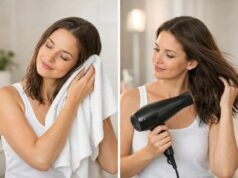
Sulfate-free shampoo has become one of the most repeated labels in hair care, often treated as a shortcut for “better,” “cleaner,” or “safer.” In practice, it is more specific than that. Sulfate-free simply means the cleanser does not rely on sulfate surfactants such as sodium lauryl sulfate or sodium laureth sulfate. It does not automatically mean gentler for every scalp, better for every hair type, or free from irritation.
For some people, switching makes a visible difference. Hair feels less stripped, curls hold moisture longer, color fades more slowly, and the scalp feels calmer after washing. For others, the swap solves nothing or even creates a new problem: limp roots, residue, itchy buildup, or a greasy scalp that never feels fully clean.
The real question is not whether sulfate-free shampoo is good or bad. It is whether it matches your scalp, your hair fiber, your styling habits, and the reason you are washing in the first place.
Core Points
- Sulfate-free shampoo often helps dry, color-treated, curly, coily, or easily irritated hair feel less stripped after washing.
- People with very oily scalps, heavy product use, or frequent buildup may not get the clean they need from a gentle cleanser alone.
- Sulfate-free does not mean allergy-free, because fragrance, preservatives, and other ingredients may still trigger irritation.
- A useful starting point is sulfate-free for regular washes, with a stronger clarifying or medicated shampoo used only when your scalp or buildup pattern calls for it.
- Judge the switch over 2 to 4 weeks, not one wash, because hair feel, residue, and scalp comfort can change gradually.
Table of Contents
- What Sulfate-Free Really Means
- Who Usually Benefits Most
- Who Often Does Not Need It
- When Sulfate-Free Is Not Enough
- The Hidden Mistakes Behind Bad Results
- How to Pick the Right Shampoo Routine
What Sulfate-Free Really Means
To understand who needs sulfate-free shampoo, it helps to start with what the term does and does not tell you. Shampoo is built around surfactants, the cleansing ingredients that lift sebum, sweat, pollution, and styling residue so they can rinse away with water. Sulfates are one category of surfactants. They are effective cleansers, which is why they became common in mainstream shampoos. They also create the rich foam many people associate with “clean.”
The catch is that strong cleansing is not always the same as ideal cleansing. Hair fiber is protected by surface lipids and a delicate cuticle structure. When cleansing is too aggressive for the condition of the hair, the result can be roughness, frizz, color fade, or a scalp that feels tight after washing. Sulfate-free shampoos usually rely on other surfactant systems, often blends that aim for a milder feel, less lipid removal, and more conditioning support during rinsing.
That does not mean sulfate-free shampoos are all the same. One formula may be genuinely mild and creamy. Another may still cleanse quite strongly. The label alone does not tell you the whole story because the final performance depends on the full formula: surfactant blend, pH, added conditioning agents, fragrance load, preservatives, and how often the shampoo is used.
This is why “sulfate-free” is best treated as a clue, not a verdict. It often signals a gentler cleansing style, but it does not guarantee a calm scalp or healthy hair. A fragranced sulfate-free shampoo can still irritate a reactive scalp. A heavy sulfate-free formula can still leave fine hair flat. And a person with significant dandruff or oily buildup may find that a mild cleanser never truly resets the scalp.
There is also a common myth worth clearing up: sulfate-free is not automatically more “natural,” more “medical,” or more appropriate for daily use. It is simply a formulation choice. In some routines, it is the right one. In others, it solves the wrong problem.
The most practical way to think about it is this: sulfate-free shampoo reduces one potential source of harshness, but it does not replace the need to match the cleanser to your scalp oil level, hair texture, and styling habits. Once that is clear, the question becomes much easier: not “Is sulfate-free better?” but “Better for whom?”
Who Usually Benefits Most
The people most likely to notice a real benefit from sulfate-free shampoo are the ones whose hair or scalp already sits on the dry, fragile, or easily disrupted side of the spectrum. In these groups, harsh cleansing can create more friction than freshness.
The clearest fit is dry, damaged, chemically treated, or color-treated hair. When hair has been bleached, dyed, relaxed, heat-styled often, or exposed to repeated chemical processing, the cuticle is less resilient. Stronger cleansing can strip surface lipids and worsen roughness, fade color faster, and make the hair feel squeaky but harder to manage. Sulfate-free formulas often help these strands keep more softness between washes.
Curly and coily hair also tends to benefit. This is not because curls are automatically unhealthy, but because scalp oil travels down a bent fiber less easily than it does down straight hair. That means the mid-lengths and ends often live with less natural lubrication. A gentler shampoo can make the difference between clean curls and a wash day followed by frizz, tangling, and dullness. Readers managing this balance often benefit from a broader curly scalp and wash routine rather than focusing on one label alone.
Sensitive scalps are another strong candidate, especially when the complaint is tightness, dryness, or a “clean but irritated” feeling after washing. Here, sulfate-free can help, but it is important to be precise: the improvement may come from overall mildness, not from sulfate removal alone. Many sensitive people react more to fragrance, preservatives, botanicals, or active ingredients than to sulfates themselves.
Sulfate-free shampoo also makes sense for people who wash frequently but do not accumulate much oil. Someone who exercises daily, rinses often, or prefers regular washing may tolerate a milder cleanser better over time than a stronger one used every day.
The best candidates often include:
- Color-treated or bleached hair.
- Curly, coily, or highly textured hair.
- Dry or frizz-prone lengths.
- A scalp that feels stripped after washing.
- Hair that tangles more after shampoo than before it.
The benefit is usually not dramatic after one wash. It tends to show up as less post-wash roughness, softer ends, calmer scalp feel, and better manageability over a few weeks. That is why sulfate-free is most useful when the problem is over-cleansing, not when the problem is too much residue. If your main complaint is dryness or roughness, the switch is often worth trying. If your main complaint is scalp oil and buildup, the answer may be more complicated.
Who Often Does Not Need It
Sulfate-free shampoo is not a universal upgrade. Many people do perfectly well with conventional shampoos, especially when their scalp is oily, their hair is unprocessed, and they do not struggle with dryness, color fade, or irritation after washing.
An oily scalp is the clearest example. If you produce a lot of sebum, work out heavily, sweat often, or go several days between washes and then need a true reset, a gentler sulfate-free cleanser may leave you feeling half-clean. That does not mean your shampoo is “bad.” It means your scalp may simply need stronger cleansing performance than a mild formula can reliably give. In these cases, the problem is not sulfates themselves but whether the cleanser removes oil efficiently enough to prevent residue, itch, and limp roots.
People with fine, straight, untreated hair sometimes feel the same way. They switch to sulfate-free because the label sounds premium, then notice their roots falling flat faster, their blowout losing lift, or their scalp feeling coated by day two. Fine hair has less room to hide residue. A formula that is lovely on dry curls can feel heavy on a silky, low-density fiber.
Heavy styling routines also change the answer. If you use oils, waxes, silicones, dry shampoo, edge products, leave-ins, or rich masks, a mild cleanser may not fully remove the film left behind. The result is not always visible flakes. It may show up as reduced bounce, scalp itch, dullness, or the sense that fresh hair never quite becomes fresh.
There is also no rule that “healthy hair must avoid sulfates.” If your hair is not colored, your scalp tolerates your current shampoo well, and washing leaves you clean without roughness or irritation, you may not need to change anything. Hair care works best when it responds to a real problem, not a trend.
This is especially relevant for people already managing dandruff, seborrheic dermatitis, or scalp oiliness with targeted cleansers. In those situations, ingredient function matters more than marketing language. A well-chosen medicated or more cleansing shampoo may outperform a sulfate-free formula simply because it treats the scalp issue you actually have. If flakes and itch are the concern, focusing on effective anti-dandruff ingredients is usually more useful than chasing a sulfate-free badge.
So who often does not need sulfate-free shampoo?
- People with very oily scalps.
- Fine, untreated hair that gets flat easily.
- Heavy users of styling products.
- Anyone already doing well with their current shampoo.
- People who mistake “gentle” for “better” without checking whether residue is building up.
In short, sulfate-free is most helpful when strong cleansing is the problem. It is much less important when insufficient cleansing is the problem.
When Sulfate-Free Is Not Enough
One reason sulfate-free shampoo gets mixed reviews is that many people use it as a complete hair strategy when it is really just one tool. There are several situations where a gentle sulfate-free wash is not enough on its own.
The first is buildup. Product residue does not always look dramatic. It can feel like coated roots, waxy lengths, hair that refuses to absorb water, or a scalp that grows itchy even when you are washing on schedule. Leave-ins, oils, dry shampoo, hairspray, mousse, silicone-rich stylers, and even some heavy conditioners can create layers that a mild cleanser only partly removes. In that setting, sulfate-free can become too polite.
The second is scalp disease. If you have dandruff, seborrheic dermatitis, scalp psoriasis, or a very oily flaky scalp, the priority is not cosmetic gentleness alone. The priority is control of inflammation, scale, yeast overgrowth, or excess oil. Many people do well using a medicated shampoo part of the week and a gentler shampoo on other wash days. That kind of split routine is often more effective than demanding one bottle do everything.
The third is true irritation or allergy, which is where sulfate-free can mislead. A shampoo can be sulfate-free and still trigger itching, burning, or rash because the real problem is fragrance, a preservative, a botanical extract, or a surfactant substitute such as cocamidopropyl betaine in a susceptible person. If the scalp is reactive, the useful question is not “Does it contain sulfates?” but “What else is in it, and what pattern does my skin show?” That is where understanding product allergy versus irritation becomes more useful than relying on marketing labels.
A final situation is hard water or environmental residue. Mineral deposits, sweat salts, sunscreen, and pool exposure can change how hair feels even when the cleanser sounds gentle on paper. Sometimes the hair does not need less cleansing. It needs a more periodic reset.
This is why the best routines are often mixed rather than ideological. A person might use sulfate-free shampoo for most washes, then a clarifying or medicated option every one to four weeks, or as needed based on scalp oil, product use, and how the hair feels. That is not “failing” sulfate-free. It is using it in the role where it works best.
The mistake is expecting a mild cleanser to behave like a treatment shampoo, a deep cleanser, and a scalp-soothing wash at the same time. Few shampoos, sulfate-free or not, can do all three equally well.
The Hidden Mistakes Behind Bad Results
When sulfate-free shampoo disappoints, the formula is not always the only issue. Often the result comes from a mismatch between product, method, and expectation.
The first mistake is using too little water. Gentler shampoos usually need more help from technique because they often foam less dramatically. If the hair is not thoroughly saturated, the shampoo spreads unevenly and ends up stuck on the lengths instead of cleansing the scalp well. The user concludes the shampoo is weak, when the real problem is poor distribution.
The second mistake is applying too much product to the mid-lengths and ends. Shampoo is mainly for the scalp. The runoff is usually enough for the rest of the hair unless there is heavy product buildup. Massaging rich sulfate-free formulas through already dry ends can weigh the hair down while still leaving the scalp under-cleansed.
The third mistake is confusing low foam with low cleansing. Foam is a sensory cue, not a perfect measure of performance. Some people keep adding more product until the shower looks satisfying, then wonder why their hair feels coated. With sulfate-free shampoo, one well-emulsified application may be enough on lightly soiled hair, while two washes may work better after several days of oil or styling products.
The fourth mistake is staying too gentle for too long. This is common in people who have adopted rich masks, leave-ins, oils, and styling creams. Hair starts to look dull, roots get sticky, and the scalp itches, but the user assumes the answer is even more moisture. In reality, the missing step may be periodic reset. A guide to when clarifying helps is often more valuable here than abandoning sulfate-free completely.
There is also a sensitive-scalp mistake: assuming the label protects you from all reactions. Sulfate-free shampoos still commonly contain fragrance, preservatives, essential oils, plant extracts, and other ingredients that can irritate or sensitize the scalp. If the scalp stings or flakes after a switch, the problem may be the new formula, not a temporary adjustment period.
A practical check after a bad switch looks like this:
- Did your scalp feel clean on wash day?
- Did your roots get oily faster, not slower?
- Did the lengths feel softer or just heavier?
- Did itching improve, worsen, or stay the same?
- Did you change other products at the same time?
That last point matters. People often switch shampoo, conditioner, leave-in, and styling cream together, then cannot tell what actually changed. The cleanest trial is one variable at a time for two to four weeks.
Sulfate-free works best when it is treated as a cleansing style, not as a personality trait for a routine. Technique, frequency, and total product load still decide whether the result feels balanced or disappointing.
How to Pick the Right Shampoo Routine
The most useful way to choose shampoo is to begin with the scalp, then check whether the hair fiber needs extra protection. People often do the reverse. They shop for what the ends want and forget that cleansing starts at the scalp.
Start with these questions:
- Is your scalp oily, balanced, dry, flaky, or reactive?
- Is your hair color-treated, bleached, curly, coily, fine, or damaged?
- How often do you wash?
- How much styling product do you use between washes?
- Do you need cosmetic softness, scalp control, or both?
From there, the routine usually becomes clearer.
A sulfate-free shampoo is often a good base if your hair is dry, colored, textured, or easily roughed up by washing. It can also work well for people who wash often and do not produce much oil. But it should not be forced into every role. If your scalp gets greasy fast, if you use a lot of stylers, or if flakes and itch are recurring, one stronger or medicated shampoo in rotation may work better than insisting on gentleness every time.
A practical framework looks like this:
- Use sulfate-free as your regular shampoo if dryness, color retention, frizz, or post-wash tightness is your main issue.
- Keep a clarifying shampoo for occasional buildup.
- Keep a medicated shampoo if you have diagnosed dandruff or seborrheic dermatitis.
- Reassess your wash frequency before blaming the formula. Sometimes the issue is simply washing too rarely or too often for your scalp.
- Change one variable at a time.
This is especially helpful for people still trying to match cleanser strength to real-life oil production. A good companion principle is adjusting wash frequency to scalp type rather than assuming one shampoo can fix an incompatible routine.
In the end, the right answer is rarely absolute. Some people truly do best with sulfate-free almost all the time. Some do best with conventional shampoos. Many do best with both, using each for a different job. That middle ground is less marketable than “always sulfate-free,” but it is closer to how real hair behaves.
The best shampoo is the one that leaves your scalp calm, your roots clean enough, your lengths manageable, and your routine sustainable. For the right person, sulfate-free helps accomplish that. For the wrong person, it is just a softer label on the wrong cleanser.
References
- Hair Cosmetics for the Hair Loss Patient 2021 (Review)
- On Hair Care Physicochemistry: From Structure and Degradation to Novel Biobased Conditioning Agents 2023 (Review)
- Allergic contact dermatitis of the scalp: a review of an underdiagnosed entity 2024 (Review)
- Hair Product Allergy: A Review of Epidemiology and Management 2024 (Review)
- A review of shampoo surfactant technology: consumer benefits, raw materials and recent developments 2018 (Review)
Disclaimer
This article is for educational purposes only and is not a substitute for personal medical advice. Scalp dryness, itching, flaking, burning, and hair breakage can have several causes, including dandruff, contact dermatitis, psoriasis, fungal infection, and grooming damage. A sulfate-free shampoo may improve comfort for some people, but it is not a diagnosis or a treatment for every scalp problem. Persistent symptoms, rash, pain, sudden shedding, or worsening flakes should be evaluated by a qualified clinician.
If this article helped you, please share it on Facebook, X, or another platform where it may help someone choose a more suitable hair care routine.