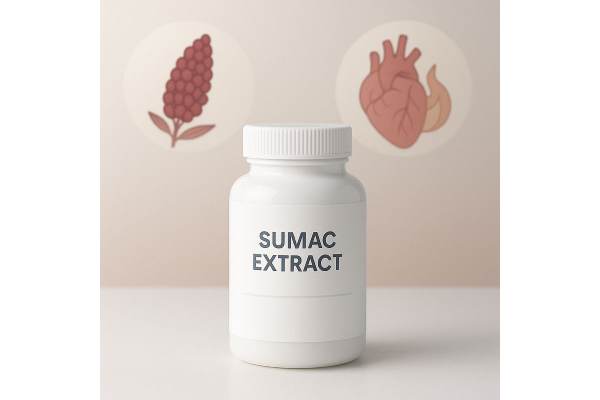
Sumac extract has moved from the spice rack into capsules, tinctures, and powders that promise antioxidant and metabolic support. Derived from the deep red fruits of Rhus coriaria, a shrub native to the Mediterranean and Middle East, sumac extract concentrates the plant’s polyphenols, organic acids, and essential oils. Early human trials suggest that standardized preparations may modestly improve blood lipids, fasting glucose, and measures of insulin resistance when combined with healthy diet and lifestyle. At the same time, cell and animal studies point to antimicrobial, anti-inflammatory, and vascular effects that may have broader relevance for heart, liver, and metabolic health.
This guide walks you through what sumac extract is, how it is thought to work, the most researched benefits, and how people typically use it. You will also find practical dosage ranges used in studies, safety considerations, and who should be cautious or avoid it altogether so you can discuss informed options with your healthcare professional.
Essential Insights on Sumac Extract
- Sumac extract is a concentrated source of polyphenols and organic acids that may support cardiometabolic health and antioxidant defenses.
- Clinical trials suggest sums of about 1,000–3,000 mg per day of sumac powder or extract can modestly improve cholesterol, triglycerides, and fasting glucose when used with lifestyle changes.
- Because sumac extract may enhance blood sugar and blood lipid control, people taking antidiabetic or lipid lowering medication should only use it under medical supervision.
- Typical supplemental intakes range from 500–1,000 mg of standardized extract once or twice daily (about 1,000–2,000 mg per day) with food.
- Individuals with allergies to cashew, pistachio, mango, or poisonous sumac, as well as pregnant or breastfeeding women and people with serious kidney or liver disease, should avoid sumac extract unless their doctor clearly approves it.
Table of Contents
- What is sumac extract and how it works
- Sumac extract main health benefits
- How to use sumac extract in daily life
- Sumac extract dosage, forms, and cycles
- Sumac extract side effects and drug interactions
- Who should take or avoid sumac extract
What is sumac extract and how it works
Sumac extract is a concentrated preparation made from the fruits (and sometimes seeds or leaves) of Rhus coriaria, the culinary “spice sumac” used in Mediterranean and Middle Eastern cuisine. It should not be confused with poisonous sumac (Toxicodendron vernix), a different plant entirely. In supplements, sumac extract usually appears as a dry standardized powder in capsules or tablets, or as a liquid tincture.
To produce an extract, manufacturers soak dried sumac in water, alcohol, or hydroalcoholic mixtures, then filter and concentrate the active compounds. This process enriches sumac’s polyphenols (especially gallic acid, quercetin, and other flavonoids), anthocyanins, hydrolysable tannins, and organic acids such as malic and citric acids. These molecules are credited with most of the antioxidant, anti-inflammatory, and antimicrobial effects observed in laboratory and preclinical studies.
Mechanistically, sumac extract appears to work through several pathways:
- Neutralizing reactive oxygen species and supporting endogenous antioxidant enzymes.
- Modulating inflammatory signaling, including NF-κB and pro-inflammatory cytokines in cell models.
- Influencing lipid metabolism, possibly via PPAR-alpha, AMPK, and pancreatic lipase inhibition, which can affect fat absorption and lipid turnover.
- Supporting vascular function by enhancing nitric oxide signaling and endothelial relaxation in animal and ex vivo models.
Because extracts are more concentrated than culinary powder, a typical capsule may deliver the polyphenols of several teaspoons of spice in a single dose. This potency is what makes sumac extract attractive in research settings but also the reason why safety and drug interactions must be considered more carefully than when using it as a seasoning.
Sumac extract main health benefits
Most of what we know about sumac extract’s benefits comes from a combination of human clinical trials using sumac fruit powder or capsules made from aqueous or hydroalcoholic extracts, alongside animal and in vitro experiments. While results are promising, they reflect modest adjunctive effects rather than a stand-alone treatment.
Cardiometabolic support is the best researched area. Randomized controlled trials in adults with type 2 diabetes, dyslipidemia, and non-alcoholic fatty liver disease have tested doses of about 1,000–3,000 mg per day of sumac powder or extract for 6–12 weeks. Across studies and pooled analyses, sumac supplementation has been associated with:
- Small but significant reductions in LDL cholesterol and triglycerides.
- Modest increases in HDL cholesterol.
- Reductions in fasting blood glucose, insulin, and calculated insulin resistance (HOMA-IR).
- Improvements in body weight, waist circumference, and body mass index in some trials when combined with calorie restriction and physical activity.
In patients with fatty liver, sumac powder has been linked with better liver enzyme profiles and improvements in liver fat scores, suggesting a potential supportive role for liver health when used alongside dietary and lifestyle interventions.
Beyond metabolic effects, preclinical work shows that sumac extracts exhibit strong antioxidant and free radical scavenging activity, inhibition of lipid peroxidation, and antimicrobial effects against several bacteria and fungi. There is also experimental evidence for anti-inflammatory, analgesic, neuroprotective, and anticancer actions in cell and animal models. These findings help explain why traditional systems used sumac for gut, skin, and wound complaints, but clinical confirmation in humans is still limited.
Overall, the most evidence-based use of sumac extract today is as an adjunct to improve cardiometabolic markers—lipids, blood sugar, and weight–related measures—in adults already following a structured nutrition and lifestyle plan under medical supervision.
How to use sumac extract in daily life
Before adding sumac extract to your routine, it is important to separate three different uses: traditional culinary powder as a spice, standardized extract in supplement form, and experimental doses used in clinical trials. Most people will combine culinary use with moderate supplemental doses, rather than trying to copy high-end research protocols on their own.
A practical way to integrate sumac extract is to think in layers:
- Culinary base. Use ground sumac on salads, grilled vegetables, legumes, poultry, or fish several times per week. This delivers small but regular amounts of polyphenols and organic acids while often replacing salt or sour condiments that add sodium or sugar.
- Supplement layer. If your doctor agrees that it is appropriate for your metabolic profile, you can add a standardized sumac extract supplement. Look for Rhus coriaria on the label, ideally with information about polyphenol or total tannin content and third-party testing for contaminants.
- Timing and food pairing. Take capsules with meals, especially those higher in fat or carbohydrates, to reduce stomach upset and align intake with times when blood lipids and glucose rise. Many people split the total daily dose into two or three portions (for example, morning and evening).
- Lifestyle alignment. Sumac works best as part of a broader cardiometabolic plan that includes a Mediterranean-style pattern rich in vegetables, whole grains, legumes, and healthy fats, regular movement, stress management, and adequate sleep.
If you already take medications for blood sugar, blood pressure, or cholesterol, treat sumac extract like any other active botanical: inform your clinician, share the exact product and dose, and monitor your lab results and symptoms for several months. Most trials that observed benefits used a minimum of 6–8 weeks of continuous supplementation, so you should not expect instant changes after a few doses.
Because products vary widely, introduce only one new sumac extract at a time. Avoid stacking several different formulas that all contain Rhus coriaria, as the combined dose may become higher than you intended.
Sumac extract dosage, forms, and cycles
There is no official recommended daily allowance for sumac extract. Existing dosage guidance is based on clinical trials and traditional use. Importantly, studies have not used the exact same preparations, so any dose you consider should be treated as approximate and individualized with professional input.
Common forms include:
- Standardized dry extract in capsules or tablets. These often provide 250–500 mg of sumac extract per capsule, sometimes standardized to a certain percentage of polyphenols, gallic acid, or tannins.
- Encapsulated sumac powder. Milled fruits or seeds with minimal processing; typical labels list total weight rather than specific active compounds.
- Liquid extracts or tinctures. Water, alcohol, or glycerin extracts, usually dosed in drops or milliliters.
Human trials have most often used total daily amounts equivalent to:
- Around 1,000–3,000 mg (1–3 g) of sumac powder or extract per day in divided doses.
- In some studies, 500 mg twice or three times daily (1,000–1,500 mg per day).
- Intervention durations ranging from 4 weeks to 6 months, with many between 8 and 12 weeks.
For a conservative supplemental approach in adults, a common pattern under professional supervision is:
- Start at 500–600 mg of standardized extract once daily with a main meal.
- After 1–2 weeks, if tolerated and still appropriate, increase to 500–1,000 mg twice daily (about 1,000–2,000 mg per day total).
- Re-evaluate after 8–12 weeks with blood work (lipids, glucose, liver enzymes as indicated).
Long-term continuous use beyond 6 months has not been well studied. Many clinicians who incorporate botanicals cycle sumac extract, for example 8–12 weeks on followed by several weeks off, especially at higher doses. Lower culinary-level intakes from food are generally considered suitable for longer term use in otherwise healthy individuals.
Children, pregnant or breastfeeding women, and people with significant kidney or liver disease should only use sumac extract under specialist guidance, if at all. In these groups, there is no reliable dosage research, and the margin between beneficial and potentially harmful intake is unknown.
Sumac extract side effects and drug interactions
In culinary amounts, sumac is widely consumed and generally well tolerated. When concentrated into extracts, though, both the potency of active compounds and the risk of side effects increase. Clinical trials in adults have mostly reported good overall tolerability, but several potential issues deserve attention.
The most common side effects reported with supplemental sumac or extract capsules include:
- Mild digestive discomfort such as stomach pain, nausea, loose stools, or, less often, constipation.
- Headache or lightheadedness, particularly in people with already low blood pressure.
- Taste changes or a persistent sour sensation in the mouth with high intake.
Sumac belongs to the Anacardiaceae family, which also includes cashew, pistachio, and mango, as well as urushiol-containing plants like poison ivy and poison oak. Although culinary Rhus coriaria does not contain urushiol at the levels seen in poisonous species, cross-reactivity is theoretically possible. People with a history of severe reactions to related plants should avoid sumac extract unless evaluated by an allergist.
Because sumac extract can influence blood sugar and lipid metabolism, and may modestly reduce blood pressure in some individuals, there is a realistic potential for pharmacodynamic interactions:
- Antidiabetic medications. Combined effects could increase the risk of low blood sugar, especially with insulin or sulfonylureas.
- Antihypertensive drugs. Additive effects on blood pressure could cause dizziness or fainting in sensitive individuals.
- Lipid lowering therapies. While clinical synergy is sometimes desirable, changes in lipid parameters should be interpreted in light of both drug and supplement use.
- Anticoagulant or antiplatelet drugs. Sumac’s tannins and polyphenols may theoretically influence platelet behavior or drug metabolism, although direct human data are limited.
High-dose extracts also deliver substantial tannin loads. In susceptible individuals, excessive tannin intake may irritate the gastrointestinal tract or interfere with iron absorption if taken around the same time as iron rich meals or supplements.
No serious organ toxicity has been documented in human trials using studied doses, and animal work has not revealed alarming toxicity at moderate levels. However, long-term high-dose human safety data are still sparse, particularly in vulnerable groups.
If you experience rash, itching, swelling, difficulty breathing, chest pain, severe abdominal discomfort, or sudden changes in blood pressure or blood sugar after starting sumac extract, discontinue it immediately and seek medical attention.
Who should take or avoid sumac extract
Sumac extract is not a universal supplement, and it is most appropriate for specific situations under professional guidance. Understanding who may benefit and who should avoid it helps you use this botanical more safely and efficiently.
Adults who may reasonably discuss sumac extract with their clinician include those who:
- Have mildly elevated cholesterol, triglycerides, or fasting blood glucose and are already working on diet, exercise, and weight management.
- Live with metabolic syndrome or non-alcoholic fatty liver disease and want an adjunctive, food-based strategy in addition to established care.
- Follow a Mediterranean or Middle Eastern dietary pattern and wish to deepen their use of traditional ingredients in a structured way.
- Seek to modestly enhance antioxidant and anti-inflammatory dietary intake via a well-characterized plant extract rather than multiple overlapping products.
Even in these cases, sumac extract should be viewed as a supportive measure, not as a replacement for prescribed medications, clinical monitoring, or core lifestyle changes.
People who should avoid sumac extract or use it only with specialist supervision include:
- Pregnant or breastfeeding women. There is not enough high-quality safety data to recommend concentrated extracts in these life stages.
- Children and adolescents. Clinical trials using supplements have mainly involved adults; culinary use of sumac as a spice is different from giving high-dose extracts.
- Individuals with known allergy to sumac, cashew, pistachio, mango, or other Anacardiaceae plants, or those with a history of severe reactions to poison ivy or poison sumac.
- Patients with advanced kidney or liver disease unless their specialist is directly overseeing botanical use and monitoring lab markers.
- People taking multiple cardiometabolic medications, blood thinners, or drugs with narrow therapeutic windows, where even modest changes in absorption or metabolism could matter.
If you fall into a gray zone—for example, you have well-controlled diabetes on a single medication and are interested in sumac extract—your clinician may decide that a low dose trial with close monitoring is reasonable. In that case, clarity about the exact product, dose, and duration, alongside regular lab testing, is essential.
In all scenarios, the safest strategy is to treat sumac extract like a pharmacologically active tool: helpful for the right person at the right time, but not inherently benign just because it comes from a plant.
References
- The effect of Sumac on cardiometabolic parameters in adults: a systematic review and meta-analysis of randomized controlled trials 2024 (Systematic Review)
- The Nutraceutical Properties of Rhus coriaria Linn: Potential Application on Human Health and Aging Biomedicine 2023 (Review)
- Pharmacological and Antioxidant Activities of Rhus coriaria L. (Sumac) 2021 (Review)
- Rhus coriaria L. (Sumac), a Versatile and Resourceful Food Spice with Cornucopia of Polyphenols 2022 (Review)
- The effects of sumac (Rhus coriaria L.) powder supplementation in patients with non-alcoholic fatty liver disease: a randomized controlled trial 2020 (RCT)
Disclaimer
The information in this article is for general educational purposes only and is not a substitute for personal medical advice, diagnosis, or treatment. Sumac extract is a bioactive botanical that can influence blood lipids, blood sugar, blood pressure, and other health parameters, and it may interact with prescription or over-the-counter medications. Always consult a qualified healthcare professional who knows your medical history before starting, changing, or stopping any supplement, including sumac extract. Never delay or disregard professional medical advice because of something you have read here. If you experience concerning symptoms after using any supplement, seek medical care promptly.
If you found this guide helpful, please consider sharing it on Facebook, X (formerly Twitter), or any platform you prefer, and follow our work on social media. Your support in sharing our articles helps our team continue to research, write, and publish high-quality, evidence informed health content.