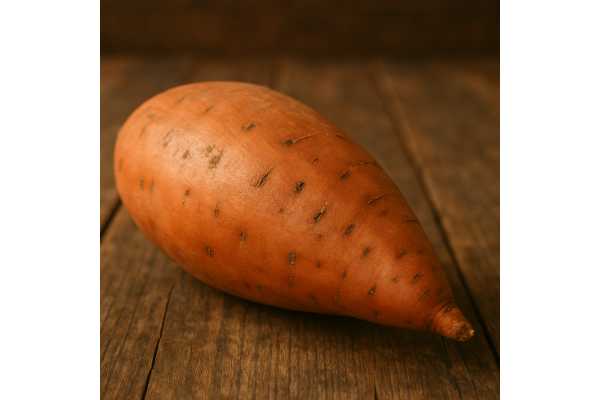
Sweet potato is one of those rare foods that can be comfortingly familiar and nutritionally impressive at the same time. Despite its name, it is not a potato but the storage root of a vine in the Convolvulaceae family, with deep roots in African, Asian, and Latin American cuisines. Orange-fleshed varieties are especially valued as rich sources of provitamin A carotenoids, while purple sweet potatoes bring striking color and anthocyanins, and white-fleshed types have a milder flavor.
From a health perspective, sweet potatoes offer complex carbohydrates, fiber, potassium, vitamin C, and unique phytonutrients that support vision, immune function, and metabolic health when eaten as part of a balanced pattern. At the table, they are just as adaptable: baked whole, mashed, roasted in cubes, blended into soups, used in curries, or even folded into breads and desserts.
This guide explains the main types, nutrition profile per 100 g, science-based benefits, potential risks and allergies, best choices and storage practices, cooking methods to preserve nutrients, and how much to eat for different health goals.
Nutrition Snapshot
- Sweet potatoes provide complex carbohydrates, fiber, potassium, and very high provitamin A carotenoids that support eye and immune health.
- Boiled sweet potato has a lower glycemic impact than baked or roasted forms, which is relevant for people managing blood sugar.
- A typical serving is about 80–100 g cooked sweet potato (roughly ½–1 cup), enjoyed several times per week within a varied diet.
- Rare cases of IgE-mediated sweet potato allergy have been reported, including generalized hives and anaphylaxis.
- People with advanced kidney disease, strict low-potassium diets, or very low-carbohydrate regimens may need to limit portion size and frequency.
Table of Contents
- Sweet potato types uses and origins
- Sweet potato nutrition profile in detail
- Science based health benefits of sweet potato
- Risks allergies and interactions with sweet potato
- Choosing storing and sustainability for sweet potatoes
- Cooking sweet potatoes and nutrient retention
- Portion guidance comparisons and sweet potato FAQs
Sweet potato types uses and origins
Sweet potatoes (Ipomoea batatas) are storage roots rather than true tubers, and they belong to a completely different botanical family than white potatoes. Originating in Central or South America, they spread across the Pacific and eventually to Africa and Asia, where they became a crucial food during times of scarcity thanks to their yield, adaptability, and nutrient density.
Several main flesh-color groups are commonly discussed:
- Orange-fleshed sweet potatoes – rich in beta carotene and other provitamin A carotenoids; widely used to combat vitamin A deficiency in public health programs.
- Purple-fleshed sweet potatoes – high in anthocyanins (especially cyanidin and peonidin derivatives) with strong antioxidant capacity and potential neuroprotective and hepatoprotective effects.
- White or cream-fleshed varieties – milder in flavor and lower in carotenoids; some traditional types, such as the Japanese white-skinned sweet potato used for the Caiapo extract, have been studied for blood glucose effects.
In everyday language, sweet potatoes are frequently confused with “yams.” True yams (Dioscorea species) are botanically distinct, typically starchier, and less sweet. In many English-speaking markets, however, orange sweet potatoes are labeled as “yams,” which can make recipe interpretation and nutritional comparisons confusing.
Culinary uses are extremely diverse:
- Baked or roasted whole as a side dish
- Cubed and roasted for salads, grain bowls, or tray bakes
- Mashed or whipped, sometimes combined with herbs or yogurt
- Pureed into soups, stews, or baby food
- Incorporated into breads, pancakes, gnocchi, and desserts
In many cultures, sweet potato leaves are also consumed as a leafy green, bringing additional micronutrients and polyphenols.
Compared with refined carbohydrate sources, sweet potatoes offer more fiber, micronutrients, and bioactive compounds. At the same time, they remain relatively affordable and store well, which is why development agencies often promote orange-fleshed varieties as “biofortified” staples in regions with widespread vitamin A deficiency.
Sweet potato nutrition profile in detail
Nutrient values vary with variety and preparation, but the tables below summarize cooked, boiled sweet potato without skin per 100 g, based primarily on standardized composition data.
Macros and electrolytes (per 100 g boiled, without skin)
| Nutrient | Amount per 100 g | %DV* |
|---|---|---|
| Energy | 76 kcal | 4% |
| Total carbohydrate | 17.7 g | 6% |
| Dietary fiber | 2.5 g | 9% |
| Total sugars | 5.7 g | – |
| Protein | 1.4 g | 3% |
| Total fat | 0.1 g | 0% |
| Saturated fat | 0.03 g | 0% |
| Potassium | 230 mg | 5% |
| Sodium | 27 mg | 1% |
*%DV based on a 2,000 kcal diet; values rounded and approximate.
This profile shows why sweet potatoes are considered moderate in carbohydrates but relatively low in energy density, especially when compared with fried potato products. The combination of fiber and potassium supports satiety and blood pressure regulation when part of a balanced diet.
Vitamins (per 100 g boiled, without skin)
| Vitamin | Amount | %DV* |
|---|---|---|
| Vitamin A (as carotenoids, µg RAE) | ~4,700 µg | >500% |
| Vitamin C | 12.8 mg | 14% |
| Vitamin B6 | 0.17 mg | 10% |
| Vitamin B5 (Pantothenic acid) | 0.58 mg | 12% |
| Thiamin (Vitamin B1) | 0.06 mg | 5% |
| Riboflavin (Vitamin B2) | 0.05 mg | 4% |
| Niacin (Vitamin B3) | 0.54 mg | 3% |
| Folate (DFE) | 6 µg | 2% |
| Vitamin E | 0.94 mg | 6% |
| Vitamin K | 2.1 µg | 2% |
Sweet potatoes are particularly notable for vitamin A precursors: 100 g boiled can provide several times the adult Daily Value, primarily as beta carotene that the body converts to active vitamin A according to need. This is a major reason orange-fleshed varieties are used in programs addressing vitamin A deficiency.
Minerals (per 100 g boiled, without skin)
| Mineral | Amount | %DV* |
|---|---|---|
| Calcium | 27 mg | 3% |
| Magnesium | 18 mg | 4% |
| Phosphorus | 32 mg | 3% |
| Iron | 0.72 mg | 4% |
| Zinc | 0.2 mg | 2% |
| Copper | 0.09 mg | 10% |
| Manganese | 0.27 mg | 12% |
| Selenium | 0.2 µg | 0% |
These minerals support functions ranging from bone health and energy metabolism (magnesium, phosphorus) to antioxidant enzyme systems (manganese, copper).
Bioactives, anti-nutrients, and glycemic metrics
- Carotenoids: Orange-fleshed sweet potatoes are rich in beta carotene and other carotenoids; purple varieties contribute anthocyanins with strong antioxidant and signaling effects.
- Phenolic compounds and anthocyanins: Purple sweet potatoes can provide significant amounts of anthocyanins that modulate oxidative stress pathways such as Nrf2 and NF-κB, potentially benefiting liver and brain health.
- Anti-nutrients: Raw sweet potatoes contain protease inhibitors and other compounds that can interfere with protein and starch digestion; these are largely inactivated by common cooking methods.
- Glycemic index (GI): Reported GIs range roughly from 44 to the 90s depending on variety and cooking method, with boiled preparations at the lower end and baked or roasted often higher.
Overall, sweet potatoes deliver more than just starch: they are a package of micronutrients and bioactive compounds that interact with metabolism, antioxidant systems, and gut health.
Science based health benefits of sweet potato
Research on sweet potatoes spans nutrient composition, bioactive compounds, gut microbiota, and specific extracts used in clinical settings. Most evidence is observational or preclinical, with a smaller number of human trials focusing on particular extracts or varieties.
Vision, immune function, and epithelial health
The most robust benefit of orange-fleshed sweet potato is its contribution to vitamin A status. Provitamin A carotenoids such as beta carotene are converted to retinol, which is essential for normal vision (especially night vision), immune competence, and maintenance of epithelial tissues in the skin, gut, and respiratory tract.
Intervention programs that promote biofortified orange sweet potatoes in communities with low vitamin A intake have demonstrated improvements in vitamin A status in children and pregnant women, primarily because sweet potatoes replace less nutrient-dense staples.
Antioxidant and anti-inflammatory properties
Sweet potatoes provide several antioxidant systems:
- Carotenoids in orange-fleshed varieties
- Anthocyanins and phenolic acids in purple-fleshed roots
- Vitamin C and vitamin E across many varieties
A comprehensive review of sweet potato’s nutritional and phytochemical composition links these compounds to antioxidant, anti-inflammatory, hepatoprotective, cardioprotective, and potential anticancer properties in cell and animal models.
A 2024 review of purple-fleshed sweet potato emphasizes that its anthocyanins can modulate oxidative stress and inflammatory pathways, with promising preclinical evidence for protection against liver injury and neurodegenerative processes.
Metabolic health and glycemic control
Sweet potatoes provide complex carbohydrates and fiber, but their glycemic impact is strongly influenced by variety and cooking:
- Boiled sweet potatoes typically show low-to-medium GI, while baked, roasted, or fried versions often have high GI values.
- Controlled trials with Caiapo, an extract from white-skinned sweet potato, have reported improvements in fasting glucose and lipid profiles in people with type 2 diabetes.
A 2022–2025 body of work highlights that sweet potato polysaccharides and polyphenols may improve insulin sensitivity, modulate carbohydrate-digesting enzymes, and reduce markers of oxidative stress in preclinical models.
Gut microbiota and digestive health
Sweet potatoes contain fermentable fiber, resistant starch (especially when cooled after cooking), and a variety of polyphenols. Emerging evidence suggests that these components can:
- Increase beneficial bacterial groups
- Enhance production of short-chain fatty acids
- Support intestinal barrier function and possibly reduce low-grade inflammation
From a practical standpoint, the fiber content (roughly 2–3 g per 100 g cooked) also helps maintain regular bowel movements and may contribute to fullness.
Cardiovascular and broader chronic disease risk
By combining high potassium, low sodium, fiber, and antioxidant compounds, sweet potatoes fit well into dietary patterns associated with lower risk of hypertension and cardiovascular disease. Observational data and mechanistic studies support their role within plant-forward diets, though sweet potatoes themselves should not be considered a stand-alone “cure” for any chronic condition.
Overall, the evidence is strongest for improvements in vitamin A status and supportive roles in antioxidant and metabolic health when sweet potatoes replace less nutrient-dense carbohydrate sources.
Risks allergies and interactions with sweet potato
For healthy individuals, sweet potatoes are usually safe. Still, a few important cautions deserve attention.
Allergy and hypersensitivity
Sweet potato allergy is rare but documented. Published case reports describe:
- Generalized urticaria (widespread hives) after consuming sweet potato cake
- IgE-mediated allergy with identified sweet potato proteins (such as sporamin A) acting as allergens
- In some cases, more systemic reactions requiring medical care
Because sweet potatoes are botanically distinct from typical allergenic foods, cross-reactivity patterns are not fully understood. However, people with:
- Previous reactions to sweet potato
- Multiple food allergies or adult-onset food allergy with expanding triggers
should discuss testing and clear guidance with an allergist. Any history of breathing difficulty, throat tightness, or dizziness after eating sweet potato is a red-flag scenario.
Digestive tolerance and FODMAP issues
Most people tolerate sweet potatoes well, but larger portions can be moderately high in certain fermentable carbohydrates:
- Some individuals with irritable bowel syndrome (IBS) or sensitive digestion may experience bloating or discomfort after large servings.
- Starting with about ½ cup cooked (80–100 g) and observing symptoms is a practical approach.
Cooking method also matters: fried preparations can introduce extra fat that slows gastric emptying and may worsen reflux or fullness.
Blood sugar and glycemic impact
Sweet potatoes still contain meaningful carbohydrate. For people with diabetes or prediabetes:
- Portion size and cooking method are key.
- Boiled sweet potatoes (especially when cooled and reheated) generally have a lower glycemic response than baked or roasted versions, though values vary by cultivar.
- Even “low-GI” sweet potato must be counted within the total carbohydrate allowance.
No one should discontinue or adjust diabetes medication based solely on dietary sweet potato or supplements derived from it; this requires a clinician’s guidance.
Potassium and kidney disease
Sweet potatoes provide moderate potassium (about 230 mg per 100 g boiled).
This is generally beneficial, but in:
- Advanced chronic kidney disease
- People on dialysis
- Individuals following a prescribed low-potassium diet
sweet potatoes may need to be limited or carefully portioned, ideally with a renal dietitian’s input.
Interactions and supplements
Commercial sweet potato extracts (such as Caiapo) are marketed for metabolic health, but:
- They are not equivalent to eating whole cooked sweet potato.
- Doses studied in trials are specific and monitored; products on the market may differ in concentration and purity.
People already taking glucose-lowering medications should be cautious with any supplement that claims to affect blood sugar and should consult their healthcare provider before use.
Choosing storing and sustainability for sweet potatoes
Good selection and storage preserve nutrients, reduce waste, and improve both safety and flavor.
Choosing quality sweet potatoes
When selecting whole roots:
- Choose firm, heavy sweet potatoes with smooth, unbroken skin.
- Avoid roots with large cracks, soft spots, or mold, especially at the ends.
- Sprouting indicates age and some nutrient loss, though slightly sprouted roots can still be safe if you cut off the sprouts and any soft tissue.
Common marketplace types include:
- Orange-fleshed varieties (often labeled as “yams” in North America)
- Japanese or Korean sweet potatoes (paler flesh, sometimes purple skin)
- Purple-fleshed sweet potatoes used in specialty dishes and functional foods
Where possible, buying locally grown sweet potatoes in season can reduce transport emissions and often yields fresher roots with better texture.
Storage for safety and quality
Raw whole sweet potatoes:
- Store in a cool, dark, well-ventilated place (roughly 12–16°C).
- Avoid refrigeration for raw roots; temperatures that are too low can lead to hard cores and undesirable flavor changes.
- Keep them away from heat sources and direct sunlight.
Cut or peeled sweet potatoes:
- Refrigerate promptly in an airtight container.
- Use within 2–3 days, and cook thoroughly before eating.
Cooked sweet potatoes:
- Refrigerate leftovers within 2 hours of cooking.
- Use within 3–4 days, or freeze for longer storage in labeled portions.
Cooling cooked sweet potatoes and reheating them later can modestly increase resistant starch, which may benefit gut health and lower glycemic impact compared with eating them piping hot immediately.
Sustainability and food systems
From a food systems perspective, sweet potatoes:
- Provide high yields per area and tolerate a range of climates.
- Can be grown in many low-input systems, making them valuable for smallholder farmers.
- Offer multiple edible parts: roots for energy and micronutrients, leaves as a leafy green, and by-products (peels, trimmings) as raw material for functional ingredients.
Processing side streams—such as peel, fiber, or pigment-rich fractions—are increasingly used in bakery products and other foods to boost antioxidant content and reduce waste.
By choosing whole sweet potatoes more often than highly processed snack forms (chips, fries), consumers can support both their own health and more sustainable food practices.
Cooking sweet potatoes and nutrient retention
Cooking radically changes the texture, taste, and metabolic impact of sweet potatoes—and it can help or hinder nutrient availability depending on the method.
Effects on vitamins and phytonutrients
- Carotenoids are relatively heat-stable and often become more bioaccessible after cooking because heat disrupts cell walls and starch matrices. Moderate heat with some dietary fat supports absorption.
- Vitamin C and some B vitamins are more heat- and water-sensitive, so long boiling in large volumes of water can reduce their levels.
- Anthocyanins in purple sweet potatoes are water-soluble and can degrade with excessive heat or prolonged boiling, but steaming or quick boiling keeps more of their activity.
Cooking methods and glycemic response
Human trials and glycemic index studies show that cooking method strongly affects blood sugar response:
- Boiling often yields lower GI values (as low as around 44–62 in some studies, depending on variety).
- Baking, roasting, and frying are more likely to produce high GI values (reported up to around 94 in some settings).
Mechanisms include:
- Greater starch gelatinization and sugar formation during dry-heat cooking
- Differences in resistant starch formation after cooling
- Changes in fiber structure that affect digestion and absorption
For people managing blood sugar, boiled, steamed, or gently microwaved sweet potatoes eaten with protein, fat, and fibrous vegetables tend to be the most glucose-friendly options.
Practical cooking guidance
- Boiling or steaming cubes
- Cut into similar-sized pieces for even cooking.
- Use minimal water and cook just until tender, not mushy.
- Reserve some cooking liquid for soups or purees to retain water-soluble nutrients.
- Baking whole sweet potatoes
- Pierce skins with a fork to allow steam to escape.
- Bake at moderate temperatures (around 180–200°C) until soft.
- Enjoy with modest amounts of healthy fats (olive oil, tahini, nuts) to support carotenoid absorption without overwhelming calories.
- Roasting cubes or wedges
- Toss lightly with oil and spices.
- Keep pieces relatively large to avoid excessive browning or charring, which can form unwanted compounds.
- Frying or chips
- Best treated as occasional rather than daily choices because of added fats and higher GI. Regular intake of fried starchy foods is associated with higher risk of type 2 diabetes and cardiometabolic issues.
- Using sweet potato in purees and baby foods
- Cook thoroughly until very soft.
- Blend with a small amount of cooking water, breast milk, or formula as appropriate.
- Avoid added salt, sugar, or honey for infants; follow local infant feeding guidelines.
Simple practices—like combining sweet potato with legumes, leafy greens, and a source of healthy fat—can improve nutrient balance and support a steadier rise in blood glucose.
Portion guidance comparisons and sweet potato FAQs
Typical serving size and frequency
For most adults, a realistic serving of sweet potato is:
- 80–100 g cooked (about ½–1 cup cubes or mash), or
- Roughly ½ of a medium baked root
As part of a varied diet rich in vegetables, legumes, and whole grains, many people can enjoy sweet potatoes several times per week. Those with diabetes or strict carbohydrate goals may choose smaller servings more frequently, guided by their blood glucose responses.
Sweet potatoes vs regular potatoes
Both sweet potatoes and white potatoes can be part of a healthy pattern when prepared in nutrient-conscious ways:
- Sweet potatoes
- More provitamin A carotenoids
- Often slightly more fiber and manganese
- Generally lower GI when boiled, but comparable or higher GI when baked or fried
- White potatoes
- Typically more potassium per gram
- Good sources of vitamin C and some B vitamins
- Provide resistant starch, especially after cooling
Recent expert summaries emphasize that the biggest differences for health come from preparation method and overall meal context rather than choosing one root over the other.
Are sweet potatoes good for weight management?
Sweet potatoes can support weight management when:
- Portions are moderate
- They are prepared with minimal added sugar and fat
- They replace more refined carbohydrate sources (like white bread or sugary snacks)
Their fiber and water content help with fullness, while the natural sweetness can reduce the desire for desserts in some meals.
Are sweet potatoes suitable for low-carb, keto, or diabetes diets?
- Strict ketogenic diets: Sweet potatoes are generally not compatible because of their carbohydrate content.
- Moderate low-carb or diabetes-friendly diets: Small portions (½ cup cooked) can sometimes fit, especially when combined with protein and non-starchy vegetables. Individual blood glucose tracking is essential.
Are sweet potatoes safe during pregnancy, breastfeeding, and childhood?
In usual food amounts, sweet potatoes are commonly included in diets for pregnant and breastfeeding people and are often one of the early complementary foods for infants:
- Provide vitamin A precursors rather than large amounts of preformed vitamin A, which reduces the risk of exceeding upper limits from food alone.
- Offer energy, vitamin C, B vitamins, and minerals helpful for growth and recovery.
Parents and caregivers should still follow pediatric guidance on texture progression, choking risk, and balanced complementary feeding.
What about pets?
Many dogs tolerate small amounts of plain, cooked sweet potato as part of a balanced diet, and some commercial pet foods use it as a carbohydrate source. However, pet nutrition requirements differ from humans, and excessive sweet potato can unbalance a pet’s diet. A veterinarian should guide any significant change or therapeutic use (such as for constipation or weight management).
References
- Sweet Potato Is Not Simply an Abundant Food Crop 2022 (Systematic Review)
- A comprehensive review of sweet potato (Ipomoea batatas (L.) Lam.) as a functional food 2021 (Systematic Review)
- Proximate Composition, Health Benefits, and Food Applications in Bakery Products of Purple-Fleshed Sweet Potato (Ipomoea batatas L.) and Its By-Products: A Comprehensive Review 2024 (Systematic Review)
- Chemical Components, Antioxidant Activity, and Glycemic Index of Purple Sweet Potato Products 2022 (Experimental Study)
- Generalized urticaria caused by ingestion of sweet potato cake 2018 (Case Report)
Disclaimer
This article is intended for general informational purposes only and does not provide medical, nutritional, or professional health advice. Sweet potatoes can affect people differently depending on factors such as age, underlying health conditions, medications, and overall diet. You should always seek the advice of your physician, registered dietitian, or other qualified health professional with any questions you have about your diet, blood sugar management, kidney function, allergies, or other medical conditions. Never disregard professional medical advice or delay seeking it because of something you have read here.
If you found this guide helpful, you are kindly invited to share it with others—on Facebook, X (formerly Twitter), or any platform you prefer. Thoughtful sharing helps more readers access reliable nutrition information and supports the continued creation of high-quality, evidence-informed content.