Pool hair damage usually begins quietly. Hair that felt smooth in early summer starts drying faster, tangling more easily, losing shine, and looking lighter or duller at the ends. For frequent swimmers, that change is rarely caused by one factor alone. Pool chemicals, repeated soaking, friction, sun, heat, and mineral deposits can all work together on the hair shaft, especially when the cuticle is already stressed by coloring or bleaching.
That is why “chlorine ruined my hair” is both understandable and incomplete. Chlorine does matter, but so do wet-dry cycles, UV exposure, and the condition of the hair before it ever enters the water. The good news is that most swimming-related hair damage is preventable, and much of it is manageable once it starts. The smartest approach is not avoiding the pool. It is building a routine that lowers exposure, reduces friction, and restores the hair surface before small signs of wear turn into breakage.
Core Points
- Frequent swimming can roughen the cuticle, fade color, and increase dryness, tangling, and breakage over time.
- Hair that is bleached, highlighted, porous, curly, or already dry is usually more vulnerable to pool damage.
- Green hair is often linked to copper deposits in pool water, not chlorine alone.
- Wetting hair with fresh water before swimming and rinsing immediately after can reduce the amount of pool water the hair holds.
- A simple swimmer routine works best when it combines pre-swim protection, gentle cleansing, and regular conditioning or repair care.
Table of Contents
- How Pool Water Affects the Hair Shaft
- Why Some Hair Types Get Hit Harder
- Chlorine Damage vs Copper Buildup
- What to Do Before You Swim
- How to Wash and Recover Afterward
- Best Routines for Frequent Swimmers
How Pool Water Affects the Hair Shaft
Swimming does not usually damage hair at the follicle level. The main problem is the hair shaft, especially the cuticle, which is the outer protective layer made of overlapping cells. When that surface is smooth, hair reflects light well, resists tangling better, and feels softer. When it is repeatedly stressed, the cuticle lifts, chips, and erodes. That is when swimmers start noticing roughness, frizz, dullness, and ends that catch on each other.
Pool water contributes to this in several ways. Chlorine-based disinfectants are oxidizing chemicals. In practical terms, that means they can affect pigment and protein structures over time, especially after frequent exposure. Repeated immersion also swells the hair fiber, and each cycle of soaking, drying, brushing, and restyling adds more mechanical stress. The pool itself is only part of the story. The towel rub after the swim, the hot shower, the quick blow-dry before work, and the sun exposure on the walk home all add to the same wear pattern.
This is why swimmers often describe the same cluster of symptoms:
- Hair feels squeaky or stripped after rinsing.
- Ends become rougher and harder to detangle.
- Color fades faster than expected.
- Curls look looser, frizzier, or less defined.
- Hair breaks more easily during brushing or styling.
The shaft changes because the surface barrier becomes less effective. Healthy hair naturally has a hydrophobic outer layer that helps reduce friction and water uptake. As that layer is worn down, the fiber becomes more vulnerable to future exposure. The result is a feedback loop: damaged hair takes on stress more easily, and repeated swimming accelerates that damage.
This also explains why pool damage can resemble general weathering rather than a dramatic chemical accident. Most people do not leave one swim with suddenly ruined hair. Instead, they get cumulative damage. The summer swimmer who enters the pool three times a week may notice it first in the last third of the hair, because those ends are the oldest part of the fiber and have already lived through more heat, washing, sun, and brushing than newer growth near the scalp.
The pool environment adds another layer when outdoor swimming is involved. Sunlight can compound weathering, especially in color-treated hair. If your hair already struggles with seasonal fading or roughness, it helps to understand how UV damage affects the hair shaft even before pool exposure is added.
The useful takeaway is this: swimming-related damage is usually surface damage first. That means prevention and recovery routines should focus on the cuticle, friction, and moisture balance rather than on dramatic scalp treatments.
Why Some Hair Types Get Hit Harder
Not all hair responds to swimming in the same way. One person can swim daily with only mild dryness, while another notices fading, frizz, and breakage within a few weeks. The difference is usually not willpower or product loyalty. It is hair condition, structure, and cumulative damage history.
Color-treated and bleached hair is usually the most vulnerable. Bleaching and permanent color raise the cuticle and change the internal protein structure of the hair shaft. Once that happens, pool exposure has an easier entry point. Hair that has already lost part of its outer lipid layer also absorbs water differently and can feel rougher faster after repeated wetting and drying. Highlighted blondes often notice changes sooner because fading and discoloration are more visible on lighter hair.
Curly and coily hair can also be more reactive. These textures often have more dryness along the lengths and ends, and the curved fiber shape can make friction damage more noticeable. Even when the scalp produces enough oil, that oil does not travel down the shaft as efficiently as it does on straighter hair. After swimming, curls may lose pattern definition, tangle more easily, or feel straw-like if the cuticle becomes rough and the fiber dries out.
Fine hair presents a different challenge. It may not always feel the driest, but it can show wear quickly because there is less bulk to disguise thinning ends and less margin before breakage becomes visible. Fine hair can also be weighed down if a swimmer responds to dryness by layering too many rich products at once.
Children who swim frequently deserve a note too. Their hair is not magically protected from chlorine or minerals, and many have routines that involve minimal conditioning, vigorous towel drying, and long hours in sun and water. That combination can create the same rough, pale, tangle-prone ends seen in adults.
A few risk factors make swimming damage more likely regardless of texture:
- Bleaching, highlighting, or frequent coloring.
- High heat styling between swims.
- Long hair with older, weathered ends.
- Frequent outdoor swimming with sun exposure.
- Hard water at home, which adds mineral stress.
- Infrequent trims once splitting begins.
Porosity is one of the most practical ways to think about this. Hair with a more damaged, lifted surface tends to take up and lose water more erratically, and it often responds more dramatically to pool exposure. That is why understanding low and high porosity hair care can help swimmers make better decisions about protection and product weight.
The key idea is not that some hair is “weak.” It is that some hair enters the pool with more structural compromises already in place. The more compromised the cuticle, the less exposure it takes for the signs of swimming damage to become obvious.
Chlorine Damage vs Copper Buildup
Many swimmers use the word “chlorine” to describe every pool-related hair problem, but two different issues often get mixed together: oxidative wear from pool chemicals and discoloration from copper deposition. They can happen together, but they are not the same thing.
Chlorine-related damage is mostly about weathering. Hair becomes drier, rougher, more porous-feeling, and more likely to snag or break. Color-treated hair may fade faster. Light hair may also look lighter or brassier over time because oxidizing exposure can affect pigment. This kind of damage is usually gradual and shows up as texture change first.
Green hair is different. In many cases, the green tint that shows up in blond, highlighted, gray, or very light hair is linked more closely to copper in the water than to chlorine alone. Copper may come from pool algaecides, plumbing, or other water chemistry issues. When the hair shaft is already rough or chemically processed, copper deposits can bind more easily to the surface and create the familiar green cast. That is why two swimmers can use the same pool but only one turns green: hair condition matters.
This distinction matters because it changes the solution. If the main problem is roughness and breakage, the answer centers on reducing exposure, restoring slip, and lowering friction. If the problem is visible green discoloration, the answer may involve metal-removing or swimmer-specific cleansing rather than just richer conditioning.
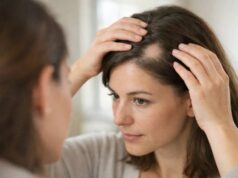
There is another confusion worth clearing up. Dry, broken swimmer hair is not the same as true hair loss. Pool exposure can absolutely increase shaft fragility and lead to broken pieces that collect in the brush or shower. But that is not the same mechanism as follicle-based shedding disorders. If your main concern is whether you are losing hair from the root or snapping it mid-length, it helps to understand the difference between breakage and true hair loss before assuming the pool is causing a scalp problem.
Common pool-related changes include:
- Faded or lighter-looking color.
- Green or greenish-blond tones.
- Rough, squeaky texture.
- Increased tangling after swimming.
- Split ends or short broken pieces around the crown and perimeter.
What often gets overlooked is that the pool environment is rarely acting alone. Rough hair catches more during rinsing and brushing. Sun-exposed hair is more weathered. Bleached hair binds unwanted deposits more easily. So while readers often ask, “Is it chlorine or copper?” the real-world answer is often “both, plus preexisting damage.”
That is also why the best protection plan does not chase only one culprit. It lowers chemical exposure, reduces water uptake, minimizes friction, and removes residue before it accumulates. Once you treat the problem as a full swimmer-hair pattern instead of a single ingredient problem, the routine becomes much more effective.
What to Do Before You Swim
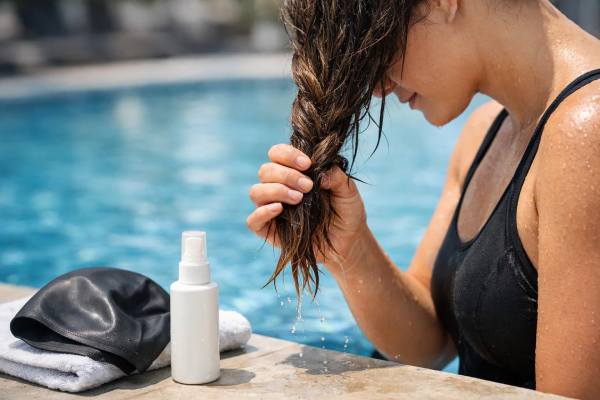
The most effective swimmer hair routine starts before the first lap. By the time pool water has soaked into dry, porous hair, some of the avoidable exposure has already happened. Pre-swim preparation works because hair has limited capacity to absorb liquid. If it goes into the pool already wet with fresh water and lightly coated, it has less room to take up chlorinated water.
A simple pre-swim routine usually works better than an elaborate one:
- Wet the hair thoroughly with fresh water.
- Apply a small amount of conditioner or a swimmer-friendly leave-in through the lengths.
- Secure the hair to reduce tangling.
- Wear a swim cap if practical.
The fresh-water soak is one of the most useful steps because it lowers the amount of pool water the shaft can hold. The light conditioning layer can improve slip and create a small barrier effect on the surface. This is not a perfect seal, and no product makes hair waterproof, but it can reduce roughness and make post-swim detangling easier.
Swim caps help too, but expectations should stay realistic. A cap reduces direct exposure and friction, yet it is not always completely watertight. Hair can still get damp around the hairline, nape, and under the cap itself. Even so, the reduction in water contact and tangling can be worth it, especially for long, color-treated, or curly hair.
Protective styling before the swim also matters. Loose hair spends more time rubbing against itself, the suit strap, and the cap. A low braid or secure bun can reduce knotting. The style should be gentle, not tight enough to create tension around the hairline. The goal is control, not traction.
A few mistakes are common before swimming:
- Entering the pool with dry hair.
- Using heavy oils as the only protection on fine hair.
- Skipping the cap because it is “not perfect.”
- Wearing hair down in lap pools or long sessions.
- Saving all care for after the damage has already built up.
Oil can help some hair types, but it is not universally the best first choice. On very porous or coarse hair, a light oil over damp hair may be useful. On fine hair, it can lead to limpness without offering the easiest rinse-out. A light conditioner or leave-in often gives more predictable slip.
If your hair is already damaged, a pre-swim routine is even more important. Chemically processed ends are usually the first area to worsen in pool season. That is why swimmers with previous bleaching or smoothing services often benefit from broader bond-repair support for damaged hair in addition to same-day pool protection.
Think of pre-swim care as exposure control, not as rescue. Once the hair is already rough, every future swim becomes harder to manage. A modest routine before the pool often prevents a much larger repair problem later.
How to Wash and Recover Afterward
What you do in the first hour after swimming often determines whether pool exposure stays manageable or turns into cumulative damage. The priority is not aggressive stripping. It is timely removal of pool residue, gentle cleansing of the shaft, and enough conditioning to restore slip before friction does more harm.
Start with a thorough rinse as soon as possible. Even if you cannot wash immediately, rinsing out pool water right away is better than letting it dry into the hair. For frequent swimmers, that simple step can make a visible difference in texture over time. After the rinse, choose the cleanser based on frequency and buildup level.
For occasional swimmers, a regular gentle shampoo is often enough. For frequent swimmers, very light blondes, or anyone noticing product-mineral residue, a swimmer shampoo or occasional clarifying wash may be more effective. The key word is occasional. Over-cleansing can make the hair feel even rougher if every swim is followed by a harsh reset.
A balanced post-swim sequence usually looks like this:
- Rinse immediately with fresh water.
- Shampoo based on how coated or exposed the hair feels.
- Apply conditioner generously to mid-lengths and ends.
- Detangle gently while the hair has slip.
- Air-dry when possible or use the lowest practical heat.
Conditioning matters because roughened cuticles catch on each other. That is why hair often feels worst not in the pool, but during the comb-out afterward. A good conditioner reduces drag, helps align the surface, and lowers the risk of snapping weakened ends.
Clarifying has a place, especially when hair feels coated, dull, or strangely resistant to getting fully wet. That can signal buildup from minerals, styling products, or repeated swimmer protectants. But frequency matters. A clarifying shampoo used every swim can overshoot and leave the shaft even more exposed. Most swimmers do better with a lighter wash most days and a more deliberate reset only when signs of residue build up. A practical guide to when and how often to clarify can help keep that balance.
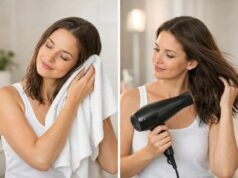
Heat is the other major decision point. Hair fresh from the pool is often more vulnerable, and high-heat tools can compound the stress. If you need to dry it quickly, use moderate heat, move continuously, and avoid repeatedly blasting the same sections. Letting the hair sit wet for many hours is also not ideal if it tangles easily, but “gentler drying” is not the same as “perfectly air-dried.”
If the hair already feels rough after several swims, focus on recovery before the next session. That may include a richer mask once or twice a week, reduced hot-tool use, and trimming ends that are already splitting. Pool season is easier on hair when post-swim care is consistent, not heroic.
Best Routines for Frequent Swimmers
The more often you swim, the less useful one-off fixes become. Frequent swimmers need a system that keeps exposure from accumulating faster than recovery can keep up. That system does not need ten products. It needs repeatable habits that match the swimmer’s hair type, pool schedule, and damage level.
A practical weekly structure often works better than treating every swim as a separate emergency. For example, someone swimming two or three times a week may do well with a fresh-water soak and cap every session, a gentle wash after each swim, a richer conditioner on the last swim day of the week, and a clarifying or swimmer-specific wash only when buildup becomes obvious. A competitive swimmer in the pool five or six days a week may need more regular cleansing support and more deliberate conditioning on non-swim days.
Different hair types usually need different emphasis:
- Bleached or highlighted hair: prioritize pre-swim saturation, cap use, post-swim conditioning, and occasional metal-removing or swimmer-focused cleansing.
- Curly and coily hair: prioritize slip, low-friction styling, and richer conditioning so wash days do not turn into detangling damage.
- Fine hair: keep products lighter and focus on timing, not heaviness.
- Long hair: protect the ends aggressively, because they are the oldest and most weathered part of the shaft.
Routine fatigue is real, so simplify where you can. A spray bottle of fresh water, one dependable conditioner, one shampoo that cleans without over-stripping, and a consistent cap often matter more than rotating multiple “miracle” products. The best routine is the one that still happens after a tiring workout.
A few habits make a noticeable long-term difference:
- Trim compromised ends before peak swim season.
- Reduce extra bleaching or high-heat styling during heavy swim periods.
- Detangle with patience, starting from the ends.
- Replace frayed elastics and rough accessories.
- Watch for early signs of dullness instead of waiting for visible breakage.
Frequent swimmers with textured hair often do especially well when swim care is folded into the broader routine rather than treated as a separate problem. That may mean preserving moisture between wash days, using low-friction styling, and adjusting cleansing frequency based on how the scalp and lengths actually respond. If that sounds familiar, a thoughtful curly hair and scalp routine can often be adapted well for pool-heavy weeks.
The most important mindset shift is this: swimmer hair care is maintenance, not punishment. The goal is not to scrub away every trace of pool exposure with increasingly aggressive products. It is to keep the cuticle protected enough that the hair stays manageable, shiny, and resilient through a season of repeated swimming. Once that becomes the goal, the routine usually becomes simpler and more successful.
References
- The exposome impact on hair health: etiology, pathogenesis and clinical features ‒ Part I 2024 (Review)
- On Hair Care Physicochemistry: From Structure and Degradation to Novel Biobased Conditioning Agents 2023 (Review)
- Pseudo Green Hair 2022 (Case Report)
- Hair-discoloration of Japanese elite swimmers 2000 (Seminal Clinical Study)
Disclaimer
This article is for educational purposes only and does not replace personal medical or dermatologic care. Hair breakage, discoloration, and dryness after swimming are common cosmetic concerns, but sudden shedding, patchy loss, scalp pain, or persistent itching may point to a different problem that needs professional evaluation. If your hair is heavily processed, unusually fragile, or changing rapidly, a dermatologist can help separate swimmer-related shaft damage from medical hair loss or scalp disease.
If this guide helped you protect your hair in the pool, please share it on Facebook, X, or another platform your readers use.