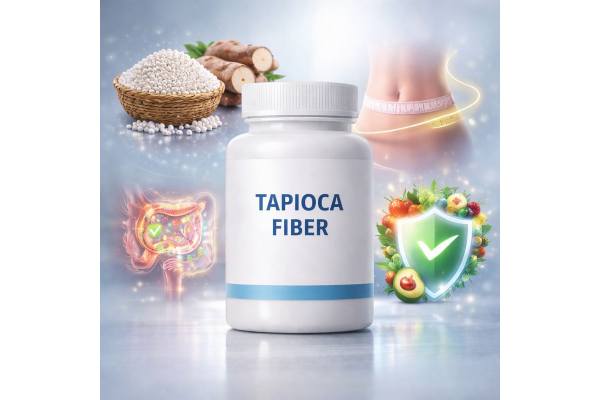
Tapioca fiber has become a popular ingredient in “low sugar” protein bars, keto snacks, and functional drinks. On labels it may appear as “soluble tapioca fiber,” “tapioca resistant dextrin,” or “tapioca resistant maltodextrin.” Despite its slightly sweet taste, this ingredient is designed to behave like dietary fiber, not like regular sugar or starch. Most of it escapes digestion in the small intestine and is fermented in the colon, where it can support a healthier gut environment and metabolic profile.
In recent years, tapioca-based resistant dextrin has been studied for its effects on post-meal blood sugar, insulin response, cholesterol, and gut microbiota in both healthy adults and people with elevated metabolic risk. At the same time, food regulators have reviewed its safety and how it counts as fiber in many everyday products. This guide explains what tapioca fiber actually is, how it works, realistic benefits, practical dosage ranges, and who should be cautious so you can decide if it deserves a place in your routine.
Key Insights
- Tapioca fiber usually refers to a resistant dextrin made from cassava starch that behaves as a low-calorie soluble fiber rather than as sugar.
- Human trials suggest tapioca resistant maltodextrin can modestly improve post-meal insulin response and support better HbA1c and LDL cholesterol when used regularly.
- A practical intake range for most adults is about 5–15 g/day of tapioca fiber, taken with food and plenty of water, ideally spread across two or more meals.
- Higher intakes, especially above about 15–20 g/day, may cause gas, bloating, or loose stools in some people, particularly if total dietary fiber is otherwise low.
- People with significant digestive disease, suspected small-intestinal bacterial overgrowth, FODMAP-sensitive irritable bowel syndrome, or cassava allergy should be especially cautious.
Table of Contents
- What is tapioca fiber and how is it made?
- How does tapioca fiber work in the body?
- Benefits of tapioca fiber for health
- How to use tapioca fiber day to day
- Tapioca fiber dosage how much per day?
- Side effects safety and who should avoid it
- How tapioca fiber compares to other fibers
What is tapioca fiber and how is it made?
“Tapioca fiber” is a marketing umbrella term. In modern products, it usually means resistant dextrin from tapioca or tapioca resistant maltodextrin, not raw tapioca starch. These ingredients are low-viscosity, soluble dietary fibers made from cassava (tapioca) starch.
To produce resistant dextrin, manufacturers heat and acid-treat dry tapioca starch. This process breaks the usual starch linkages and allows fragments to recombine into a new pattern of bonds that human digestive enzymes have difficulty breaking. The resulting mixture is purified and concentrated, and then either spray-dried into a white powder or concentrated into a light syrup.
Typically:
- Powder forms contain roughly 80 percent or more dietary fiber on a dry basis.
- Syrup forms contain around 60 percent fiber, with the rest as water and a small amount of digestible carbohydrate.
Because of its neutral flavor, clarity, and stability in heat and acidity, tapioca fiber is easy to include in:
- Nutrition and protein bars
- Low sugar baked goods
- Ready-to-drink shakes and smoothies
- Sauces, dressings, and frozen desserts
From a regulatory standpoint, tapioca resistant dextrin has been evaluated as generally safe when used within intended levels. High intake estimates from its use across many food categories still fall within safety margins in subchronic animal and human tolerability studies.
A practical complication is that not all products labeled “soluble tapioca fiber” are the same. Some older or lower-quality products may include partially digestible syrups (such as certain isomaltooligosaccharides) that raise blood sugar more than true resistant dextrin. When possible, look for brands that clearly describe the ingredient as resistant dextrin or resistant maltodextrin and list fiber content per gram.
In short, when produced as resistant dextrin or resistant maltodextrin, tapioca fiber should be viewed as a functional prebiotic fiber rather than a hidden sugar.
How does tapioca fiber work in the body?
Tapioca resistant dextrin behaves very differently from regular tapioca starch once it enters the digestive system.
In the small intestine, digestive enzymes such as amylase and brush-border disaccharidases struggle to break down the modified linkages in resistant dextrin. As a result, most of the carbohydrate passes through undigested, contributing little to immediate blood glucose or calorie load.
When it reaches the colon, resident gut microbes begin to ferment it. This fermentation process:
- Produces short-chain fatty acids (SCFAs) like acetate, propionate, and butyrate.
- Lowers colonic pH, which can discourage overgrowth of certain harmful bacteria.
- Provides energy to colon cells (especially from butyrate).
- Sends metabolic signals that can influence appetite, insulin sensitivity, and inflammation.
In acute feeding trials where tapioca resistant maltodextrin replaces some rapidly digestible carbohydrate, researchers have observed:
- A smaller rise in post-meal insulin over two to three hours.
- Minimal change, or only modest change, in the blood glucose curve.
This pattern suggests that while overall carbohydrate load may be similar, the body requires less insulin to manage it, likely due to slower digestion and partial replacement of digestible starch with non-digestible fiber.
In longer interventions, daily intake of a tapioca resistant maltodextrin–containing drink over several weeks has led to:
- Small but meaningful reductions in HbA1c in adults with elevated baseline values.
- Modest improvements in LDL cholesterol and sometimes in HDL cholesterol.
- Stable or slightly improved markers of inflammation and insulin sensitivity.
From a mechanistic standpoint, tapioca fiber is:
- Low-viscosity – it does not form thick gels like psyllium, so it does not dramatically slow stomach emptying or make drinks thick.
- Fermentable – it feeds specific gut bacteria and supports SCFA production.
- Low energy – because most of it is fermented rather than fully absorbed as glucose, it contributes fewer calories than typical carbohydrates.
Together, these features help explain why tapioca resistant dextrin can support metabolic health while remaining easy to formulate into foods and drinks without major texture changes.
Benefits of tapioca fiber for health
Evidence on tapioca fiber is still developing, but several health domains appear most promising: glycemic control, cardiometabolic markers, digestive function, and microbiome support.
1. Blood sugar and insulin balance
When part of a standard carbohydrate source is replaced by tapioca resistant dextrin, post-meal insulin responses tend to be lower. Over time, this reduced demand on the pancreas may support better insulin sensitivity. In a 12-week study of an oral nutrition drink enriched with tapioca resistant maltodextrin, participants with prediabetic markers experienced improvements in HbA1c and, in some cases, fasting glucose. For people with normal blood sugar, the main change was a small improvement in HbA1c, suggesting more stable overall glucose handling.
These effects are modest but can be meaningful as part of a broader strategy that includes diet, movement, and, where needed, medication.
2. Cholesterol and cardiometabolic health
Some studies report reductions in total and LDL cholesterol after regular use of tapioca resistant dextrin, along with little change or slight improvement in HDL cholesterol. Over several months, such shifts may contribute to a lower cardiovascular risk profile, especially when paired with other healthy habits.
3. Digestive regularity
Resistant dextrins are low-viscosity soluble fibers that add bulk and hydration to stool without forming heavy gels. Many people notice:
- More regular bowel movements
- Improved stool form (neither too hard nor too loose)
- Only mild, transient gas or bloating during dose escalation
This makes tapioca fiber a useful option for individuals who struggle with very thick fibers (like psyllium) or who prefer fibers that can be mixed into drinks and soft foods without significantly altering texture.
4. Microbiome and gut barrier function
Like other prebiotic fibers, tapioca resistant dextrin can increase beneficial bacteria and SCFA production. Some studies find improvements in microbial diversity and a trend toward more butyrate-producing species. These changes support gut barrier integrity and may help reduce low-grade inflammation over time.
5. Weight management support
Tapioca fiber contributes fewer calories than the same weight of sugar or digestible starch. When used to replace a portion of these ingredients in foods, it lowers the energy density of the diet. Trials with resistant dextrins in overweight individuals show small but favorable changes in body weight or body composition, likely via:
- Reduced caloric intake (due to partial sugar replacement).
- SCFA-mediated signals affecting appetite.
- Slight improvements in insulin sensitivity and lipid handling.
Overall, tapioca fiber is not a stand-alone treatment but can be a helpful tool for people looking to increase fiber intake, smooth out blood sugar and insulin responses, and support gut and heart health.
How to use tapioca fiber day to day
Tapioca fiber can be introduced into your routine either through packaged foods that contain it or as a separate powder or syrup you add yourself.
1. Through packaged products
You will commonly find tapioca fiber in:
- Protein bars and meal replacement bars
- “No added sugar” or keto baked goods
- Low sugar cereals and granolas
- Shakes and smoothie mixes
- Fiber-enriched sauces, toppings, and frozen desserts
When reading labels:
- Look for “soluble tapioca fiber,” “tapioca resistant dextrin,” or “tapioca resistant maltodextrin.”
- Check “dietary fiber” on the Nutrition Facts panel to see how many grams of fiber you actually get per serving.
- Watch total sugar and sugar alcohol content, as some products combine tapioca fiber with other sweeteners.
2. As a stand-alone supplement
Powdered tapioca resistant dextrin is easy to use:
- Stir 3–5 g into water, tea, or coffee once daily to start.
- Mix into smoothies, yogurt, oatmeal, or overnight oats for an invisible fiber boost.
- Add small amounts to baking recipes (as advised by the manufacturer) to increase fiber without drastically altering texture.
Because it is low-viscosity and neutral in flavor, it does not significantly thicken liquids or change taste in most recipes, especially at moderate doses.
3. Best practices for daily use
To get the most from tapioca fiber:
- Introduce it gradually
Start with 3–5 g/day and increase by 3–5 g every few days as tolerated, aiming for a personal “sweet spot” in the 5–15 g/day range. - Spread your intake
Split your daily amount across two or three meals or snacks rather than taking it all at once. This usually improves comfort and supports more stable fermentation in the colon. - Drink enough fluids
While tapioca fiber is not a thick gel, it is still fiber and works best in a well-hydrated gut environment. - Use it alongside whole foods
Think of tapioca fiber as a supplement to, not a replacement for, fiber from vegetables, fruits, legumes, nuts, seeds, and whole grains. - Time it around medications
To be cautious, avoid taking large fiber doses at the exact same time as important oral medications. Leaving a gap of 1–2 hours is a reasonable rule unless your healthcare provider advises otherwise.
Used thoughtfully, tapioca fiber can quietly increase fiber intake and support health goals with minimal disruption to food enjoyment or texture.
Tapioca fiber dosage how much per day?
There is no official “recommended dietary allowance” for tapioca fiber itself, but we can anchor dosing decisions around:
- General fiber recommendations for adults
- Doses used in clinical trials
- Regulatory exposure estimates and tolerability data
General fiber context
Most guidelines suggest:
- Around 25 g/day of total fiber for adult women
- Around 38 g/day of total fiber for adult men
Many people fall short of these targets, often reaching only 15–20 g/day. Tapioca fiber can help close this gap but should ideally be part of a balanced mix of fiber sources.
Doses studied in research
Clinical trials with tapioca resistant maltodextrin commonly use:
- About 5–10 g/day in adults, sometimes as part of a drink or as a partial replacement for another carbohydrate source.
- Intervention periods of 8–12 weeks, with outcomes focused on blood sugar, lipids, and tolerability.
These amounts have shown metabolic and gut-related benefits with good safety profiles.
Regulatory intake estimates
Safety evaluations that consider tapioca resistant dextrin in many food categories estimate that:
- High-intake adults (around the 90th percentile) could consume roughly 26–31 g/day from all food sources combined.
- Even at these levels, subchronic toxicity studies and human data do not signal meaningful safety concerns in healthy populations.
Practical dosage suggestions
For most healthy adults:
- Introductory range:
3–5 g/day for one to two weeks if you are new to fiber supplements. - Common “functional” range:
5–15 g/day, split over two or three occasions, is a realistic goal for additional fiber support and metabolic benefits. - Upper routine range:
Up to about 20–25 g/day may be reasonable if you have gradually increased your dose and tolerate fiber well.
For children, pregnant or breastfeeding individuals, and people with chronic disease, there is less direct evidence. In these groups, it is better to:
- Focus primarily on whole-food fiber sources.
- Use products containing tapioca fiber in moderation rather than high-dose supplementation.
- Involve a healthcare professional before starting regular tapioca fiber supplementation.
When adjusting your fiber regimen, remember to include other sources (such as inulin, psyllium, or wheat dextrin) in your calculations. The gut often prefers steady, moderate increases rather than rapid jumps in total fermentable fiber.
Side effects safety and who should avoid it
Tapioca-based resistant dextrin has a generally favorable safety profile, but like any active food ingredient, it is not entirely free of side effects.
Typical side effects
At commonly used doses, the most frequent issues are gastrointestinal and usually mild:
- Gas and bloating
- Abdominal discomfort or cramping
- Softer stools or, occasionally, loose stools
- Temporary changes in stool frequency
These symptoms are more common if:
- You rapidly increase your intake.
- Your baseline fiber intake is low.
- You simultaneously add other fermentable fibers.
Most people find that symptoms lessen after a few days to a couple of weeks as the microbiome adapts, especially if they step up intake gradually.
Safety findings from studies
Safety work on tapioca resistant dextrin and related resistant dextrins shows:
- No evidence of mutagenicity in standard tests.
- No toxicologically relevant findings in 90-day animal studies at doses far above typical human intakes.
- Stable liver and kidney function tests in human clinical trials over several weeks of daily use.
These data support the idea that tapioca fiber is safe for the general adult population when used within normal food and supplement ranges.
Who should be cautious or seek medical advice first
- People with active inflammatory bowel disease (IBD). Extra fermentable substrate can worsen symptoms in some individuals, particularly during flares.
- Those with severe irritable bowel syndrome (IBS) or suspected small-intestinal bacterial overgrowth. Fermentable fibers sometimes increase bloating or discomfort and should be introduced carefully, if at all.
- Individuals following a low-FODMAP plan. While resistant dextrin is not classically categorized like fructans or lactose, individual tolerance differs and should be tested at very low doses.
- Anyone with known cassava or tapioca allergy. Even if rare, allergic reactions are possible.
- People taking many oral medications. Large doses of any fiber have the potential to reduce absorption of certain medicines if taken at the same time.
If you experience persistent or severe symptoms such as ongoing abdominal pain, significant diarrhea, unexplained weight loss, or blood in the stool, stop the fiber and seek medical evaluation. These signs require a broader assessment beyond adjusting your fiber dose.
For most healthy adults, introducing tapioca fiber slowly, staying within moderate dosage ranges, and monitoring your body’s response is enough to keep side effects to a manageable minimum.
How tapioca fiber compares to other fibers
Choosing a fiber supplement or fiber-rich product often means comparing several options. Tapioca fiber sits alongside inulin, psyllium, soluble corn fiber, and more. Understanding the differences can help you decide where it fits.
Tapioca fiber versus inulin and FOS
Inulin and fructooligosaccharides (FOS) are classic prebiotic fibers that strongly stimulate certain beneficial bacteria. They can, however, cause substantial gas and bloating in some people, especially above about 10 g/day. Tapioca resistant dextrin tends to be somewhat gentler at similar doses, with many people reporting fewer gas-related symptoms, although individual responses vary.
Tapioca fiber versus psyllium husk
Psyllium is a high-viscosity, gel-forming soluble fiber. It is excellent for constipation and some forms of IBS and can lower LDL cholesterol effectively. The trade-off is that it thickens liquids dramatically, must be taken with substantial water, and can be harder to blend into ordinary foods. Tapioca fiber, in contrast:
- Has very low viscosity.
- Hardly changes the texture of beverages or soft foods.
- Offers more subtle effects on bowel regularity and cholesterol, but is easier to incorporate into daily eating.
Tapioca fiber versus soluble corn fiber and other resistant dextrins
Soluble corn fiber and resistant maltodextrins from wheat or corn have been widely studied and share many features with tapioca resistant dextrin: they are low-viscosity, fermentable, and linked with modest improvements in metabolic markers and gut health. Tapioca-derived versions mainly differ in their botanical origin (cassava instead of corn or wheat), which may matter for people avoiding those grains or seeking particular label claims.
Tapioca fiber versus naturally occurring resistant starch
Foods like cooled potatoes, legumes, and unripe bananas provide resistant starch, which also feeds the microbiome and produces SCFAs. Resistant starch in whole foods, however, comes with other nutrients and often alters texture in recipes. Tapioca resistant dextrin is more refined and acts as an almost invisible fiber additive, making it very convenient but also more “processed” in nature.
A complementary approach
No single fiber does everything. An effective long-term strategy might combine:
- Whole-food fibers from vegetables, fruits, legumes, whole grains, nuts, and seeds.
- A gel-forming fiber like psyllium if constipation or cholesterol reduction is a key goal.
- A low-viscosity prebiotic fiber such as tapioca resistant dextrin to increase total fiber and support metabolic health without big texture changes.
Used this way, tapioca fiber is not meant to displace whole foods but to complement them, especially in people who rely on bars and shakes for convenience and want those products to contribute more meaningfully to daily fiber intake.
References
- GRAS Notice GRN 1045 Agency Response Letter 2022 (Regulatory Safety Evaluation)
- Tapioca Resistant Maltodextrin as a Carbohydrate Source of Oral Nutrition Supplement (ONS) on Metabolic Indicators: A Clinical Trial 2022 (Randomized Controlled Trial)
- Attenuation of glycaemic and insulin responses following tapioca resistant maltodextrin consumption in healthy subjects: a randomised crossover controlled trial 2020 (Randomized Controlled Trial)
- Resistant dextrin, as a prebiotic, improves insulin resistance and inflammation in women with type 2 diabetes: a randomised controlled clinical trial 2015 (Randomized Controlled Trial)
- Efficiency of Resistant Starch and Dextrins as Prebiotics: A Review of the Existing Evidence and Clinical Trials 2021 (Systematic Review)
Disclaimer
The information in this article is for educational purposes only and is not a substitute for individualized medical advice, diagnosis, or treatment. Effects of tapioca fiber can vary based on your health status, medications, and overall diet. Do not start, stop, or change any medication or major dietary pattern based solely on this article. Always consult a qualified healthcare professional before using tapioca fiber or any supplement, especially if you are pregnant or breastfeeding, have diabetes or metabolic syndrome, digestive or kidney disease, or plan to use it for children.
If you found this guide useful, please consider sharing it on Facebook, X (formerly Twitter), or any platform you prefer, and follow our work on social media. Your support through sharing helps our team continue producing carefully researched, high-quality content on nutrition and health.