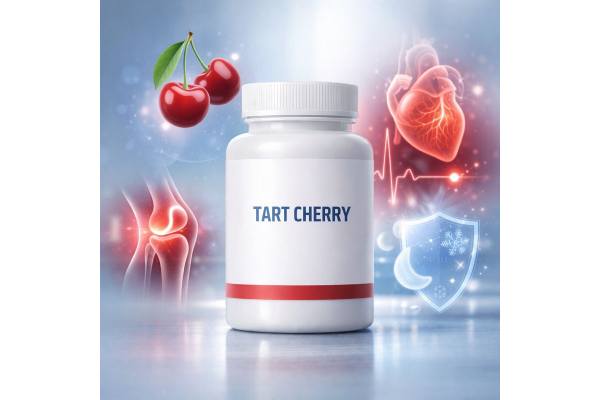
Tart cherry, usually from the Montmorency variety of Prunus cerasus, has moved from a simple baking ingredient to a widely used functional food and supplement. Its deep red color reflects a dense concentration of polyphenols, especially anthocyanins, which are studied for antioxidant, anti-inflammatory, and sleep-supporting actions. People use tart cherry juice, concentrates, and capsules to support exercise recovery, joint comfort, gout management, heart and metabolic health, and better sleep quality.
At the same time, the research is still evolving. Some trials show clear benefits, while others report smaller or no effects, often because the dose, product quality, or study design differ. This guide walks you through what tart cherry is, how it appears to work, which benefits are most realistic, how to choose and use products, and what to watch out for in terms of sugar load, interactions, and side effects. The goal is to help you make informed, balanced decisions rather than rely on hype.
Quick Overview for Tart Cherry
- Tart cherry provides concentrated polyphenols and anthocyanins that may support exercise recovery, joint comfort, and sleep quality.
- Human studies suggest potential benefits for muscle soreness, uric acid levels, and cardiometabolic markers, but results are not fully consistent.
- Common supplemental intakes range from 240–480 mL tart cherry juice daily, 30–60 mL concentrate, or about 500–1,000 mg standardized extract.
- People with kidney disease, severe diabetes, or known cherry allergy, and those on certain medications, should consult a clinician before use.
Table of Contents
- What is tart cherry and how is it used?
- What are the main health benefits of tart cherry?
- Active compounds and how they work in the body
- How to take tart cherry day to day
- Tart cherry dosage: how much per day?
- Side effects, safety, and who should avoid tart cherry
- What does the evidence say overall?
What is tart cherry and how is it used?
Tart cherries are sour cherries, most often the Montmorency cultivar, distinct from sweet cherries such as Bing. They are smaller, sharper in taste, and naturally richer in certain phytochemicals, particularly anthocyanins and other polyphenols. These compounds give tart cherry its intense red color and are the main reason it is marketed as a health-supporting food.
Traditionally, tart cherries were used in pies, jams, and preserves. Today they appear in several supplement formats. The most common are ready-to-drink juices, frozen or shelf-stable concentrates, capsules containing dried extract, and powdered additions to smoothies or sports formulas. Many sports nutrition and “sleep support” products now include tart cherry extracts as a key ingredient.
From a nutrition perspective, tart cherries provide water, natural sugars, small amounts of fiber, and modest levels of vitamins and minerals, including vitamin A precursors and potassium. However, people usually rely on tart cherry not for basic nutrition but for its dense polyphenol content. These polyphenols are concentrated further when cherries are processed into juices and extracts, allowing a relatively high intake from a small volume.
Usage patterns vary with goals. Athletes often take tart cherry for several days before and after demanding events to support recovery. People with joint discomfort, gout, or cardiometabolic concerns may use it daily over weeks to months. Those interested in sleep commonly consume a serving in the evening. Because products differ widely in strength, simply “taking tart cherry” is less important than knowing the approximate polyphenol or anthocyanin dose you are getting.
As interest in plant-based and “food first” strategies grows, tart cherry sits at the intersection of food and supplement: it is widely available as a whole-food juice but is increasingly standardized and encapsulated like a nutraceutical.
What are the main health benefits of tart cherry?
Research on tart cherry spans several health areas, but effects are not identical for every outcome. The strongest and most consistently explored domains are exercise recovery, joint and muscle comfort, uric acid and gout, cardiometabolic markers, and sleep quality.
For exercise recovery, multiple human studies report that tart cherry supplements can reduce perceived muscle soreness and support faster recovery of strength following intense or prolonged exercise. Benefits appear more likely in situations with substantial muscle damage, such as marathons, multi-day tournaments, or heavy resistance training. In lighter training, the advantage may be small or absent. Differences in dose and product quality partly explain why some trials show clear effects while others do not.
Tart cherry is also widely discussed in the context of joint health and gout. Several human studies indicate that cherry intake can lower serum uric acid and may reduce the risk of gout flares when used along with standard care. The mechanism likely involves both reduced uric acid and lower inflammation. Still, tart cherry should not be seen as a replacement for prescribed gout medications, especially in people with frequent, severe attacks.
Cardiometabolic effects include modest improvements in blood pressure, blood lipids, and markers of oxidative stress or inflammation in some trials. These changes are generally small but may add up when combined with lifestyle measures such as diet and physical activity.
Perhaps most visible in the supplement market is tart cherry’s reputation for supporting sleep. Studies in older adults with insomnia and in athletes show that tart cherry juice can increase total sleep time and improve certain aspects of sleep quality. These effects seem related to its polyphenol profile and small amount of naturally occurring melatonin, along with downstream impacts on inflammation and tryptophan metabolism.
Overall, tart cherry is best thought of as a supportive, not stand-alone, strategy: it can complement established treatments and healthy habits, especially for recovery, sleep, and inflammatory conditions, but it is unlikely to be a single, dramatic solution.
Active compounds and how they work in the body
Tart cherry’s potential benefits come largely from its polyphenols, a broad family of plant compounds with antioxidant and signaling effects. Key groups include anthocyanins, flavonols, flavanols, and phenolic acids. At least two dozen distinct anthocyanins and many other polyphenols have been identified in tart cherries, providing a complex mixture rather than a single active ingredient.
Anthocyanins, which give tart cherry its red color, can influence inflammatory pathways. In laboratory and animal models, they modulate enzymes such as cyclo-oxygenase (COX) and may reduce the production of pro-inflammatory prostaglandins. They also interact with transcription factors like NF-κB and Nrf2, which regulate genes involved in inflammation and antioxidant defenses. Instead of simply “neutralizing free radicals,” tart cherry polyphenols appear to nudge the body’s own protective systems into a more balanced state.
Tart cherries also contain procyanidins and other flavanols that may affect tryptophan metabolism and support sleep pathways. Some clinical work suggests that specific procyanidins can inhibit the enzyme indoleamine 2,3-dioxygenase (IDO), which otherwise diverts tryptophan away from serotonin and melatonin synthesis. By slightly shifting this balance, tart cherry could help preserve tryptophan for neurotransmitter production, contributing to better sleep in susceptible individuals.
Another piece of the puzzle is melatonin itself. Tart cherries naturally contain small amounts of melatonin and related compounds. The absolute quantity is much lower than typical supplemental melatonin doses, but even small changes in melatonin exposure, combined with anti-inflammatory effects, may influence sleep timing or quality in some people.
For uric acid and gout, tart cherry polyphenols may inhibit xanthine oxidase, an enzyme involved in uric acid formation, and support renal clearance of urate. In addition, their anti-inflammatory action may dampen the cascade that turns uric acid crystals into intensely painful joint flares.
Because bioavailability varies with processing, gut microbiota, and individual differences, not everyone will respond equally. Standardized extracts that quantify total polyphenols and anthocyanins give a more predictable exposure than generic “cherry flavor” drinks, but even then, the response depends on the broader health and lifestyle context.
How to take tart cherry day to day
Tart cherry can be consumed as a food, a functional drink, or an encapsulated supplement. Each format has advantages and trade-offs, so it helps to match the product to your goals, tolerance, and diet.
1. Juices and ready-to-drink products
Many clinical studies use 100% tart cherry juice, typically around 240 mL (one standard glass) once or twice per day. This approach provides a broad spectrum of natural compounds and feels more like food than medicine. However, it also delivers significant natural sugars and calories. For someone already consuming a high-sugar diet, this may be a drawback, especially in diabetes or weight-management contexts.
2. Concentrates
Concentrated tart cherry shots are popular with athletes. A common pattern is 30 mL concentrate diluted in water taken twice daily for several days around the time of an event. Concentrates allow high polyphenol intake with less volume, which is practical when travel, appetite, or gastrointestinal comfort are issues. Sugar content varies by product; some concentrates are unsweetened while others contain added sugars.
3. Capsules and powders
Standardized capsules or powders appeal to those who want to avoid extra sugar or dislike the taste of tart cherry. Typical products provide around 400–500 mg of extract per capsule, often standardized to a defined polyphenol or anthocyanin content. These are convenient for daily use in long-term joint, gout, or cardiometabolic support plans. Because they bypass the “food” experience, it is especially important to choose products from reputable manufacturers that specify active compound content and undergo third-party testing where possible.
4. Timing strategies
For exercise recovery, many protocols start supplementation two to seven days before an important event and continue for two to three days afterward. For sleep, tart cherry is usually taken in the evening, one to two hours before bedtime. For general joint or cardiometabolic support, consistent once- or twice-daily intake is more important than precise timing.
5. Combining with other strategies
Tart cherry works best alongside adequate protein intake, hydration, good sleep hygiene, and appropriate training or rehabilitation. It may fit into a broader anti-inflammatory eating pattern that emphasizes vegetables, fruits, whole grains, legumes, and healthy fats, rather than being added on top of a highly processed diet.
If you take medications or have chronic health conditions, it is wise to discuss tart cherry with your healthcare provider, especially if you plan to use it daily or at higher doses.
Tart cherry dosage: how much per day?
There is no single universally accepted dose of tart cherry, but clinical studies and expert reviews give useful ranges for different goals. When thinking about dosage, it helps to distinguish between the amount of juice or extract and the amount of active polyphenols or anthocyanins.
Across many human trials, daily doses of tart cherry supplements have provided roughly 143–2,140 mg total polyphenols and 15–547 mg anthocyanins, depending on the product and protocol. Within this broad range, several practical intake levels emerge:
- General health and antioxidant support Many people use around 240 mL of 100% tart cherry juice once daily, or about 30 mL concentrate diluted in water once daily. In capsule form, 400–500 mg standardized extract per day is common.
- Exercise recovery and muscle soreness Protocols in athletes often use 240–480 mL juice per day or 30–60 mL concentrate per day, divided into two doses, beginning two to seven days before a major event and continuing for several days afterward. When using capsules, total extract doses around 500–1,000 mg per day are typical, though specific products vary.
- Sleep quality Sleep-oriented studies frequently use about 240 mL of tart cherry juice twice daily or roughly 240–480 mL per day divided into morning and evening doses. For practical home use, many people prefer one evening serving of 120–240 mL juice, especially when sugar intake is a concern.
- Joint health and gout support For uric acid and gout-related outcomes, trials often use daily juice or concentrate in similar ranges to those for exercise recovery (for example 240–480 mL juice or around 30 mL concentrate once or twice daily). Extract capsules in the 500–1,000 mg per day range may be used when sugar needs to be minimized.
A sensible approach is to start toward the lower end of these ranges, observe how you respond over two to four weeks, and adjust within the typical range if needed. Because sugar and calorie intake increase quickly with larger juice volumes, capsules or lower-sugar concentrates may be better long-term options for people with diabetes, insulin resistance, or weight-management goals.
Children, pregnant or breastfeeding women, and people with kidney disease or complex medication regimens should only use tart cherry products under medical supervision. In all groups, higher doses do not automatically mean better results; they may simply add more sugar, more cost, and more potential for gastrointestinal upset.
Side effects, safety, and who should avoid tart cherry
Tart cherry is generally considered well tolerated when used in amounts similar to those in food or in typical supplement doses studied in clinical trials. Most reported side effects are mild and occur at higher intakes or in sensitive individuals.
The most common complaints are gastrointestinal, such as bloating, loose stools, or abdominal discomfort. These are more likely when people consume large volumes of juice quickly, especially on an empty stomach. Introducing tart cherry gradually and taking it with food or spreading doses across the day can reduce this risk.
Because juices and some concentrates contain a significant load of natural sugars, people with diabetes, insulin resistance, or those carefully managing body weight should be cautious. Switching to a lower-sugar concentrate or capsule may help. It is also important to factor tart cherry into total daily carbohydrate intake rather than treating it as “free.”
Allergic reactions to cherries are uncommon but possible, especially in individuals with known stone-fruit allergies (such as peach or apricot) or pollen-food allergy syndromes. Symptoms might include itching in the mouth, swelling, or skin reactions. Anyone with a history of serious food allergies should consult an allergist or physician before starting regular tart cherry use and should discontinue immediately if allergic symptoms appear.
People with significant kidney disease should discuss tart cherry with their nephrologist. While tart cherry is sometimes explored for uric acid management, some products may contain appreciable amounts of potassium or other components that require consideration in advanced kidney conditions. Likewise, those with a history of kidney stones may wish to review oxalate and overall stone-risk factors with a clinician before using large or long-term doses.
There is limited evidence on interactions between tart cherry and medications, but because polyphenols can influence enzyme systems and platelet function, caution is reasonable if you use blood thinners, antiplatelet agents, or multiple prescription drugs. A pharmacist or physician can help review your specific combination.
Pregnant and breastfeeding women, and children, have not been extensively studied in tart cherry trials. Occasional food-level intake (for example, small servings of juice or whole cherries) is usually acceptable as part of a balanced diet, but concentrated supplements should only be used with professional guidance in these groups.
Overall, tart cherry appears safe for most healthy adults when used in studied doses, but it should still be personalized to your health status, medications, and tolerance.
What does the evidence say overall?
The body of research on tart cherry has expanded markedly in recent years. Several comprehensive reviews of human trials now summarize dozens of studies using juices, concentrates, and encapsulated supplements across different populations.
Taken together, these reviews agree that tart cherry is a rich source of polyphenols, especially anthocyanins, and that these compounds show consistent antioxidant and anti-inflammatory activity in experimental models. In human trials, the picture is more nuanced. Many, but not all, studies report benefits for at least one outcome, yet the magnitude and reliability of these effects vary.
For exercise recovery, multiple trials report reductions in markers of muscle damage and perceived soreness, along with improved strength recovery after strenuous exercise. Some others show minimal impact, particularly when the exercise was less damaging or the polyphenol dose was relatively low. Meta-analytic work generally concludes that tart cherry can meaningfully support recovery in demanding exercise settings when dosing is adequate and starts before the effort.
Cardiometabolic studies suggest small but potentially meaningful improvements in systolic blood pressure, certain blood lipids, and markers of oxidative stress and inflammation in people with higher baseline risk. Effects are not uniform across all trials, which may reflect differences in baseline health, background diet, genetics, and the quality of the tart cherry product used.
Sleep studies, while often small, give a consistent signal that tart cherry can increase total sleep time and improve aspects of sleep quality in older adults with insomnia and in athletes facing heavy training loads. Mechanistic work supports roles for both melatonin-related pathways and broader anti-inflammatory and tryptophan-metabolism effects.
For uric acid and gout, early clinical investigations and observational data show reductions in serum uric acid and fewer reported gout flares in those using cherry products in addition to standard care. Systematic reviews point to a probable benefit but also emphasize the need for larger, well-controlled trials.
Safety data from clinical studies are reassuring: tart cherry is usually well tolerated, with gastrointestinal symptoms and sugar-related concerns being the main issues at higher intakes. Serious adverse events are rare in published trials that use standardized products and reasonable dosing schedules.
In summary, tart cherry is best seen as a promising, evidence-supported adjunct for specific goals—exercise recovery, sleep support, mild joint discomfort, and cardiometabolic risk markers—rather than a cure-all. When integrated thoughtfully into a broader health plan and matched to individual needs, it can be a useful part of a modern, food-forward approach to wellness.
References
- Health Benefits of (Poly)phenols from Cherries: A Review of Clinical Trials 2025 (Systematic Review)
- Tart cherry (Prunus cerasus L.): Polyphenols, bioactivity, and bioavailability beyond exercise 2025 (Narrative Review)
- Review of Analytical Methods and Reporting of the Polyphenol Content of Tart Cherry Supplements in Human Supplementation Studies Investigating Health and Exercise Performance Effects: Recommendations for Good Practice 2021 (Methodological Review)
- Pilot Study of Tart Cherry Juice for the Treatment of Insomnia and Investigation of Mechanisms 2018 (RCT)
- Effects of Short-Term Intake of Montmorency Tart Cherry Juice on Sleep Quality after Intermittent Exercise in Elite Female Field Hockey Players: A Randomized Controlled Trial 2022 (RCT)
Disclaimer
The information in this article is for educational purposes only and is not a substitute for personalized medical advice, diagnosis, or treatment. Tart cherry products can interact with individual health conditions, medications, and dietary needs. Always consult a qualified healthcare professional before starting, stopping, or changing any supplement, including tart cherry juice, concentrates, or capsules, especially if you are pregnant, breastfeeding, managing a chronic illness, or taking prescription drugs.
If you found this guide helpful, please consider sharing it on Facebook, X (formerly Twitter), or any social platform you prefer, and follow our work on social media. Your support in sharing our articles helps our team continue to research, write, and update high-quality health content for readers worldwide.