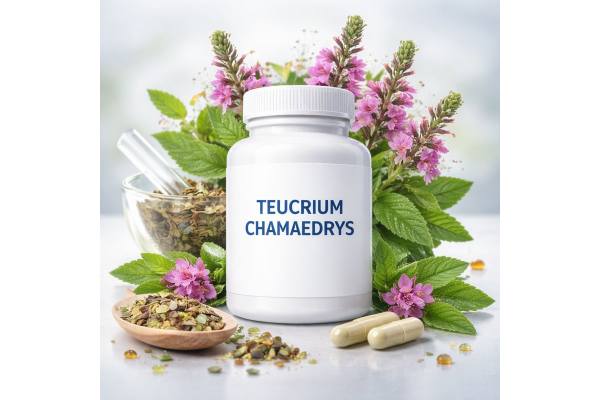
Teucrium chamaedrys, commonly called wall germander, is a small aromatic shrub from the mint family that has been used in European folk medicine for centuries. Traditionally it was taken as a bitter digestive tonic, a remedy for poor appetite and bloating, and an aid for joint pain, coughs, and skin problems. Modern laboratory research shows that extracts are rich in polyphenols and can display antioxidant and antimicrobial activity in vitro, which explains some of the long-standing interest in this plant.
However, wall germander also has a serious downside: repeated case reports and reviews link it to potentially severe liver injury, sometimes requiring hospitalization and, very rarely, liver transplantation. Because of these risks, many regulators have restricted or banned dietary supplements containing Teucrium chamaedrys.
This guide walks through what the plant is, why people have used it, what the science actually shows, typical traditional dosages, and—most importantly—the side effects and who should avoid it entirely.
Key Insights for Teucrium chamaedrys
- Wall germander has a long history as a bitter digestive herb and shows antioxidant and antimicrobial activity in laboratory tests.
- Multiple human case reports link Teucrium chamaedrys teas, decoctions, and weight-loss preparations to acute liver injury and jaundice.
- Traditional oral intakes were roughly 600–1600 mg dried herb per day as teas or capsules, but no modern safe dosage is established and some injuries occurred within that range.
- Because of clear hepatotoxicity signals, people with any liver disease, those who drink heavily, or who use hepatotoxic medications should strictly avoid Teucrium chamaedrys.
- In many cases, safer alternatives (such as gentler digestive bitters or evidence-based weight-management strategies) are strongly preferable to any use of wall germander.
Table of Contents
- What is Teucrium chamaedrys?
- Traditional uses and active compounds
- Potential benefits and current evidence limitations
- Dosage, preparations, and practical use today
- Side effects, liver risks, and interactions
- Who should avoid Teucrium chamaedrys?
- Safer alternatives and key takeaways
What is Teucrium chamaedrys?
Teucrium chamaedrys is a small, evergreen subshrub native to the Mediterranean region and parts of central Europe. It belongs to the mint family (Lamiaceae) and grows 10–30 cm tall with small, serrated leaves and pink-purple flowers. You will often see it called wall germander, true germander, or simply germander.
Botanically, it thrives on dry, rocky, calcareous soils, often along walls and sunny slopes—hence the common name. The aerial parts (leaves and flowering tops) are the main medicinal material. They contain essential oils, polyphenols (including flavonoids), tannins, and a distinctive group of diterpenes called neo-clerodane diterpenoids.
These neo-clerodane diterpenes are a double-edged sword. They may contribute to the plant’s biological activity, but certain molecules—especially teucrin A and related furan-containing diterpenes—are strongly implicated in its hepatotoxicity after metabolic activation in the liver.
Historically, wall germander has been:
- Used as a bitter tonic to stimulate appetite and digestion
- Included in “Portland powder” and other traditional mixtures for gout and rheumatism
- Taken as infusions, tinctures, or wines for coughs, asthma, menstrual complaints, and skin problems
- Added to liqueurs and vermouths as a flavoring bitter
In modern herbal commerce, germander is much less common than in the past, largely because of concerns about its liver toxicity and regulatory bans on supplements based on its aerial parts in several jurisdictions.
From the standpoint of evidence-based health care, Teucrium chamaedrys is best viewed as a historically important but high-risk traditional herb, not as a routine dietary supplement.
Traditional uses and active compounds
Across Mediterranean and Balkan folk medicine, wall germander has been regarded as a versatile remedy. Ethnobotanical surveys describe its use for:
- Digestive complaints (poor appetite, bloating, intestinal spasms)
- Liver and gallbladder problems, often taken after meals
- Joint pain, rheumatism, and gout
- Respiratory conditions such as coughs and mild asthma
- Skin issues, minor wounds, and hemorrhoids
- General “tonic” effects, especially after illness
Most of these uses revolve around three perceived properties: bitter digestive stimulation, mild anti-inflammatory effects, and antimicrobial activity.
Chemically, Teucrium chamaedrys contains several groups of constituents:
- Neo-clerodane diterpenoids – including teucrin A and related compounds; these are central to both pharmacological activity and hepatotoxicity.
- Flavonoids and phenolic acids – such as luteolin, quercetin derivatives, caffeic and chlorogenic acid, contributing to antioxidant and potential anti-inflammatory effects.
- Tannins – responsible for astringency; may explain some traditional use for diarrhea and mucosal inflammation.
- Essential oils – a complex mixture of terpenes that can have antimicrobial and spasmolytic (antispasmodic) activity.
Laboratory studies on extracts and essential oils of Teucrium chamaedrys (and related Teucrium species) have shown:
- Free-radical scavenging and antioxidant activity in standard in-vitro assays
- Antimicrobial effects against some bacteria and fungi
- Spasmolytic activity on smooth muscle preparations
- Modulation of inflammatory markers in cell models
These findings are often used to justify traditional uses. But most of the data come from test-tube and animal work, not from modern, controlled human trials.
Equally important, the same diterpenoids that may have interesting biological actions are bioactivated by liver enzymes into reactive metabolites that can damage hepatocytes and bile canaliculi. This means that any potential “benefits” must be weighed against a very real and documented risk of liver toxicity, particularly with internal use over days to weeks.
Because of this, many contemporary practitioners consider wall germander unsuitable for routine internal use, even in small “traditional” doses.
Potential benefits and current evidence limitations
When people search for Teucrium chamaedrys today, they are often looking for potential benefits in areas such as digestion, metabolic health, immune support, or weight loss. Historically and in vitro, there are several plausible effects, but the human evidence is quite limited and overshadowed by toxicity concerns.
Digestive and bitter tonic effects
As a strong bitter herb with tannins, wall germander likely stimulates saliva, gastric secretions, and bile flow in the short term, which can subjectively improve appetite and feelings of sluggish digestion. Traditional texts and modern herbal websites often highlight this “eupeptic” role.
However, these effects are not unique to germander; many safer bitters (like gentian, artichoke leaf, or citrus peel) can offer similar digestive stimulation without the same hepatotoxic risk.
Antioxidant and antimicrobial activity
Several in-vitro studies show that Teucrium chamaedrys extracts have robust antioxidant activity (for example, in DPPH scavenging and related assays) and can inhibit the growth of a range of microbes.
These findings support the traditional use for infections and as a general “strengthening” herb. But in-vitro antioxidant effects do not automatically translate into meaningful human health benefits, and they tell us nothing about real-world safety.
Metabolic and weight-loss claims
Germander was widely marketed in the 1980s and early 1990s in Europe as a weight-loss aid. Some early animal work suggested hypolipidemic and hypoglycemic effects, and the bitter taste was thought to modestly suppress appetite.
Unfortunately, the main “evidence” that accumulated in humans was not weight loss, but liver injury: multiple patients developed acute hepatitis after taking germander products for slimming, sometimes at recommended doses and for only a few weeks.
Overall evidence balance
- There are no robust randomized controlled trials showing clinically important benefits of Teucrium chamaedrys for any indication.
- The strongest and most consistent human data concern hepatotoxicity, not benefit.
- Modern reviews of herb-induced liver injury routinely list germander among high-risk botanicals to avoid.
Given this profile, it is difficult to justify using wall germander internally today when there are many safer herbs and lifestyle approaches that can address digestion, blood lipids, or weight management.
Dosage, preparations, and practical use today
From a safety-first perspective, it is important to emphasize at the outset: no safe oral dosage of Teucrium chamaedrys has been established in modern medicine. The information below describes how it has been used historically—not a recommendation to use it.
Traditional and historical dosages
Older hepatotoxicity reviews and case reports describe typical adult doses used in Europe as:
- Around 600–1600 mg/day of dried aerial parts in the form of capsules or standardized herbal teas for weight loss
- Infusions made with 1–2 teaspoons of dried herb per cup (roughly 1–2 g) steeped for 7–15 minutes, taken up to 2–3 times per day for digestive or tonic purposes
- Decoctions where about 1 g in 300 mL of water is gently boiled for several minutes before drinking, sometimes repeated once or twice daily
Several documented cases of acute hepatitis occurred after weeks to a few months of use at comparable doses, or even at label-recommended amounts.
Modern commercial preparations
Because of regulatory actions, wall germander is now uncommon as a stand-alone supplement in many countries. Where it is still sold, it most often appears as:
- Loose dried herb for teas
- Ingredients in multi-herb bitters, digestive formulas, or traditional “slimming” blends
- Occasionally, small-scale tinctures or fluid extracts produced by local herbalists
Labels may suggest low daily intakes and limited durations (for example, one cup of tea per day for no more than two weeks). But even these “mild” suggestions are not backed by safety data, and toxicity has been reported within similar ranges.
Topical and external use
Some traditional sources mention external uses of germander for minor wounds or skin problems. In principle, topical application may carry lower systemic risk than ingestion, although the diterpenes can still be absorbed through the skin. There are no good clinical data to define either benefit or safety of topical use.
Practical stance today
Given the well-documented potential for liver injury and the availability of safer alternatives, many hepatologists, toxicologists, and cautious herbal practitioners recommend avoiding internal use of Teucrium chamaedrys altogether, regardless of dose or form.
If someone has previously used wall germander and develops fatigue, dark urine, itching, nausea, or yellowing of the eyes or skin, they should stop the herb immediately and seek urgent medical evaluation.
Side effects, liver risks, and interactions
The side-effect profile of wall germander is dominated by its potential to cause liver injury. Other adverse effects are minor by comparison.
Liver toxicity (hepatotoxicity)
Multiple case reports and series have linked Teucrium chamaedrys teas, decoctions, and slimming preparations to acute hepatocellular injury. Typical features include:
- Onset after days to 1–3 months of use
- Symptoms such as fatigue, nausea, abdominal discomfort, pruritus, and jaundice
- Markedly elevated ALT and AST with a hepatocellular or mixed pattern
- In many cases, improvement after stopping the herb (positive dechallenge)
- Rare but reported severe outcomes, including acute liver failure and need for transplantation
Mechanistically, bioactivation of furan-containing neo-clerodane diterpenes (such as teucrin A) by cytochrome P450 enzymes appears to produce reactive metabolites that damage hepatocytes and bile canalicular membranes.
Other possible side effects
Reports are less systematic, but some users and case descriptions have mentioned:
- Gastrointestinal discomfort, nausea, or cramping
- Headache or malaise early in use
- Rare allergic-type reactions (rash, itching)
These are far less concerning than the liver effects but reinforce that germander is not a “gentle” tonic.
Drug and herb interactions
Because wall germander’s toxicity is mediated in part by hepatic metabolism, there is particular concern about combining it with:
- Other hepatotoxic drugs (for example, high-dose acetaminophen, certain anticonvulsants, some TB drugs, methotrexate)
- Other hepatotoxic herbs or supplements (for example, kava, high-dose green tea extracts, some traditional mixtures)
- Strong modulators of cytochrome P450 enzymes, which may alter the formation of toxic metabolites
The exact interaction profile is not well mapped, but given the seriousness of possible outcomes, conservative practice is to avoid germander entirely rather than attempt to manage interactions.
Re-exposure risk
Several reports document worsening or recurrence of hepatitis on inadvertent re-exposure to germander, even after prior recovery. This suggests that people who have ever experienced suspected germander-related liver injury should never take it again.
Who should avoid Teucrium chamaedrys?
Given its risk profile, the list of people who should avoid wall germander is long. For many readers, this section is the most practically important.
Groups for whom germander is strongly contraindicated
- Anyone with known liver disease – including fatty liver disease, viral hepatitis, autoimmune hepatitis, primary biliary cholangitis, cirrhosis, or past unexplained liver enzyme abnormalities.
- People who drink alcohol heavily or regularly – alcohol already stresses the liver; adding a hepatotoxic herb can substantially increase risk.
- Those taking hepatotoxic medications – such as high-dose acetaminophen, certain antiepileptics, chemotherapy drugs, or long-term high-dose vitamin A derivatives.
- People with a history of herb-induced liver injury (of any cause), as they may be especially susceptible to further damage.
- Pregnant or breastfeeding individuals – there are no safety data, and fetal or infant exposure to reactive diterpene metabolites is not acceptable.
- Children and adolescents – developing livers may be more vulnerable; there is no justification for use.
Situations requiring extreme caution (practically, avoidance)
Even in otherwise healthy adults, internal use is hard to justify. People who might be tempted to use germander for:
- Weight loss
- “Liver detox” or “liver cleansing”
- Long-term digestive tonics
are better advised to consider it unsafe. Ironically, some marketing materials still portray germander as liver-supportive, despite well-documented hepatotoxicity in humans.
Topical use
Evidence for topical germander (creams, poultices) is minimal. From a cautious standpoint, people with severe liver disease, pregnancy, or a history of severe drug allergies should avoid even topical products, as systemic absorption and allergic reactions cannot be excluded.
In short, for most readers—especially anyone with liver risk factors—the safest approach is not to use Teucrium chamaedrys at all, and to seek other ways to support digestion or metabolic health.
Safer alternatives and key takeaways
Because wall germander carries a real risk of serious liver injury and offers no clearly proven clinical benefits, it makes sense to focus on safer options that target the same goals.
For digestive support and appetite
Discuss with a qualified professional whether any of the following might be appropriate alternatives:
- Gentler bitters such as artichoke leaf, ginger, or citrus peel
- Simple dietary strategies: smaller, more frequent meals; adequate hydration; avoiding heavy late-night eating
- Medical evaluation for underlying causes of chronic indigestion, reflux, or bloating
These options have a much more favorable safety profile than germander.
For metabolic health and weight management
Evidence-based strategies include:
- Structured nutrition plans focused on whole foods, appropriate calorie intake, and adequate protein and fiber
- Regular physical activity (a mix of aerobic and resistance training)
- Addressing sleep, stress, and any underlying conditions such as hypothyroidism or PCOS
- When necessary, medically supervised weight-management programs or medications with known risk–benefit profiles
Weight-loss teas containing obscure herbs like germander are, at best, a distraction from these foundations—and at worst, a route to liver injury.
Key takeaways
- Teucrium chamaedrys is a historically valued bitter herb with demonstrable antioxidant and antimicrobial activity in laboratory settings, but its clinical benefits remain unproven.
- Human data strongly link internal use to idiosyncratic but sometimes severe liver injury, even at apparently moderate doses and over short periods.
- Several regulators and scientific bodies now treat germander as a hepatotoxic botanical, and dietary supplements based on its aerial parts have been banned or withdrawn in some regions.
- In practice, for most people, the safest dosage is zero, and health goals are better addressed using safer herbs, diet, lifestyle changes, and evidence-based medical care.
If you are currently using a product that lists Teucrium chamaedrys (or “germander”) among its ingredients, consider stopping it and discussing this with your healthcare provider, especially if you have any liver-related symptoms or conditions.
References
- Acute hepatitis caused by wild germander. Hepatotoxicity of herbal remedies 1992 (Case Series)
- Acute hepatitis due to ingestion of Teucrium chamaedrys infusions 2001 (Case Series)
- Hepatotoxicity of Teucrium chamaedrys L. decoction: role of difference in the harvesting area and preparation method 2014 (Case Reports)
- A Review of the Phytochemistry, Traditional Uses and Biological Activities of the Essential Oils of Genus Teucrium 2021 (Systematic Review)
- Hepatotoxicity of Herbal Supplements Mediated by Modulation of Cytochrome P450 2017 (Review)
Disclaimer
This article is for general informational and educational purposes only. It does not provide medical advice, diagnose health conditions, or recommend any treatment, drug, or supplement, including Teucrium chamaedrys. Herbal products can interact with medications and may cause serious side effects, including severe liver injury. Never start, stop, or change any medication or supplement based on online information alone. Always discuss your individual situation, symptoms, and lab results with a licensed physician or other qualified healthcare professional who can provide personalized guidance. If you suspect liver problems—such as jaundice, dark urine, pale stools, intense fatigue, or right-upper abdominal pain—seek prompt in-person medical care.
If you found this guide helpful, please consider sharing it on Facebook, X (formerly Twitter), or any platform you use, and follow our channels for future updates. Your support by sharing our articles helps our team continue creating careful, research-informed health content.