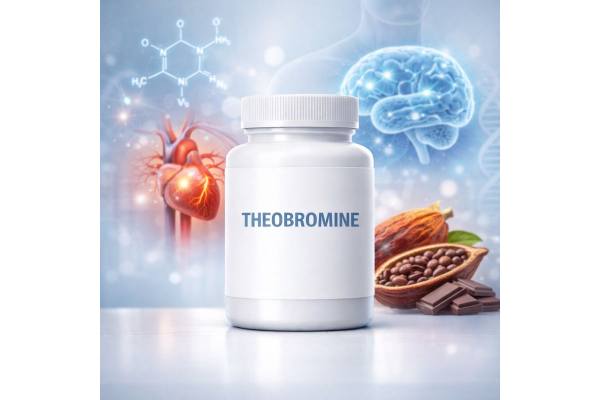
Theobromine is the bitter compound that helps give dark chocolate its unmistakable flavor, but it is also a member of the methylxanthine family alongside caffeine. While caffeine is known for sharp stimulation, theobromine is often described as gentler and longer lasting, with more emphasis on circulation, mood, and breathing. It is naturally present in cocoa, dark chocolate, cacao nibs, some teas, and a few South American plants.
In recent years, researchers have looked beyond “chocolate as a treat” and studied theobromine as a standalone compound. Early work suggests it may support cardiovascular health, modulate cholesterol, influence inflammation and oxidative stress, and even play a role in brain health and cough control. At the same time, not every study shows benefits, and high doses can cause side effects such as palpitations, insomnia, or gastrointestinal discomfort.
This guide walks you through what theobromine is, how it works, potential benefits, practical usage, dosage ranges, and safety so you can discuss it more confidently with a qualified professional.
Essential Insights on Theobromine
- Theobromine from cocoa and dark chocolate may support vascular function, mild alertness, mood, and respiratory comfort with less stimulation than caffeine.
- Human studies show modest improvements in HDL (“good”) cholesterol and some vascular markers, but overall effects are small and not a substitute for medical therapy or lifestyle changes.
- Typical supplemental doses range from about 100–400 mg per day, while 30 g of dark chocolate can supply roughly 200–300 mg of theobromine.
- High intakes may cause insomnia, rapid heartbeat, nausea, or headaches, especially in sensitive people or when combined with caffeine.
- People with heart rhythm problems, uncontrolled hypertension, pregnancy or breastfeeding, children, and those on certain medications should avoid high-dose theobromine supplements unless advised by a clinician.
Table of Contents
- What is theobromine and how does it work?
- What are the main benefits of theobromine?
- How to use theobromine in daily life
- Theobromine dosage and timing guide
- Side effects, interactions and who should avoid it
- What current research says overall
What is theobromine and how does it work?
Theobromine is a naturally occurring alkaloid in the methylxanthine family. Chemically, it is closely related to caffeine and theophylline. Its main natural source is the cocoa bean (Theobroma cacao), which is used to make chocolate and cocoa powder. Smaller amounts are also present in tea leaves and certain traditional South American plants.
In chocolate products, theobromine content varies widely. Dark chocolate typically contains several times more theobromine per gram than milk chocolate. An ounce (about 30 g) of milk chocolate may contain around 60 mg of theobromine, whereas the same amount of dark chocolate can contain roughly 200 mg or more. Cocoa powder and cacao nibs can be even more concentrated, which is why they are often used in research studies.
In the body, theobromine acts as:
- A mild central nervous system stimulant: It is weaker than caffeine but can still increase alertness and reduce fatigue in some people.
- A vasodilator and cardiac stimulant: It can relax smooth muscle in blood vessels and affect heart contractility, potentially influencing blood flow and blood pressure patterns.
- A bronchodilator: By relaxing airway smooth muscle, it may support breathing comfort, similar to older asthma drugs in the same family.
- A phosphodiesterase inhibitor and adenosine receptor antagonist: These mechanisms influence cyclic nucleotides and signaling pathways related to inflammation, vascular tone, metabolism, and neuronal activity.
Compared with caffeine, theobromine has a longer half-life in humans (often around 8–10 hours) and tends to produce less intense jitter and anxiety, but possibly more impact on the cardiovascular and urinary systems (for example, mild diuresis). Individual response depends on genetics, liver enzyme activity, concurrent caffeine intake, and general health.
Importantly, theobromine is far more toxic to many animals, especially dogs and some other pets, than to humans because they metabolize it much more slowly. Even moderate amounts of chocolate can be dangerous for pets and should never be offered as a treat.
What are the main benefits of theobromine?
Theobromine is often discussed as one component of dark chocolate’s “health halo.” When studied directly, it shows several potential benefits, though results are mixed and effect sizes are usually modest.
1. Cardiovascular markers and cholesterol
Some randomized trials where participants consumed drinks or capsules containing several hundred milligrams of theobromine per day have reported:
- Small but measurable increases in HDL cholesterol (for example, increases in the range of a few tenths of a mmol/L).
- Reductions in LDL cholesterol or apolipoprotein B in some, but not all, study groups.
- Changes in central blood pressure and arterial stiffness indexes, sometimes in different directions than peripheral blood pressure.
Systematic reviews suggest that theobromine may contribute to favorable lipid profiles, but that its independent impact on vascular function and actual cardiovascular events remains uncertain.
2. Vascular function and blood pressure
Theobromine can dilate blood vessels and influence central hemodynamics. Some research using theobromine-enriched cocoa showed reductions in central (aortic) systolic pressure, even when ambulatory peripheral blood pressure did not change or slightly increased. In other trials using theobromine alone, improvements in flow-mediated dilation or other functional markers were minimal.
Overall, the current picture is that theobromine may modestly influence certain vascular parameters, but its benefits are less consistent than those of cocoa flavanols and seem dose- and context-dependent.
3. Brain health and mood
Preclinical work and early human data indicate that theobromine may:
- Modulate adenosine receptors in brain regions related to mood and alertness.
- Support cognitive performance and neuroprotection in models of neurodegeneration.
- Influence pathways related to oxidative stress, inflammation, and neurotrophic factors.
In everyday life, many people report a calm, focused feeling from high-cocoa dark chocolate or cacao drinks, which likely reflects the combined action of theobromine, small amounts of caffeine, flavanols, and other bioactives.
4. Respiratory and cough control
Theobromine has been investigated as an antitussive (cough-suppressing) agent. Studies in humans and animals have shown that it can reduce cough reflex sensitivity, possibly by acting on vagal nerves and airway smooth muscle. Experimental cough medicines containing theobromine have been tested, although products are not widely available.
5. Metabolic and body composition effects
In cell and animal models, theobromine has been shown to:
- Promote “browning” of white adipose tissue, increasing energy expenditure.
- Influence lipid metabolism and inflammatory pathways in adipose tissue.
- Modulate markers of insulin sensitivity and liver fat in some experimental systems.
Human data are still limited, and any metabolic benefits from usual dietary intakes (for example, from a small amount of dark chocolate) are likely to be modest.
Taken together, theobromine appears to be a bioactive support compound rather than a stand-alone “magic bullet.” Its greatest value may be as part of a dietary pattern that includes cocoa-rich foods in moderation, combined with established heart-healthy and lifestyle measures.
How to use theobromine in daily life
You can obtain theobromine from regular foods, specialized cocoa products, or targeted supplements. The best approach depends on your goals, tolerance, and overall diet.
1. Food-based sources
Everyday sources of theobromine include:
- Dark chocolate (70–85% cocoa or higher): Often 150–300 mg theobromine per 30 g serving, depending on brand and cocoa content.
- Cocoa powder or cacao powder: Unsweetened varieties can provide 200–400 mg per tablespoon, though values vary.
- Cacao nibs: Crushed cocoa beans with high theobromine content and minimal processing.
- Certain teas and yerba mate-type drinks: Usually lower in theobromine than cocoa but may still contribute.
For many people, one small serving of high-percentage dark chocolate (about 20–30 g) or a tablespoon of cocoa in a drink is enough to feel mild effects without overdoing sugar or calories.
2. Supplements
Theobromine is also sold as:
- Stand-alone capsules or tablets, commonly in the 100–300 mg range.
- Part of “mood,” “focus,” “pre-workout,” or “fat-burning” formulas, often combined with caffeine and other stimulants.
If the goal is to explore potential effects on cholesterol, blood flow, or mood in a structured way, a single-ingredient product is usually easier to evaluate and dose. Combination formulas can be more stimulating and make it harder to attribute benefits or side effects.
3. Practical usage examples
Some possible daily patterns (to be confirmed with a health professional) include:
- Lifestyle-focused user: One small piece of 70–85% dark chocolate after lunch or dinner, paired with otherwise balanced eating.
- Supplement user interested in lipids: A capsule providing 100–200 mg theobromine once or twice daily with meals, while monitoring cholesterol and blood pressure as advised.
- Caffeine-sensitive individual: Replacing some coffee with a hot cacao drink made from unsweetened cocoa and a modest amount of sweetener or milk alternative, to reduce caffeine while still enjoying a mild lift.
4. Combining with other compounds
Theobromine often appears alongside:
- Caffeine: The combination can increase stimulation; some people experience improved alertness, others feel overstimulated.
- Cocoa flavanols: These plant compounds have clearer evidence for blood pressure and endothelial effects; theobromine may enhance or modify those effects.
- L-theanine, adaptogens, or nootropics: In some formulas, theobromine is used as part of a broader “cognitive support” stack.
Because interactions among stimulants can be unpredictable, it is wise to introduce theobromine gradually and avoid starting multiple new stimulatory supplements at once.
Theobromine dosage and timing guide
There is no universally accepted “optimal” dose of theobromine for health, and it is not an essential nutrient. However, research trials and practical experience give reasonable ranges to consider. Always treat these as general information, not personal medical advice.
1. Typical intake from food
- A diet including modest amounts of dark chocolate, cocoa, or cacao nibs may naturally provide 50–400 mg of theobromine per day, depending on portion sizes and product choice.
- Many people remain within this range without consciously thinking about it, especially if they enjoy a square or two of dark chocolate daily.
2. Supplement doses used in studies
Human trials examining cholesterol, vascular markers, or metabolic effects have commonly used:
- 300–500 mg per day of pure theobromine capsules for several weeks.
- Up to around 850–1000 mg per day in some designs, often combined with cocoa or other components.
These doses are significantly higher than what most people obtain through diet alone and are typically given under supervision, with monitoring for side effects and changes in blood pressure, heart rate, and laboratory markers.
3. Practical supplemental ranges
For individuals considering a supplement after consulting a health professional, approximate ranges sometimes discussed are:
- Low dose: 50–100 mg once or twice daily.
- Moderate dose: 100–200 mg once or twice daily.
- Higher-dose research-style use: 300–500 mg per day, usually short term and supervised.
It is generally wise to start at the lower end of any range, observe how you feel over several days, and only then consider gradual adjustments.
4. Timing considerations
Because of its relatively long half-life and mild stimulation:
- Taking theobromine earlier in the day (morning or early afternoon) reduces the risk of insomnia or fragmented sleep.
- Splitting the total daily amount into two smaller doses (for example, breakfast and lunch) may lead to steadier effects and fewer cardiovascular symptoms such as palpitations.
- Avoid combining high-dose theobromine with late-day caffeine, especially if you are prone to anxiety or sleep difficulties.
5. Upper limits and caution
Human toxicity thresholds are estimated to be far above normal dietary intakes, but that does not mean “more is better.” Several grams of theobromine, especially taken all at once, could plausibly cause serious symptoms such as severe nausea, vomiting, chest pain, arrhythmia, or dangerously low blood pressure. Chronic high intake could also strain the heart or exacerbate pre-existing conditions.
For most people, staying at or below 400 mg per day from supplements (plus whatever comes from chocolate or cocoa) is a conservative working ceiling unless a clinician recommends otherwise. People with cardiovascular, neurological, or kidney issues may need stricter limits or complete avoidance.
Side effects, interactions and who should avoid it
Like any bioactive compound, theobromine can cause side effects, particularly at higher doses or in sensitive individuals. Knowing what to watch for helps you distinguish a minor adjustment issue from a reason to stop and seek medical advice.
1. Common side effects
At doses similar to or somewhat higher than typical dietary intakes, people may experience:
- Restlessness or a “wired” feeling, especially when combined with caffeine.
- Mild insomnia or trouble falling asleep.
- Headache or pressure behind the eyes.
- Gastrointestinal discomfort, nausea, or loose stools.
- Increased urination due to mild diuretic effects.
These symptoms usually resolve by lowering the dose, avoiding late-day use, or discontinuing the supplement.
2. Cardiovascular concerns
Theobromine can increase heart contractility and influence blood vessel tone. In some trials, high-dose theobromine-enriched cocoa raised 24-hour ambulatory systolic blood pressure while lowering central systolic pressure, illustrating that effects are complex. Potential issues include:
- Palpitations or rapid heartbeat.
- Fluctuations in blood pressure (up or down), particularly in those with hypertension or cardiovascular disease.
- Chest discomfort in susceptible individuals.
Anyone who experiences chest pain, pronounced palpitations, dizziness, or breathlessness after taking theobromine should stop use and seek medical evaluation.
3. Nervous system and mood
In moderate doses, many people find theobromine less jittery than caffeine. However, higher amounts or combinations with other stimulants may cause:
- Anxiety or irritability.
- Tremor or muscle twitching.
- Difficulty concentrating due to overstimulation.
If you are prone to anxiety, panic attacks, or bipolar spectrum conditions, it is especially important to talk to a mental health or medical professional before experimenting with stimulant-type supplements.
4. Interactions with medications and conditions
You should be particularly cautious or avoid theobromine supplements if you:
- Take medications that affect heart rhythm, blood pressure, or blood clotting.
- Use other stimulants (prescription or over-the-counter) or high daily doses of caffeine.
- Have kidney or liver impairment, which can alter methylxanthine metabolism.
- Are pregnant or breastfeeding, since theobromine crosses the placenta and enters breast milk; safety data at supplemental doses are limited.
Because methylxanthines can interact with certain drugs via liver enzymes or overlapping physiological pathways, a pharmacist or physician can help you review your specific medication list.
5. Who should generally avoid high-dose theobromine supplements?
- Individuals with known arrhythmias, heart failure, or recent heart attack.
- People with uncontrolled high blood pressure or severe vascular disease.
- Pregnant or breastfeeding women, unless specifically advised otherwise.
- Children and adolescents, due to limited safety data and high sensitivity to stimulants.
- Anyone with a history of seizure disorders or serious psychiatric conditions unless closely supervised.
Remember that chocolate and cocoa themselves also contain theobromine, so “hidden” intake from food should be included when assessing total exposure. Finally, all chocolate products must be kept strictly away from dogs, cats, and other pets, for whom theobromine can be life-threatening at doses that seem trivial for humans.
What current research says overall
Theobromine research has expanded significantly in recent years, moving from simple observations about chocolate to detailed investigations of this single molecule. The big picture can be summarized along several lines.
1. Mechanistic depth
Modern reviews highlight that theobromine:
- Acts on adenosine receptors and phosphodiesterases, influencing signaling pathways in the heart, blood vessels, brain, adipose tissue, and immune cells.
- Exhibits antioxidant and anti-inflammatory effects in experimental systems.
- May promote beneficial changes in adipose tissue biology and energy metabolism.
- Can modulate neuronal survival, synaptic function, and amyloid-related pathways in models of neurodegeneration.
These mechanistic insights help explain why theobromine has been linked to such a wide range of potential outcomes, from vascular function to cognition and liver fat.
2. Human trial outcomes
Randomized controlled trials using isolated theobromine or theobromine-rich cocoa have reported:
- Cholesterol and lipoproteins: Modest increases in HDL cholesterol and favorable shifts in some apolipoprotein markers with daily doses in the several-hundred-milligram range. However, not all populations respond equally.
- Vascular function: Inconsistent findings. Some studies show changes in central blood pressure and augmentation indexes, while others report no meaningful improvement in flow-mediated dilation or overall vascular health markers.
- Metabolic and inflammatory markers: Some improvements in specific inflammatory or metabolic endpoints, but often small and not always consistent across trials.
Taken together, the human evidence generally supports the idea that theobromine is physiologically active and can nudge certain cardiovascular risk markers in a favorable direction, but it does not yet justify using high-dose theobromine supplements as primary treatment for cardiovascular disease, dyslipidemia, or metabolic syndrome.
3. Relative role of theobromine vs cocoa flavanols
Cocoa and dark chocolate contain both methylxanthines (especially theobromine) and polyphenols (especially flavanols). Systematic analyses suggest that:
- Flavanols are major contributors to blood pressure and endothelial benefits.
- Theobromine may be particularly important for HDL cholesterol modulation and some aspects of mood and alertness.
- The combination of flavanols plus methylxanthines can sometimes produce effects that neither achieves alone.
This helps explain why high-cocoa dark chocolate can have different physiological effects from a pure theobromine capsule, and why results from cocoa studies do not directly translate into recommendations for isolated theobromine supplements.
4. Future directions
Ongoing and future research is exploring:
- Whether specific subgroups (for example, people with particular genetic variants, baseline lipid profiles, or liver fat patterns) benefit more from theobromine.
- The potential for theobromine-containing formulations in cough, respiratory, or neurodegenerative conditions.
- Long-term safety and efficacy of daily theobromine supplementation at various doses.
For now, the most evidence-based and balanced approach is to view theobromine as one helpful component of cocoa-rich foods and, where appropriate, as a cautiously used supplement that might modestly support cardiovascular and metabolic health when integrated into a broader lifestyle plan.
References
- Health benefits and mechanisms of theobromine 2024 (Systematic Review)
- A comprehensive insight into the molecular effect of theobromine on cardiovascular-related risk factors: A systematic review of in vitro and in vivo studies 2023 (Systematic Review)
- Effect of cocoa and theobromine consumption on serum HDL-cholesterol concentrations: A randomized controlled trial 2013 (RCT)
- Theobromine consumption does not improve fasting and postprandial vascular function in overweight and obese subjects 2019 (RCT)
- The relevance of theobromine for the beneficial effects of cocoa consumption 2015 (Review)
Disclaimer
The information in this article is for general educational purposes only and is not a substitute for individual medical advice, diagnosis, or treatment. Theobromine is a pharmacologically active compound that can interact with medical conditions, prescription medications, and other supplements. Never start, stop, or change a supplement or medication regimen based solely on online information.
If you are pregnant, breastfeeding, under 18, have cardiovascular, metabolic, neurological, kidney, or liver disease, or take prescription medications, consult a qualified healthcare professional before using theobromine-containing supplements or substantially increasing your intake of cocoa products. In case of concerning symptoms such as chest pain, severe palpitations, shortness of breath, or neurological changes after taking theobromine, seek urgent medical care.
If you found this guide useful, please consider sharing it with friends, family, or colleagues on Facebook, X (formerly Twitter), or any social platform you prefer. Your support in sharing our work helps our team continue to research, write, and update high-quality health content for a wider audience. We also invite you to follow our future updates on social media so you can stay informed as new evidence on nutrients like theobromine emerges.