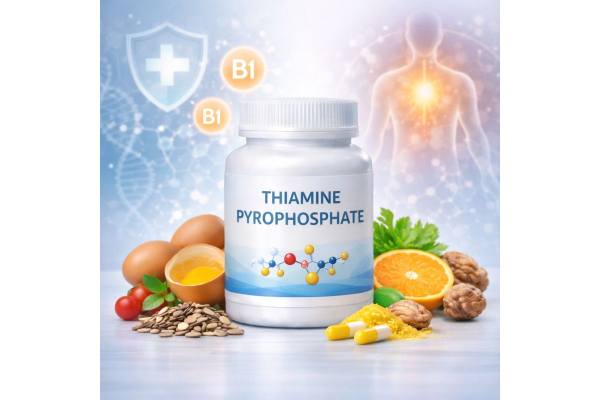
Thiamine pyrophosphate (TPP), also called thiamine diphosphate, is the metabolically active form of vitamin B1. While most people know vitamin B1 in its basic forms such as thiamine hydrochloride or thiamine mononitrate, TPP is the “working” coenzyme inside cells. It helps key enzymes convert carbohydrates, certain amino acids, and fats into usable energy, and it supports normal nerve function and antioxidant defense.
In supplements, TPP is often marketed as an “activated” or “coenzymated” form of vitamin B1. That idea sounds appealing if you are dealing with fatigue, high carbohydrate intake, alcohol use, or health conditions that may affect B-vitamin status. At the same time, TPP as a supplement is less thoroughly studied than standard thiamine salts, and its advantages over regular thiamine are still being clarified.
This guide explains what thiamine pyrophosphate is, how it works, where it may be useful, how much people typically take, and the main side effects and safety limits you should know before using it.
Essential Insights
- Thiamine pyrophosphate is the active coenzyme form of vitamin B1 that supports energy metabolism and nervous system function.
- Supplemental TPP may be helpful when thiamine needs are increased or absorption or activation of thiamine is impaired.
- Typical supplemental thiamine intakes range from 10–100 mg per day, while most multivitamins provide about 1–2 mg.
- People with severe illness, on multiple medications, or with kidney disease should only use higher-dose thiamine or TPP under medical supervision.
Table of Contents
- What is thiamine pyrophosphate and what does it do?
- Thiamine pyrophosphate benefits for energy and nerves
- How to use thiamine pyrophosphate supplements
- Thiamine pyrophosphate dosage and timing
- Side effects and who should avoid thiamine pyrophosphate
- Research on thiamine pyrophosphate and key takeaways
What is thiamine pyrophosphate and what does it do?
Thiamine pyrophosphate is the main active coenzyme form of thiamine (vitamin B1) inside the body. When you consume thiamine from food or supplements, intestinal enzymes first strip off any phosphate groups so thiamine can be absorbed. Once inside cells, an enzyme called thiamine diphosphokinase adds two phosphate groups to form thiamine diphosphate, also known as thiamine pyrophosphate or TPP.
Most of the body’s small thiamine pool is present as TPP in tissues with high metabolic demand, particularly the brain, heart, liver, and skeletal muscle. TPP binds to and activates several critical enzymes in energy pathways. These include pyruvate dehydrogenase and α-ketoglutarate dehydrogenase in the Krebs cycle, branched-chain α-keto acid dehydrogenase for amino acid breakdown, and transketolase in the pentose phosphate pathway. Through these roles, TPP helps convert carbohydrates into ATP, supports neurotransmitter production, and contributes indirectly to antioxidant defense via NADPH generation.
In nutrition and supplements, thiamine pyrophosphate is sometimes provided directly as a salt, such as thiamine pyrophosphate chloride. The idea is to bypass the body’s need to activate thiamine and deliver the coenzyme form more efficiently. However, in the gut, phosphatases may still dephosphorylate TPP back to free thiamine before absorption, meaning some of its “pre-activated” advantage may be reduced. The real-world benefit of TPP over standard thiamine salts likely depends on individual factors such as enzyme function, gut health, and dose.
Even when TPP is not taken as a supplement, understanding it is useful because deficiency syndromes, functional tests like erythrocyte transketolase activity, and some drug interactions are best explained at the level of this coenzyme form rather than the vitamin as a whole.
Thiamine pyrophosphate benefits for energy and nerves
Because TPP sits at several junctions of carbohydrate and mitochondrial metabolism, adequate levels are central to how efficiently cells produce ATP. When TPP-dependent enzymes such as pyruvate dehydrogenase are underactive, pyruvate and lactate can accumulate, while acetyl-CoA generation is reduced. In practical terms, that means less fuel entering the Krebs cycle, potential lactate build-up, and impaired energy supply for organs with high demand like the brain and heart.
From a neurological perspective, TPP supports normal nerve conduction and neurotransmitter synthesis. Neurons rely heavily on glucose oxidation, and TPP-dependent enzymes help ensure a continuous supply of ATP. TPP also supports the pentose phosphate pathway through transketolase. This pathway not only produces ribose-5-phosphate for nucleotide synthesis but also generates NADPH, which is necessary for regenerating glutathione and other antioxidant systems. When thiamine or TPP is low, oxidative stress in nervous tissue can rise, which is one reason deficiency states present with neuropathy, confusion, and, in severe cases, Wernicke–Korsakoff syndrome.
In more general health settings, people often look at TPP and thiamine to support:
- Fatigue linked to high carbohydrate intake or very low thiamine diets
- Older age, where dietary intake and absorption may decrease
- High alcohol intake, which interferes with thiamine absorption and storage
- Chronic conditions or medications that increase thiamine requirements
Some research explores thiamine’s role in glucose metabolism, heart function, and endothelial health, with TPP at the center of these mechanisms. However, in many trials the supplement used is standard thiamine rather than isolated TPP, so conclusions about TPP-specific benefits must be cautious. It is more accurate to say that maintaining good thiamine status and, by extension, adequate TPP supports healthy energy metabolism, nerve function, and cardiovascular health, especially in people at risk for deficiency or marginal intake.
How to use thiamine pyrophosphate supplements
Thiamine pyrophosphate supplements appear in several forms: as stand-alone capsules or tablets labeled “coenzymated B1,” as part of activated B-complex formulas, or in some clinical nutrition products. Most over-the-counter options provide TPP in the range of a few milligrams up to around 10–20 mg per serving, often combined with other B vitamins.
If someone and their clinician decide to use a TPP-containing supplement, a stepwise approach is sensible:
- Review overall thiamine intake. Check current diet, multivitamins, and B-complex products. Many people already get 1–2 mg per day from a multivitamin in addition to food.
- Clarify the goal. Are you targeting a known or suspected low thiamine status, supporting recovery from a high-risk state (for example, heavy alcohol use, recent bariatric surgery, prolonged poor intake), or simply trying to support energy levels? TPP is usually reserved for more targeted use rather than general prevention.
- Start with modest doses. For most otherwise healthy adults, starting with a product that provides 5–20 mg TPP alongside standard B1 forms is usually adequate under professional guidance, instead of jumping to very high doses.
- Combine with lifestyle measures. Since TPP primarily supports carbohydrate metabolism, pairing supplementation with balanced meals, adequate protein, and controlled alcohol intake will have more impact than TPP alone.
TPP is usually taken orally with food to aid tolerance, although absorption is not strongly food-dependent. Dividing the dose once in the morning and once at midday can smooth any subjective energy effects. Evening dosing is generally safe, but people who feel more alert after B vitamins sometimes prefer to avoid late doses.
In clinical settings, higher-dose thiamine (often as thiamine hydrochloride, not TPP) may be used under close monitoring by intravenous or intramuscular routes for deficiency syndromes. This is quite different from self-directed supplementation and should never be attempted outside medical care.
Because the evidence for TPP-specific advantages is still emerging, many practitioners focus first on ensuring adequate overall thiamine intake using standard forms, then consider a TPP-rich product if tests suggest functional issues such as low transketolase activity or if response to regular thiamine has been incomplete.
Thiamine pyrophosphate dosage and timing
For healthy adults, the recommended dietary allowance for total thiamine from food and supplements is around 1.1 mg per day for women and 1.2 mg per day for men, with slightly higher needs in pregnancy and lactation. Ordinary diets plus a multivitamin usually cover these amounts. Thiamine pyrophosphate supplements sit on top of this baseline and are not required for everyone.
There is no universally agreed daily intake specifically for TPP, because the body normally makes it from thiamine as needed. Instead, dosage guidance is based on typical thiamine supplement ranges and clinical use. In research and practice, oral thiamine intakes from about 10 mg up to 100 mg per day are common for people with increased requirements or marginal status, with higher doses reserved for medical supervision.
When TPP is used as an oral supplement in otherwise healthy adults, typical patterns include:
- Low to moderate amounts (for example, 5–20 mg TPP daily) as part of an activated B-complex, mainly for general support.
- Moderate amounts (20–50 mg of thiamine equivalents per day, sometimes including both TPP and standard thiamine salts) when there is a suspected higher need, such as high alcohol intake, certain chronic diseases, or diets very low in whole grains and animal products.
Because thiamine is water-soluble and excess is excreted in urine, toxicity at nutritional doses has not been clearly established, and an upper intake level has not been set by many authorities. Nonetheless, very high oral intakes (hundreds of milligrams per day or more) should only be used under medical direction, especially in people with kidney disease, complex medication regimens, or serious illness.
Timing can be flexible, but several practical points help:
- Take TPP with or after meals to minimize any mild nausea.
- If using more than one dose per day, split it between breakfast and lunch or early afternoon.
- If you notice any unusual symptoms such as rash, itching, shortness of breath, or palpitations after starting a new product, stop and seek medical advice promptly.
For children, pregnant people, and individuals with diagnosed deficiency diseases, dosage and choice of thiamine form (including whether to use TPP at all) must be determined by a clinician familiar with current guidelines, rather than extrapolating from adult supplement labels.
Side effects and who should avoid thiamine pyrophosphate
At nutritional and moderately above-nutritional doses, thiamine in general is considered to have a good safety profile. Because it is water-soluble and not stored in large amounts, excess is usually excreted by the kidneys. However, this does not mean that every dose or form is risk-free, and thiamine pyrophosphate has some specific considerations.
Commonly reported issues with oral thiamine or TPP supplements are mild and may include digestive discomfort, nausea, or a feeling of warmth or flushing shortly after ingestion. These effects often improve with food or dose adjustment. Very large doses may cause headache, restlessness, or insomnia in some people, although this is not universal.
Serious reactions are rare but possible. Hypersensitivity or allergic responses to thiamine preparations, including anaphylaxis, have been reported, especially with parenteral (injection) forms used in hospitals. Anyone with a known history of allergic reactions to vitamin B1 or multivitamin injections should avoid TPP supplements unless evaluated and monitored by a specialist.
Groups who should be particularly cautious and seek medical advice before using TPP or high-dose thiamine include:
- People with advanced kidney disease or on dialysis, because excretion of water-soluble vitamins and their metabolites can be altered.
- Individuals with severe heart disease, where abrupt changes in fluid or electrolyte handling during high-dose therapy might need monitoring.
- Those on multiple medications, especially chemotherapy or diuretics, since some drugs can alter thiamine levels or interact indirectly via fluid balance and electrolytes.
- Pregnant or breastfeeding individuals considering doses far above standard prenatal recommendations.
Thiamine supplements are often crucial in deficiency states associated with alcohol use disorder, malnutrition, prolonged vomiting, or certain surgeries. In those situations, treatment decisions, dosing, and choice of intravenous, intramuscular, or oral route belong firmly in medical hands, not in self-medication with over-the-counter TPP.
Finally, TPP should not be used as a substitute for emergency care. Symptoms such as confusion, severe weakness, shortness of breath, chest pain, or sudden changes in vision or balance require urgent evaluation. Supplements can support recovery when appropriate, but they cannot safely replace diagnosis and treatment.
Research on thiamine pyrophosphate and key takeaways
Modern research on thiamine and TPP spans three main areas: basic biochemistry, clinical deficiency and disease, and potential therapeutic applications beyond correcting deficiency.
Biochemical studies have mapped TPP’s role as a coenzyme in multiple enzyme complexes. Work on transketolase and other TPP-dependent enzymes shows how tightly this cofactor is integrated into carbohydrate metabolism and the pentose phosphate pathway, affecting NADPH production and redox balance. These mechanistic insights help explain why TPP deficiency can lead simultaneously to problems in energy production, nerve function, and oxidative stress handling.
Clinical research has long shown that preventing and correcting thiamine deficiency is critical. Deficiency syndromes such as beriberi and Wernicke–Korsakoff syndrome illustrate what happens when TPP-dependent enzymes cannot function. More recent studies focus on milder or “marginal” deficiency in older adults, people with chronic diseases, or those following restricted diets. In these groups, supplementing thiamine to restore normal TPP status can improve biochemical markers and, in some cases, symptoms like fatigue or neuropathy.
With respect to supplements, most human trials still use thiamine hydrochloride or thiamine mononitrate rather than isolated TPP. Some regulatory reviews recognize thiamine pyrophosphate chloride as a safe source of vitamin B1 in supplements and fortified foods, but they also emphasize that intestinal dephosphorylation may convert it back to thiamine before absorption. That means TPP’s benefit may be more about providing an additional thiamine source than delivering intact coenzyme directly into the bloodstream.
Emerging topics include:
- The role of TPP-dependent enzymes in mitochondrial health and oxidative stress.
- Potential links between marginal thiamine status and heart failure, diabetes complications, or cognitive changes.
- Whether functional tests that measure TPP-dependent enzyme activity (like erythrocyte transketolase) better capture subtle deficiency than total thiamine levels alone.
From a practical standpoint, the main takeaways are straightforward. First, maintaining adequate thiamine intake from diet and, when needed, standard supplements is essential so that your body can generate enough TPP in tissues. Second, TPP-containing products may be a reasonable option in targeted situations under professional guidance, but they are not magic substitutes for overall nutrition and medical care. Third, any higher-dose strategy should respect the broader clinical context, including other nutrients, medications, and organ function.
References
- Thiamin – Health Professional Fact Sheet 2023 (Guideline)
- Vitamin B1 (Thiamine) 2024 (Guideline/Review)
- Thiamine (Vitamin B1)—An Essential Health Regulator 2025 (Systematic Review)
- New Role of Water in Transketolase Catalysis 2023 (Mechanistic Study)
- Structure and functioning mechanism of transketolase 2014 (Review)
Disclaimer
The information in this article is for educational purposes only and is not a substitute for personalized medical advice, diagnosis, or treatment. Thiamine pyrophosphate and other vitamin B1 preparations should be used under the guidance of a qualified health professional, especially in the presence of chronic disease, pregnancy, breastfeeding, use of multiple medications, or symptoms that could indicate deficiency or other serious conditions. Never delay or disregard seeking professional medical advice because of something you have read here. Always discuss changes to your supplement routine, including dose and form, with your clinician or pharmacist.
If you found this guide helpful, you are warmly invited to share it on Facebook, X (formerly Twitter), or any platform you prefer, and to follow our work on social media. Your support in sharing our articles helps our team continue to research, write, and update high-quality, evidence-informed content for readers around the world.