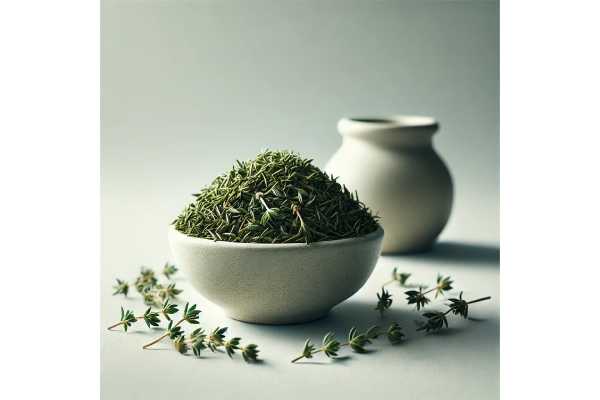
Thyme is a small, woody herb with tiny leaves and a powerful, earthy aroma that can make even the simplest meal smell and taste more complex. Native to the Mediterranean, it has long been used in cooking, herbal preparations, and even food preservation. Today, thyme appears in everything from roast vegetables and marinades to herbal teas and throat syrups.
Behind its fragrant flavor, thyme contains a concentrated mix of essential oils, polyphenols, and minerals. These compounds have been studied for antioxidant, antimicrobial, and anti-inflammatory effects, as well as for potential roles in respiratory and metabolic health. At the same time, thyme essential oil is very potent, so questions about safe amounts and best uses are important.
This article walks you through what thyme is, how it is typically used, what its nutrition and bioactive compounds look like, what the research suggests about benefits, and how to enjoy it safely as part of a varied diet.
Fast Facts
- Thyme is an aromatic Mediterranean herb rich in essential oils and polyphenols that add flavor and support overall plant diversity in the diet.
- Experimental and clinical work suggests thyme preparations may help with cough, infections, and oxidative stress, but they should not replace prescribed treatment.
- A practical culinary portion is about ½–1 teaspoon (0.5–1 g) dried thyme or 1–2 teaspoons fresh leaves per serving, used regularly across meals.
- People who are pregnant, have liver disease, asthma, or are sensitive to strong fragrances should be cautious with thyme essential oil and high-dose supplements.
Table of Contents
- Thyme History Varieties and Kitchen Roles
- Thyme Nutrition Profile and Key Compounds
- Thyme Health Benefits from Research
- Thyme Risks Allergies and Interactions
- Selecting Quality Thyme Sustainability and Storage
- Cooking with Thyme Retaining Nutrients
- Thyme Portions Comparisons and FAQs
Thyme History Varieties and Kitchen Roles
Thyme (Thymus vulgaris) is a low-growing, evergreen shrub in the mint family. It thrives in sunny, dry conditions and has been cultivated for thousands of years around the Mediterranean. Historically, thyme was burned as incense, used to preserve meats, and brewed into infusions for digestion and respiratory complaints. Its name is linked to words for “courage” and “fumigation,” reflecting both symbolic and practical roles.
Several thyme types are used in the kitchen. Common or garden thyme is the best known, with a warm, woody aroma. Lemon thyme adds a bright citrus note that pairs beautifully with fish, salads, and lighter dishes. Creeping and ornamental species bring fragrance and pollinator-friendly flowers to gardens, though they are less common in cooking. Most culinary thyme sold as dried leaves or ground herb comes from Thymus vulgaris, even if the label simply says “thyme.”
In cooking, thyme is a backbone herb rather than a bold garnish. It appears in classic blends such as bouquet garni and herbes de Provence, paired with bay, rosemary, and parsley to flavor stews, soups, and braises. Its small leaves hold up well to longer cooking times, making thyme ideal for slow-roasted vegetables, bean dishes, and hearty sauces. A few fresh sprigs added early in cooking can infuse a dish, while a pinch of dried thyme in marinades or rubs adds depth without dominating.
Beyond European and North American cuisines, thyme and related species are used in Middle Eastern spice mixes, North African marinades, and traditional herbal remedies. It also features in certain preserved foods and cheeses, valued both for aroma and for its potential role in slowing microbial spoilage. This cross-cultural history gives thyme a place not only as a flavoring, but as part of traditional approaches to food safety and daily wellbeing.
Overall, thyme’s greatest culinary strength is its ability to harmonize with many savory ingredients. Poultry, lamb, tomatoes, mushrooms, root vegetables, lentils, and hearty grains all pair comfortably with its herbal, slightly peppery profile. This makes thyme an easy herb to use more often when you want to build flavorful, plant-forward meals.
Thyme Nutrition Profile and Key Compounds
Because thyme is used mainly as a seasoning, each serving contributes only a small amount of energy. Gram for gram, though, dried thyme is densely packed with minerals and plant compounds.
Per 100 g of dried thyme, nutrient data show about 270–280 kcal, with roughly 60–65 g carbohydrate, 9 g protein, and 7–8 g fat. The same amount provides very high levels of calcium, iron, and meaningful amounts of magnesium and potassium, along with around 35–40 g of fiber. Those numbers look impressive, but typical culinary portions are much smaller. One teaspoon of dried thyme (around 0.8–1 g) provides only 2–3 kcal, trace protein and fat, and a modest contribution to daily mineral intake. Fresh thyme leaves contain more water and slightly less concentrated nutrients, but they still deliver minerals and phytochemicals, especially when used regularly across meals.
The most distinctive part of thyme’s profile is its essential oils and polyphenols. The main volatile constituents include:
- Thymol
- Carvacrol
- p-Cymene
- Gamma-terpinene
Together, these compounds shape thyme’s pungent aroma and have been studied for antimicrobial, antioxidant, and anti-inflammatory properties.
Thyme also contains a range of phenolic acids and flavonoids, such as rosmarinic acid, apigenin, and luteolin derivatives. These plant compounds can neutralize reactive oxygen species in experimental systems and may support the body’s own defense mechanisms against oxidative stress. The exact composition shifts with growing conditions, harvest time, plant variety, and processing method.
Drying influences both nutrient density and aroma. As water is removed, minerals and many non-volatile polyphenols become more concentrated by weight. Some essential oils, however, dissipate or oxidize during drying and long storage, which is why fresh thyme often smells brighter and more complex than older dried thyme. Gentle drying at lower temperatures and storing dried thyme away from light and heat help preserve aromatic and functional components.
In an everyday diet, the nutritional contribution of thyme is modest at each meal but adds up through repeated use. A kitchen that regularly uses thyme, oregano, rosemary, basil, and other herbs can steadily increase intake of polyphenols and trace minerals without adding many calories, while also making vegetables, legumes, and lean proteins more appealing.
Thyme Health Benefits from Research
Thyme has been part of traditional medicine for respiratory symptoms, digestive discomfort, and minor infections for centuries. Modern research examines these uses more systematically, focusing on thyme extracts, essential oil, and syrups.
Experimental studies show that thyme extracts and essential oil can act as antioxidants and antimicrobials in laboratory systems. Thyme oil and its main components, particularly thymol and carvacrol, inhibit the growth of several bacteria and fungi, including some associated with food spoilage and human infections. They can also neutralize free radicals and influence inflammatory pathways in cell and animal models. These findings support the idea that thyme supplies bioactive compounds rather than being a neutral flavoring.
This combination of antioxidant and antimicrobial actions is one reason why thyme is being tested as a natural preservative in foods such as meats, cheeses, and ready-to-eat products. Extracts may help slow oxidation of fats and inhibit microbial growth, allowing manufacturers to reduce synthetic additives while maintaining safety and shelf life.
Respiratory health is another area with relatively strong support. Clinical trials and real-world studies have evaluated thyme-containing syrups, often combined with ivy leaf or other herbal extracts, for acute cough and bronchitis. These mixtures have been associated with reduced frequency and severity of coughing fits and faster symptom improvement compared with placebo or standard supportive care alone. In some studies of children with asthma exacerbations, thyme extract added to usual treatment improved cough scores and nighttime symptoms.
There is also early evidence that thyme constituents may influence metabolic and neurological targets. For example:
- Thymol and related compounds can inhibit enzymes such as acetylcholinesterase in experimental models, a mechanism of interest for cognitive function.
- In animal models, thyme extracts have shown protective effects on the liver and modulation of blood lipids and glucose under oxidative or inflammatory stress.
These findings are intriguing but still far from establishing clear therapeutic roles in humans. Doses used in research often involve standardized extracts at levels much higher than those provided by cooking.
In practical terms:
- Regular culinary use of thyme likely contributes a small but steady supply of bioactive compounds with antioxidant and antimicrobial potential.
- Thyme-based syrups and lozenges can be reasonable options for short-term management of uncomplicated cough and cold symptoms, especially when chosen from reputable manufacturers and used according to directions.
- Concentrated extracts or essential oils aimed at metabolic, cognitive, or systemic effects should be approached cautiously and discussed with a healthcare professional, as evidence is still emerging and doses are much higher than those found in food.
Overall, thyme appears to support health best as part of a broader pattern that emphasizes whole foods, diverse herbs and spices, and appropriate medical care when needed.
Thyme Risks Allergies and Interactions
For most people, thyme used as a culinary herb is considered low risk. The leaves are eaten in small quantities, and significant adverse reactions are uncommon. However, there are important safety considerations, especially with concentrated forms such as essential oils and high-dose extracts.
Thyme essential oil is rich in thymol and carvacrol. These compounds are responsible for much of its antimicrobial power but also for its potential toxicity at high doses. Animal experiments indicate that large oral doses of thyme oil or isolated thymol can damage intestinal and liver cells. There are also case reports of acute liver injury following ingestion of substantial amounts of thyme oil for self-treatment. Because products vary widely in concentration and purity, internal use of thyme essential oil is not recommended without professional supervision.
Even on the skin, undiluted thyme oil can cause irritation, burning, or allergic contact dermatitis. When used topically, it should be diluted in a carrier oil, and patch testing a small area first is sensible.
Allergic reactions to thyme itself are relatively rare but possible, particularly in people sensitive to other plants in the mint family or to fragrance components. Symptoms can include:
- Skin redness, itching, or hives where thyme-containing products are applied
- Oral itching or swelling after ingestion
- Sneezing, runny nose, or wheezing in response to strong vapors
Any signs of difficulty breathing, significant swelling, or widespread hives require urgent medical attention.
Potential interactions include:
- Respiratory conditions: While thyme is sometimes used to support respiratory health, strong essential oil vapors can trigger bronchospasm in sensitive individuals, including some people with asthma. Inhalation products should be used cautiously.
- Medications for cough and cold: Thyme syrups are sometimes used alongside conventional cough medicines. This is usually safe, but using multiple products with overlapping sedative effects, or in children, should be done with care.
- Liver disease and polypharmacy: People with liver conditions or those taking multiple medications should be cautious with concentrated thyme preparations, as the liver is involved in processing many essential oil constituents.
Special populations who should be particularly cautious with thyme essential oil and supplements include:
- Pregnant and breastfeeding individuals
- Young children
- People with chronic liver disease
- Anyone with a history of severe allergies or fragrance sensitivity
For these groups, keeping thyme use at normal food levels is generally the safest approach unless a healthcare professional advises otherwise.
In summary, thyme sprinkled on roasted vegetables or brewed lightly into tea is very different from concentrated essential oil taken internally. Respecting this distinction is key to using thyme safely.
Selecting Quality Thyme Sustainability and Storage
The thyme you choose and how you store it will determine both flavor and the level of aromatic compounds you actually consume.
For fresh thyme, look for:
- Vibrant green leaves without yellowing or black spots
- Flexible, not brittle, stems
- A strong herbal aroma when you rub a small sprig between your fingers
Avoid bunches that are slimy, very dry, or have a faint smell. Fresh thyme keeps best when loosely wrapped in a slightly damp paper towel and stored in an airtight container in the refrigerator. Alternatively, you can place the stems in a small glass of water, like a bouquet, and cover them loosely, changing the water every few days.
For dried thyme, quality can vary widely. Choose brands that:
- Indicate a recent harvest or “best by” date
- Package the herb in opaque or dark containers to protect from light
- Have a noticeable aroma when opened; a dusty or bland smell usually means the herb is old
Dried thyme should be stored away from heat, moisture, and light, ideally in a tightly closed jar in a cool cupboard. Opening the jar above steaming pots accelerates the loss of volatile oils and can cause clumping.
Sustainability considerations offer another reason to pay attention to source. Because thyme is a hardy perennial in many regions, it can be grown at home in pots or garden beds with relatively low inputs. Supporting local growers at farmers markets reduces transport emissions and often yields fresher, more fragrant herbs. Organic or low-spray production may be appealing if you use large amounts of fresh herbs and want to minimize pesticide exposure overall.
You can also reduce waste by preserving leftover thyme. Options include:
- Freezing whole sprigs or stripped leaves in airtight containers
- Chopping leaves and freezing them in ice cube trays with olive oil or water
- Infusing thyme in vinegar or oil for several weeks, then straining and using the flavored liquid in dressings and marinades
These practices extend thyme’s usable life and help you benefit from its aroma and compounds across seasons.
Even a single small thyme plant can supply a household generously. Growing thyme in a pot near the kitchen door or on a sunny windowsill can make it easier to reach for herbs instead of salt-heavy sauces or ultra-processed flavoring mixes, indirectly supporting healthier cooking habits.
Cooking with Thyme Retaining Nutrients
Thyme is one of the few tender herbs that can tolerate longer cooking, but some attention to timing and technique will help you get the most from its flavor and beneficial compounds.
Fresh thyme offers a bright, complex profile and works well when:
- Added to marinades for poultry, fish, or tofu
- Stirred into soups, stews, or sauces in the final 10–15 minutes of cooking
- Sprinkled over roasted vegetables right after they come out of the oven
- Mixed into compound butters, salads, or grain dishes just before serving
Dried thyme is convenient and potent in small amounts. It is often better suited for:
- Rubs for roasted or grilled meats and vegetables
- Slow-simmered dishes, where it has time to soften and infuse
- Spice blends such as homemade herbes de Provence or poultry seasoning
As a rough guide, 1 teaspoon of dried thyme is similar in strength to about 2–3 teaspoons of chopped fresh leaves, although this varies by brand and age.
Research on herbs and spices suggests that prolonged high heat can reduce some essential oils and antioxidant activity, while moderate cooking may increase the extractability of certain polyphenols. For thyme, a practical approach is to layer additions:
- Add a small amount of dried thyme early in cooking to build a base flavor.
- Add fresh thyme or an extra pinch of dried thyme toward the end to refresh aroma.
Infusing thyme in oil or vinegar without high heat is another way to capture volatile compounds. Thyme-infused oil can be used for finishing roasted vegetables or drizzling over cooked legumes, while thyme vinegar works well in dressings and marinades.
Some practical ideas:
- Make a simple bean and vegetable soup with onions, carrots, tomatoes, and a bay leaf, seasoning it with dried thyme early and fresh sprigs near the end.
- Roast root vegetables with olive oil, garlic, dried thyme, and black pepper; finish with a squeeze of lemon and a few fresh leaves for brightness.
- Prepare an herbal tea by steeping a teaspoon of dried thyme or a small handful of fresh sprigs in hot water for 5–10 minutes, then straining. This can be soothing for some people with mild throat or upper respiratory discomfort.
Adjusting the amount of thyme to your taste is important. Some people enjoy bold, prominent thyme flavor, while others prefer it in the background. Starting with smaller quantities and increasing gradually helps you find a balance that enhances dishes without overpowering them.
Thyme Portions Comparisons and FAQs
Because thyme is a seasoning, there are no official dietary intake targets. Instead, practical portion guidance focuses on flavor, tolerability, and safe use relative to more concentrated forms.
For most adults:
- About ½–1 teaspoon of dried thyme (roughly 0.5–1 g) per serving is enough to give noticeable flavor in soups, stews, or roasted dishes.
- For fresh thyme, 1–2 teaspoons of stripped leaves (or a couple of small sprigs) per serving is usually appropriate, depending on the other flavors in the dish.
Using thyme at this level several times per week fits comfortably within traditional dietary patterns and is unlikely to pose problems for healthy adults. People who particularly enjoy thyme may use it almost daily, rotating with other herbs such as oregano, rosemary, parsley, and marjoram.
How does thyme compare to related herbs?
- Compared with oregano, thyme is gentler and more woody, whereas oregano is stronger and more pungent, often tied to tomato-based dishes.
- Compared with rosemary, thyme has smaller leaves and a less resinous aroma, making it suitable for both quick sautés and slow braises.
- Compared with sage, thyme is less intense and more versatile; sage is used very sparingly due to its strong, camphor-like note.
Who might need to limit thyme or specific preparations?
- Individuals with known allergies to thyme or other members of the mint family
- People with asthma or fragrance sensitivities, who may react to strong essential oil vapors
- Those with liver disease or taking multiple medications, in relation to thyme essential oil or high-dose extracts
- Pregnant or breastfeeding individuals, particularly regarding concentrated preparations rather than normal food use
For these groups, moderate culinary use is typically acceptable, but it is wise to speak with a healthcare professional before using strong thyme-based remedies.
Frequently asked questions:
Is thyme tea good for cough?
Mild thyme teas and syrups have long been used for cough and cold symptoms. Clinical work with standardized thyme-based preparations supports modest benefits in acute bronchitis and upper respiratory infections. These products can be a useful complement to rest, fluids, and medical treatment when needed, but they should not replace medical evaluation for persistent or severe symptoms.
Can children have thyme?
Children usually tolerate small culinary amounts of thyme in food. Commercial thyme syrups formulated specifically for children can also be appropriate when used according to age-specific dosing instructions. Essential oil products should only be used if recommended and supervised by a pediatric professional.
Is thyme low in calories?
Yes. Thyme adds significant flavor with very few calories per gram. It can help make lower-salt, plant-forward meals more satisfying without adding much energy.
Should I choose organic thyme?
If you use large amounts of fresh herbs or want to minimize pesticide exposure, organic thyme can be a reasonable choice. Washing fresh herbs and buying from growers who follow good agricultural practices also contribute to safety.
Used thoughtfully, thyme is a flexible herb that supports flavorful, home-cooked meals and may offer additional health-related benefits as part of an overall balanced way of eating.
References
- Antioxidant and Anti-Inflammatory Effects of Thyme (Thymus vulgaris L.) Essential Oil in Experimental Models 2022 (Systematic Review)
- The Evidence of Health Benefits and Food Applications of Thymus vulgaris and Its Extracts 2021 (Review)
- A Review on Applications and Uses of Thymus in the Food Industry 2020 (Review)
- Dried Thyme Nutrition Facts and Analysis 2023 (Nutrient Database)
- Thymol and Thyme Essential Oil: Selected Therapeutic Applications and Safety Considerations 2020 (Review)
Disclaimer
The information in this article is provided for general educational purposes only and is not intended as a substitute for professional medical advice, diagnosis, or treatment. Thyme, thyme extracts, and thyme essential oil can interact with individual health conditions and medications, particularly at higher doses or in concentrated forms. Always speak with a qualified healthcare professional or registered dietitian before using herbal preparations to manage symptoms or health conditions, changing prescribed treatments, or making substantial changes to your diet.
If you found this overview of thyme helpful, you are warmly encouraged to share it on Facebook, X (formerly Twitter), or any other platform you prefer. Thoughtful sharing supports wider access to careful, evidence-informed nutrition content and helps sustain the continued creation of high-quality articles for readers.