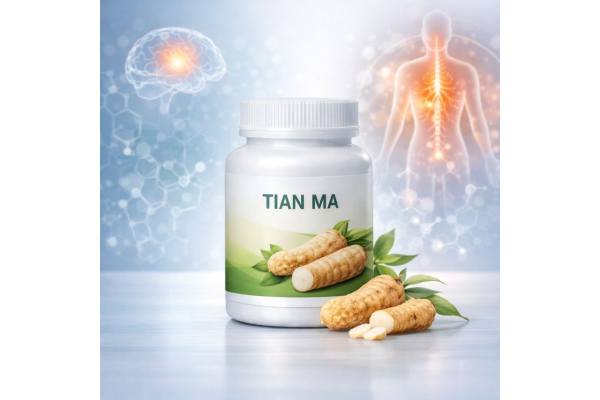
Tian ma is the Chinese name for Gastrodia elata, a traditional medicinal orchid that has been used for centuries to calm “internal wind” – symptoms like dizziness, headaches, tremors, and certain types of seizures. Today, Tian ma appears in herbal formulas, capsules, and functional foods aimed at supporting brain and nervous system health. Modern research focuses on its main active compound, gastrodin, and related phenolic compounds with antioxidant, anti-inflammatory, and neuroprotective properties.
This guide walks you through what Tian ma is, how it is used, potential benefits and risks, typical dosage ranges, and who should avoid it. It is designed to help you have an informed, realistic conversation with your doctor or qualified traditional Chinese medicine (TCM) practitioner before you consider using Tian ma on your own.
Quick Overview for Tian ma
- Tian ma is traditionally used for headaches, dizziness, migraine, tremors, and some neurological symptoms.
- Modern studies suggest neuroprotective, anti-inflammatory, and circulation-supporting effects, but evidence is still emerging.
- Common adult doses range from 3–10 g of dried Tian ma tuber daily in decoction or about 300–600 mg of standardized extract, under professional guidance.
- People who are pregnant, breastfeeding, taking blood thinners, or with serious heart, liver, or kidney disease should avoid unsupervised Tian ma use.
Table of Contents
- What is Tian ma and how it works
- Benefits and traditional uses of Tian ma
- How to take Tian ma in everyday life
- Tian ma dosage guidelines and typical ranges
- Tian ma side effects and safety risks
- Who should avoid Tian ma and when to seek help
- What science says about Tian ma today
What is Tian ma and how it works
Tian ma (Gastrodia elata) is a parasitic orchid native to East Asia. Unlike most plants, it has no chlorophyll and relies on a symbiotic fungus for nutrition. In traditional Chinese medicine it is classified as an herb that “extinguishes wind and stops spasms,” which roughly corresponds to stabilizing abnormal nervous system activity, especially in the head and limbs.
The part used medicinally is the tuber. It is usually steamed and dried before use, which helps preserve its active compounds. The best-known constituent is gastrodin, but Tian ma also contains p-hydroxybenzyl alcohol, vanillyl alcohol, polysaccharides, and small amounts of sterols and organic acids. Together, these compounds are thought to contribute to its effects rather than working in isolation.
From a modern biomedical viewpoint, Tian ma appears to act on several pathways at once:
- Neuroprotection: Tian ma extracts can reduce oxidative stress and protect neurons from damage in laboratory models.
- Anti-inflammatory effects: Some components down-regulate inflammatory signaling in the brain and vascular system.
- Modulation of neurotransmitters: Gastrodin and related compounds may enhance GABA (an inhibitory neurotransmitter), which could help calm overactive neuronal firing.
- Vascular effects: In some studies, Tian ma has helped improve cerebral blood flow and reduce vascular resistance, which may partly explain its use in headache and dizziness.
It is important to understand that Tian ma is not the same as conventional thyroid or neurological medications, and it should not be used as a substitute for prescribed drugs without medical supervision. Instead, it is usually used as an adjunct within a broader treatment plan, particularly in TCM practice.
Benefits and traditional uses of Tian ma
In traditional Chinese medicine, Tian ma is famous for addressing “liver wind,” a pattern that can present as headache, dizziness, vertigo, tremors, and certain types of spasms. Over centuries, practitioners have observed several core clinical uses that overlap with modern interest areas.
1. Headache and migraine
Tian ma is a key herb in classic formulas for headache and migraine, especially when pain is accompanied by dizziness, visual aura, or a sense of pressure in the head. In practice, it is rarely used alone; instead, it is combined with herbs that move blood, relax muscles, or calm the nervous system. Modern clinical research on gastrodin (a main Tian ma constituent) has reported improvements in migraine frequency, intensity, and attack duration when used alongside standard treatments, though study quality is variable and largely limited to Chinese populations.
2. Dizziness and vertigo
Because of its traditional indication for “internal wind,” Tian ma is commonly used for dizziness, lightheadedness, and certain forms of vertigo. It often appears with herbs like uncaria (Gou teng) in formulas designed to calm upward-rising yang and support healthy blood pressure and cerebral circulation. People may experience reduced spinning sensations or improved balance, but not everyone responds, and serious causes of vertigo must always be ruled out medically.
3. Neurological symptoms and spasms
Tian ma has long been used for numbness, limb weakness, and some seizure-like conditions. Preclinical data suggest anti-convulsant and neuroprotective effects in animal models of epilepsy and ischemic brain injury. In real-world practice, Tian ma is sometimes included in supportive regimens for patients with Parkinsonian tremors, neuropathic symptoms, or post-stroke recovery, always as an adjunct to conventional care.
4. Stress, mood, and cognitive support
Some newer research explores Tian ma’s potential to support mood and cognitive performance by reducing oxidative stress, modulating neurotrophic factors, and balancing neurotransmitters. This has sparked interest in Tian ma-containing “brain health” supplements. However, data in humans are still limited, and benefits should be considered possible rather than proven.
Because Tian ma acts on the nervous and vascular systems, it is not a casual “tonic” herb. A qualified practitioner should determine whether your pattern and diagnosis match what Tian ma is traditionally used for.
How to take Tian ma in everyday life
If you and your clinician decide that Tian ma is appropriate, the form and schedule make a real difference in how you respond and how well you tolerate it.
Common forms
- Traditional decoction: Sliced dried tuber simmered with other herbs for 20–40 minutes, then strained and taken as a warm tea. This is the classic TCM approach, often as part of formulas like Tian Ma Gou Teng Yin for headaches, dizziness, and high blood pressure patterns.
- Powdered herb (granules): Standardized granules made from decocted herbs that you dissolve in hot water. These are convenient and widely used in modern TCM clinics.
- Capsules or tablets: Standardized extracts of Tian ma or gastrodin. Labels may state the equivalent dry-herb amount or the dose of gastrodin per capsule.
- Tinctures and liquids: Alcohol or glycerin extracts, sometimes combined with other herbs aimed at neurological or vascular support. These allow flexible dosing but may contain significant alcohol.
Practical timing and use
Many clinicians suggest taking Tian ma preparations with food to reduce any chance of stomach upset. When used for headaches or dizziness, it is often divided into two or three doses evenly spaced through the day to keep blood levels steady. For chronic patterns (such as recurrent migraine), Tian ma is normally used for several weeks while monitoring symptoms, sleep, blood pressure, and any adverse effects.
A simple example of a daily routine under professional guidance might look like:
- Morning: One dose of a prescribed Tian ma–containing formula after breakfast.
- Midday: Second dose if symptoms tend to worsen in the afternoon.
- Evening: Third dose taken early in the evening, avoiding bedtime if it seems stimulating or disturbing to sleep in your case.
Combination with other approaches
Tian ma works best as part of a comprehensive plan that can include:
- Good sleep hygiene and regular routines.
- Adequate hydration and balanced nutrition.
- Management of triggers (such as certain foods in migraine).
- Appropriate conventional medications (for blood pressure, epilepsy, or migraine), which must never be stopped without medical advice.
Self-prescribing high-dose Tian ma in place of needed medical treatment is unsafe, especially for neurological or cardiovascular conditions.
Tian ma dosage guidelines and typical ranges
There is no single globally accepted “standard dose” for Tian ma. Dosage depends on your body weight, age, overall health, the form used, and whether it is part of a multi-herb formula. The following ranges are typical examples reported in TCM practice and research, not individualized prescriptions.
Traditional dried herb
- Common adult dose: 3–10 g of dried Tian ma tuber per day in decoction or as equivalent granules, usually divided into 2–3 doses.
- Higher doses (up to about 15 g/day) may be used short-term in some clinical settings but only under close professional supervision.
In formulas, Tian ma is nearly always combined with other herbs that complement its action and reduce potential side effects, which allows moderate doses to be effective.
Standardized extracts and supplements
Commercial supplements vary widely. Some provide:
- Standardized Tian ma extract equivalent to several grams of dried herb per day.
- Gastrodin-specific products with typical daily totals in the range of 100–300 mg, sometimes more in clinical trials.
Because supplement quality and strength differ, it is essential to:
- Follow the manufacturer’s dosing instructions.
- Prefer products that list both extract ratio and the amount of gastrodin or other key actives per capsule.
- Discuss the label with your healthcare provider, especially if you have chronic illness or take medications.
Duration of use
For issues like recurrent headaches or dizziness, Tian ma is often prescribed for 4–8 weeks, followed by reassessment. Long-term continuous use should only proceed under supervision, with periodic checks of blood pressure, liver and kidney function (if doses are high or combined with other herbs), and symptom patterns.
Special populations
- Children and adolescents: Self-directed Tian ma use is not recommended. Dosing in pediatric cases is highly individualized and should be handled only by experienced clinicians.
- Older adults: Start at the low end of typical adult ranges, as they are more likely to be on multiple medications and have reduced organ reserve.
- People with low blood pressure: Doses may need to be smaller or avoided entirely, depending on medical advice.
The guiding principle is to use the lowest effective dose for the shortest necessary duration, while monitoring response and tolerability carefully.
Tian ma side effects and safety risks
Tian ma is generally well tolerated in traditional doses, and formal toxicity studies of water extracts have not revealed obvious genotoxic or short-term toxic effects at doses far higher than those used in humans. Nevertheless, “generally safe” does not mean risk-free, especially when used unsupervised or alongside multiple medications.
Commonly reported mild effects
Some people experience:
- Gastrointestinal discomfort such as nausea, mild stomach pain, or loose stools.
- A sensation of warmth, flushing, or lightheadedness if blood pressure changes.
- Mild drowsiness or, less commonly, agitation or insomnia, reflecting its effects on the nervous system.
These reactions often improve with dose adjustment or taking the herb with food. If they persist or worsen, use should be stopped and medical advice sought.
Potential serious risks
Although rare, more concerning possibilities include:
- Marked blood pressure changes: In people already on antihypertensive medications, Tian ma could theoretically contribute to excessive lowering of blood pressure, with dizziness or fainting.
- Excess sedation or interaction with neurological drugs: Because Tian ma may modulate GABA and other neurotransmitters, combining it with sedatives, anti-anxiety medications, or anti-epileptic drugs might exaggerate central nervous system effects in some individuals.
- Allergic reactions: As with any plant, allergic responses are possible, ranging from skin rashes to more serious reactions.
- Effects on clotting: Some TCM practitioners are cautious using Tian ma in patients on anticoagulants or antiplatelet drugs, though firm human data are limited. The concern arises because many “circulation-modulating” herbs can interact unpredictably with such medications.
Quality and contamination issues
Herbal products can vary widely in purity and potency. Risks increase when:
- The herb is adulterated with similar-looking species.
- Products contain undeclared pharmaceuticals or heavy metals.
- Extraction processes leave residual solvents or contaminants.
Choosing products manufactured under good quality standards and recommended by a qualified clinician reduces, but does not eliminate, these risks.
If you experience chest pain, severe or sudden headache, confusion, difficulty speaking, weakness on one side of the body, or a seizure while using Tian ma, seek emergency medical care immediately. These are signs of serious conditions that Tian ma cannot treat and may even mask for a short time.
Who should avoid Tian ma and when to seek help
Because Tian ma affects the brain and circulation, some groups should avoid it or use it only under tightly controlled conditions.
People who should generally avoid unsupervised Tian ma
- Pregnant or breastfeeding individuals: There is insufficient safety data, and Tian ma’s neuroactive compounds could, in theory, affect the fetus or infant.
- Children and adolescents: Their nervous systems are still developing, and dosing is complex. Use should be limited to specialist care.
- People with serious heart, liver, or kidney disease: Organ dysfunction can alter how herbs and drugs are processed, increasing the risk of side effects and interactions.
- Those with a history of severe psychiatric illness or seizures not under stable control: Any changes to neurological treatment should be handled by a specialist.
Medication interactions to watch for
Caution is especially important if you take:
- Blood pressure medications (for high or low blood pressure).
- Sedatives, hypnotics, anti-anxiety medications, or anti-epileptics.
- Antiplatelet or anticoagulant drugs (such as aspirin, warfarin, direct oral anticoagulants, or clopidogrel).
- Multiple medications that already stress the liver or kidneys.
In these situations, Tian ma might still be considered, but only with coordinated care and monitoring, not as a self-selected supplement.
When to stop Tian ma and contact a doctor
Stop using Tian ma and seek medical advice if you notice:
- New or worsening headaches, especially sudden, severe, or associated with neurological symptoms.
- Palpitations, chest discomfort, or significant changes in your usual blood pressure readings.
- Persistent dizziness, confusion, mood changes, or unusual agitation.
- Signs of an allergic reaction such as rash, swelling, or difficulty breathing.
Tian ma should never delay urgent evaluation. If symptoms are acute or severe, emergency services are the priority; discussing herbal use can then happen as part of the medical assessment.
What science says about Tian ma today
In recent years, Tian ma has attracted growing research attention, particularly for neurological and cerebrovascular conditions. Several trends emerge from modern studies:
1. Broad pharmacological profile
Comprehensive reviews of Gastrodia elata describe more than 100 identified compounds, many with demonstrated biological activity in laboratory systems. These include antioxidant, anti-inflammatory, anti-convulsant, neuroprotective, and circulatory-modulating effects. Together, they support the traditional use of Tian ma for conditions involving the nervous system and cerebral blood flow.
2. Evidence for migraine and headache
A meta-analysis of randomized controlled trials of gastrodin (often combined with conventional therapies) in migraine reported improvements in overall response rate, pain intensity, frequency of attacks, and attack duration compared with control treatments. However, most of the included trials were small, and many had a high or unclear risk of bias. This means the results are promising but not definitive, and they cannot yet justify replacing established migraine treatments with Tian ma or gastrodin.
3. Neuroprotection and cognitive function
Experimental work in cell and animal models suggests that Tian ma and its active ingredients can:
- Reduce neuronal death from oxidative stress and excitotoxicity.
- Modulate inflammatory pathways in the brain and microglial activation.
- Support synaptic plasticity and neurotrophic factors that are important for learning and memory.
Some early human studies and clinical observations support potential benefits in conditions like vascular dementia, Parkinson’s disease symptoms, or post-stroke recovery, but these remain preliminary and often involve multi-herb formulas where Tian ma is only one component.
4. Safety data
A dedicated toxicity study on water extract of Gastrodia elata found no evidence of mutagenicity or significant toxicity in standard in vitro and 28-day oral animal tests, even at doses many times higher than typical human intakes. This supports the general impression that Tian ma is relatively safe when used appropriately. Still, long-term human safety data, especially in vulnerable groups and in combination with modern drugs, are limited.
5. Remaining gaps
Key gaps include:
- High-quality, large randomized controlled trials in diverse populations.
- Detailed pharmacokinetic studies in humans for different extracts and doses.
- Systematic assessment of herb–drug interactions.
- Long-term observational data on safety in real-world settings.
For now, the most balanced position is that Tian ma is a promising traditional herb with supportive but not conclusive modern evidence. It is best viewed as a potential adjunct to, not a replacement for, evidence-based medical care.
References
- Gastrodia elata BI.:A Comprehensive Review of Its Traditional Use, Botany, Phytochemistry, Pharmacology, and Pharmacokinetics 2023 (Systematic Review)
- Neuropharmacological effects of Gastrodia elata Blume and its active ingredients 2025 (Systematic Review)
- Effectiveness of gastrodin for migraine: A meta-analysis 2022 (Meta-analysis, RCTs)
- Safety evaluation of water extract of Gastrodia elata Blume: Genotoxicity and 28-day oral toxicity studies 2020 (Toxicology Study)
- From molecules to medicine: a systematic review of Gastrodia elata’s bioactive metabolites and therapeutic potential 2025 (Systematic Review)
Disclaimer
The information in this guide is for educational purposes only and is not a substitute for personalized medical advice, diagnosis, or treatment. Tian ma is a pharmacologically active herb that can interact with medications and underlying health conditions. Always consult your physician, pharmacist, or a qualified traditional medicine practitioner before starting, changing, or stopping any herbal or nutritional supplement, especially if you are pregnant, breastfeeding, managing a chronic illness, or taking prescription drugs. Never delay or disregard professional medical advice because of information you have read online.
If you found this article helpful, please consider sharing it on Facebook, X (formerly Twitter), or any platform you prefer, and follow our work on social media. Your support in sharing our articles helps our team continue to research and produce accurate, high-quality health content for more readers.