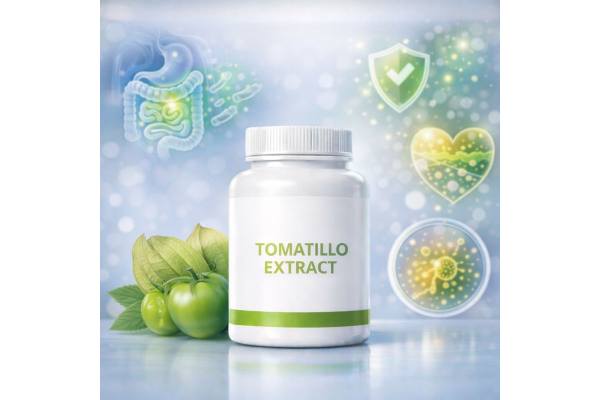
Tomatillo extract is a concentrated form of compounds found in the husk tomato (most often Physalis philadelphica and sometimes Physalis ixocarpa). While most people know tomatillos as the bright, tangy base of green salsa, extracts are now sold for “metabolic support,” antioxidant benefits, and general wellness. The interesting part is where the plant stores its chemistry: not only in the fruit, but also in the papery husk (calyx) that wraps it. That husk is often treated as waste in food production, yet it contains polyphenols and related plant chemicals that may influence digestion and oxidative stress pathways.
This guide explains what tomatillo extract is, which benefits are realistic (and which are oversold), how to use it safely, what dosage ranges make sense, and what side effects and interactions to watch for—especially if you take blood sugar or blood pressure medications.
Essential Insights
- May modestly support post-meal glucose control and oxidative stress markers, but human data is limited.
- Choose fruit or husk (calyx) extracts from reputable brands; avoid leaf-only products unless clinically guided.
- Typical cautious supplemental range: 400–1,100 mg/day of dried extract, taken with meals.
- Stop and reassess if you get persistent stomach upset, rash, or unusual fatigue.
- Avoid during pregnancy and breastfeeding, and use extra caution with diabetes medications.
Table of Contents
- What is tomatillo extract and what is in it?
- What benefits are realistic and who might notice them?
- How to use tomatillo extract in real life
- How much should you take and when?
- Side effects, interactions, and who should avoid it
- What the evidence actually says and what to try instead
What is tomatillo extract and what is in it?
Tomatillo extract is a supplement ingredient made by concentrating compounds from the tomatillo plant—most commonly the fruit and/or the papery outer husk (also called the calyx). In supplement labels you may see it listed as Physalis philadelphica extract, tomatillo extract, husk tomato extract, or calyx (husk) extract. The source matters: fruit-based extracts behave more like “food concentrates,” while husk (calyx) extracts can be richer in certain polyphenols and may be used specifically for metabolic or antioxidant positioning.
What’s in it depends on the plant part and extraction method. In general, tomatillo-related extracts may contain:
- Polyphenols (including phenolic acids), which can act as antioxidants and may influence digestive enzymes and inflammation signaling.
- Flavonoids, which are a large class of polyphenols often studied for vascular and oxidative stress effects.
- Steroidal lactones in the broader Physalis genus (including withanolide-like compounds and physalin-type compounds). These are part of why Physalis plants are researched in labs for immune and anti-inflammatory activity, but they also raise “dose matters” cautions in concentrated extracts.
Extraction method changes the profile. Water extracts (infusions, macerations, and some ultrasound-assisted water extracts) tend to emphasize more water-soluble compounds. Alcohol extracts can pull a broader range of constituents, but quality control matters more because stronger extraction can concentrate compounds you may not want at high doses.
A helpful way to think about tomatillo extract is “targeted concentration.” Eating tomatillos gives you fiber, vitamins, and a natural matrix that slows absorption. Extracts remove much of the fiber and can deliver a more pharmacologically active mix. That is why the same plant can be both a food and a supplement ingredient—yet the safety expectations should be different.
If your goal is general nutrition, the whole food often makes more sense. If your goal is a specific, measurable effect (like post-meal glucose support), an extract may be the more relevant tool—provided you use it carefully and track outcomes.
What benefits are realistic and who might notice them?
Tomatillo extract is often marketed as an “antioxidant” or “blood sugar support” supplement. Those themes aren’t random: research on tomatillo husk or closely related Physalis calyx extracts has explored carbohydrate digestion, oxidative stress markers, and metabolic outcomes in animal models, along with enzyme-inhibition tests in lab settings. Still, the biggest limitation is this: human clinical trials specifically on tomatillo extract are scarce. So the most responsible approach is to treat benefits as potential and look for changes you can actually measure.
Benefits that are most plausible (and how to evaluate them):
- Post-meal glucose support (most targeted claim): Some Physalis calyx/husk extracts have been studied for inhibiting carbohydrate-digesting enzymes (like alpha-amylase and alpha-glucosidase) in lab testing, and for improving short-term glucose handling in animal models. If this works for you, the change is usually subtle: fewer “crashes” after carb-heavy meals, or slightly smoother glucose readings if you use a continuous glucose monitor.
- Oxidative stress and antioxidant support: Polyphenols can increase the body’s antioxidant capacity and influence oxidative pathways. In practical terms, you might not “feel” antioxidants. This benefit is more about long-term risk management than an immediate sensation.
- Inflammation modulation (possible but indirect): The Physalis genus includes compounds researched for anti-inflammatory and immunomodulatory activity. For a typical supplement user, any perceived benefit here is more likely to show up as improved recovery, less digestive discomfort, or better tolerance of dietary indiscretions—but those signals are nonspecific and easy to misattribute.
- Digestive comfort (variable): Some people tolerate polyphenol extracts well; others get bloating or looser stools. If you notice benefits, they often come from taking the extract with meals and keeping the dose modest.
Who might notice benefits most:
- People with higher-carb diets who want to support post-meal metabolic control (especially those already working on sleep, protein intake, and fiber).
- People who respond well to polyphenol-rich supplements generally (green tea extracts, chlorogenic-acid–rich coffee extracts, or grape polyphenols).
- Those willing to track outcomes: fasting glucose, post-meal readings, waist circumference, or energy stability.
Who is less likely to benefit:
- Anyone expecting quick weight loss without changing food intake or activity.
- People with already excellent metabolic markers—there’s less room for noticeable improvement.
- Anyone using a low-carb diet consistently (the “enzyme inhibition” angle matters less when fewer starches are present).
A realistic mindset: tomatillo extract is best viewed as an adjunct—not a replacement for dietary fiber, weight training, protein at breakfast, or medication when needed.
How to use tomatillo extract in real life
Most people buy tomatillo extract because they want one of two things: metabolic support (especially around carbs) or a broad antioxidant supplement they can take daily. How you use it should match that intent, and it should also match the form you purchased—capsule, powder, or tincture.
Common forms and how to use them:
- Capsules or tablets (most consistent): This is the easiest form for predictable dosing. Take with meals to improve tolerance and to align with the “carb digestion” hypothesis.
- Powdered extract: Mix into water, smoothies, or yogurt. The taste can be mildly herbal or tart depending on the extraction method. Powder is convenient if you want to split doses across meals.
- Tinctures (alcohol or glycerin extracts): Tinctures vary widely in strength. If you use one, look for a label that states the extract ratio (for example 1:2, 1:5) and the solvent percentage. Without that, dosing becomes guesswork.
Practical use cases that tend to make sense:
- With your highest-carb meal
If your main goal is post-meal glucose support, take the extract 0–15 minutes before eating or with the first bites. Track how you feel 1–3 hours later (energy, cravings, sleepiness). If you use a glucose meter or CGM, compare similar meals with and without the extract. - Split dosing for tolerance
If you get stomach sensitivity, take smaller amounts with two meals instead of one larger dose. - Short “trial blocks” with a defined goal
Run a two-week trial with a stable diet pattern. Decide ahead of time what “success” means—examples: lower post-meal peaks, fewer afternoon crashes, or reduced cravings after pasta/rice meals. If nothing changes, that’s useful information.
How to choose a higher-quality product:
- Species and part used should be clear: Prefer labels that specify Physalis philadelphica (or Physalis ixocarpa) and indicate fruit, husk/calyx, or both.
- Avoid vague “proprietary blend” dosing: You want the mg amount for the tomatillo extract itself.
- Look for third-party testing: Heavy metals and pesticide residues matter more for concentrated plant extracts than for occasional culinary use.
- Be cautious with leaf extracts: Leaves in many Solanaceae plants can contain higher levels of alkaloids. Food tradition and most supplement research typically focus on fruit/calyx rather than leaf-only products.
If you want to link the extract to a routine, pair it with a consistent habit: a glass of water before meals, a short walk after dinner, or a protein-first plate structure. Those habits make the supplement easier to evaluate—and often amplify any small benefits.
How much should you take and when?
There is no universally established “official” tomatillo extract dosage for humans, partly because products differ (fruit vs husk, water vs alcohol extraction, standardized vs non-standardized) and partly because direct human trials are limited. The best way to create a practical dosage plan is to combine (1) label guidance, (2) conservative safety logic, and (3) a transparent link to how animal-dose research translates—without pretending that translation guarantees the same effect in people.
A cautious, practical daily range for many adults is:
- 400–1,100 mg/day of dried extract, typically taken with meals.
Why that range? In animal studies of Physalis calyx/husk extracts, doses are often expressed as mg per kg of body weight. A common scientific method converts rat dosing into a rough human equivalent dose using body-surface-area scaling. When you convert typical studied rat doses into an adult human estimate (for example, a 70 kg adult), you land in the “hundreds of milligrams to around a gram” neighborhood. This does not prove effectiveness in humans—but it helps avoid wildly unrealistic dosing.
A stepwise dosing plan (safer than jumping to a full dose):
- Days 1–3: 200–400 mg/day with your largest meal
- Days 4–10: 400–800 mg/day (either once daily with a meal or split across two meals)
- After day 10 (only if helpful and well tolerated): up to 1,100 mg/day split into two doses
Timing guidance based on intent:
- For post-meal glucose support: take with the first bites of a carb-containing meal (or 10–15 minutes before).
- For general antioxidant support: take with a meal at a consistent time daily.
- For sensitive stomachs: avoid taking on an empty stomach; split the dose.
How to handle different extract types:
- Standardized extracts (best for consistency): If your label lists standardization (for example, “X% total polyphenols”), you can keep your dose stable for longer and evaluate results more confidently.
- Non-standardized extracts: Start lower. Effects and tolerability can vary more lot-to-lot.
How long to take it:
- Trial period: 2–4 weeks is usually enough to notice changes in post-meal energy stability or glucose readings.
- Longer use: If you continue beyond 8–12 weeks, consider a 1–2 week break to reassess baseline and tolerance.
Red flags that your dose is too high:
- New or persistent nausea, cramps, loose stools, headaches, or unusual fatigue.
- Signs of low blood sugar if you are on glucose-lowering medications (shakiness, sweating, confusion).
If you take diabetes medication, it’s smart to treat tomatillo extract as a potential “amplifier” and adjust only with clinical guidance—because the combination can sometimes push glucose too low.
Side effects, interactions, and who should avoid it
Tomatillos are widely eaten as food, which suggests a strong baseline of safety in culinary amounts. But extracts are different: they concentrate plant compounds and can introduce side effects that most people never experience from salsa. Safety is mostly about dose, product quality, and your personal risk factors.
Common side effects (usually dose-related):
- Gastrointestinal upset: nausea, stomach cramping, loose stools, or bloating—especially if taken on an empty stomach or at higher doses.
- Headache or “off” feeling: sometimes reported with polyphenol-rich extracts, often improving with dose reduction or taking with food.
- Allergic reactions: rash, itching, swelling, or breathing difficulty (rare but serious). If this happens, stop immediately and seek medical help if symptoms are significant.
Important interactions to consider:
- Diabetes medications and insulin: The most important practical risk is additive glucose lowering. If you use insulin, sulfonylureas, GLP-1 drugs, or other glucose-lowering agents, monitor closely. Symptoms of hypoglycemia are a safety signal, not a “detox” sign.
- Blood pressure medications: If an extract improves metabolic function or changes fluid balance for you, blood pressure may shift slightly. That can be helpful or can cause lightheadedness in people already well-controlled on medication.
- Immunosuppressants or autoimmune conditions: Some Physalis compounds studied in labs have immunomodulatory properties. That does not automatically mean “immune boosting” in humans, but it is enough uncertainty to justify caution if you have a transplant, take immunosuppressant drugs, or have autoimmune disease flares.
Who should avoid tomatillo extract (or use only with clinician approval):
- Pregnant or breastfeeding people: Concentrated extracts are not the same as food use, and safety data is limited.
- Children: Avoid unless specifically recommended by a qualified pediatric clinician.
- People with a known Solanaceae sensitivity: If tomatoes, peppers, eggplant, or related plants reliably trigger symptoms for you, avoid or be extremely cautious.
- People with unstable diabetes control or frequent hypoglycemia: This is not a safe “experiment” category.
- Anyone scheduled for surgery soon: Many clinicians recommend pausing non-essential supplements 1–2 weeks pre-op because of unpredictable interactions with anesthesia, glucose control, and blood pressure.
Safety habits that reduce risk:
- Start low and increase slowly.
- Choose fruit or husk/calyx extracts from reputable brands with contaminant testing.
- Use a defined trial period and monitor symptoms and, if relevant, glucose readings.
- Stop immediately if you develop rash, facial swelling, wheezing, or severe GI symptoms.
A final caution: some supplements may blend tomatillo with other glucose-lowering ingredients (like berberine, cinnamon extracts, or bitter melon). Those combos can increase both benefits and risks. If you use a blend, assume the interaction risk is higher and dose more conservatively.
What the evidence actually says and what to try instead
The evidence for tomatillo extract sits in an “emerging” zone: promising mechanistic signals, encouraging animal data in some contexts, and relatively little direct human-trial confirmation. That doesn’t mean it is useless—it means you should treat it as a hypothesis you test carefully rather than a guaranteed outcome.
What the current research picture supports most strongly:
- Metabolic and digestive-enzyme angles: Studies on tomatillo husk/calyx extracts and closely related Physalis calyx extracts explore carbohydrate digestion enzymes and metabolic outcomes in animal models. This supports the idea that some extracts could reduce post-meal spikes by slowing starch breakdown or absorption, or by improving metabolic signaling under stress conditions (like obesogenic diets).
- Antioxidant capacity: Tomatillo and Physalis species are rich in plant compounds that can show antioxidant activity in lab tests. In living systems, this may translate into improved oxidative stress markers under certain conditions, but it’s not something everyone will feel.
- Compound diversity as both strength and challenge: The Physalis genus contains a wide mix of polyphenols and steroidal lactones. That diversity may explain why researchers keep studying it—but it also explains why supplement outcomes vary so much by extract type, plant part, and dosing.
Where the evidence is weaker (and marketing often overreaches):
- Cancer prevention or treatment claims: Laboratory findings about specific compounds are not the same as proven human outcomes. Treat any “anti-cancer” marketing as a red flag.
- Guaranteed weight loss: If weight changes happen in animal models, they’re usually part of broader metabolic changes under controlled diets. In real life, weight loss still depends on energy balance, diet quality, sleep, and muscle mass.
- One-size-fits-all dosing: Because extracts differ, “one capsule works for everyone” is not a credible message.
If you want alternatives with stronger human evidence for similar goals, consider these categories (and discuss with a clinician if you have medical conditions):
- For post-meal glucose control: lifestyle first (protein-first meals, post-meal walking), then well-studied options like soluble fiber (psyllium), or clinically used approaches tailored to your risk profile.
- For polyphenol support: standardized green tea catechins, grape seed extract, or chlorogenic-acid–rich coffee extracts may be easier to dose consistently—though each has its own safety considerations.
- For insulin sensitivity support: strength training, sleep regularity, and weight reduction if needed are still the highest-impact interventions.
How to decide if tomatillo extract is worth it for you:
- Pick a single goal (for example, “reduce post-dinner glucose peak” or “avoid afternoon crash”).
- Use a consistent dose for 2–4 weeks (see the dosage section).
- Track 1–2 outcomes you can measure (CGM data, fasting glucose, waist circumference, energy stability, cravings).
- If nothing changes, stop. If it helps, keep the dose modest and reassess every couple of months.
This evidence-aware approach protects you from both extremes: dismissing a potentially useful tool and overcommitting to a supplement that may not match your biology.
References
- Evaluation of Aqueous Maceration and Ultrasound-Assisted Extracts of Physalis philadelphica Lam. Solanaceae Husk on Hyperglycemia, Insulin Resistance, Hepatic Steatosis, and Oxidative Stress Markers in Obese Rats 2025 (Animal Study)
- Genus Physalis L.: A review of resources and cultivation, chemical composition, pharmacological effects and applications – PubMed 2024 (Review)
- Hypoglycemic and antioxidant effects of green tomato (Physalis ixocarpa Brot.) calyxes’ extracts – PubMed 2021 (Animal and In Vitro Study)
- Naturally occurring physalins from the genus Physalis: A review – PubMed 2021 (Review)
- A review of nutritional properties and health benefits of Physalis species – PubMed 2020 (Review)
Disclaimer
This article is for educational purposes only and does not provide medical advice, diagnosis, or treatment. Tomatillo extract products vary widely in strength and composition, and research in humans is limited. If you are pregnant, breastfeeding, have a medical condition (especially diabetes, low blood pressure, liver or kidney disease), or take prescription medications, consult a qualified healthcare professional before using tomatillo extract. Stop use and seek medical help if you develop signs of an allergic reaction, severe gastrointestinal symptoms, or symptoms of low blood sugar.
If you found this guide useful, please consider sharing it on Facebook, X (formerly Twitter), or any platform you prefer, and follow us on social media. Your support through sharing helps our team continue producing high-quality, evidence-aware health content.