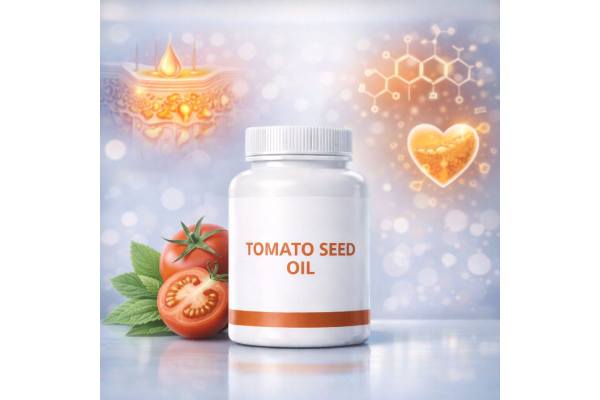
Tomato seed oil is a specialty oil pressed from the tiny seeds left behind when tomatoes are processed into sauce, paste, and juice. That origin gives it two standout advantages: it’s a form of “upcycled nutrition,” and it naturally concentrates fat-soluble compounds that don’t show up much in watery tomato foods. Depending on how it’s produced, tomato seed oil can contain a mix of polyunsaturated and monounsaturated fats, vitamin E–type antioxidants (tocopherols), and small amounts of carotenoids that contribute to its color and oxidative stability.
People use tomato seed oil in two main ways: as an edible finishing oil for salads and cold dishes, and as a skin-softening oil in facial and body routines. This guide explains what tomato seed oil is, which benefits are realistic, how to use it safely, and how to dose it—both topically and as a food—while avoiding common storage and irritation mistakes.
Quick Overview
- Can support softer, more comfortable skin by reinforcing the skin barrier when used consistently.
- Works best as a finishing oil (low-heat) rather than a high-temperature frying oil.
- Typical use range: 5–10 mL/day as food, or 2–6 drops per application on skin.
- Patch test first; discontinue if stinging, rash, or worsening acne persists.
- Avoid if you have a tomato allergy, very reactive skin, or a history of frequent product-triggered dermatitis.
Table of Contents
- What is tomato seed oil and how is it made?
- What are the benefits for skin and hair?
- Can you eat tomato seed oil for health?
- How to use tomato seed oil day to day
- How much tomato seed oil should you use?
- Side effects and who should avoid it
- What the evidence says and how to choose
What is tomato seed oil and how is it made?
Tomato seed oil is the oil extracted from the seeds of the common tomato plant (Solanum lycopersicum). In practice, most commercial tomato seed oil comes from tomato “pomace,” the mixture of skins, pulp, and seeds left after industrial processing. The seeds are separated, dried, and then pressed or extracted to yield oil. That supply chain matters because it affects freshness, contamination risk, and how many of the oil’s minor compounds survive.
You’ll typically see tomato seed oil produced in three ways:
- Cold pressing (mechanical pressing at relatively low temperatures)
- Solvent extraction (often used to maximize yield, then refined)
- Supercritical CO₂ extraction (a high-control method that can preserve certain compounds, though it depends on parameters and cost)
For consumers, the label cues are simple: “cold-pressed,” “virgin,” and “unrefined” usually imply more aroma and more naturally occurring minor compounds, while “refined” oils tend to be lighter in smell and more stable but may contain fewer pigments and volatile compounds.
What makes tomato seed oil different from “tomato extract” is that it is primarily a fat matrix. It can carry small amounts of tomato-derived carotenoids and other lipophilic compounds, but its core nutritional identity is the fatty acid profile. Tomato seed oil is commonly described as rich in unsaturated fats, with linoleic acid (an omega-6 polyunsaturated fat) often being dominant, and oleic acid (a monounsaturated fat) contributing to texture and stability. Many seed oils have a similar fatty acid pattern, but tomato seed oil is distinctive because it can also include measurable tocopherols (vitamin E compounds) and traces of carotenoids from the tomato processing stream.
A practical advantage is sustainability: using tomato seeds turns a by-product into a value-added ingredient. A practical limitation is oxidation risk: polyunsaturated fats can oxidize if poorly stored or repeatedly heated. That’s why tomato seed oil is often a better fit for cold use, gentle cooking, and skincare than for high-heat frying.
If you’re choosing a first bottle, treat tomato seed oil like you would a delicate culinary oil: prioritize freshness, dark glass packaging, clear batch information, and a smell that’s clean and mild—not sharp, paint-like, or bitter.
What are the benefits for skin and hair?
Tomato seed oil is most compelling as a topical oil because its fatty acids and naturally occurring minor compounds align with what many people want from a face or body oil: comfort, softness, and a stronger-feeling barrier. It is not a prescription treatment, and it won’t replace sunscreen or medical therapy for eczema or acne. But when used appropriately, it can play a supportive role in everyday skin maintenance.
Benefits that are most realistic for topical use:
- Barrier support and reduced dryness
Oils rich in unsaturated fatty acids can help reduce transepidermal water loss by reinforcing the lipid layer on the skin’s surface. In practical terms, this often feels like less tightness after cleansing, fewer dry patches, and smoother texture—especially in colder months or during frequent hand washing. - Softer look and feel
Tomato seed oil acts as an emollient, meaning it smooths and softens by filling microscopic gaps between skin cells at the surface. This can make skin feel more supple without needing a heavy occlusive layer. - Support in “stressed skin” routines
Some tomato-derived oils used in cosmetic formulations have been evaluated in skin-care contexts aimed at reducing sensitivity and improving the feel of skin exposed to environmental stressors. This doesn’t mean tomato seed oil is an anti-pollution shield, but it supports the idea that tomato-based oils can be workable cosmetic ingredients when formulated and used consistently.
Where results vary (and why):
- Acne-prone skin: some people find plant oils calming; others break out. The outcome often depends on the rest of the routine (cleansers, exfoliants, retinoids), the amount applied, and whether the oil is used on damp skin. Using too much oil can trap sweat and residue, especially under makeup or sunscreen.
- Very reactive skin: any botanical oil can cause stinging or dermatitis in a small subset of users. “Natural” does not guarantee “non-irritating.”
Hair and scalp use:
- For hair: a few drops worked through mid-lengths and ends can reduce frizz and improve shine, especially on textured or color-treated hair.
- For scalp: use cautiously. Oils can help with dryness, but they can also worsen scalp folliculitis or seborrheic dermatitis in some people. If flaking or itching worsens, discontinue.
The most useful way to think about tomato seed oil is as a “routine stabilizer.” If your skin is dry, over-exfoliated, or barrier-stressed, a simple oil step used consistently—without stacking too many actives—often makes routines easier to tolerate and maintain.
Can you eat tomato seed oil for health?
Tomato seed oil can be used as an edible oil, and nutritionally it behaves like many unsaturated seed oils: it provides energy, helps you absorb fat-soluble nutrients from meals, and supplies fatty acids that can support a balanced dietary fat profile. The key is to set realistic expectations. Tomato seed oil is not a “medicine oil,” and the strongest evidence base around tomatoes still comes from whole tomato foods and established patterns like Mediterranean-style eating. Tomato seed oil can complement those patterns, but it is not a shortcut around them.
Potential dietary advantages:
- A mostly unsaturated fat profile
Tomato seed oil is commonly reported as high in unsaturated fats, with a large share coming from linoleic acid and a smaller but meaningful share from oleic acid. For many diets, swapping some saturated fat sources for unsaturated oils is a practical way to improve the overall fat balance of meals. - Natural tocopherols and minor lipophilic compounds
Tomato seed oil can contain tocopherols (vitamin E compounds) and traces of carotenoids. These compounds may contribute to oxidative stability and antioxidant capacity, although the actual amounts depend on processing and storage. This is one reason fresh, well-stored oil is a better choice than an old bottle that has been opened for months. - Food experience and adherence
A benefit many people overlook is culinary satisfaction. A flavorful finishing oil can make salads and vegetable dishes more appealing, which helps people stick to higher-fiber meals over time. If tomato seed oil helps you eat more vegetables or legumes consistently, that “secondary effect” can be more valuable than any single compound in the oil.
Where caution is appropriate:
- Heat sensitivity
Oils higher in polyunsaturated fats generally tolerate high-heat cooking less well than oils specifically bred for high oleic content. Using tomato seed oil for low-heat sautéing may be fine, but repeated high-heat frying is not a smart default. - Calorie density
Like all oils, it is energy dense. If your goal is weight loss, the most important variable is portion control. Adding oil on top of an already calorie-rich diet often backfires. - “Halo effect” marketing
Tomato seed oil sometimes gets marketed as if it carries the same health narrative as lycopene supplements or tomato extracts. In reality, the primary driver of health effects from an edible oil is still the fatty acid profile, the dose, and what it replaces in your diet.
If you want to test tomato seed oil as a food, the cleanest approach is substitution: use it instead of a less favorable fat source in a meal you already eat, rather than adding it on top of everything.
How to use tomato seed oil day to day
Tomato seed oil is most useful when you treat it as a “small, consistent” addition—either to your skincare routine or your cooking routine—rather than a product you use heavily for a week and then forget. Consistency matters because the benefits people want (softer skin, calmer dryness, better meal satisfaction) are cumulative.
Topical use: a practical routine that stays simple
- Cleanse gently
Use a cleanser that doesn’t leave skin squeaky or tight. If your barrier is already stressed, harsh cleansing is often the real problem. - Apply on slightly damp skin
Place 2–6 drops in your palm, warm it between hands, and press into the face and neck. Damp skin helps spread the oil thinly and reduces the temptation to over-apply. - Seal only if needed
If your skin is very dry, apply a basic moisturizer over the oil. If you are oily or acne-prone, you may prefer oil only at night, 2–4 times per week. - Patch test before full-face use
Apply a tiny amount to a small area (such as behind the ear or along the jawline) for several days to check for stinging, redness, or bumps.
Hair use: keep it minimal
- For ends: 1–3 drops on dry hair to reduce frizz and add shine.
- For pre-wash treatment: apply a thin layer to ends for 20–60 minutes, then shampoo.
Culinary use: where the oil shines
- Salad dressings and cold sauces
Tomato seed oil works well in vinaigrettes and as a finishing oil on beans, vegetables, and grains. - Low-heat cooking, if you choose to cook with it
Use it for gentle sautéing rather than high-heat searing. High heat accelerates oxidation, which can change flavor and reduce quality. - Flavor pairing ideas
It tends to pair naturally with lemon, vinegar, herbs, garlic, and roasted vegetables. If the flavor is mild, it can still work as a “neutral plus” oil.
A helpful mental model is “function first.” Use tomato seed oil when you want either (a) a light emollient step that reduces dryness without a heavy feel, or (b) a finishing oil that makes vegetable-forward meals easier to enjoy and repeat.
How much tomato seed oil should you use?
Because tomato seed oil can be used both on the skin and as food, “dosage” depends on the context. There is no single universally established dose for everyone, and you do not need large amounts to get practical value. The safest plan is to start small, watch how you respond, and keep the oil’s role specific.
Topical dosage (face and body)
- Face and neck: 2–6 drops per application
For many people, this is enough to cover the face evenly when applied to slightly damp skin. If your skin stays shiny for hours or makeup slips, you’re probably using too much. - Body: a pea-sized amount per limb area, or mix into lotion
If you prefer a lighter feel, mix tomato seed oil into a basic body lotion rather than applying it alone. A common practical range in DIY mixing is about 1–3% oil in the final mixture (for example, a few drops per palmful of lotion). Keep mixtures small so you can use them up quickly. - Frequency:
Normal to dry skin: once daily (often best at night)
Oily or acne-prone skin: 2–4 nights per week to start
Barrier-stressed skin: nightly for 2–3 weeks, then reassess
Edible dosage (food use)
- Typical range: 5–10 mL/day (about 1–2 teaspoons)
This amount is large enough to function as a finishing oil or dressing base without turning into “extra calories by accident.” If you want to use it more, do so by replacing another fat source rather than adding it on top. - Timing: with meals
Use it with vegetables, legumes, or grains where the oil improves taste and helps you stick to the meal pattern you want. - Cooking limits: keep heat gentle
If you cook with it, keep temperatures moderate and avoid using it as your main frying oil. Reserve it for cold use or finishing when possible.
How long to trial it
- Skin: 2–4 weeks is a fair trial for dryness, comfort, and texture changes.
- Food: 4–8 weeks is a reasonable window to judge whether it improves meal adherence or fits your digestion and preferences.
Signs you should reduce the amount
- For skin: clogged pores, persistent shine, or increased bumps.
- For food: reflux flares, nausea, or digestive discomfort after oily meals.
A small dose used consistently almost always beats an aggressive dose used inconsistently—especially for topical oils where irritation and breakouts are often caused by “too much, too soon.”
Side effects and who should avoid it
Tomato seed oil is generally well tolerated, but side effects can happen—particularly with topical use on reactive skin, or with edible use in people who have reflux or fat-sensitive digestion. The most important safety principle is that “natural” does not equal “risk-free,” especially when an ingredient is concentrated and used daily.
Topical side effects
- Irritation or stinging
This can happen if your skin barrier is already compromised from over-exfoliation, strong retinoids, or harsh cleansers. It can also happen as a true sensitivity reaction. - Contact dermatitis
Signs include itch, redness, swelling, and persistent discomfort. If this occurs, stop use and avoid re-challenging without clinical guidance. - Breakouts or congestion
Any oil can contribute to clogged pores for some people. This is often dose-related. Over-application, layering under heavy occlusives, and applying to sweaty skin can all increase risk.
Edible side effects
- Reflux or nausea
Oils can worsen symptoms in some people with GERD, especially when taken late at night or in large amounts. - Digestive discomfort
If you are sensitive to high-fat meals, even a “healthy” oil can cause cramping or loose stools.
Who should avoid tomato seed oil (or use only with medical guidance)
- People with a known tomato allergy
Even though many tomato allergies relate to proteins rather than oils, cross-reactivity and trace residues are still possible. If you have had allergic reactions to tomatoes, avoid tomato seed oil unless you are advised otherwise by an allergist. - People with very reactive or eczema-prone skin that flares easily
You may still be able to use it, but a patch test and a slow introduction are essential. - Those with active, inflamed acne or folliculitis
Oils can worsen these in some cases. If you want to try it, use a conservative amount and avoid applying to already inflamed, pustular areas. - Infants and young children
Avoid routine topical or supplemental use unless guided by a qualified pediatric clinician. - Pregnancy and breastfeeding
Culinary amounts as part of normal diet patterns are one thing; routine topical use is usually low risk but still best kept simple and fragrance-free. For concentrated or supplemental-style use, consult a clinician.
Medication interactions are not a major concern for tomato seed oil in typical culinary or topical amounts, but if you are on a medically prescribed diet (for example, severe fat restriction due to pancreatic disease) or you have conditions affected by dietary fat intake, discuss any new oil routine with your clinician.
If a side effect appears, treat it as a signal to reduce, pause, or stop—not as a sign that the oil is “working.”
What the evidence says and how to choose
The evidence for tomato seed oil is strongest in three areas: composition (what’s in it), processing effects (how methods change the oil), and practical applications in food and cosmetic contexts. It is weaker in the form many people wish existed—large human trials proving that tomato seed oil reliably improves cholesterol, blood pressure, or specific skin diseases. That gap doesn’t make the oil useless; it just means you should judge claims by what the research actually measures.
What research supports most directly
- Tomato seed oil can be “bioactive-rich” compared with many neutral oils
Analytical studies of tomato seed oil report a dominant linoleic acid profile and measurable levels of tocopherols and carotenoids, though amounts vary by processing and source. - Processing changes the oil
Roasting seeds before oil extraction can shift the oil’s chemical profile and oxidative stability. This matters because it explains why two tomato seed oils can behave differently in flavor and shelf life. - Tomato-derived oils can function in cosmetic formulations
Research involving oil derived from tomato processing streams has been used in face cream contexts that assess biophysical skin parameters and tolerability. This supports tomato oils as workable cosmetic ingredients, while still leaving the “how much benefit compared to other oils” question open.
How to choose a quality tomato seed oil
- Choose fresh packaging and storage-friendly formats
Prefer dark glass bottles or air-restrictive packaging, with a clear manufacture date or batch information when available. - Favor “cold-pressed” or “virgin” if your priority is minor compounds
These versions may preserve more naturally occurring tocopherols and pigments, though they can be more sensitive to oxidation. - Prefer “refined” if your priority is neutral smell and stability
Refined oils can be easier to cook with and may be better tolerated by people sensitive to strong aromas, but the oil may be less “characterful.” - Look for third-party testing if you plan daily use
Seed oils can concentrate contaminants depending on sourcing. A brand that tests for heavy metals, pesticides, and oxidation indicators is a better long-term choice.
How to judge claims without getting misled
- Be skeptical of disease claims
If a label implies treatment of eczema, psoriasis, or cardiovascular disease, treat that as a red flag. - Prefer “supports” language tied to a mechanism you can observe
For example: “supports skin softness,” “helps reduce dryness,” or “finishing oil for salads.” Those are realistic and testable in daily life. - Compare against a baseline, not a fantasy
If your baseline is no moisturizer and harsh cleansing, almost any gentle oil may “work.” If your baseline is a well-designed routine, the marginal benefit may be smaller.
A practical, evidence-aware way to use tomato seed oil is to treat it as a high-quality supporting ingredient: it can help you maintain comfortable skin or enjoy vegetable-forward meals more consistently, and those steady habits often deliver the biggest returns.
References
- Evaluation of the Bioactive Compounds Found in Tomato Seed Oil and Tomato Peels Influenced by Industrial Heat Treatments – PubMed 2021
- Valorization of Tomato Seed By-Products as a Source of Fatty Acids and Bioactive Compounds by Using Advanced Extraction Techniques – PubMed 2022
- Tomato (Solanum lycopersicum L.) seed: A review on bioactives and biomedical activities – PubMed 2021 (Review)
- Effect of Roasting on the Chemical Composition and Oxidative Stability of Tomato (Solanum lycopersicum L.) Seed Oil – PubMed 2024
- Valorisation of tomato pomace in anti-pollution and microbiome-balance face cream – PubMed 2024
Disclaimer
This article is for educational purposes only and does not provide medical advice, diagnosis, or treatment. Tomato seed oil products can vary by processing method, purity, and freshness, which can affect tolerability and results. If you are pregnant, breastfeeding, have a medical condition (especially severe reflux, fat-malabsorption disorders, or chronic inflammatory skin disease), or have a known tomato allergy, consult a qualified healthcare professional before using tomato seed oil as a daily supplement or skincare ingredient. Stop using the product and seek medical care if you develop signs of an allergic reaction, persistent rash, swelling, or severe gastrointestinal symptoms.
If you found this guide helpful, please consider sharing it on Facebook, X (formerly Twitter), or any platform you prefer, and follow us on social media. Your support through sharing helps our team continue producing high-quality, evidence-aware health content.