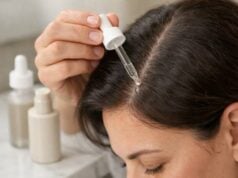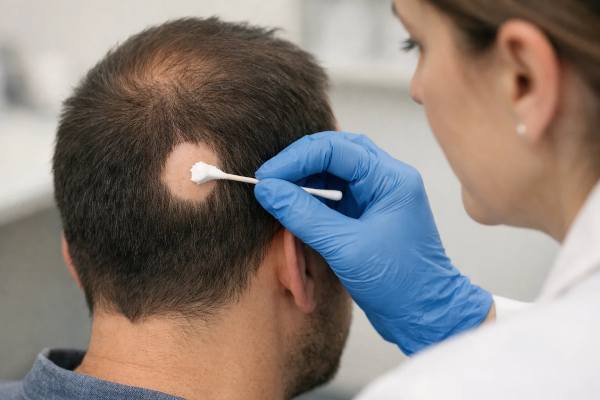
Topical JAK inhibitors are one of the most intriguing ideas in alopecia areata care because they promise something many patients want: a targeted treatment applied to the skin rather than taken by mouth. On paper, the appeal is obvious. Alopecia areata is an immune-driven condition, JAK signaling is part of that pathway, and a cream, ointment, or solution seems like a cleaner way to treat small areas without the burden of whole-body immunosuppression. In practice, though, the story is much less simple.
These products have generated real interest, but the evidence is mixed, the formulations vary widely, and the results are usually far less predictable than the excitement around them suggests. Some patients with limited, patchy disease may see worthwhile regrowth. Others spend months on compounded topicals with little to show for it. The key is to understand where these treatments fit, where they fall short, and which patients are most likely to get a fair return on the effort.
Core Points
- Topical JAK inhibitors may help some patients with limited alopecia areata, but scalp results are less reliable than many headlines suggest.
- The best responses appear more plausible in small, localized patches and in selected eyebrow or eyelash cases under specialist care.
- These topicals are not a substitute for stronger, evidence-backed options in extensive alopecia areata.
- A practical trial usually needs a dermatologist-guided plan, a standardized formulation, and photo tracking over several months.
Table of Contents
- What topical JAK inhibitors are and why they attract attention
- What the evidence actually shows
- Who seems most likely to benefit
- How they compare with oral JAKs and standard care
- Side effects, limitations, and practical downsides
- How to decide whether a topical JAK is worth trying
What topical JAK inhibitors are and why they attract attention
Alopecia areata is an autoimmune form of hair loss in which immune signaling disrupts the normal activity of the hair follicle. Janus kinase, or JAK, pathways help transmit some of the inflammatory signals involved in that process. That is why JAK inhibitors drew so much attention in the first place. If you can interrupt that signaling, you may be able to reduce the immune attack on the follicle and allow hair growth to resume.
Topical JAK inhibitors aim to do that through the skin rather than through the bloodstream. Instead of a tablet, the medication is delivered as a cream, ointment, solution, or gel. The most discussed agents in alopecia areata have been topical ruxolitinib, topical tofacitinib, and, in smaller studies, topical delgocitinib or other compounded formulations. Some are pharmacy-compounded and not commercially standardized. Others use branded molecules that are approved for different skin diseases but not specifically for alopecia areata.
That last detail matters. Interest in topical JAKs has grown alongside better-known oral JAK therapies, but the evidence base is not the same. The idea sounds elegant: deliver the drug directly to the scalp, minimize systemic exposure, and treat only the affected patches. Yet hair follicles in alopecia areata are not just sitting at the skin surface. The inflammatory process involves deeper follicular structures, which means a topical product has to penetrate well enough, at the right concentration, and in the right vehicle, to reach a biologically meaningful depth.
This is where the gap between theory and reality starts to show. Many patients imagine topical JAKs as a safer cream version of the now-famous oral JAK drugs. But a cream is not simply a pill made gentler. Absorption can be uneven, compounded formulas can vary, and scalp skin is not always an easy delivery route, especially in hair-bearing areas. That may help explain why results have been much more inconsistent than people hoped.
The appeal still makes sense, especially for limited disease. A patient with a few stubborn patches on the scalp, beard, or brows may reasonably prefer a targeted topical over a systemic drug with broader safety monitoring. That is why these products keep coming up in specialist conversations around patchy alopecia areata. But “interesting mechanism” is not the same as “established treatment.” Topical JAKs remain a selective, still-evolving option rather than a default first-line answer.
The most useful mindset is to see them as an experimental or off-label tool with a plausible scientific basis, not as a proven cream equivalent of oral JAK therapy. Once that distinction is clear, the rest of the evidence becomes much easier to interpret.
What the evidence actually shows
The evidence for topical JAK inhibitors in alopecia areata is encouraging in spots, disappointing in others, and overall much weaker than the evidence for oral JAK therapy. That unevenness is the single most important point for readers deciding whether these creams work.
The best broad summary comes from systematic and narrative reviews that gathered case reports, case series, small prospective studies, and one notable randomized trial. Across these publications, topical JAKs have shown some regrowth in a subset of patients, but the data are highly heterogeneous. The products are not standardized, concentrations vary, durations vary, and many studies are small or uncontrolled. That makes it hard to know whether one apparent success came from the molecule itself, the vehicle, the site of treatment, spontaneous remission, or the natural patchy behavior of alopecia areata.
The clearest caution comes from the phase 2 trial of ruxolitinib 1.5% cream. In that study, patients used the cream twice daily for 24 weeks, but the randomized, vehicle-controlled portion did not show a significant advantage over vehicle for meaningful scalp regrowth. That is a serious finding because it suggests that a scientifically promising topical JAK does not automatically translate into strong real-world scalp efficacy.
At the same time, smaller studies of topical tofacitinib have kept interest alive. A 2024 study using a compounded 2% tofacitinib ointment reported that 40% of participants achieved an excellent response, defined as more than 50% SALT improvement over six months, and the treated patches outperformed control patches. That is worth noting, but it does not settle the question. The study was small, non-blinded, and based on a compounded product, which means it is better viewed as a signal than as a definitive standard.
Reviews also suggest that topical JAKs may perform better outside large scalp patches than many people expect. Eyebrow and eyelash alopecia areata, in particular, have produced more encouraging reports than widespread scalp disease. That may be because the treatment areas are smaller and easier to saturate consistently, or because selected facial sites respond differently. Either way, the response pattern appears narrower than “creams work well for alopecia areata.”
A practical evidence summary looks like this:
- Best-supported conclusion: topical JAKs can produce regrowth in some patients, but results are inconsistent.
- Most cautionary result: ruxolitinib cream failed to beat vehicle in a controlled scalp trial.
- Most encouraging signal: small topical tofacitinib studies suggest some patients with localized disease may improve.
- Most likely explanation for mixed results: inadequate penetration, variable formulations, small studies, and disease heterogeneity.
So, do creams work? Sometimes, yes. Do they work reliably enough to be treated like an established standard for scalp alopecia areata? Not yet. The current literature supports interest, not certainty. That difference is exactly why these treatments should be discussed with nuance rather than marketed as a quiet breakthrough.
Who seems most likely to benefit
Topical JAK inhibitors are not equally promising for every form of alopecia areata. The patients most likely to benefit tend to share a few characteristics: smaller disease burden, more localized treatment areas, and a clinical situation where a dermatologist wants to try a targeted option before moving to stronger systemic therapy.
The best-fit group is probably people with limited, patchy alopecia areata rather than extensive scalp involvement. When the affected area is small, it is simply easier to apply the medication thoroughly and consistently. It is also easier to judge whether a patch is changing over time. In that setting, a topical JAK may be considered when standard first-line options are not enough, are not tolerated, or are not ideal for the specific site involved.
Another group that seems to draw more interest is patients with eyebrow or eyelash involvement, though this is specialist territory. Reports suggest topical tofacitinib can sometimes help brows or lashes more convincingly than large scalp areas. That does not mean anyone should start placing a compounded JAK product near the eyes on their own. It means that, under expert guidance, selected facial sites may be more promising than the average scalp patch.
Topical JAKs may also appeal to people who strongly want to avoid systemic therapy. Some patients are not comfortable with oral immunomodulators, are not candidates for them, or have disease that is bothersome but not severe enough to justify a pill with broader safety monitoring. For them, a topical JAK may function as a targeted attempt rather than a major therapeutic commitment.
The people least likely to get much from a cream are those with:
- very extensive scalp involvement
- alopecia totalis or universalis
- long-standing smooth areas with little visible regrowth potential
- rapidly progressive disease requiring stronger control
- expectations shaped by the success of oral JAK trials
That last point matters. Topical JAKs are often discussed in the same breath as approved oral JAKs, but the response profile is different. A patient with severe or diffuse disease may be better served by a conversation about more established systemic options, including more extensive alopecia areata patterns, rather than months spent hoping a compounded cream will act like a pill.
There are also patients who may be poor candidates for self-directed experimentation, even if the disease is limited. Children, pregnant or breastfeeding patients, people with frequent dermatitis, and anyone applying multiple off-label scalp products at once need a more careful plan. In these situations, the question is not just “Could this help?” but “Can this be used safely and meaningfully enough to justify the effort?”
The honest answer to “who benefits?” is narrower than many people expect. The strongest case is usually a motivated patient with small, localized alopecia areata, reasonable expectations, and access to a dermatologist who understands where topical JAKs fit and where they do not.
How they compare with oral JAKs and standard care
One reason topical JAK inhibitors create confusion is that they sit between two very different treatment worlds. On one side are long-standing, more established treatments for limited alopecia areata, such as topical corticosteroids and intralesional steroid injections. On the other side are the newer oral JAK inhibitors that have transformed expectations for severe disease. Topical JAKs are caught in the middle: more targeted and theoretically elegant than older topicals, but far less proven than oral JAKs.
For limited patchy disease, many dermatologists still consider topical steroids or intralesional corticosteroids more standard starting points because they have a longer track record and clearer place in routine practice. A topical JAK may enter the discussion when those options have not produced enough regrowth, are poorly tolerated, or are less suitable for a particular area. In other words, topical JAKs are often a second-step or specialist option rather than the obvious first move.
For moderate to severe alopecia areata, the comparison becomes even sharper. Oral JAK inhibitors now have much stronger clinical-trial support than any topical JAK product for scalp disease. That does not mean they are right for everyone, but it does mean they set a much higher evidence bar. If someone has extensive scalp involvement, fast progression, or a form of alopecia areata that is profoundly affecting quality of life, topical JAKs usually look more like a compromise than a true equivalent. In that context, approved systemic options such as baricitinib for alopecia areata tend to be the more evidence-based conversation.
This does not make topical JAKs useless. They may still serve a role in several situations:
- as an adjunct to another therapy
- as a targeted option for one stubborn patch
- as a site-specific treatment for brows or beard in selected cases
- as a bridge for patients who are not ready for systemic treatment
But they are not interchangeable with oral JAKs. Oral therapies expose the immune system more broadly and therefore carry broader safety concerns, monitoring, and regulatory scrutiny. That is exactly why they can also produce more dramatic results in severe alopecia areata. Topical JAKs try to preserve some benefit while limiting systemic exposure, but the tradeoff is often lower and less predictable efficacy.
There is also a practical expectation problem. Patients sometimes hear that oral JAKs can produce significant regrowth in severe alopecia areata and then assume a cream based on a related molecule will offer a milder version of the same outcome. That assumption is understandable but often wrong. The current evidence suggests topical JAKs are best viewed as niche tools for selective cases, not as a lower-risk shortcut to the results seen with systemic therapy.
A useful way to compare them is this: standard local therapies remain more established, oral JAKs are more powerful for severe disease, and topical JAKs occupy a promising but still uncertain middle ground.
Side effects, limitations, and practical downsides
One reason patients ask about topical JAK inhibitors is the hope that they avoid the systemic risks associated with oral JAK therapy. That hope is reasonable, and in general, topicals do appear to have a lighter side-effect profile than systemic JAK inhibitors. But “safer than oral” is not the same as “simple,” “standardized,” or “risk-free.”
The most common problems are local rather than systemic. Reported issues include:
- scalp irritation
- redness or burning
- folliculitis
- acne-like bumps
- dryness or contact dermatitis
- poor cosmetic feel that makes long-term use hard to sustain
These side effects may sound modest, but they matter because topical JAKs often need months of consistent application. A treatment that is theoretically safer but hard to tolerate every day can still fail in practice.
Another limitation is formulation quality. Many topical JAKs for alopecia areata are compounded rather than mass-manufactured for this indication. That means concentration, base, stability, and penetration can vary from one pharmacy to another. If two people both say they used “topical tofacitinib,” they may not have used equivalent products at all. That makes results harder to predict and harder to compare across studies.
Then there is the question of penetration. A scalp cream has to travel through the skin and hair-bearing surface in a way that meaningfully affects the inflammatory process around the follicle. That is a tougher delivery problem than many people realize. A negative result does not always mean the pathway is wrong; it may mean the formulation did not reach the target well enough. But from a patient standpoint, that distinction is not especially comforting if the patch still does not regrow.
Cost and access are practical downsides too. Compounded prescriptions can be expensive, may not be covered by insurance, and sometimes require repeat coordination with specialty pharmacies. A patient may end up paying significant out-of-pocket costs for a treatment that remains off-label and not strongly standardized.
There are also unanswered questions around longer-term use in special populations. Children, pregnant or breastfeeding patients, and people with very sensitive skin need individualized decisions, not online enthusiasm. Even when systemic absorption is expected to be low, that does not erase the need for caution.
One final limitation is psychological. Because alopecia areata can spontaneously improve and flare unpredictably, patients may over-credit or under-credit a topical JAK. If a small patch regrows, was it the cream, the natural course, or both? If it does not, was the medication ineffective, or was the disease simply too extensive for a topical approach? These are not just academic questions. They shape whether a treatment feels worthwhile.
So while topical JAKs may reduce some of the burden associated with systemic therapy, they introduce a different set of burdens: uncertain potency, variable formulations, daily hassle, and a real chance of limited payoff.
How to decide whether a topical JAK is worth trying
The smartest way to approach a topical JAK inhibitor is not to ask whether it is exciting. It is to ask whether it fits your disease pattern, treatment goals, and tolerance for uncertainty. For some patients, the answer will be yes. For many others, a cream sounds better in theory than it performs in real life.
A good candidate usually has a few features: the alopecia areata is limited, the area to treat is small enough for careful application, there is a clear reason to avoid or delay systemic therapy, and expectations are realistic. Realistic means understanding that regrowth may be partial, slow, or absent, and that scalp results are still less dependable than the buzz around the category suggests.
Before starting, it helps to ask a dermatologist a few direct questions:
- Is my disease localized enough that a topical JAK makes sense?
- Would you normally try a steroid-based approach first?
- What specific drug, concentration, and vehicle are you recommending?
- How long should I try it before deciding it is not working?
- What side effects would make you stop or switch?
- Would this be monotherapy or part of a combination plan?
Those questions matter because topical JAK therapy is not one uniform thing. A compounded 2% ointment used twice daily for six months is very different from a branded cream used on a different site or in a different disease context.
If you do try one, make the trial measurable. Take baseline photos before treatment, then repeat them every four weeks under the same lighting and hairstyle. Do not change five other treatments at the same time. Give the plan enough time to be judged fairly, but not so much time that an obviously failing approach drags on unchecked.
These principles usually help:
- use one clearly defined formulation
- treat the same area consistently
- photograph before, during, and at the stop point
- reassess at about 3 months and again at 6 months
- stop sooner if irritation is significant or the disease is spreading
A topical JAK is least worth trying when the alopecia areata is extensive, rapidly worsening, or accompanied by major emotional burden that calls for a stronger, more predictable plan. It is also a poor fit when the patient wants certainty. At this stage, these treatments are still too variable to promise that.
The best use case is narrower: a selective, dermatologist-guided trial for localized alopecia areata when the balance between possible benefit and lower systemic exposure genuinely fits the person in front of you. If the diagnosis is unclear, the patch is spreading, or the whole course feels hard to interpret, it is better to step back and get a formal assessment. In that situation, advice on when to see a dermatologist for hair loss becomes more valuable than another off-label topical experiment.
That may sound less dramatic than the phrase “topical JAK inhibitor,” but it is a better basis for decision-making. A treatment can be promising and still be selective. Right now, that is exactly where these creams belong.
References
- Management of Alopecia Areata With Topical JAK Inhibitor Therapy: An Evidence-Based Review 2022 (Systematic Review)
- Efficacy and Safety of Topical Tofacitinib for the Treatment of Alopecia Areata 2024 (Controlled Clinical Study)
- Ruxolitinib cream for the treatment of patients with alopecia areata: A 2-part, double-blind, randomized, vehicle-controlled phase 2 study 2020 (RCT)
- Alopecia Areata: An Updated Review for 2023 2023 (Review)
- Japanese Dermatological Association’s Clinical Practice Guidelines for Alopecia Areata 2024: A Complete English Translated Version 2025 (Guideline)
Disclaimer
This article is for educational purposes only and is not a diagnosis or individualized treatment recommendation. Alopecia areata can range from a few limited patches to rapidly progressive or extensive disease, and topical JAK inhibitors are off-label or investigational options for many patients. Decisions about these treatments should be made with a qualified clinician, especially for children, pregnancy, eyelid-area involvement, extensive hair loss, or active scalp irritation.
If this article helped you, please consider sharing it on Facebook, X, or another platform you use so more people can approach topical JAK inhibitors with clearer expectations and better questions.