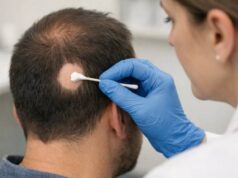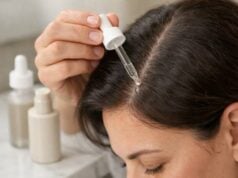
Few hair-loss decisions feel as loaded as this one. Oral finasteride has the longest track record in male pattern hair loss, but many people hesitate because the drug circulates throughout the body, not just the scalp. Topical finasteride promises a more local approach, and that promise is appealing: similar hair results with less systemic exposure. The catch is that “topical” does not mean “zero absorption,” and not every spray, gel, or compounded serum behaves like the formulas studied in clinical trials.
That is why the better question is not simply which route is stronger. It is which route offers the balance of benefit, tolerability, and day-to-day practicality that fits your situation. The best evidence suggests that a well-designed topical finasteride can come surprisingly close to oral finasteride for some men, but the comparison depends on dose, formulation, treatment area, and time. The sections below break down what the current evidence really shows, where the trade-offs sit, and how to choose more carefully.
Quick Facts
- Oral finasteride has the deepest long-term evidence, while topical finasteride may deliver similar short-term scalp results in some men.
- Topical finasteride lowers blood exposure and serum DHT less than oral finasteride, but systemic absorption is not zero.
- Oral finasteride has more established sexual and mood-related warnings, while topical finasteride more often raises local irritation questions.
- Most direct comparison data come from a once-daily 0.25% spray, so results do not apply equally to every compounded topical formula.
- Reassess after several months, because neither route works quickly and both depend on steady, long-term use.
Table of Contents
- How the two routes work differently
- How close the effectiveness really is
- Absorption and DHT what the numbers mean
- Side effects and safety trade-offs
- Who may prefer topical and who may prefer oral
- How to use either option more effectively
How the two routes work differently
Topical finasteride and oral finasteride use the same active drug, but the route changes how the body sees it. Both aim to reduce the activity of type II 5-alpha-reductase, the enzyme that converts testosterone into dihydrotestosterone, or DHT. In androgenetic alopecia, DHT gradually shortens the growth phase of susceptible follicles and pushes hairs toward miniaturization. That is the common target. The difference is where the drug concentrates first and how much of it enters the bloodstream.
Oral finasteride is the simpler route pharmacologically. You swallow a fixed dose, the drug is absorbed systemically, and DHT falls not only in the scalp but also elsewhere in the body. That broad exposure is one reason oral finasteride has been studied for so long and why its effect profile is easier to predict. It is also why people worry about systemic side effects. The benefit and the burden come from the same feature: reliable whole-body exposure.
Topical finasteride tries to change that balance. Instead of asking the bloodstream to carry the drug to the scalp, it delivers finasteride directly to the skin over the thinning area. In theory, that should create stronger local exposure with less systemic spillover. In practice, it does reduce systemic exposure, but it does not eliminate it. Some of the drug still crosses the scalp barrier and reaches the circulation. That single point matters because it corrects two common myths at once: topical finasteride is not just a cosmetic scalp product, and oral finasteride is not automatically “too strong” for everyone.
Another important difference is standardization. Oral finasteride is straightforward: one tablet, one dose, one well-established daily routine. Topical finasteride is more variable. Studies have used spray solutions, gels, and combination formulas with different concentrations and vehicles. The most convincing direct comparison data are tied to a specific once-daily 0.25% spray solution, not to every online serum labeled “topical finasteride.” That means route matters, but formulation matters too.
The practical takeaway is that oral finasteride is standardized and predictable, while topical finasteride is more technique-dependent. If a topical product sits on the hair instead of reaching the scalp, the drug cannot help the follicle it never contacts. That is one reason readers comparing treatment pathways often step back and review broader male pattern baldness treatment options before settling on a route. The molecule is the same, but the treatment experience is not.
How close the effectiveness really is
The most useful comparison between topical and oral finasteride comes from a 24-week phase III trial in men with androgenetic alopecia. In that study, a 0.25% topical spray significantly improved target-area hair count compared with placebo, and the improvement was numerically similar to oral finasteride. That finding is the reason topical finasteride has become a serious discussion rather than a fringe idea.
The phrase “numerically similar” deserves a calm reading. It does not mean the two routes are proven identical in every situation. It means that, in this study, the average hair-count gains were close enough that topical finasteride looked competitive over six months. The reported mean change from baseline in target-area hair count at week 24 was about 20.2 hairs for topical finasteride and 21.1 hairs for oral finasteride. For a person deciding whether topical finasteride is worth considering, that is encouraging. For a person trying to prove topical is always just as good, it is not enough.
Why the caution? First, the trial endpoint focused on a defined scalp target area, not every aspect of a real-life hairline or crown. Second, six months is meaningful but still short in hair biology. Hair changes move slowly because follicles cycle slowly. A treatment that looks close at 24 weeks may still differ in long-term durability, ease of adherence, or consistency across patients. Oral finasteride still has the deeper long-range evidence base.
There is also a quiet but important practical point: topical success depends more on delivery. If you have dense existing hair, long hair, or poor application habits, some of the spray may never reach the scalp well enough to match study results. Oral finasteride does not have that problem. The pill does not care whether you applied it evenly. Topical finasteride asks more from the user, and that can widen the gap between trial performance and everyday performance.
That said, a topical route can still be highly attractive when the goal is to preserve scalp benefit while trimming systemic exposure. For many men with early thinning, that trade-off is reasonable. It is especially relevant if you are already planning to combine treatment with minoxidil, which targets hair growth through a different pathway. Combination regimens are common, but it helps to understand how minoxidil works for hair loss before layering it onto finasteride and trying to judge what is helping.
So how close is the effectiveness? Closer than many people assume, but not so close that route no longer matters. Oral finasteride remains the benchmark for evidence depth and simplicity. Topical finasteride is the more targeted option with promising comparison data, especially when the formula and application are good. The smartest reading is not “same” or “different.” It is “potentially comparable, with more variables.”
Absorption and DHT what the numbers mean
This is where the topical-versus-oral conversation becomes genuinely useful. The main value of topical finasteride is not that it changes the drug’s purpose. It changes the exposure pattern. In the phase III comparison study, maximum plasma finasteride concentrations were more than 100 times lower with topical finasteride than with oral finasteride. That is not a subtle difference. It is the clearest evidence that topical delivery can reduce how much drug reaches the bloodstream.
Serum DHT levels also fell less with topical finasteride than with oral finasteride. After 24 weeks, mean serum DHT was reduced by about 34.6% in the topical group and 55.6% in the oral group. This detail matters because DHT reduction is part of both the therapeutic mechanism and the side-effect discussion. Lower serum DHT suppression does not prove freedom from systemic effects, but it gives a biological reason why topical finasteride may carry a lower likelihood of systemic adverse effects tied to DHT reduction.
A newer phase I pharmacokinetic study adds a second layer. In men using a 0.25% topical spray once daily for seven days, systemic exposure did accumulate somewhat over repeated dosing, with roughly twofold higher exposure after multiple doses than after a single application. Even so, the blood concentrations remained low, and no clinically significant adverse events were reported in that short study. The message is not that topical finasteride stays outside the body. It is that systemic entry is limited, measurable, and still lower than with the oral route.
What determines absorption in real life?
- the concentration of the topical product
- the volume applied
- how large an area you cover
- how often you apply it
- the vehicle, such as spray or gel
- how healthy or irritated the scalp barrier is
This is why copying random concentrations from internet forums is a bad plan. A stronger compounded formula may not deliver proportionally better scalp results, but it may increase systemic exposure or local irritation. More sprays do not automatically equal more hair benefit. At some point, you may simply be pushing more drug through the skin without meaningfully improving follicle targeting.
The key idea is that lower absorption is helpful, not magical. Topical finasteride is best understood as a route that reduces systemic exposure rather than one that abolishes it. That may sound less exciting, but it is actually the most practical framing. It supports rational expectations. It also explains why some people choose topical finasteride specifically to lower risk while others stay with oral finasteride because they prefer the simplicity of a fixed tablet over a treatment that is more sensitive to formulation and application technique.
Side effects and safety trade-offs
Most people comparing topical finasteride with oral finasteride are not really asking about chemistry. They are asking what kind of risk each route asks them to accept. The honest answer is that the trade-off changes, but it does not disappear.
Oral finasteride has the clearer systemic safety record because it has been used longer and studied more extensively. That long record includes well-known sexual side effects such as decreased libido, erectile dysfunction, and ejaculation changes. In prescribing information for oral finasteride 1 mg, those effects are still the headline adverse reactions. There are also mood-related warnings. In 2025, the European medicines regulator concluded that suicidal ideation should be included as a side effect of finasteride tablets and reinforced guidance for patients using the 1 mg tablet form for hair loss to seek medical advice if mood changes occur.
Topical finasteride shifts the pattern rather than creating a side-effect-free version of the drug. In the phase III trial, topical finasteride showed a tendency toward fewer treatment-related sexual adverse events than oral finasteride, which fits the lower systemic exposure data. At the same time, topical products introduce local tolerability questions: itching, erythema, burning, scalp irritation, and application-site discomfort. Those events were generally mild in the trial, but they still matter in real use because a treatment you dread applying is often a treatment you stop applying.
This is where evidence quality matters. Current data are reassuring for topical finasteride, and the 2025 European review found no evidence linking finasteride skin sprays to suicidal ideation. Still, the topical evidence base is smaller than the oral one, and most of the best data come from a specific spray solution in men. That supports cautious optimism, not carelessness.
A few practical safety points deserve emphasis:
- topical finasteride may lower systemic risk, but not to zero
- oral finasteride avoids scalp irritation, but not bodywide exposure
- persistent sexual symptoms or new mood symptoms deserve medical review
- local redness, stinging, or rash with topical finasteride may signal intolerance rather than “adjustment”
- switching routes may change side-effect type more than it changes the need for monitoring
People who tend to react easily to leave-on scalp products should also think about the difference between irritant reactions and true product allergy. That distinction is useful when evaluating redness or burning from any scalp treatment, including hair product allergy and irritation patterns.
The most balanced way to view safety is this: oral finasteride carries the stronger systemic warning profile because it has stronger systemic exposure and a longer surveillance history. Topical finasteride appears to reduce that burden, but it replaces part of it with local tolerability questions and residual systemic uncertainty. It is a trade-off in route, not an escape from pharmacology.
Who may prefer topical and who may prefer oral
The better route often becomes clearer once you stop asking, “Which one is best?” and start asking, “Which one fits how I actually live and what I worry about?” The answer is often practical rather than ideological.
Topical finasteride may make the most sense for men who want to reduce systemic exposure as much as possible while still using finasteride. It is also a logical option for someone who is uncomfortable with the idea of a daily pill, has previously stopped oral finasteride because of side effects, or wants a more localized treatment strategy. Men with early vertex thinning and a short hairstyle may find topical application especially manageable because it is easier to get the product onto the scalp rather than onto the hair.
Oral finasteride may fit better when simplicity matters more than route. One tablet a day is easier than carefully applying a spray, allowing it to dry, and making sure the product actually reached the scalp. Oral treatment can also be more practical for men with diffuse thinning over a broad area, long hair that makes precise scalp access harder, or routines that already feel too crowded. There is value in a treatment that is hard to underdose by accident.
The biggest deciding factors often look like this:
- Topical may fit better if: you strongly prioritize lower systemic exposure, have a history of sensitivity to oral medications, or are likely to stay more consistent with a scalp-based routine.
- Oral may fit better if: you want the deepest evidence base, the easiest daily routine, and the least variability from application technique.
- Either route may fit if: you understand that treatment is long-term, not a quick fix, and you are prepared to judge success over months rather than weeks.
There is also a population issue that deserves clarity. Most direct comparison data between topical and oral finasteride come from men with androgenetic alopecia. That matters. Finasteride is not a casual self-treatment for women, and it is especially not a do-it-yourself option around pregnancy or when pregnancy is possible. Use outside the usual male pattern hair loss setting needs specialist oversight, not online improvisation.
Another original but very practical point is this: a route that looks better on paper may still be the wrong route if it does not match your habits. The best pharmacology in the world cannot help much if the spray stays in the cabinet or the pill stays in the blister pack. Consistency usually beats theoretical perfection. For readers deciding whether medication fits into a broader plan that may also involve camouflage, procedures, or watchful waiting, it helps to zoom out and compare treatment choices for male pattern baldness in context rather than evaluating finasteride in isolation.
How to use either option more effectively
Whichever route you choose, the biggest mistake is expecting a fast verdict. Finasteride works on follicle biology, and follicles move slowly. With oral finasteride 1 mg, prescribing information notes that at least three months of daily use are generally needed before benefit is observed, and most people need longer to judge real stabilization or visible thickening. Topical finasteride follows the same biological timetable. A better delivery route does not override the hair cycle.
A few habits make either treatment easier to judge and more likely to work.
- Start with a clear baseline. Take photos in the same lighting, from the same angles, with dry hair. Memory is unreliable, especially when progress is subtle.
- Use the route consistently. A tablet works only if it is taken daily. A topical works only if it is applied to the scalp, not mostly to the hair shafts.
- Do not keep changing the formula. Switching concentrations or brands every few weeks makes it impossible to know what is happening.
- Give it enough time. Reassess at about three months for early tolerance and at six to twelve months for a meaningful effectiveness review.
- Layer treatments thoughtfully. If you add minoxidil, do it on purpose and track the change rather than starting several new products at once.
Topical finasteride deserves one extra rule: respect the studied dosing style. The best comparison data come from a once-daily 0.25% spray applied in a controlled volume, not from aggressively increasing the amount whenever anxiety rises. More topical drug is not always more scalp benefit. It can simply mean more residue, more irritation, and more absorption.
Oral finasteride deserves its own guardrails too. Because it is systemic, it should be reviewed with a clinician if side effects emerge, if you have major mood changes, or if you are unsure whether the hair loss pattern is really androgenetic alopecia. It is also worth remembering that benefit fades after stopping. Finasteride manages the process; it does not permanently “cure” the follicle.
If you are combining finasteride with minoxidil, use a routine you can actually sustain. Many people underestimate how much adherence shapes results. A route that fits neatly into the morning or evening is often the route that wins over a year. Readers who are about to build a combination regimen usually benefit from reviewing common minoxidil routine mistakes before they add another variable.
Finally, seek help if the pattern looks atypical, the shedding is sudden, or the scalp is inflamed. Finasteride is for androgenetic alopecia, not every form of hair loss. When in doubt, a dermatologist can save months of treating the wrong condition.
References
- Efficacy and safety of topical finasteride spray solution for male androgenetic alopecia: a phase III, randomized, controlled clinical trial 2022 (RCT)
- Topical finasteride for male and female pattern hair loss: Is it a safe and effective alternative? 2022 (Review)
- The Pharmacokinetics of Topical Finasteride 0.25% Spray in Chinese Adult Male Volunteers with Androgenic Alopecia: A Phase I Study 2025
- Finasteride- and dutasteride-containing medicinal products – referral | European Medicines Agency (EMA) 2025 (Safety Review)
- DailyMed – FINASTERIDE tablet, coated 2025 (Prescribing Information)
Disclaimer
This article is for educational purposes and does not replace medical advice, diagnosis, or treatment. Finasteride is a prescription medication with route-specific benefits and risks, and the right choice depends on your diagnosis, sex, age, medical history, side-effect tolerance, and pregnancy considerations. Seek medical advice promptly if you develop persistent sexual side effects, mood changes, a new scalp rash, or if your hair loss pattern is sudden, patchy, painful, or associated with inflammation.
If this article helped you, please share it on Facebook, X, or another platform you use so others weighing topical and oral finasteride can find clear, evidence-based guidance.