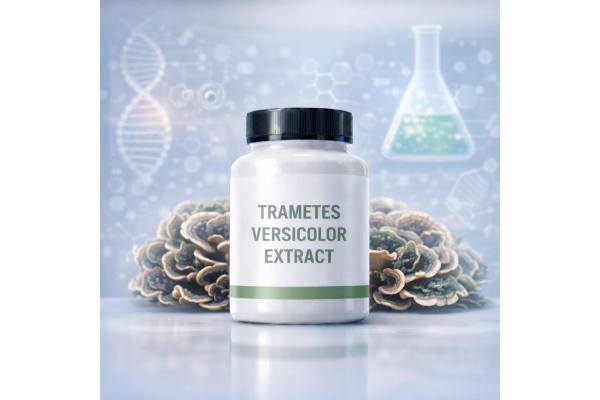
Trametes versicolor extract—often called turkey tail extract—is a mushroom-based supplement best known for immune support and its long history as an adjunct in oncology settings in parts of Asia. What makes it unique is that “extract” can mean very different products: hot-water extracts rich in polysaccharides (including PSK and PSP in some preparations), blends of fruiting body and mycelium, or formulas standardized to beta-glucans. Those details matter because they influence both expected effects and dosing. People most often use Trametes versicolor extract to support immune function during periods of high stress, to complement wellness routines that include sleep and nutrition, and—under medical supervision—to support quality of life during cancer treatment. This guide explains what it is, what benefits are realistic, how to choose a product, how to dose it conservatively, and which side effects and interactions should make you pause.
Essential Insights for Trametes versicolor Extract
- Supports immune signaling and may help with resilience during demanding periods.
- In clinical oncology contexts, PSK has commonly been used at 3,000–6,000 mg/day under supervision.
- Stop and seek care for hives, wheezing, facial swelling, or severe stomach symptoms.
- Avoid if pregnant, breastfeeding, post-transplant, or taking immunosuppressants unless your clinician approves.
Table of Contents
- What is Trametes versicolor extract and what does it contain?
- What benefits do people look for?
- How to choose a good extract
- How much should you take?
- Side effects and interactions
- What the evidence actually supports
What is Trametes versicolor extract and what does it contain?
Trametes versicolor is a wood-growing mushroom recognized by its thin, fan-shaped “rings” of color—hence the common name “turkey tail.” In supplement form, you rarely consume it like a culinary mushroom. Instead, you’ll see powders and extracts designed to concentrate certain compounds that are not easily absorbed from raw mushroom material.
The word “extract” matters. A hot-water extract is typically aimed at pulling out polysaccharides—large carbohydrate chains that can influence immune signaling. Many products emphasize beta-glucans, a type of polysaccharide found in fungi that interacts with immune receptors in the gut and on immune cells. Some extracts also include protein-bound polysaccharides, which are often discussed under names like PSK (polysaccharide-K, also called krestin in some contexts) and PSP (polysaccharopeptide). These terms can be confusing because they are not guaranteed to be present in meaningful amounts in every turkey tail product. They are best thought of as specific, studied preparations rather than automatic features of every capsule labeled “turkey tail.”
Another major variable is the mushroom material used. Some brands use fruiting body only, others use mycelium grown on grain, and some use blends. Fruiting body extracts may differ in polysaccharide profile from mycelium-based powders, and mycelium grown on grain can contain a meaningful percentage of substrate starch unless the manufacturer provides transparency testing.
Finally, dose labels can be misleading without context. “1,000 mg per capsule” might refer to whole powder (less concentrated) or a standardized extract (more concentrated). A stronger extract is not always “better,” but it is more likely to cause noticeable effects—good or bad—especially if you start too high.
Practical takeaway: treat Trametes versicolor extract less like a single ingredient and more like a category. Your expected results depend on extraction method, mushroom part, and whether the product is standardized to measurable compounds.
What benefits do people look for?
People use Trametes versicolor extract for two main reasons: everyday immune support and supportive care during intensive health challenges. It helps to separate “plausible biological effects” from “promised outcomes,” because marketing often blurs that line.
1) Immune signaling and immune readiness
Turkey tail’s best-known role is immune modulation—helping the immune system respond appropriately rather than simply “boosting” it. Many users describe benefits as fewer run-down days, better recovery after poor sleep, or less lingering fatigue after routine infections. These are subjective outcomes, but they match what you would expect from a supplement that influences immune signaling through the gut-immune interface.
A realistic way to frame it is: this is not a stimulant, and it is not an instant shield. If it helps, you often notice subtle changes over weeks, such as improved resilience during busy months or fewer “minor dips” in energy.
2) Support during oncology care (only with clinician oversight)
In some settings, specific Trametes-derived preparations have been used alongside conventional cancer treatments. The goals in these contexts are typically supportive: maintaining treatment tolerance, supporting quality of life, and potentially supporting immune parameters. This is not the same as treating cancer with a supplement. The people most likely to consider it are those who already have an oncology team and want a structured, safety-first plan.
3) Gut comfort and microbiome-adjacent effects
Because mushroom polysaccharides can act like prebiotic fibers, some users notice changes in digestion—often positive (more regularity), sometimes negative (bloating). If you are sensitive to fermentable fibers, starting low is important.
4) Inflammation balance and recovery
Users sometimes take turkey tail for general inflammation balance, training recovery, or stress adaptation. The best expectation here is modest: it may support recovery indirectly by improving immune efficiency and gut resilience, not by acting like an anti-inflammatory drug.
Signs you’re expecting too much: claims that it “replaces chemotherapy,” “treats infections,” or “works in days.” A responsible goal is support—paired with sleep, protein, hydration, and medical care when needed.
How to choose a good extract
Choosing Trametes versicolor extract is mostly about avoiding vague labels and making sure the product’s form matches your goal. A strong plan starts with one simple question: are you taking it for general wellness support, or under clinician supervision for a specific health context?
Look for clarity on three label items
- Mushroom material: fruiting body, mycelium, or both. Fruiting body-only products are often preferred by people seeking higher beta-glucan content per gram, while mycelium products can vary widely depending on how they are grown and processed.
- Extraction method: hot-water extract, dual extract (water + alcohol), or whole powder. For immune-focused goals, hot-water extracts are commonly chosen because they concentrate polysaccharides. Dual extracts may include more non-polysaccharide compounds, but that does not automatically translate to stronger immune effects.
- Standardization and testing: ideally, the label (or a batch certificate) lists beta-glucans as a measurable percentage, not just “polysaccharides.” “Polysaccharides” can include starch from grain substrate, which is not the same thing.
Match the format to your tolerance
- Capsules: easiest for consistent dosing and slow titration.
- Powders: flexible but easier to accidentally take too much, and some are gritty or bitter.
- Liquids: can be convenient, but alcohol content and concentration vary widely.
A simple “first bottle” decision rule
If you’re new to turkey tail, pick a product that allows low starting doses (smaller capsules or a powder with a clear scoop size). Your first goal is to learn how your body responds—especially your gut—before you worry about maximum dose.
Quality signals that matter more than hype
- Clear species identification (Trametes versicolor)
- Plant part transparency (fruiting body vs mycelium)
- Third-party testing for contaminants (heavy metals are a real concern with fungi)
- A dosing label that distinguishes “extract” from “raw powder” and lists an extract ratio when applicable (for example, 10:1)
Finally, avoid stacking multiple immune-active supplements at once when you start. If you combine turkey tail with several other mushrooms, high-dose zinc, and herbal immunostimulants, you won’t know what caused a benefit—or a side effect.
How much should you take?
There is no single universal dose for Trametes versicolor extract because products differ in concentration, and some clinical dosing data refers to specific preparations used alongside cancer therapy. The safest approach is to start low, increase slowly, and use the lowest dose that produces the effect you want.
Typical consumer wellness dosing (conservative)
For many over-the-counter extracts, a practical starting approach is:
- Start: 500–1,000 mg/day (extract or concentrated powder), taken with food
- Increase: by 500–1,000 mg every 5–7 days if well tolerated
- Common range: 1,000–3,000 mg/day for general immune support
If the product is a whole-mushroom powder (not a concentrated extract), the effective dose often needs to be higher to deliver similar polysaccharide exposure. In that case, some people use 2,000–5,000 mg/day, but tolerance varies and labeling differences are common.
Clinical-context dosing you may see discussed
In supervised oncology settings, a well-known Trametes-derived preparation (PSK) has commonly been administered orally at 3,000 mg/day, and in some contexts doses of 6,000 mg/day have been used. These are not “better wellness doses.” They are clinical-context doses tied to specific protocols, patient populations, and medical monitoring. If you are considering turkey tail as part of cancer care, involve your oncology team so the plan fits your treatment schedule and safety needs.
Timing and scheduling
Most people take turkey tail:
- With breakfast and/or lunch (to reduce stomach upset)
- Split into 2–3 smaller doses if they notice bloating
- For 6–12 weeks, then reassess
A simple tracking method helps: choose one outcome (for example, number of days you feel run-down, digestive comfort, or training recovery) and check it weekly. If nothing changes after 8–10 weeks at an appropriate dose, it may not be worth continuing.
When “more” is not the answer
Stop increasing if you develop persistent bloating, loose stools, nausea, or headaches. A slightly lower dose taken consistently usually beats a high dose that you discontinue after two uncomfortable days.
Side effects and interactions
Trametes versicolor extract is generally well tolerated for many adults, but “generally” is not the same as “risk-free.” Side effects tend to cluster around digestion, allergies, and immune-system interactions with medications.
Common side effects
Most reported issues are mild to moderate and often improve when you lower the dose:
- Bloating, gas, or changes in stool frequency
- Nausea or stomach discomfort (more likely on an empty stomach)
- Headache or a “wired but tired” feeling in sensitive users
- Skin irritation or itching (less common, but important to take seriously)
Some people report dark stool or darkening of nails with certain preparations. While this can be benign, you should treat any unexpected color change—especially if paired with weakness, abdominal pain, or dizziness—as a reason to stop and check in with a clinician.
Allergy warning signs (stop immediately)
Do not “push through” these symptoms:
- Hives, facial swelling, wheezing, throat tightness
- Severe rash or widespread itching
- Chest tightness or faintness
Seek urgent care if breathing is affected.
Who should avoid it unless a clinician approves
- Pregnant or breastfeeding people
- Children and teens (lack of dosing and safety clarity)
- Organ transplant recipients
- People taking immunosuppressants (including for autoimmune disease)
- People with uncontrolled autoimmune conditions where immune activation can worsen symptoms
Medication and treatment interactions to take seriously
- Immunosuppressants: turkey tail may work against the goals of these drugs.
- Cancer therapy: even “supportive” supplements can affect tolerance, lab values, or timing decisions. If you are in active treatment, your oncology team should be part of the choice.
- Anticoagulants and antiplatelets: mushrooms are sometimes discussed in the context of bleeding risk and platelet effects. Evidence varies by species and preparation, but caution is reasonable—especially before surgery.
A practical rule: if you are scheduled for surgery, stop non-essential supplements 1–2 weeks ahead unless your surgical team says otherwise.
Finally, do not start turkey tail during an acute unexplained illness with fever or rapidly worsening symptoms. Supplements should not delay diagnosis.
What the evidence actually supports
The evidence story for Trametes versicolor extract is stronger than for many supplements, but it is also easy to misunderstand. Much of the best-known data involves specific, standardized preparations used in clinical contexts, not the average retail “mushroom complex.”
Where evidence is most convincing
The most substantial human data has focused on Trametes-derived polysaccharide preparations used alongside conventional cancer care, often as adjuvant support following surgery and during chemotherapy protocols. In these settings, the goals are typically measured outcomes such as treatment completion, immune markers, recurrence patterns, and survival metrics. Doses used in those contexts are usually in the gram-per-day range and are taken for months to years, with the plan managed within a medical system.
That does not mean every turkey tail capsule provides the same exposure or the same likely effect. A key limitation is product mismatch: clinical preparations are tightly defined, while retail supplements vary widely in extraction strength and composition.
Where evidence is promising but less direct
For general immune support, the evidence often leans on mechanistic plausibility (how beta-glucans and related polysaccharides interact with immune receptors), smaller human studies, and broader clinical observations about medicinal mushrooms. This can support a reasonable consumer goal—improving resilience and recovery—without justifying disease-treatment claims.
For gut health, the evidence is consistent with how fermentable polysaccharides can influence the microbiome and short-chain fatty acid production. Still, individual response varies: what feels like “better digestion” for one person can feel like bloating for another.
How to interpret claims responsibly
A helpful way to think about Trametes versicolor extract is as a supportive tool that may shift probabilities over time, not a product that creates dramatic short-term changes. If you decide to use it, the best practice is:
- Choose a transparent product with clear extraction and testing details.
- Use a conservative dose and titrate slowly.
- Track a single meaningful outcome over 6–12 weeks.
- Stop if side effects appear or if the supplement complicates medical care.
When alternatives may be a better fit
If your main goal is “immune support,” you may get more predictable results from foundations like sleep quality, protein intake, vitamin D status (when appropriate), stress management, and vaccination when indicated. Supplements can complement these basics, but they rarely outperform them.
References
- Medicinal Mushroom Supplements in Cancer: A Systematic Review of Clinical Studies – PubMed 2023 (Systematic Review)
- Coriolus (Trametes) versicolor mushroom to reduce adverse effects from chemotherapy or radiotherapy in people with colorectal cancer – PMC 2022 (Review)
- Protein-bound polysaccharide K prolonged overall survival in gastric cancer patients from a non-Japanese Asian country who received gastrectomy and adjuvant chemotherapy – PMC 2022 (Clinical Study)
- A toxicological assessment of Hericium erinaceus (Lion’s mane) and Trametes versicolor (Turkey tail) mushroom powders – PMC 2025 (Toxicology Study)
Disclaimer
This article is for educational purposes only and is not medical advice. Trametes versicolor extracts vary widely in composition and potency, and individual responses can differ based on health status and medications. If you are pregnant, breastfeeding, immunocompromised, living with an autoimmune condition, preparing for surgery, or receiving cancer treatment, consult a licensed clinician before using turkey tail products. Seek prompt medical care for severe allergic symptoms, persistent vomiting, black or bloody stools, unexplained fever, or rapidly worsening health concerns.
If you found this guide useful, please share it on Facebook, X (formerly Twitter), or any platform you prefer, and follow us on social media. Your support through sharing helps our team continue producing clear, trustworthy health content.