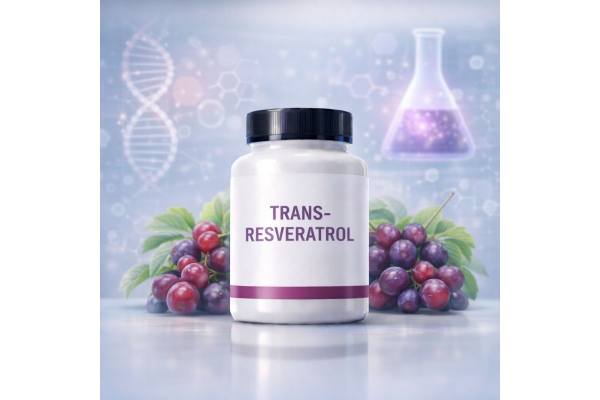
Trans-resveratrol is a plant polyphenol best known for its role in “healthy aging” conversations, but most people take it for more practical reasons: metabolic support, vascular and heart health, and inflammation balance. It is the naturally dominant, more stable “trans” form found in foods like grapes and berries, and it is also made into concentrated supplements—often from Japanese knotweed. The catch is that resveratrol’s effects depend heavily on dose, formulation, and the person’s baseline health. Some trials show modest improvements in markers like insulin sensitivity or blood vessel function, while others find little to no change. This guide helps you set realistic expectations, choose a product that matches your goal, dose it safely, and avoid common pitfalls such as poor absorption, unnecessary stacking, and risky drug interactions.
Quick Overview for Trans-resveratrol
- May support vascular function and metabolic markers, with effects that are usually modest and gradual.
- Low oral bioavailability means formulation and consistency often matter more than “mega-doses.”
- Typical supplemental range is 100–500 mg/day, with higher intakes requiring extra caution.
- Avoid if pregnant, breastfeeding, on blood thinners, or using immunosuppressants unless your clinician approves.
Table of Contents
- What is trans-resveratrol and why does trans matter?
- Which benefits are most supported?
- How to use trans-resveratrol for common goals
- How much trans-resveratrol per day?
- Side effects and who should avoid it
- What the evidence actually shows
What is trans-resveratrol and why does trans matter?
Resveratrol is a stilbene polyphenol—one of many plant compounds that help plants respond to stress. In nature it exists mainly as trans-resveratrol, a shape (isomer) that is generally more stable and more studied than the cis form. Light and heat can shift trans toward cis over time, which is one reason quality supplements use opaque packaging and careful manufacturing.
In foods, resveratrol is present in small amounts. You will see it associated with grape skins, red wine, berries, and peanuts, but dietary amounts are typically far below what is used in most clinical trials. Supplements close that gap by concentrating trans-resveratrol, commonly from Japanese knotweed (Polygonum cuspidatum). That source is practical and inexpensive, but it can come with “tagalong” compounds such as emodin unless the product is purified and tested. If you are sensitive to laxative-like effects, this sourcing detail can matter.
The most important practical concept is bioavailability. Your gut absorbs resveratrol fairly well, but your body rapidly converts it into metabolites (mostly glucuronides and sulfates). That means only a small fraction of unchanged trans-resveratrol circulates for long. This is not automatically a deal-breaker—metabolites may still have biological activity, and local effects in the gut may also matter—but it does explain why many people feel nothing, why results can be subtle, and why formulation can influence outcomes.
When labels say “resveratrol,” you also want to confirm it is predominantly trans-resveratrol, ideally with a purity statement (for example, “≥98% trans-resveratrol”). Without that, you cannot compare one bottle to another. Finally, remember that resveratrol is not a vitamin. It is not required for health, and it is not a substitute for medical care. Think of it as a targeted experiment for specific goals, with a clear stop point if it is not helping.
Which benefits are most supported?
Resveratrol is often marketed as a “longevity” supplement, but the best-supported human outcomes are more grounded: vascular measures, metabolic markers, and inflammation-related signaling. Even in these areas, effects vary by dose, duration, and who is taking it. A realistic mindset is “marker support,” not “dramatic transformation.”
1) Vascular and endothelial function
Your endothelium is the thin lining inside blood vessels that helps regulate dilation, blood flow, and clotting signals. Some trials suggest resveratrol can support endothelial function—especially in people with existing cardiometabolic risk factors—while other trials show no clear effect. If it helps, changes are usually modest and appear after weeks, not days. People sometimes notice indirect “real life” improvements like better exercise tolerance or less post-meal sluggishness, but those are not guaranteed and can be influenced by many factors.
2) Metabolic and glucose-related markers
Resveratrol is frequently studied in insulin resistance and type 2 diabetes contexts. Meta-analyses often find small improvements in insulin resistance and fasting glucose in some populations, but not consistently across all studies. This inconsistency is a theme: benefits tend to be more likely when baseline markers are already off-track. If your glucose markers are already excellent, resveratrol may not move them.
3) Weight and body composition
Weight-loss claims are common, but the average effect in human studies is usually small. Some longer interventions and higher doses show slight improvements in waist circumference or body fat measures, but resveratrol should not be treated as a primary weight-loss tool. If it supports weight goals, it likely does so indirectly by nudging metabolic flexibility and inflammation balance while you do the bigger levers—calorie control, resistance training, sleep, and protein intake.
4) Exercise recovery and inflammation balance
Resveratrol has antioxidant and anti-inflammatory properties, but more antioxidant is not always better, especially around training adaptation. Some users report less soreness or better recovery, while others notice no change. If you are training hard, prioritize consistency, carbohydrates and protein timing, and sleep first. Consider resveratrol a “nice-to-test” rather than a cornerstone.
A practical way to interpret benefits: resveratrol is most likely to help when it targets a real gap—vascular stiffness, metabolic strain, or high inflammatory load—and when the dose and formulation are appropriate.
How to use trans-resveratrol for common goals
The most effective way to use trans-resveratrol is to match a simple plan to one goal at a time. If you try to “cover everything” with multiple high-dose antioxidants, you will not know what is working, and you increase the risk of side effects or interactions.
Goal: metabolic support and glucose resilience
A sensible approach is steady, moderate dosing paired with meals and the habits that actually move glucose markers:
- Take resveratrol with a meal that contains some fat (this may improve absorption for some people).
- Track one or two markers over 8–12 weeks, such as fasting glucose trends (if you already monitor them) or post-meal energy and cravings.
- Pair the trial with fiber and movement basics: 25–35 g/day fiber (as tolerated), and a 10–15 minute walk after your largest meal.
If you use glucose-lowering medication, do not “self-stack” resveratrol and then adjust your medication on your own. Use a clinician-guided plan.
Goal: vascular support and blood flow
For vascular goals, consistency often matters more than timing. Many people do well with morning dosing so the habit sticks. Support the “signal” with fundamentals:
- Hydration and electrolytes (especially if you are active)
- A potassium-rich diet (fruits, beans, potatoes) unless medically restricted
- Regular aerobic work plus 2–3 days/week of strength training
Resveratrol should not replace blood pressure medication or clinician-directed therapy.
Goal: “healthy aging” routines
If your goal is broad, keep the plan conservative. A moderate dose, taken consistently, is easier to tolerate and easier to evaluate. “Healthy aging” is also where unrealistic expectations thrive, so choose one outcome you can actually feel or measure—sleep quality, daily energy stability, or recovery.
How long to run a trial
For most goals, resveratrol trials make sense in these windows:
- 6–8 weeks to judge tolerance and any early signal
- 8–12 weeks to evaluate metabolic or vascular markers
- Stop if there is no benefit after a well-run trial at an appropriate dose
Finally, avoid starting resveratrol during an acute illness, immediately before surgery, or during a major medication change. Keep variables stable so you can interpret your results.
How much trans-resveratrol per day?
There is no single “best” dose, but there are practical ranges that balance potential benefit with tolerability. Because trans-resveratrol has low systemic availability and can cause gastrointestinal side effects at higher intakes, the smartest approach is usually to start low and increase gradually.
Common supplemental dosing ranges
A conservative, widely used plan:
- Start: 100 mg/day with food for 7–10 days
- Typical range: 150–300 mg/day for general wellness trials
- Higher range: 300–500 mg/day for time-limited trials (8–12 weeks), if well tolerated
Some studies use higher doses (for example, 1,000 mg/day or more), but higher dosing is not automatically better. It can increase side effects and may not improve outcomes proportionally. If you are considering doses above 500 mg/day, it is wise to involve a clinician—especially if you take prescriptions.
Timing: morning, evening, or split doses?
- With food is usually the best default for stomach comfort.
- Splitting the dose (for example, morning and lunch) can reduce nausea and loose stools.
- If you notice sleep disruption or vivid dreams, avoid late-day dosing.
Absorption tips that are actually useful
- Take with a meal that includes fat (even 10–15 g), unless you are on a medically low-fat diet.
- Choose products that clearly state trans-resveratrol purity and provide third-party testing.
- Consider formulation if you have tried standard capsules with no effect. Some products use micronized or encapsulated forms designed to increase exposure.
Be cautious with “bioavailability boosters.” Ingredients that inhibit drug-metabolizing pathways can raise medication levels and create interaction risks. If a formula includes multiple enhancers, treat it as higher risk unless your clinician clears it.
How to decide if your dose is “enough”
Use the lowest dose that produces a meaningful change in your chosen outcome. If you are increasing doses every week without any plan to evaluate results, you are drifting into “supplement collecting,” not supplementation. A clean approach is:
- pick a goal, 2) pick a dose, 3) run it long enough, 4) decide.
Side effects and who should avoid it
Trans-resveratrol is often tolerated at moderate doses, but side effects and interactions are real—especially with higher doses, sensitive digestion, or complex medication regimens. Your safety plan should be as intentional as your dosing plan.
Common side effects
Most side effects are dose-related and improve when you reduce the dose or take it with food:
- Nausea, stomach discomfort, gas, or diarrhea
- Headache in sensitive users
- Mild dizziness or lightheadedness (less common)
If your resveratrol comes from Japanese knotweed and includes unwanted co-compounds, you may be more likely to experience digestive upset. That is one reason purity and testing matter.
Stop immediately and seek care if
- You develop hives, wheezing, facial swelling, or throat tightness
- You have severe or persistent vomiting, black stools, or blood in stool
- You experience unusual bleeding or bruising, especially if you are on blood thinners
Who should avoid resveratrol unless a clinician approves
- Pregnant or breastfeeding people (insufficient safety clarity for supplemental dosing)
- Children and teens (no standardized dosing)
- People on anticoagulants or antiplatelet drugs
- People preparing for surgery (often advised to stop non-essential supplements 1–2 weeks prior)
- People with hormone-sensitive conditions who have been told to avoid estrogenic compounds
- People using immunosuppressants or living with complex autoimmune disease (risk-benefit depends on the individual)
Drug interaction risk areas
Resveratrol may affect pathways involved in drug metabolism and platelet function. The most important practical point is not the mechanism—it is the real-world consequence: your medication levels or bleeding risk may change. This matters most if you take:
- Blood thinners or antiplatelet agents
- Certain blood pressure medicines
- Diabetes medicines (risk of additive effects on glucose control)
If you are managing a chronic condition, the safest approach is to treat resveratrol like a medication trial: start low, change one thing at a time, and monitor.
What the evidence actually shows
Resveratrol has a reputation that is bigger than its clinical track record. The research base is large, but it is also uneven: different doses, different formulations, different populations, and a wide variety of outcomes. That makes it easy to cherry-pick positive findings and overpromise.
What meta-analyses tend to agree on
Across cardiometabolic topics, reviews often find that resveratrol’s effects are:
- More likely to show up in people with existing risk (obesity, insulin resistance, type 2 diabetes)
- Small to moderate when they do appear
- Inconsistent across trials, with many neutral findings
This pattern supports a realistic use case: resveratrol may be a supportive tool for a subset of people, not a universal “health upgrade.”
Why results vary so much
A few practical reasons explain the mixed outcomes:
- Bioavailability differences (standard capsule vs modified delivery)
- Short trial duration (some outcomes need months, not weeks)
- Baseline status (if markers are normal, improvement is harder to detect)
- Lifestyle noise (diet, sleep, and activity changes can overwhelm small supplement effects)
What “works” best as a consumer strategy
If you want the best chance of a meaningful outcome, focus less on hype and more on trial design:
- Choose one goal and one primary measure (for example, fasting glucose trend, waist circumference, or a clinician-approved vascular marker).
- Use a transparent trans-resveratrol product with a stable dose.
- Run the trial for 8–12 weeks without adding other major supplements.
- Decide based on data, not hope.
Where resveratrol fits in a high-quality health plan
Resveratrol can be reasonable if you treat it as an add-on to the fundamentals that reliably improve outcomes: fiber, protein adequacy, resistance training, aerobic conditioning, and sleep. If you are skipping those and relying on resveratrol, you are likely to be disappointed.
The best endpoint is not “I take it forever.” The best endpoint is “I tested it thoughtfully, it helped (or it did not), and I adjusted accordingly.”
References
- Effect of resveratrol supplementation on metabolic risk markers and anthropometric parameters in individuals with obesity or overweight: A systematic review and meta-analysis of randomized controlled trials 2024 (Systematic Review and Meta-Analysis)
- The effect of resveratrol supplementation on obesity indices: a critical umbrella review of interventional meta-analyses 2025 (Umbrella Review)
- Efficacy and Safety of Resveratrol Supplements on Blood Lipid and Blood Glucose Control in Patients with Type 2 Diabetes: A Systematic Review and Meta-Analysis of Randomized Controlled Trials 2021 (Systematic Review and Meta-Analysis)
- Resveratrol and vascular health: evidence from clinical studies and mechanisms of actions related to its metabolites produced by gut microbiota 2024 (Review)
- Enhancing the Bioavailability of Resveratrol: Combine It, Derivatize It, or Encapsulate It? 2024 (Review)
Disclaimer
This article is for educational purposes only and does not provide medical advice, diagnosis, or treatment. Trans-resveratrol supplements vary widely in purity, formulation, and dose, and individual responses can differ based on health conditions and medications. If you are pregnant, breastfeeding, preparing for surgery, have a bleeding disorder, or take prescription anticoagulants, antiplatelet drugs, diabetes medications, blood pressure medicines, or immunosuppressants, consult a licensed clinician before using trans-resveratrol. Stop use and seek medical care for allergic symptoms, severe gastrointestinal distress, or unusual bleeding or bruising.
If you found this guide helpful, please share it on Facebook, X (formerly Twitter), or any platform you prefer, and follow us on social media. Your support through sharing helps our team continue producing quality content.