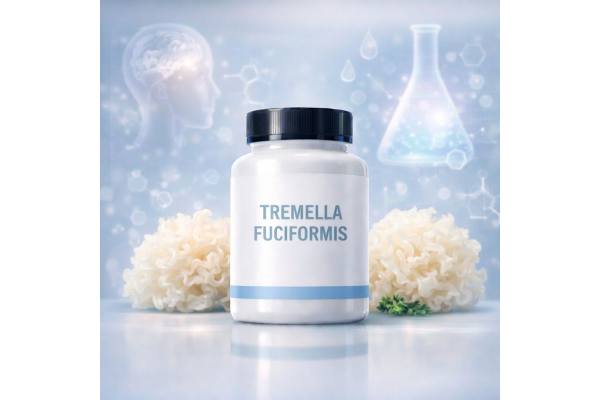
Tremella fuciformis—often called snow fungus or silver ear—is a jelly-like edible mushroom that has moved from traditional soups into modern powders, capsules, and skincare. Most Tremella extracts focus on its polysaccharides, a group of complex carbohydrates valued for water-binding, barrier-supporting, and immune-modulating properties. That combination explains why Tremella is marketed for “deep hydration,” glow, and healthy aging, while also showing up in functional beverages aimed at metabolic wellness.
Still, Tremella is not a magic shortcut. The strongest evidence is about biological plausibility (how it behaves in the body and on skin) and early human trials in specific settings. The most useful approach is to treat Tremella as a supportive ingredient: pair it with proven basics (sleep, protein, fiber, sun protection, and medical care when needed), and use it consistently enough to judge your own response.
Essential Insights for Tremella fuciformis
- May support skin hydration and barrier comfort, especially when used consistently.
- Early human evidence suggests possible benefits for waist circumference and HbA1c in prediabetes contexts.
- Start low to reduce stomach upset; stop if you develop rash, swelling, or breathing symptoms.
- Typical supplemental range in studies is 600–1,200 mg/day of Tremella fuciformis (extract or powder), often for 8–12 weeks.
- Avoid if you have a mushroom allergy, are pregnant or breastfeeding, or take immunosuppressants unless your clinician approves.
Table of Contents
- What is Tremella fuciformis extract?
- Benefits for skin hydration and aging
- Immune and gut effects worth knowing
- Metabolic support and blood sugar claims
- How to use Tremella in food and supplements
- Tremella dosage: how much and how long?
- Side effects, interactions, and who should avoid
What is Tremella fuciformis extract?
Tremella fuciformis is a pale, frilly mushroom with a naturally gelatinous texture. In cooking, it behaves a bit like a culinary sponge: it soaks up liquid, becomes silky, and adds body to soups and desserts. In supplements and skincare, “Tremella extract” usually means a concentrated preparation made from the fruiting body, mycelium, or fermentation broth. The goal is to deliver the mushroom’s most studied compounds in a consistent form—mainly Tremella polysaccharides.
Polysaccharides are large, branching carbohydrate molecules. Tremella’s polysaccharides are often described as “moisture friendly” because they can bind water and form a film-like layer—an effect that matters more on skin than in the gut. They also appear to interact with the immune system (especially innate immunity) and with gut microbes, which can influence inflammatory signaling and metabolic pathways. That said, the exact effects depend heavily on the extract’s structure: molecular weight, branching pattern, and purity can change how it behaves.
You will see Tremella sold in a few main formats:
- Whole dried mushroom (for cooking): best for food texture and culinary use, not standardized for active compounds.
- Powder (often ground fruiting body): easier to add to drinks, but potency varies by brand.
- Extract capsules or powders: usually standardized by extraction method rather than a single “active” number.
- Topical skincare ingredients (often labeled as Tremella fuciformis polysaccharide): used for hydration and barrier feel.
A practical takeaway: treat “Tremella” as a category, not a single uniform product. If you want predictable results, choose a product that clearly states whether it is a whole-food powder or an extract, and how much you are taking per serving.
Benefits for skin hydration and aging
Tremella’s popularity in skincare is not an accident. Its polysaccharides are good at holding water and improving the feel of dryness—two outcomes people notice quickly: less tightness and a smoother, more comfortable surface. In topical products, Tremella is typically used as a humectant-like ingredient and texture enhancer. If you have skin that gets “paper dry” after cleansing or feels rough under sunscreen, Tremella-containing serums and moisturizers often help by supporting surface hydration and reducing that squeaky, stripped sensation.
For aging concerns, the realistic promise is not “wrinkle erasing” but “better conditions for skin to look and behave younger.” When the outer layer of skin (the stratum corneum) is well hydrated, it reflects light more evenly, fine lines look softer, and makeup sits better. Barrier support also matters for reactivity: a calmer barrier tends to show less redness and less stinging from actives like retinoids or exfoliating acids.
Where Tremella may fit best:
- Dry, dehydrated, or seasonally irritated skin: to improve comfort and softness.
- Post-procedure or over-exfoliated periods: as a gentle hydration step while you simplify your routine.
- “Glass skin” goals: because hydration and light reflection often matter more than adding new actives.
How to set expectations:
- Topical Tremella can be noticeable within days (feel and comfort), but the “look” benefits usually take 2–4 weeks of consistent use.
- It works best when paired with basic barrier building blocks: a bland moisturizer, sun protection, and avoiding harsh cleansing.
- If your main goal is collagen support, Tremella is a supportive player—not a replacement for proven options like daily sunscreen, prescription retinoids (when tolerated), and dermatologist-guided procedures.
One more useful angle: Tremella is often chosen by people who cannot tolerate heavy fragrance, aggressive acids, or overly strong retinoids. It can make a routine feel more forgiving without requiring you to abandon your core steps.
Immune and gut effects worth knowing
Tremella’s internal “wellness” claims usually rest on the relationship between polysaccharides, the gut microbiome, and immune signaling. Unlike vitamins that absorb directly as small molecules, many mushroom polysaccharides act more like dietary fibers: they may pass through the upper digestive tract largely intact and become fuel for microbes in the colon. When microbes ferment these compounds, they can produce short-chain fatty acids (SCFAs) and other metabolites that influence inflammation, gut barrier function, and immune tone.
What this can mean in real life: some people use Tremella as a “gentle gut support” supplement—especially if they are already building a fiber-forward diet. The best-case scenario is subtle: steadier digestion, fewer “off” days, and a sense that the immune system feels less jumpy. The worst-case scenario is also common: nothing noticeable, because baseline lifestyle factors matter more than any single supplement.
A helpful way to think about Tremella is as a signal modulator rather than an immune stimulant. You do not want a supplement that cranks the immune system indiscriminately. A better goal is balanced responsiveness—appropriate reaction to threats without chronic, unnecessary inflammatory noise. Early research suggests Tremella polysaccharides can influence immune pathways involved in oxidative stress and inflammatory mediators, but human outcomes are still developing.
Who might find the gut angle most relevant:
- People increasing dietary fiber and looking for an additional “prebiotic-like” ingredient
- Individuals who notice skin and digestion flare together (often a clue that barrier function matters)
- Those who do not tolerate stronger mushroom extracts and want a milder option
Practical guardrails:
- If Tremella causes bloating, your dose may be too high or your gut may need a slower ramp.
- If you have an autoimmune condition or take immune-targeting medications, treat immune-modulating supplements as a “medical conversation,” not a self-experiment.
- Supplements should never replace vaccines, prescribed treatments, or evaluation for persistent infections.
Used wisely, Tremella can fit into a broader “gut and barrier” strategy—especially when your foundation includes fiber diversity, sleep, and stress management.
Metabolic support and blood sugar claims
Metabolic claims—“supports blood sugar,” “helps weight,” “improves lipids”—are where readers deserve extra clarity. Tremella is not a medication for diabetes or obesity, and it is not a substitute for nutrition, activity, or clinician-guided care. However, there is early human evidence that a Tremella-containing daily beverage can modestly improve markers like HbA1c and waist circumference in a prediabetes context. That is encouraging, but it should be interpreted as an early signal, not a final verdict.
Why Tremella might influence metabolic markers:
- Viscosity and carbohydrate handling: Some beta-glucans and polysaccharides form viscous solutions that can slow gastric emptying and dampen post-meal glucose spikes.
- Microbiome effects: Shifts in microbial composition and SCFA production can influence insulin sensitivity and appetite signaling.
- Inflammation and oxidative stress: Chronic low-grade inflammation is tied to insulin resistance, and Tremella polysaccharides may influence antioxidant pathways.
What “success” looks like in the real world:
- A small improvement over 8–12 weeks—often alongside unchanged diet advice—rather than dramatic changes.
- Better results when paired with basics: protein at breakfast, daily walking, consistent sleep, and reduced ultra-processed intake.
- The clearest “win” is often waist circumference and steady energy, not a sudden change on the scale.
Common mistakes to avoid:
- Relying on Tremella while ignoring calories and protein. Supplements cannot compensate for a chronically mismatched diet.
- Changing multiple variables at once. If you start Tremella, a new workout program, and a new diet on the same day, you will not know what helped—or what caused side effects.
- Treating normal day-to-day glucose variability as failure. Look at trends over weeks, not single readings.
If you have prediabetes, PCOS, fatty liver, or metabolic syndrome, Tremella may be a reasonable “adjunct” conversation with your clinician—especially if you choose a product with clear dosing and you track outcomes in a structured way.
How to use Tremella in food and supplements
You can use Tremella three main ways: as food, as a supplement, or as a topical skincare ingredient. The best choice depends on your goal and how sensitive your digestion and skin are.
1) Food use (dried Tremella in soups and desserts)
Culinary Tremella is ideal if you enjoy cooking and want a gentle, consistent habit. It adds texture and satiety more than it delivers a standardized “dose.” Basic method:
- Rinse and soak dried Tremella until it softens.
- Trim the tough central base.
- Simmer it in soups, teas, or lightly sweetened desserts.
Food use is best for people who want a whole-food approach and are not chasing a specific clinical-style dose.
2) Supplements (powder or extract capsules)
Supplements are more practical if your aim is repeatable intake. When choosing a product, prioritize clarity over marketing:
- Label transparency: look for “fruiting body” vs “mycelium” vs “fermented,” and the amount per serving.
- Extraction details: hot-water extraction is common for polysaccharides.
- Testing: ideally, third-party testing for contaminants (especially heavy metals) and identity.
- Simplicity: fewer “fairy dust” blends, more straightforward dosing.
Powders mix well into smoothies, yogurt, oatmeal, and coffee alternatives. Capsules are easier for travel and consistent dosing.
3) Skincare (serums, essences, and moisturizers)
If your main goal is hydration, topical use is often the most direct path. A simple approach:
- Apply Tremella-containing serum on damp skin.
- Seal with a moisturizer suited to your barrier needs.
- Use sunscreen daily, because hydration benefits are easier to see when sun irritation is controlled.
If you are acne-prone, choose lighter textures and patch test first. “Natural” does not guarantee non-comedogenic.
A final practical note: Tremella can be part of a “stack,” but it does best when you keep the rest of the routine boring. Consistency beats complexity—especially for skin.
Tremella dosage: how much and how long?
There is no single universally accepted Tremella dosage because products vary (whole mushroom powder vs extract, different polysaccharide profiles, and different delivery forms). Still, you can use the available human research as a sensible reference point and then adjust based on tolerance and goals.
Common oral dosing ranges (practical guidance)
- Extract or concentrated powder: 600–1,200 mg per day is a commonly studied range in human trials. Many people start at 600 mg/day for the first week and increase only if well tolerated.
- Whole-food powder (less concentrated): often used in the 1,000–3,000 mg/day range, but effects can be milder and more variable.
- Functional beverages: follow the label; the meaningful factor is the daily consistency over weeks, not occasional use.
Timing and how to take it
- With food is a safe default, especially if you have a sensitive stomach.
- If your goal is metabolic support, taking it with the largest carb-containing meal may be a reasonable strategy.
- If your goal is general wellness, timing matters less than consistency.
How long to try before deciding
- Skin (oral): give it 6–8 weeks, because skin turnover and barrier patterns take time.
- Skin (topical): you can judge comfort and hydration within 1–2 weeks, but assess “look” outcomes around 4 weeks.
- Metabolic markers: a meaningful test window is 8–12 weeks, ideally with consistent routines and measurable endpoints (waist circumference, fasting glucose, HbA1c if clinically appropriate).
How to judge whether it is working
Use a simple, trackable checklist:
- Dryness/tightness scores (0–10) a few times a week
- Waist circumference weekly (same time of day)
- Energy and cravings notes (brief, not obsessive)
- Any side effects (bloating, rash, headache)
If you are on medications for glucose, blood pressure, or clotting, do not “optimize dosage” on your own. Treat Tremella like any bioactive ingredient: start low, track outcomes, and involve a clinician when stakes are high.
Side effects, interactions, and who should avoid
Tremella fuciformis is widely eaten as food, which is a reassuring baseline. Even so, extracts and powders can cause side effects—especially when you move from culinary amounts to daily concentrated use.
Common side effects (usually mild)
- Digestive upset: bloating, gas, or changes in stool consistency—more likely if you start high or take it on an empty stomach.
- Headache or “off” feeling: uncommon, but worth noting if it appears after dosing and resolves when you stop.
- Skin reactions (topical): stinging, redness, or clogged pores, often due to the overall formula rather than Tremella alone.
Allergy risks
Mushroom allergy is the clearest red flag. Stop immediately and seek care if you develop hives, facial swelling, wheezing, or throat tightness.
Interaction cautions (be conservative)
Because Tremella polysaccharides can influence immune signaling and inflammation pathways, it is prudent to be cautious if you take:
- Immunosuppressants or immune-modulating drugs (including some biologics)
- Anticoagulants or antiplatelet medications (due to the general caution with supplements and bleeding risk uncertainty)
- Diabetes medications if you closely manage glucose (because any additive effect on glucose trends should be monitored)
These cautions do not mean Tremella is unsafe; they mean the evidence is not strong enough to guarantee “no interaction,” so the safest approach is coordination.
Contaminants and product quality
One of the most practical safety issues with mushroom products is not the mushroom—it is what comes with it. Poor sourcing can increase risk of heavy metal contamination or misidentified species. That is why third-party testing and reputable sourcing matter more here than fancy branding.
Who should avoid Tremella unless medically advised
- Pregnant or breastfeeding individuals (limited safety data for concentrated extracts)
- People with known mushroom allergy
- Those with organ transplants or on significant immunosuppression
- Anyone preparing for surgery in the next 2 weeks (a conservative supplement pause is common practice)
- Individuals with complex medical conditions who cannot easily interpret new symptoms
If you are generally healthy, Tremella is often well tolerated when you start low, take it with food, and use a quality-tested product. If you are not generally healthy, treat it as a clinician-guided experiment, not a casual add-on.
References
- Recent advances in polysaccharides from Tremella fuciformis: isolation, structures, bioactivities and application 2025 (Systematic Review)
- Tremella fuciformis beverage improves glycated hemoglobin A1c and waist circumference in overweight/obese prediabetic subjects: a randomized controlled trial 2024 (RCT)
- The potential cutaneous benefits of Tremella fuciformis 2023 (Review)
- Tremella fuciformis polysaccharide reduces obesity in high-fat diet-fed mice by modulation of gut microbiota 2022 (Preclinical Study)
- Efficacy and Safety of Tremella fuciformis in Individuals with Subjective Cognitive Impairment: A Randomized Controlled Trial 2018 (RCT)
Disclaimer
This article is for educational purposes only and does not provide medical advice, diagnosis, or treatment. Supplements can affect people differently and may interact with medications or medical conditions. If you are pregnant, breastfeeding, immunocompromised, managing a chronic condition (such as diabetes), or taking prescription medications, consult a qualified clinician before using Tremella fuciformis extracts. Stop use and seek urgent care if you develop signs of an allergic reaction, including swelling, hives, or breathing difficulty.
If you found this guide useful, please consider sharing it on Facebook, X (formerly Twitter), or any platform you prefer, and follow us on social media. Your support through sharing helps our team continue producing quality, research-informed content.