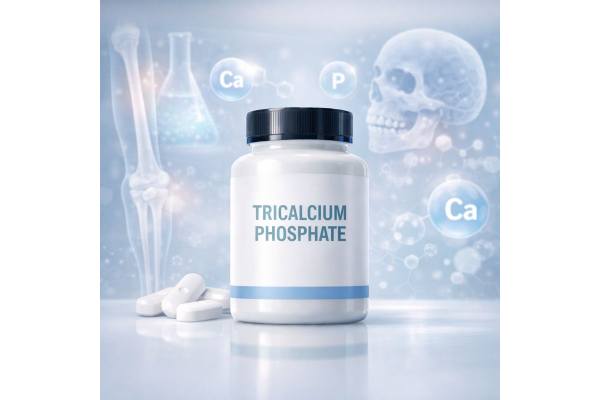
Tricalcium phosphate is a calcium-and-phosphorus compound used in two very different ways: as a common food additive (often to prevent clumping in powders) and as a calcium source in fortified foods and supplements. That split identity explains why many people feel confused when they see it on an ingredient list or a bottle label. As a nutrient source, it can help people who struggle to meet daily calcium needs—especially when diet, appetite, lactose intolerance, or life stage makes adequate intake harder. As an additive, it helps products flow, mix, and stay stable on the shelf. This guide breaks down what tricalcium phosphate is, how it behaves in the body, what benefits are realistic, and how to dose it safely. You will also learn how to interpret “elemental calcium,” avoid common label traps, and recognize side effects and interactions that matter in real life.
Quick Overview
- Helps fill calcium gaps when diet alone falls short, supporting bone and muscle function over time.
- Works best when total daily calcium is split into doses of 500–600 mg elemental calcium or less.
- Too much calcium from supplements can raise kidney-stone risk and cause constipation or bloating.
- Avoid without medical guidance if you have kidney disease, high blood calcium, or a history of calcium stones.
Table of Contents
- What is tricalcium phosphate and why is it used?
- What benefits and properties does it actually have?
- Is tricalcium phosphate a good calcium supplement?
- How much tricalcium phosphate should you take?
- How to read labels and choose a quality product
- Side effects, interactions, and who should avoid it
- What the evidence and safety reviews say
What is tricalcium phosphate and why is it used?
Tricalcium phosphate is a mineral salt made from calcium and phosphate. In plain terms, it is a compact way to package two nutrients your body already uses every day: calcium (for bones, muscle contraction, nerve signaling, and blood clotting) and phosphorus (for bones, energy production, and cell membranes). If you see it listed on a label, it usually appears for one of three reasons:
- As a food additive to keep powdered ingredients from clumping and to improve flow in products like drink mixes, powdered creamers, seasoning blends, and some infant and sports formulations.
- As a fortification ingredient to increase calcium content in foods that are not naturally calcium-rich, such as some plant-based milks, cereals, and nutrition powders.
- As a supplement ingredient that contributes “elemental calcium” (the amount of calcium your body can actually use), sometimes paired with vitamin D.
It also shows up outside of nutrition—in dental and medical materials, for example—because calcium-phosphate chemistry is closely related to the mineral structure of bone and teeth. That does not mean it “turns into bone,” but it does explain why calcium phosphate compounds are widely studied and used in biomedical applications.
One practical point that affects how tricalcium phosphate behaves: it is not very soluble in water. That low solubility is a feature for manufacturing (it stays stable, does not dramatically change flavor, and helps powders remain free-flowing). In the body, low solubility means it depends more on the acidic environment of the stomach to dissolve and release calcium for absorption.
So, when people ask, “Is tricalcium phosphate safe?” or “Is it a good supplement?” they are often mixing two different questions:
- Is the tiny amount used as an additive in food safe and regulated?
- Is a higher-dose form, taken intentionally for calcium intake, effective and well tolerated?
The rest of this guide separates those use cases and gives you a clear framework for deciding whether tricalcium phosphate fits your needs.
What benefits and properties does it actually have?
Tricalcium phosphate’s real-world value is mostly about calcium sufficiency, not quick effects you “feel” overnight. Calcium is a long-game mineral: your body maintains blood calcium within a tight range, and when intake is low, it can pull calcium from bone to keep essential functions running. Over months and years, consistently missing calcium needs can contribute to lower bone mineral density, especially when vitamin D status, protein intake, and resistance training are also not optimal.
Here are the benefits that are realistic and defensible when tricalcium phosphate helps you reach a healthier overall calcium intake:
- Bone and teeth support over time. Adequate calcium contributes to building and maintaining bone mass. This matters most during growth (teens and young adults) and later life when bone loss accelerates, particularly after menopause.
- Muscle and nerve function reliability. Calcium is central to muscle contraction and nerve signaling. Meeting needs supports normal function, though extra calcium beyond needs does not typically improve performance.
- A practical option for fortification. In foods, tricalcium phosphate can raise calcium content without dramatically changing taste. For people who do not consume dairy, fortified foods can be a major calcium strategy.
- Shelf stability and clean formulation advantages. As an additive, it improves powder flow and reduces caking. This can make products easier to measure and mix, and can reduce the need for other processing aids.
It also has “properties” that matter for how you use it:
- Lower water solubility compared with calcium citrate, which means absorption can be more meal- and stomach-acid dependent.
- Calcium plus phosphorus together, which can be beneficial in typical diets but requires caution for people who must limit phosphorus (notably some kidney conditions).
- Relatively high elemental calcium density compared with some other calcium salts, which can reduce the number of pills needed to reach a target.
A helpful expectation-setter: if your diet already provides adequate calcium, adding tricalcium phosphate is unlikely to create noticeable benefits. The real advantage is closing a gap—especially for people who consistently fall short due to dietary preferences, appetite changes, or life stage needs.
Is tricalcium phosphate a good calcium supplement?
Tricalcium phosphate can be a reasonable calcium source, but it is not the “best” choice for everyone. The answer depends on your digestion, your diet pattern, and how you plan to take it.
Where tricalcium phosphate fits well
It often makes sense when:
- You prefer fortified foods (plant-based milks, nutrition powders, cereals) and want the calcium in those foods to count meaningfully toward daily intake.
- You tolerate it well and want a calcium form with a higher elemental calcium percentage than calcium citrate (which can mean fewer tablets).
- You already take vitamin D or get enough vitamin D, since vitamin D status influences calcium absorption.
Where other calcium forms may be easier
You might consider calcium citrate instead if:
- You use acid-suppressing medications long-term or have lower stomach acid (which can reduce dissolution of less soluble calcium salts).
- You have a sensitive stomach and notice that certain calcium pills cause bloating or constipation.
You might consider calcium carbonate if:
- Cost is the biggest factor and you reliably take it with meals, which improves absorption for many people.
What about absorption and “bioavailability”?
Calcium absorption is not all-or-nothing. Your body typically absorbs a fraction of the calcium you ingest, and that fraction depends on:
- Dose size (smaller doses generally absorb better)
- Vitamin D status
- Age
- Meal timing
- The calcium salt form and how well it dissolves
Tricalcium phosphate’s lower solubility means it often performs best when taken with food or as part of fortified foods consumed with meals. That is not a dealbreaker; it is simply a usage rule.
When tricalcium phosphate is not the right tool
If your goal is not “meeting calcium needs” but rather treating osteoporosis, preventing fractures on its own, or improving bone density rapidly, calcium supplements—regardless of the form—tend to have limited impact unless you were truly deficient or have a specific medical indication. In those cases, a clinician typically focuses on a broader plan: resistance training, fall-risk reduction, adequate protein, vitamin D sufficiency, and—when appropriate—prescription therapies.
Bottom line: tricalcium phosphate can be a solid, practical calcium source when used correctly, but your best choice depends on tolerance, timing, and your overall diet strategy.
How much tricalcium phosphate should you take?
The most important dosing concept is that you do not dose “tricalcium phosphate” directly—you dose elemental calcium. Tricalcium phosphate is just the carrier. Your target should be based on how much calcium you get from food, then filling only the gap.
Step 1: Know your daily calcium target
Most adults aim around:
- 1,000 mg per day of calcium from all sources for many adults
- Up to 1,200 mg per day in older age and certain life stages
Your personal target depends on age, sex, and medical context. If you are unsure, it is safer to aim for adequacy rather than “as high as possible.”
Step 2: Estimate how much you get from food
A quick, realistic approach:
- Count dairy or fortified equivalents first (milk, yogurt, fortified plant milk).
- Add major contributors (cheese, canned fish with bones, calcium-set tofu, fortified cereals).
- If you rarely consume these, your dietary calcium may be lower than you think.
If diet provides, for example, 600–800 mg per day, you may only need a small supplement dose (or none).
Step 3: Use dose splitting to improve absorption and reduce side effects
For supplements, many people do best with:
- 500–600 mg elemental calcium per dose or less, once or twice daily depending on the gap you need to fill.
This improves absorption efficiency and often reduces constipation and bloating.
What does that mean in tricalcium phosphate milligrams?
Labels vary, but tricalcium phosphate contains roughly about 38% elemental calcium by weight. That means:
- A “1,000 mg tricalcium phosphate” serving may provide roughly 380 mg elemental calcium (check your label; manufacturers should list elemental calcium explicitly).
If your gap is 400–600 mg elemental calcium per day, that could be one serving for some products, or two smaller servings for others.
How long should you take it?
If you need supplemental calcium, it is typically a long-term habit, but it should not be mindless. Reassess every few months:
- Has your diet changed?
- Are you getting side effects?
- Do you still need the same amount?
If you are taking calcium for a medical reason (like malabsorption, certain bariatric procedures, or hypoparathyroidism), follow a clinician’s dosing plan closely.
How to read labels and choose a quality product
Calcium labels can be deceptively confusing because the big number on the front may refer to the compound (tricalcium phosphate) rather than the elemental calcium you are trying to consume. The safest rule is: only trust the “Supplement Facts” (or nutrition panel) line that lists calcium in mg of calcium.
Label checkpoints that prevent common mistakes
Use this checklist before buying or dosing:
- Find the elemental calcium line. It should say something like “Calcium (as tricalcium phosphate) — X mg.” That X mg is what counts.
- Check serving size realism. If the serving is 3–4 tablets, ask yourself if you will actually take it consistently.
- Look for vitamin D pairing. Some people benefit from calcium plus vitamin D, but you should avoid stacking high-dose vitamin D across multiple supplements by accident.
- Avoid unnecessary megadoses. More calcium is not automatically better. Overshooting can increase side effects and kidney stone risk.
- Prefer third-party testing when possible. Minerals can carry contaminants (like heavy metals) if sourcing and testing are poor. Reputable brands typically test and document purity.
Choosing between pills, powders, and fortified foods
Different formats fit different people:
- Fortified foods are often the easiest and most “set-and-forget” method. If a plant milk or cereal is already fortified, you may not need a separate pill at all.
- Tablets or capsules are convenient for travel and consistent dosing, but may cause constipation in some people.
- Powders can be useful if you dislike pills, but measure carefully. Calcium powders can also interact with other ingredients in smoothies (for example, high-oxalate greens can reduce absorption).
Timing and spacing that matters
Calcium can interfere with absorption of certain medications and minerals. A practical spacing strategy:
- Take calcium with meals if you use tricalcium phosphate or calcium carbonate.
- Separate calcium by at least 2–4 hours from iron supplements, thyroid medication, and some antibiotics (follow your prescriber’s advice).
A simple “best practice” routine
If you are filling a moderate gap:
- Get as much calcium as you comfortably can from food and fortified foods.
- Use a supplement only for the remaining gap.
- Split doses and take them with meals.
- Reassess every season (diet and routines change more than most people notice).
Side effects, interactions, and who should avoid it
Most side effects associated with tricalcium phosphate supplements are really calcium supplement side effects—they can occur with many calcium salts. The risk rises when the dose is high, dosing is not split, or total calcium intake from food plus supplements exceeds what you need.
Common side effects
These are usually dose-related and improve by lowering the dose or splitting it:
- Constipation
- Gas and bloating
- Stomach discomfort
- Nausea (less common)
Hydration, dietary fiber, and splitting doses often help. If constipation is persistent, you may tolerate a different calcium form better.
Overuse risks you should take seriously
Chronically high calcium intake from supplements can increase the risk of:
- Kidney stones in susceptible people
- High blood calcium (hypercalcemia), especially if combined with high-dose vitamin D or certain medical conditions
Warning signs that should prompt medical advice include persistent nausea, confusion, unusual thirst, frequent urination, or new kidney-stone symptoms (severe flank pain, blood in urine).
Medication interactions
Calcium can bind to or interfere with absorption of certain drugs. Common categories include:
- Thyroid hormone replacement (spacing is essential)
- Tetracycline and quinolone antibiotics (calcium can reduce absorption)
- Bisphosphonates used for bone health (calcium can interfere if taken too close)
- Iron and zinc supplements (calcium can reduce absorption for some people)
A simple safety habit is to keep calcium on a different schedule than these medications unless your clinician instructs otherwise.
Who should avoid tricalcium phosphate without medical guidance
Avoid self-supplementing (or use only under clinician guidance) if you have:
- Chronic kidney disease or a need to restrict phosphorus intake
- A history of calcium-containing kidney stones
- Hyperparathyroidism, sarcoidosis, or other conditions that can raise blood calcium
- Unexplained high calcium on blood tests
- Use of multiple supplements that already contain calcium and vitamin D
Also, if you are pregnant, breastfeeding, or dosing calcium for a child, it is especially important to follow age- and stage-specific guidance rather than copying adult supplement routines.
What the evidence and safety reviews say
When you look at the research on calcium supplements, a clear theme appears: calcium is essential, but supplements are most useful when they correct a shortfall, not when they push intake far above needs. In other words, the question is rarely “Does calcium work?” and more often “Do I need additional calcium, and what is the safest way to reach adequacy?”
Effectiveness depends on the baseline
People who already meet calcium needs through food typically do not gain much from extra supplemental calcium. On the other hand, people with low intake—due to diet patterns, appetite changes, lactose intolerance, or limited access to calcium-rich foods—may benefit from a supplement or fortified foods because it helps them reach the intake range associated with healthier bone maintenance.
Supplement form matters less than dosing behavior
Across calcium forms (including calcium phosphate salts), practical behaviors often drive results and tolerability:
- Smaller, split doses tend to absorb better than one large dose.
- Taking calcium with meals can improve absorption for less soluble forms.
- Vitamin D status strongly influences calcium absorption and utilization.
Tricalcium phosphate’s role in fortified foods is also worth highlighting. Fortification can meaningfully raise calcium intake without asking someone to take pills every day. However, calcium absorption can vary across fortified products depending on the calcium salt used and how the food matrix behaves during digestion.
Safety is about the total pattern, not one ingredient line
Safety reviews commonly focus on outcomes such as gastrointestinal side effects, kidney stone risk, and potential cardiovascular concerns. The most actionable takeaway for a typical reader is not to fear calcium, but to avoid “stacking” calcium unintentionally across multiple products and to avoid treating calcium as a harmless megadose nutrient.
What tricalcium phosphate adds to the conversation
Tricalcium phosphate is also a widely used additive (including in powdered products). Research into the physical form of food-grade tricalcium phosphate has raised interesting questions about particle characteristics in some contexts. For most consumers, the practical implication is simply this: choose reputable products, avoid unnecessary high-dose supplementation, and prioritize meeting needs through food and fortification first.
If you use tricalcium phosphate as a supplement, your best evidence-aligned strategy is conservative and boring—in the best way: dose only what you need, split doses, take it with meals, and reassess periodically.
References
- Calcium – Health Professional Fact Sheet 2025 (Government Resource)
- Calcium Supplementation- Efficacy and Safety – PubMed 2025 (Review)
- The True Nature of Tricalcium Phosphate Used as Food Additive (E341(iii)) – PubMed 2023
- Calcium Absorption from Food Products: Food Matrix Effects 2022 (Review)
Disclaimer
This article is for educational purposes only and does not provide medical advice, diagnosis, or treatment. Mineral supplements can interact with medications and can be harmful when taken in excessive amounts or when used in people with certain medical conditions. If you have kidney disease, a history of kidney stones, abnormal calcium or parathyroid results, or you take prescription medications (including thyroid hormone, antibiotics, or osteoporosis medicines), consult a qualified healthcare professional before using tricalcium phosphate or any calcium supplement. Seek prompt medical care if you develop severe abdominal or flank pain, blood in urine, confusion, persistent vomiting, or symptoms that suggest high blood calcium.
If this guide helped you, please share it on Facebook, X (formerly Twitter), or any platform you prefer, and follow us on social media. Your support through sharing helps our team continue producing reliable, reader-friendly health content.