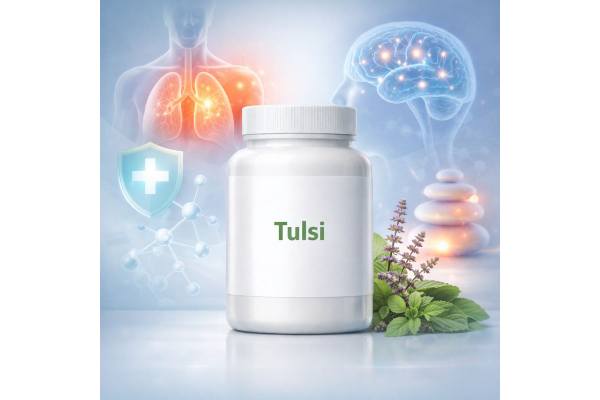
Tulsi—also called holy basil—is one of those herbs people reach for when they want steady, everyday support rather than a quick “kick.” In traditional wellness systems it is valued for resilience: helping the body handle stress, supporting comfortable breathing, and backing up immune and metabolic balance. Modern supplements usually use Ocimum tenuiflorum leaf (sometimes labeled Ocimum sanctum), offered as tea, capsules, tinctures, or standardized extracts.
What makes tulsi unique is its broad mix of plant compounds—aromatic oils and polyphenols—that may influence inflammation and oxidative stress (your body’s “rust and wear” signals) and the stress response. Still, “natural” does not automatically mean risk-free. Tulsi can interact with certain medications, and some safety flags matter for pregnancy and people trying to conceive. This guide focuses on practical benefits, realistic use cases, dosage, and safety details.
Essential Insights
- May support perceived stress and sleep quality when used consistently for 6–8 weeks.
- Often used for seasonal respiratory comfort and everyday immune support, especially as tea.
- Typical supplemental intake ranges from 250–1,000 mg/day of extract, depending on product strength.
- Avoid during pregnancy and use caution if trying to conceive, breastfeeding, or using blood thinners.
Table of Contents
- What is tulsi and what is in it?
- What benefits do people use tulsi for?
- How to take tulsi: tea, capsules, and tinctures
- Tulsi dosage ranges and timing
- Side effects, interactions, and who should avoid it
- What the evidence says and how to set expectations
What is tulsi and what is in it?
Tulsi is a leafy herb in the mint family, traditionally grown throughout South Asia and now cultivated worldwide. In supplements, the most common species is Ocimum tenuiflorum (frequently listed as Ocimum sanctum in older labeling). You will also see two popular “types” referenced in commerce and tradition: Rama (green-leaf) and Krishna (purple-leaf) tulsi. They are closely related and overlap in many uses, but they can differ in aroma and in the balance of certain plant compounds.
Tulsi’s “feel” as an herb comes from two broad chemical families:
- Aromatic oils (volatile compounds): These are responsible for the strong scent and include compounds often discussed in tulsi such as eugenol and related aromatics. Volatile oils are also where some safety considerations can live, because concentrated essential oils behave differently than leaf tea.
- Polyphenols and triterpenoids (non-volatile compounds): These include molecules frequently highlighted in tulsi research, such as rosmarinic acid and ursolic acid, which are often discussed in the context of oxidative stress and inflammatory signaling.
A useful way to think about tulsi is as a “whole-plant toolkit.” Instead of acting like a single-ingredient drug with one target, it is typically used as a supportive daily routine herb—especially as tea—or as a standardized extract when someone wants a more measurable dose.
Common tulsi product forms:
- Dried leaf tea bags or loose leaf (gentler, daily ritual friendly)
- Capsules/tablets containing powdered leaf or extract (more consistent dosing)
- Tinctures/glycerites (easy to adjust dose drop by drop)
- Standardized extracts (aim for repeatable potency; check label for ratio and mg)
If your goal is predictable results, the label details matter more with tulsi than many people realize. Two “500 mg” products can be very different if one is powdered leaf and the other is a concentrated extract. That difference affects both benefits and side effect risk.
What benefits do people use tulsi for?
Most tulsi searches boil down to one question: “What can it actually help with?” The most realistic answer is that tulsi is commonly used for support, not rescue—especially in three areas.
Stress balance and sleep quality
Tulsi is often described as an adaptogen, meaning an herb used to support resilience during stress. In practical terms, people reach for it when they feel “wired but tired,” under pressure, or when stress starts showing up as restless sleep. Some users report a smoother mood and better sleep continuity after several weeks rather than overnight.
What this can look like in real life:
- Feeling less “on edge” during the day
- Easier wind-down in the evening
- Less stress-related snacking or tension habits (indirect benefit, not guaranteed)
If stress is severe, persistent, or tied to depression, trauma, or panic, tulsi should be viewed as an add-on—something that may help alongside core care (sleep routine, therapy, medical evaluation).
Seasonal respiratory and throat comfort
Tulsi tea is widely used for comfort during seasonal changes: scratchy throat, occasional cough, and that “heavy” feeling in the chest that comes with irritation. Warm tea itself helps, and tulsi’s aromatic oils may add a soothing effect. People often combine it with ginger, honey, or lemon in home routines, but tulsi also stands alone as a simple daily cup.
Metabolic and inflammatory support
Another major use case is broad metabolic support—particularly when someone is working on diet and exercise changes and wants an herb that is generally associated with antioxidant and anti-inflammatory activity. This is not the same as treating diabetes or replacing medication. It is better framed as supporting healthy ranges when used responsibly.
Where tulsi fits best:
- As a habit anchor (tea ritual replacing sugary drinks)
- As part of a stress-metabolism loop plan (stress and sleep strongly affect cravings and glucose regulation)
- As a seasonal routine (several weeks at a time)
A helpful “decision rule” is this: tulsi makes the most sense when your goal is steady support and you can commit to consistent use for a few weeks. It makes less sense if you want immediate, dramatic effects.
How to take tulsi: tea, capsules, and tinctures
The “best” way to take tulsi depends on what you value most: ritual, convenience, or precision.
Option 1: Tulsi tea (best for daily consistency)
Tea is ideal if you want a gentle, repeatable habit with a wide safety margin compared with concentrated extracts.
Practical brew tips:
- Use 1 tea bag or 1–2 teaspoons dried leaf per cup.
- Steep 10–15 minutes with a lid (keeps aromatic compounds from escaping).
- If you are using tulsi primarily for evening wind-down, try it 60–90 minutes before bed.
If you love the taste but want more “signal,” steep longer or use two bags—then reassess how you feel over a week.
Option 2: Capsules or tablets (best for portability)
Capsules are useful when you want the same routine every day without thinking about brewing. The key is to understand what you are swallowing:
- Leaf powder is closer to tea in spirit, usually milder per mg.
- Extracts are more concentrated and may be standardized.
How to make capsules work better:
- Take with food if you are prone to nausea.
- Choose a consistent time window (morning and early afternoon are common for stress support).
- Give it at least 2–4 weeks before judging results.
Option 3: Tinctures and glycerites (best for flexible dosing)
Liquids are good when you want to “dial in” a dose. They can also be easier for people who dislike capsules.
Simple approach:
- Start low (for example, a small dose once daily).
- Increase gradually every few days until you notice benefit or reach the label dose.
- If you feel too sedated or get stomach upset, reduce the dose.
Option 4: Standardized extracts (best for “trial-style” precision)
If you want the closest match to how tulsi is studied, standardized extracts are the most straightforward—because you can replicate a mg dose consistently. This matters for stress and sleep goals where consistency is everything.
One more practical point: avoid mixing multiple “calming” supplements at full strength all at once. If you want to combine tulsi with something like ashwagandha, magnesium glycinate, or L-theanine, introduce one at a time so you can tell what is helping (and what is causing side effects).
Tulsi dosage ranges and timing
Tulsi dosing is tricky because products vary: leaf tea, leaf powder, concentrated extracts, and standardized formulas are not interchangeable. The goal is to choose a dose range that matches your form, your sensitivity, and your reason for taking it.
Common dosage ranges by form
Tea (dried leaf)
- A typical routine is 1–3 cups/day.
- Many commercial tea bags contain roughly 0.6–2.0 g dried plant material per bag, so your total daily intake depends on the brand and how strong you brew.
Capsules (leaf powder)
- Many people land in a broad daily range such as 500–2,000 mg/day of powdered leaf, often split into 1–2 doses.
- Leaf powder tends to feel gentler than extracts at the same mg number.
Extract capsules (non-standardized)
- A common “label-world” range is 250–1,000 mg/day, but potency depends on extract ratio (for example 5:1, 10:1). A 500 mg 10:1 extract is not the same as a 500 mg leaf powder capsule.
Standardized extract (study-style approach)
- In at least one well-known stress trial format, participants used 125 mg twice daily for 8 weeks (total 250 mg/day) of a specific extract.
Timing: morning or evening?
Match timing to your goal:
- Stress and daytime resilience: morning, or morning plus early afternoon.
- Sleep support: late afternoon or early evening (not right at bedtime if it affects digestion).
- Stomach sensitivity: take with food, or choose tea.
How long to take tulsi before deciding
A realistic evaluation window is:
- 7–10 days to assess tolerance (stomach, headaches, sedation).
- 2–4 weeks to notice early changes (stress reactivity, sleep continuity).
- 6–8 weeks for a fair “full trial” if stress and sleep are the main targets.
A simple “start low, build” plan
- Pick one form (tea or one capsule product).
- Start at the lowest practical dose for 3–4 days.
- Increase once if needed, then hold steady for 2 weeks.
- If benefits are subtle, consider either a stronger tea routine or a standardized extract rather than stacking multiple tulsi products.
If you are taking other supplements, keep a brief note of dose and timing. Tulsi’s effects can be subtle, and tracking makes it easier to spot patterns.
Side effects, interactions, and who should avoid it
Tulsi is often well tolerated as tea, but side effects and interactions become more relevant with higher-dose extracts and long-term daily use.
Possible side effects
Most reported issues are mild and often dose-related:
- Stomach upset or nausea (more common with capsules on an empty stomach)
- Headache (can happen with many herbs; often resolves with dose adjustment)
- Sleepiness or feeling “too calm” (especially if combined with other calming agents)
- Heartburn or reflux in sensitive people (tea strength and timing can matter)
If you get side effects, reduce dose first rather than stopping immediately. Many people find a lower dose works well.
Medication and supplement interactions to consider
Tulsi may not be a good “mix and match” herb for everyone:
- Blood thinners and antiplatelet drugs: If you use anticoagulants or have a bleeding disorder, ask a clinician before using concentrated tulsi extracts.
- Diabetes medications: If you use insulin or glucose-lowering medication, monitor closely when adding tulsi because “supporting glucose” plus medication can sometimes push levels too low.
- Blood pressure medications: If you are prone to low blood pressure, pay attention to dizziness or fatigue when starting tulsi.
- Sedatives and alcohol: If tulsi makes you sleepy, combining it with sedating medications or alcohol can amplify that effect.
Who should avoid tulsi or use medical supervision
Tulsi is not a casual choice for everyone. Avoid or seek medical guidance if you are:
- Pregnant (important)
- Trying to conceive (male or female fertility concerns have been raised in some safety discussions)
- Breastfeeding, or considering giving it to children
- Scheduled for surgery (stop in advance due to bleeding risk questions)
- Managing thyroid disease, autoimmune disease, or taking immune-modulating medication (not always a problem, but worth individualized guidance)
Quality and contamination risks
Herbs can carry risks unrelated to the plant itself:
- Mislabeling (species mix-ups)
- Heavy metals or pesticide residues
- Adulteration with pharmaceuticals (rare, but a known supplement-market problem)
If safety is a priority, choose products with clear testing statements and conservative dosing instructions. And if you are using tulsi daily for months, consider periodic breaks (for example, a week off every 6–8 weeks) unless your clinician advises otherwise.
What the evidence says and how to set expectations
Tulsi has a long history of traditional use, but modern evidence is uneven: stronger in some areas (stress and related measures), weaker in others (broad disease treatment claims). The most helpful way to read the evidence is to map it to what you want from the herb.
Where evidence is most practical
Stress, mood, and sleep-related outcomes
Clinical research has explored standardized tulsi extracts in people experiencing stress. The most meaningful takeaway for everyday users is not “tulsi cures stress,” but that consistent dosing over weeks may improve stress perception and certain sleep-related outcomes in some adults.
Mechanisms that match user experiences
Several publications focus on how tulsi might influence systems linked to stress response, inflammation, and oxidative stress. This matters because it explains why some people feel more stable over time rather than immediately stimulated or sedated.
Where claims often outpace proof
You will see tulsi marketed for everything from “detox” to major chronic diseases. A safer interpretation:
- Tulsi may support healthy inflammatory balance and antioxidant defenses.
- That does not equal treating cancer, replacing asthma treatment, or reversing diabetes.
If a product promises dramatic results in days, be skeptical. Tulsi is typically a “slow and steady” herb.
How to know if tulsi is working for you
Choose one or two measurable signals, not ten.
Good signals:
- Perceived stress score (rate 1–10 each evening)
- Time to fall asleep and number of awakenings
- Afternoon energy stability (not “more energy,” but fewer crashes)
- Digestive comfort if tulsi is part of a tea ritual after meals
If nothing changes after 6–8 weeks at a reasonable dose, tulsi may not be your best fit—or the form may be too weak. At that point, consider:
- Switching from leaf powder to a standardized extract, or
- Using tulsi as tea for enjoyment while choosing a different supplement for your main goal.
Comparisons people often ask about
- Tulsi vs ashwagandha: Ashwagandha often feels more “direct” for stress and sleep, while tulsi can feel gentler and more routine-friendly. Some people prefer tulsi if they are sensitive to stronger adaptogens.
- Tulsi vs green tea: Green tea is a stimulant for many people; tulsi usually is not. If you want calm focus without caffeine, tulsi tea is often easier to tolerate.
- Tulsi vs chamomile: Chamomile is typically more sedating; tulsi can feel more balancing than sleepy.
The best choice is the one you will take consistently and safely. If you treat tulsi like a daily practice rather than a quick fix, you give it the best chance to be useful.
References
- A randomized, double-blind, placebo-controlled trial investigating the effects of an Ocimum tenuiflorum (Holy Basil) extract (HolixerTM) on stress, mood, and sleep in adults experiencing stress – PubMed 2022 (RCT)
- Risk assessment of holy basil (Ocimum tenuiflorum L. and Ocimum sanctum L.) and some of the component substances used in herbal teas and food supplements – FHI 2023 (Guideline)
- A Comprehensive Review of the Phytochemical Constituents and Bioactivities of Ocimum tenuiflorum – PubMed 2024 (Review)
- Ocimum tenuiflorum extract (HOLIXERTM): Possible effects on hypothalamic–pituitary–adrenal (HPA) axis in modulating stress | PLOS One 2023 (Mechanistic Study)
- The Neuroprotective Potential of Ocimum Plant Species: Seasoning the Mind with Sweet and Holy Basil | MDPI 2025 (Review)
Disclaimer
This article is for educational purposes only and does not provide medical advice. Supplements can affect medications, lab values, and medical conditions, and quality can vary widely between products. If you are pregnant, breastfeeding, trying to conceive, have a chronic condition, or take prescription medications (especially blood thinners, diabetes drugs, or sedatives), consult a qualified healthcare professional before using tulsi or any concentrated herbal extract. Stop use and seek medical guidance if you experience concerning symptoms or an allergic reaction.
If you found this guide helpful, please consider sharing it on Facebook, X (formerly Twitter), or any platform you prefer, and follow us on social media. Your support through sharing helps our team continue producing practical, high-quality health content.