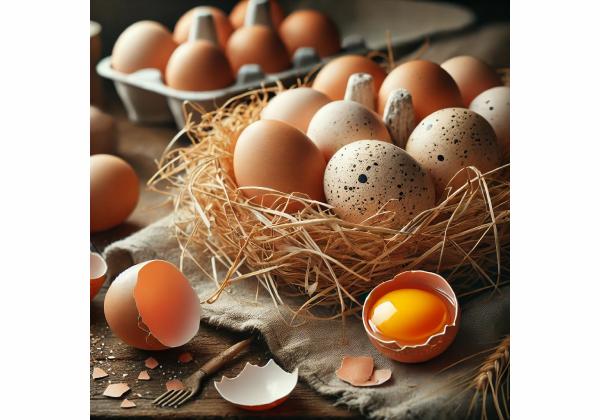
Turkey eggs are a rare find in most markets, yet they reward curious cooks with a rich, custardy flavor and impressive nutrition. Larger than chicken eggs and dotted with tan speckles, they have a thicker shell, a proportionally bigger yolk, and a firm, velvety white. That combination makes them exceptional for baking, emulsifying sauces, and turning out ultra-creamy scrambles and custards. Per 100 grams, turkey eggs deliver complete, high-quality protein along with meaningful amounts of vitamin B12, riboflavin (B2), pantothenic acid (B5), iron, selenium, and phosphorus.
Because turkeys lay seasonally and far fewer eggs than chickens, most turkey eggs are set for hatching, so availability is usually limited to small farms or backyard flocks. If you do get them, handle them like any other shell egg: keep them cold, cook them thoroughly unless pasteurized, and store them in their carton. Below, you will find a clear overview, detailed nutrition tables (per 100 g), practical cooking guidance, and balanced safety notes so you can decide where turkey eggs fit in your kitchen and your diet.
Nutrition Snapshot
- Complete protein source with ~13.7 g protein and 1.6 µg vitamin B12 per 100 g.
- Notable selenium (≈34 µg/100 g) and riboflavin; minimal carbohydrates (~1.2 g/100 g).
- Allergen caution: egg proteins can trigger reactions; avoid raw eggs due to Salmonella risk.
- Typical serving: 1 turkey egg (70–90 g), enjoy 1–3 times per week within overall diet.
- People with egg allergy or familial hypercholesterolemia should limit or avoid.
Table of Contents
- Turkey eggs: detailed overview
- Turkey egg nutrition profile (per 100 g)
- Health benefits of turkey eggs
- Risks, allergies and interactions
- Selecting quality, sustainability and storage
- Preparation, cooking and nutrient retention
- Portions, comparisons and FAQs
Turkey eggs: detailed overview
Turkey eggs are laid by domesticated turkeys and wild-type heritage breeds. They typically weigh 70–90 grams per egg (about one and a half times a standard chicken egg), with a thick, beige shell spattered with cinnamon speckles. The shell’s strength and the resilient inner membranes make them slightly harder to crack cleanly, but they also protect freshness well under proper refrigeration. Inside, you will find a relatively large yolk compared with the white. That higher yolk-to-white ratio gives turkey eggs a richer taste and a luxurious texture in cooked dishes.
Flavor-wise, most tasters describe turkey eggs as “eggier” rather than “gamier.” Expect a fuller, custard-like mouthfeel, not an off-putting barnyard note. The yolk emulsifies beautifully, which is why pastry cooks prize turkey eggs for crème anglaise, ice cream bases, flans, and sabayon. At breakfast, the same richness yields creamy scrambles and sturdy omelets that hold moisture without weeping. In savory applications, they shine in carbonara, shakshuka, and quiches. Bakers appreciate the added fat and lecithin from the larger yolk: cakes gain fine crumb and sheen; brioche and enriched doughs proof with satisfying volume; and cookies spread evenly while staying tender.
Why do you seldom see turkey eggs in supermarkets? Economics. Turkeys are generally raised for meat, and hens lay far fewer eggs per year than chickens. Many farms reserve those eggs to hatch poults, not for eating. When turkey eggs do reach consumers, it is usually through farm stands, specialty groceries, or direct-to-consumer sales. Seasonality matters, too: turkeys lay in longer-day months, so availability may peak in spring and early summer, depending on latitude and management.
Storage, safety, and handling mirror chicken eggs. Keep them cold in their carton, minimize temperature swings, and use pasteurized eggs for raw preparations. In recipes, you can substitute one turkey egg for roughly 1½ medium chicken eggs. For baking formulas that rely on precise ratios of liquid to solids, weigh the eggs (shell off) and match the recipe’s egg weight; your results will be more consistent.
Finally, a word on sustainability: because turkey eggs are a byproduct of meat-focused production or small mixed flocks, their environmental footprint depends on the specific farm system. Pasture-based or integrated systems that use local feed, maintain soil health, and reduce transport often have favorable profiles. When buying directly, ask about feed sourcing, outdoor access, and biosecurity measures (important in years with avian influenza pressure).
Turkey egg nutrition profile (per 100 g)
How to read these tables: Values are for raw, whole turkey egg per 100 g. Cooking slightly changes some nutrients (e.g., minor B-vitamin losses), but protein and minerals remain largely stable. Percent Daily Values (%DV) use current U.S. reference DVs for adults.
Macros and electrolytes
| Nutrient | Amount (per 100 g) | %DV |
|---|---|---|
| Energy | 171 kcal | — |
| Protein | 13.68 g | 27% |
| Total Fat | 11.88 g | 15% |
| Saturated Fat | 3.63 g | 18% |
| Carbohydrate | 1.15 g | 0% |
| Dietary Fiber | 0 g | 0% |
| Sodium | 151 mg | 7% |
| Potassium | 142 mg | 3% |
Fats and fatty acids
| Fatty Component | Amount (per 100 g) | %DV |
|---|---|---|
| Monounsaturated Fat | ~4.57 g | — |
| Polyunsaturated Fat | ~1.66 g | — |
| Omega-3 Fatty Acids (total) | ~0.08 g | — |
| Omega-6 Fatty Acids (total) | ~1.17 g | — |
| Cholesterol | ~933 mg | —* |
*No established %DV for cholesterol; individual guidance varies.
Vitamins
| Vitamin | Amount (per 100 g) | %DV |
|---|---|---|
| Vitamin A (RAE) | ~166 µg | 18% |
| Thiamin (B1) | ~0.11 mg | 10% |
| Riboflavin (B2) | ~0.47 mg | 36% |
| Niacin (B3) | ~0.03 mg | 0% |
| Pantothenic Acid (B5) | ~1.90 mg | 38% |
| Vitamin B6 | ~0.13 mg | 7% |
| Folate (DFE) | ~71 µg | 18% |
| Vitamin B12 | ~1.65 µg | 69% |
| Vitamin D | data not available | — |
Minerals
| Mineral | Amount (per 100 g) | %DV |
|---|---|---|
| Calcium | ~99 mg | 8% |
| Iron | ~4.05 mg | 22% |
| Magnesium | ~13 mg | 3% |
| Phosphorus | ~170 mg | 14% |
| Zinc | ~1.52 mg | 14% |
| Selenium | ~34.3 µg | 62% |
Glycemic and acid–base context: With ~1.15 g carbohydrate per 100 g, turkey eggs have a negligible glycemic load. They are moderately acid-forming, typical of animal-protein foods.
Allergens and intolerance markers: Egg-white proteins (ovalbumin, ovotransferrin, ovomucoid) and yolk proteins (including alpha-livetin) can provoke IgE-mediated reactions in sensitized individuals. Cooking denatures some proteins but does not guarantee safety for those with true egg allergy.
Health benefits of turkey eggs
Complete protein for repair and performance. Like all eggs, turkey eggs provide a complete amino acid profile with ~13.7 g protein per 100 g. That supports tissue repair after exercise, helps maintain lean mass during weight loss, and contributes to enzyme and hormone production. The protein is highly digestible, and the yolk’s phospholipids aid satiety, which can help with appetite control when turkey eggs replace lower-protein breakfast options.
Micronutrients that pull their weight. Turkey eggs deliver notable vitamin B12 (about 1.6 µg per 100 g), riboflavin, pantothenic acid, and selenium. B12 supports red blood cell formation and neurologic function; riboflavin and B5 help convert food into energy and maintain healthy skin and mucosa. Selenium contributes to antioxidant defenses via glutathione peroxidases. You also get iron (roughly 22% DV per 100 g), zinc (about 14% DV), and phosphorus (about 14% DV) for oxygen transport, immune function, and bone health, respectively.
Eye and brain support from yolk components. While exact carotenoid values for turkey eggs are limited, egg yolks generally supply lutein and zeaxanthin—pigments linked to macular health and visual performance. The yolk also contains choline, a precursor to acetylcholine and an essential nutrient for fetal brain development and adult cognitive function. Many people fall short of choline adequacy; including eggs can help close that gap as part of a balanced diet.
Cardiometabolic context in real-world diets. Modern evidence suggests that, for most healthy people, moderate egg intake (e.g., up to one egg per day) is not associated with higher cardiovascular risk when part of an overall prudent diet. Risk appears to depend more on dietary patterns as a whole, metabolic health, and what eggs replace (for instance, eggs in place of refined carbohydrates can improve satiety and glycemic responses). If you have diabetes, very high LDL cholesterol, or familial hypercholesterolemia, discuss individualized limits with your clinician and dietitian.
Practical upsides in the kitchen. The larger yolk makes turkey eggs culinary workhorses. They emulsify sauces (hollandaise, mayonnaise), enrich custards, and add structure to baked goods. Because the whites are sturdy, you can gently whip them for sponge cakes and soufflés; a pinch of acid (cream of tartar) helps stabilize foams. For home cooks prioritizing nutrient density per portion, one turkey egg delivers more B12, selenium, and iron than a typical chicken egg, simply by virtue of total mass.
The bottom line: turkey eggs offer concentrated nutrition and culinary versatility. Fold them into a Mediterranean-style pattern—plenty of vegetables, legumes, whole grains, nuts, seeds, and seafood—and they can be part of a heart-smart, protein-forward way of eating.
Risks, allergies and interactions
Food safety—treat turkey eggs like any shell egg. The main microbiological concern is Salmonella. Reduce risk by buying from reputable sources, keeping eggs refrigerated at 4 °C (40 °F) or below, and cooking until yolks and whites are firm (or heating dishes to 71–74 °C/160–165 °F). Use pasteurized eggs for raw or lightly cooked recipes (mayonnaise, aioli, tiramisu). Hard-cooked eggs should be eaten within one week under refrigeration. Discard any eggs with off odors once cracked.
Allergy and cross-reactivity. People with egg allergy react to proteins in the white (ovalbumin, ovomucoid, ovotransferrin) and sometimes in the yolk (alpha-livetin, also known as Gal d 5). Cross-sensitization across avian species is common: individuals allergic to chicken eggs often react to other bird eggs (including turkey) due to shared epitopes. Severity ranges from hives to anaphylaxis. Anyone with a known egg allergy should avoid turkey eggs unless cleared by an allergist after supervised testing and, if appropriate, an oral food challenge.
Cholesterol considerations. Per 100 g, turkey eggs contain roughly 933 mg cholesterol. Although dietary cholesterol affects blood cholesterol less than saturated fat for most people, some are hyper-responders. Those with familial hypercholesterolemia, very high LDL cholesterol, or established cardiovascular disease should follow individualized medical advice; that may involve stricter limits or reserving eggs for occasional use within a lipid-lowering diet.
Raw whites and biotin binding. Avidin, a protein in raw egg whites, binds biotin (vitamin B7) and can reduce its availability. Cooking denatures avidin, eliminating this concern. Avoid regular consumption of raw whites unless pasteurized.
Medication and condition notes.
- Pregnancy and immunocompromise: Avoid raw or undercooked eggs; use pasteurized eggs for any preparation not fully cooked.
- Diabetes and metabolic syndrome: Consider overall patterns and lipid targets; pair eggs with fiber-rich vegetables and whole grains to improve post-meal responses.
- Renal concerns: Turkey eggs are moderate in phosphorus; those with advanced chronic kidney disease may need to limit total phosphorus and choose protein sources accordingly under clinical guidance.
Environmental and residue context. Properly regulated egg production minimizes residues of veterinary drugs; choose suppliers that follow good practices and maintain biosecurity. If you keep backyard turkeys, avoid off-label antibiotic use and follow local veterinary guidance.
As with any nutrient-dense food, the question is not “are turkey eggs good or bad?” but “how do they fit your overall diet and health goals?” When you keep handling and cooking practices strict and tailor frequency to your risk profile, they can be safely enjoyed.
Selecting quality, sustainability and storage
Choosing quality eggs. Look for clean, intact shells without hairline cracks. Speckles and color variation are normal for turkey eggs and do not indicate age or quality. If buying directly from a farm, ask about refrigeration (required in many jurisdictions), flock health, and any washing practices. Washed eggs should always be kept refrigerated; if you are in a region where unwashed eggs are permitted and you buy them that way, refrigeration is still recommended for safety and quality.
Freshness checks at home.
- Float test (quick screen): Slip eggs into a bowl of cold water. Fresh eggs tend to lay flat; older eggs stand or float as their air cell enlarges. This is a screening tool, not a safety test—always crack into a separate bowl and smell before using.
- Candling (advanced): Holding a bright light to the large end reveals the air cell and interior quality; this is more useful for frequent home producers.
Storage guidelines. Keep turkey eggs in their original carton to limit moisture loss and odor absorption, pointed end down, in the coldest part of the refrigerator (not the door). For best quality, use raw shell eggs within 3–5 weeks of refrigeration. Hard-cooked eggs keep up to 1 week chilled. Do not freeze eggs in the shell; instead, lightly beat whole eggs or separate whites and yolks before freezing (label containers with number of eggs or weight).
Sourcing and sustainability. Since most turkey eggs are used for hatching, edible eggs often come from small producers. You can support sustainable practices by choosing farms that:
- Provide meaningful outdoor access or pasture during appropriate seasons.
- Use regionally sourced feed when possible.
- Manage manure to protect water quality.
- Practice robust biosecurity to reduce disease transmission.
- Maintain humane stocking densities and veterinary oversight.
Local sourcing has two benefits: shorter supply chains (fresher eggs, lower transport impact) and direct transparency into husbandry. If avian influenza is active in your area, farms with sound biosecurity and veterinary guidance help keep both birds and consumers safer.
Price expectations. Turkey eggs usually cost more than chicken eggs due to limited supply, slower lay rates, and the opportunity cost of hatching poults. Treat them as a seasonal specialty: use them where their richer yolks noticeably improve the dish (custards, sauces, celebratory bakes), and lean on chicken eggs for routine volume.
Buying pasteurized eggs. Pasteurized shell eggs are less common for turkeys than for chickens, but if you find a source, they offer an extra safety margin for raw or lightly cooked recipes. Otherwise, stick to fully cooked applications.
Preparation, cooking and nutrient retention
General substitution rule. One turkey egg ≈ 1½ medium chicken eggs by weight. For precision baking, weigh eggs and match the total egg weight your formula expects. If a recipe calls for 3 medium chicken eggs (about 150 g shell-off), one turkey egg plus half a chicken egg (or ~75 g beaten egg) will approximate the same contribution of water, fat, and protein.
Boiling and steaming. Because turkey eggs are larger and have thicker shells and membranes, give them a little more time than large chicken eggs for comparable doneness. As a starting point (at sea level):
- Soft-set yolk, jammy center: 8–9 minutes at a gentle boil (or 10–11 minutes for steam).
- Medium: 10–11 minutes boil (12–13 minutes steam).
- Hard-cooked: 12–13 minutes boil (14–15 minutes steam).
Immediately chill in ice water to stop carryover cooking and make peeling easier. Slight variations depend on egg starting temperature and your stove; run a quick test with one egg to dial in exact timing.
Scrambling and omelets. For creamy curds, use medium-low heat and stir slowly, finishing just as the sheen turns satiny. A teaspoon of water or milk per egg adds tenderness without muting flavor. Because yolks are larger, turkey-egg scrambles stay rich even with lean add-ins (spinach, mushrooms, herbs).
Sauces and custards. The bigger yolk boosts emulsification. For hollandaise or sabayon, whisk off heat to ~65–70 °C (149–158 °F) to thicken while minimizing scrambling. For crème anglaise or ice-cream base, stir gently until the mixture coats the back of a spoon and reaches nappe consistency; a digital thermometer helps avoid overcooking. Strain through a fine sieve for extra silkiness.
Baking tips.
- Foams: Whites whip best at room temperature; add a pinch of acid to stabilize. Stop at soft peaks for folding into batters.
- Enriched doughs: The added fat from larger yolks enriches brioche or challah; you may need a touch more flour to balance hydration.
- Cookies and cakes: Expect deeper color and a finer crumb; if a batter looks overly thick, loosen with a small splash of milk or beaten egg.
Nutrient retention. Heat can modestly reduce certain B-vitamins (folate, B6) while leaving minerals and protein largely intact. Gentle methods (steaming, low-to-moderate oven temperatures, custards thickened below a simmer) conserve more vitamins than high-heat frying. If you enjoy fried eggs, choose moderate heat and avoid smoking oil; that keeps the surface from over-browning and minimizes unwanted oxidation.
Raw preparations. For homemade mayonnaise, aioli, Caesar dressing, tiramisu, or nog, use pasteurized eggs. If pasteurized turkey eggs are unavailable, use pasteurized chicken eggs for these specific recipes and reserve turkey eggs for cooked dishes.
Portions, comparisons and FAQs
Reasonable portions and frequency. A practical serving is 1 turkey egg (70–90 g). Within a balanced dietary pattern, most healthy adults can enjoy turkey eggs several times per week. If you already eat chicken eggs daily, swap in turkey eggs occasionally where their richer yolks have the most culinary payoff rather than increasing total egg frequency.
Turkey vs chicken vs duck vs quail (quick comparisons).
- Size and richness: Turkey > duck > chicken > quail per egg. Larger yolks mean a creamier mouthfeel and more fat-soluble nutrients per egg.
- Per 100 g nutrition: All bird eggs have broadly similar macronutrient profiles; turkey eggs provide robust B12, riboflavin, selenium, and iron.
- Cholesterol: All egg yolks are cholesterol-rich per 100 g; because turkey eggs are larger, a single egg contains more total cholesterol than a standard chicken egg.
- Flavor: Turkey and duck eggs taste fuller; chicken eggs are milder; quail eggs are delicate but similar to chicken.
- Availability and price: Chicken eggs are ubiquitous and least expensive; turkey eggs are seasonal and command a premium; duck and quail sit in the middle, depending on region.
Who should limit or avoid?
- Anyone with confirmed egg allergy (unless cleared by an allergist after evaluation).
- People with familial hypercholesterolemia or very high LDL cholesterol should follow clinician-directed limits.
- Pregnant, very young, older, or immunocompromised individuals should avoid raw or undercooked eggs and choose pasteurized eggs for any uncooked recipes.
Common questions.
- Are turkey eggs “healthier” than chicken eggs? Per 100 g, they are comparable. Because turkey eggs are larger, one egg delivers more absolute protein, B12, selenium, and iron than one medium chicken egg.
- Are they keto or low-carb friendly? Yes. With about 1.15 g carbohydrate per 100 g, they fit ketogenic and low-carb plans.
- Can I poach them? Absolutely. Poach as you would chicken eggs but allow slightly more time (whites are firmer). A tablespoon of vinegar per liter of water helps set the albumen neatly.
- Do they taste gamey? No—most people experience them as richer and creamier, not gamey.
- How should I store them? Keep refrigerated in the carton, pointed end down; use within 3–5 weeks for best quality. Hard-cooked eggs keep up to 1 week chilled.
Smart pairing ideas. Build balanced meals by pairing turkey eggs with vegetables and whole grains: eggs over sautéed greens with farro; a vegetable frittata; poached eggs on lentil salad; or a grain bowl with roasted squash, herbs, and a soft-set egg. These combinations add fiber and phytonutrients while keeping saturated fat in check.
References
- Nutrition Facts for Egg, turkey, whole, fresh, raw 2025 (Data page)
- What You Need to Know About Egg Safety 2024 (Guidance)
- The frequency of cross-reactivity with various avian eggs among children with hen’s egg allergy using skin prick test results: fewer sensitizations with pigeon and goose egg 2020
- Egg consumption and risk of cardiovascular disease: three large prospective US cohort studies, systematic review, and updated meta-analysis 2020 (Systematic Review and Meta-analysis)
- Choline – Health Professional Fact Sheet 2022
Medical Disclaimer
This article is for general education and is not a substitute for personalized medical advice, diagnosis, or treatment. Nutrition and safety needs vary by individual health status, medications, allergies, and life stage. Always consult your healthcare professional or a registered dietitian for guidance tailored to you. If you suspect a food allergy or experience symptoms after eating eggs, seek medical care promptly.
If you found this guide helpful, please consider sharing it with a friend or on Facebook or X to support our work in creating clear, trustworthy food articles. Thank you.